

Ann Arbor's Cheryl Elliott highlighted in CNBC documentary on Baby Boomers
Ann Arbor-area viewers tuning in Thursday night to a CNBC documentary on Baby Boomers may have been surprised to see some familiar faces and places.
Source:www.boomercafe.com
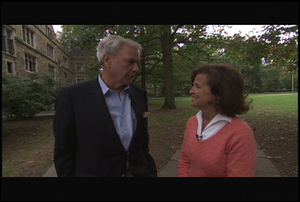
"Boomer$! History's wealthiest and most influential generation," hosted by Tom Brokaw, started and ended with segments featuring the University of Michigan and some local residents like Bruce and Cheryl Elliott.
"I was honored to be a part of it," Cheryl Elliott said today.
The broadcast was taped in fall 2009 during the University of Michigan homecoming weekend. Contacts in the U-M Alumni Association ended up connecting the crews to the Elliotts, who joined three other U-M graduates assembled in the Law Quad for the interview with Brokaw.
The crew came to U-M early in the production process, Elliott said, because they wanted to focus on the impact the Baby Boomer generation - generally people born in 1946 to 1964 - had on the economy.
The two-hour documentary touched on many aspects of the Baby Boomer experience, telling the story through interviews with former President Bill Clinton, actor Tom Hanks and even the couple whose photo taken at Woodstock ended up symbolizing the event and the generation.
Elliott's piece of the experience started out as hours of filming - with the group at the Law Quad, then later during a 3.5-hour taped walking conversation with Brokaw - but ended up only lasting minutes during the program.
Still, the reach of the program - and its many promotions - yielded many calls and emails before the program and today after friends, family and acquaintances viewed it.
Elliott, president and CEO of the Ann Arbor Area Community Foundation, said she was nervous about watching the program with her husband, a local attorney, and some friends.
The experience was positive, Elliott said. She enjoyed talking with Brokaw, whom she's admired over time.
It also brought back memories of a definitive time in her life, when she came to Ann Arbor for college during a time when the country - and the campus - was challenging authority.
"It exposed me to so many ways of thinking," she said. "College should do that, but it was a very exciting time. It was fun to look back and remember that."
Comments
Eric P
Wed, Mar 10, 2010 : 10:20 p.m.
Moose- First off I never said give--- I said clear a path. That mean's succession planning in your work place and letting your successor know they are being considered to take your job down the line. In housing that means making sure there is affordable starter housing for the budgets of young workers in your neighborhoods and your towns. In your community organizations that means starting to tap the next set of leaders. MjC- In caricaturing Gen X and Gen Y as the 'Whatever' generation you don't really have to listen to what they are saying do you? They don't count and you might as well just keep on doing what you think is best. It's too bad that you missed the point of my post which was that the Boomers like every generation need to know that they get their time and then they need to move on, and for too many boomers the reality is they never want to let go. and lastly, it's in no way about me, it's about having a society where EACH generation has the chance to build on what the last did, leave it's mark and make way for the next generation behind it.
Donna
Mon, Mar 8, 2010 : 8:22 p.m.
It was great fun watching my former high school history Teacher on tv. You did a great job Mrs. Ellott. I remember when you were Teaching us you were also purchasing your first home. You still look the same. You both had many great comments and points. Congratulations on being chosen for the piece. Donna Baldwin-Johnson
Original Ann Arborite
Mon, Mar 8, 2010 : 2:03 p.m.
I agree they didn't CREATE anything-please! And they need 2 get the heck out of the way because now my children (who r really smart and upstanding citizens) will b graduating from college soon and it's their time! Let the 'new' people take over PLEASE! By new I mean 30-45 year olds...we (Gen X-who the heck came up with that label?!)r still waiting for the jobs WE went to school 4 LOL
MjC
Sat, Mar 6, 2010 : 10:17 p.m.
Oh Eric - the generation of boomers you seem to loathe will be out of your way soon enough. Please just try to remember their motto was "Peace" as opposed to "Whatever" which is all this world has ever heard from the me Generation of Y & X. So, whatever. I suppose that pretty much covers it. And careful, Generation Z is on it's way.
Moose
Sat, Mar 6, 2010 : 9:03 p.m.
I guess Eric wants me to give him my home. The one I rebuilt myself, saved from the wrecking ball and paid off twice. Then I should give up my job and kill myself so he can get the house and $$ that I put into savings and Social Security that I spent 40 years working to accumulate. Maybe he'[ll be happy if I put him in my will so he can inherit the car with 156,000 miles and the house. Please take care of my dog. Every generation makes their own dream. As much as you might think, you aren't entitled to mine. By a few people's convoluted rationalization, it's apparent that the "millenials" X & Y are jealous and feel entitled because they missed out on the 60's, the free love, drugs and getting the crabs. All they have to look forward to is living in their parents (my) basement until we "boomers" die. All about you my friend... all about you.
E
Sat, Mar 6, 2010 : 11:05 a.m.
In reality the BB generation was and continues to be perhaps the most irresponsible generation the world has ever seen. As a member of this generation I have witnessed the largest transfer of wealth the world has ever known. This wealth was not earned and rather than being saved to cover the expenses of a longer life span this wealth has been squandered on bad investments, just look at the current housing debacle. Still to come is the BB bubble moving through its retirement years where our children will be burdened by higher taxes in order to finance the social security system because so many did not save enough money to take care of themselves. Essentially proving that the concept of retirement is merely a failed social experiment. Lets get real; history will label us the irresponsible generation. I could go on, but will let others pick it up from here.
Eric P
Sat, Mar 6, 2010 : 9:43 a.m.
MjC said "but so much good came from the young boomer generation. And you can bet they will likely make the path clear for you and our children when you face your elder years and ultimate death. Just you wait and see." wow really, cause one things those boomers have yet to do is clear a path for Gen X and Gen Y in the work place, housing and beyond. It's been a decade and a half of empty promises about how boomers have made the world better and how if Gen X and Gen Y just wait they might get to share in the boomer dream. I also love how you point out all the stuff that boomers did to make it a better world, as if Civil Rights, Women's Rights and Gay Rights movements suddenly sprung into being when the boomers were young. Really it's part of a continuum of events, and if you were really honest you have to acknowledge that the seeds of the movements that the Boomers participated in were planted long before by previous generations, each of whom have moved the goal forward bit by bit.
Moose
Sat, Mar 6, 2010 : 8:34 a.m.
With my checkered past, I would have been a better interview.;-) Oh, and when eventually there is affordable health care for all, and there will be someday, with or without the obstructionist republicans in congress, before all of us boomers leave this earthly plane, then you can get on your knees, bruno uno, and thank us.
MjC
Sat, Mar 6, 2010 : 8:01 a.m.
Bruno_uno your vague comment leaves me wondering what on earth are you thinking? The boomers opened doors for the current generation in ways you apparently will never understand. You had to be around in those times to hear the voices of a generation demanding a new way of respecting freedom, liberty, and the pursuit of happiness in this country. Yes, mistakes were made, but so much good came from the young boomer generation. And you can bet they will likely make the path clear for you and our children when you face your elder years and ultimate death. Just you wait and see.
bruno_uno
Sat, Mar 6, 2010 : 12:02 a.m.
thanks for ruining my kids future, hope it was worth it for ya baby boomers.
ummsw
Fri, Mar 5, 2010 : 7:59 p.m.
Just finished watching "Boomers" I really enjoyed. Loved the home town connection...I thought Cheryl and her husband did a great job..