

How Groupon co-founder got his start in Ann Arbor (and what he thinks about Michigan now)
The investors who co-founded Chicago-based daily deals website Groupon -- otherwise known as the “fastest growing company ever,” as Forbes put it -- formed their entrepreneurial foundation at the University of Michigan.
As co-founders of Groupon along with Andrew Mason, the firm’s CEO, U-M grads Brad Keywell and Eric Lefkofsky vaulted into the spotlight of the technology world in late 2010 after the 3-year-old startup reportedly refused a $6 billion acquisition attempt by Google.
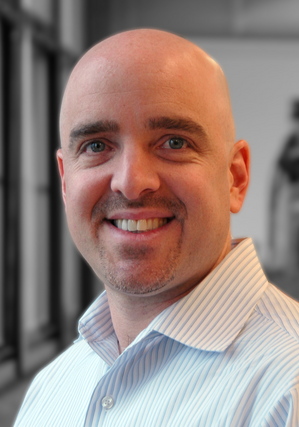
University of Michigan graduate and Groupon co-founder Brad Keywell
Photo courtesy of LightBank
Now, they’re part of a growing list of global technology leaders with Ann Arbor connections - including Twitter CEO Dick Costolo and Google’s soon-to-be-CEO and co-founder Larry Page.
Groupon is enjoying astonishing growth. The company went from 124 employees on Jan. 1, 2010 to more than 5,000 today, including 1,000 at its headquarters in Chicago.
The company’s business model involves selling coupons for retail products or services in specific metropolitan markets. In metro Detroit, for example, the website has offered deals like $15 for $30 in food and drinks from Arbor Brewing Co. in downtown Ann Arbor. Groupon reportedly keeps about half of the revenue from the deal, and the client keeps the other half.
Interest in Groupon is surging as the company reportedly considers an initial public offering and seeks to fend off big competitors, like Amazon.com-backed LivingSocial, and numerous smaller competitors, like AnnArbor.com’s The Real Deal.
In an interview, Keywell, who serves on Groupon’s board but is not involved in its day-to-day operations, declined to discuss Groupon’s corporate strategies.
Keywell, who still visits Ann Arbor from time to time as a member of the U-M Ross School of Business' Zell Lurie Institute for Entrepreneurial Studies advisory board, also declined to say whether Groupon would ever consider launching an office in Ann Arbor, where Google opened an office in 2006.
But Keywell did say that he believes Michigan’s economy is ripe for an entrepreneurial turnaround.
“If Michigan gets it right, it can become a home to innovators and risk-takers and a home that embraces those that are out to change the world and tries to provide a super friendly home for their journey,” Keywell said.
Keywell’s U-M experience shaped his future. As a freshman business student, he convinced the university to allow him to take U-M’s first class on entrepreneurship. He met real estate entrepreneur Sam Zell through that class, which Zell had personally funded. That connection continued in later years, as Keywell became a key leader in Zell’s Equity Group Investments LLC in the 1990s.
Keywell recently spoke with AnnArbor.com’s Nathan Bomey about the lessons he learned at U-M, why Chicago is attractive to young people and why he likes Michigan Gov. Rick Snyder. Excerpts from that conversation:
AnnArbor.com: What was it about your experience at the University of Michigan that shaped your career and still informs your investing and startup leadership?
Keywell: My time at the University of Michigan was a time of massive entrepreneurial exploration. I had six or seven different businesses running in some shape or form at the same time.
On a practical level, I had a highly entrepreneurial and very nontraditional university experience. I spent just as much time and attention on starting and growing businesses as I did going to school and hopefully doing well in school. I ended up doing quite well. I think I was on cum laude at both the business school and at the law school, but that wasn’t at the expense of being an entrepreneur. …
And I was a Michigan football fan from when I was three years old. Both my parents went to Michigan. My sister went to Michigan - so the University of Michigan is a critical and key part of my life and the life of my family.
AnnArbor.com: U-M has really embraced entrepreneurial education. How have you seen that change over the last 20 years?
Keywell: Everything today is different than it was 20-plus years ago. On every level, the university has become a thriving entrepreneurial community in ways I couldn’t have comprehended 20 years ago.
AnnArbor.com: As a former college student entrepreneur yourself, how would you describe the potential of startup companies led by students?
Keywell: Well, way beyond my experience as a student entrepreneur, the last five or 10 years have shown us what we can do.
What Mark Zuckerberg has done at Facebook is the beacon for all students to realize that you don’t need to have a certain combination of letters after your name in order to build great businesses and do great things.
So the climate for students becoming phenomenal entrepreneurs has never been better, and I think it will continue to get better than it is today. Knowledge and familiarity of creating companies, raising money for growth, venture capital, technology and more means that students get it better today than they ever have.
They get what it takes to go from an idea to a business. And the tools that it takes to go from an idea to a business are more accessible than ever.
AnnArbor.com: There’s such explosive growth at Groupon. How does a company manage such explosive growth without losing the culture and running off track with its business plan?
Keywell: Explosive growth needs discipline in order to continue. Explosive growth needs a culture in order to continue well. And explosive growth needs to be facilitated by a fabulous business model.
Groupon has been a unique example of those things and more. A massively key element to Groupon is its spectacular CEO, Andrew Mason. I do believe that a great leader does define a company with culture and does sustain that culture through actions.
Andrew is a perfect example of defining a company with a particular culture and then living that culture and becoming the example of that culture.
AnnArbor.com: You formed a new fund last year to invest in Midwest companies. How is the focus of that fund shaping up and would you consider at any point investing in any Michigan companies?
Keywell: Lightbank is a $100 million fund that we created last year. After 11 months, we have 12 investments. We’ve been investing aggressively, but in every single case we’ve come across unique situations where we can invest not just money but our experience and expertise, so that we can fundamentally increase the likelihood of reward and reduce the risk.
Helping to change that risk equation is a key element to how we look at our role as investors and the fact that we look at our relationships with entrepreneurs as one of a partnership rather than one as an investor and an operator.
We’ve been able to find entrepreneurs where their appetite is not just for our capital but for our partnership. That makes it fun.
And in terms of investing in Michigan, absolutely. We would love to find great entrepreneurs with great business models and emerging businesses in Michigan.
AnnArbor.com: How would you assess the state of Michigan’s capacity to generate an entrepreneurial economy to replace the auto-intensive economy that’s dominated for so long?
Keywell: I’m not sure a state does or does not have a capacity to do something. The question is: Are there people in the state of Michigan currently who have both the innovative ideas and the entrepreneurial passion to build great businesses?
And the answer is, I’m sure there are. Our hope is that those who fit that definition -those who are great entrepreneurs, who want to build great businesses - somehow find us or we find them, and we are able to become their partners.
AnnArbor.com: As a founder of Echo Global Logistics, you’re really familiar with the transportation and logistics industry. In Michigan there’s this concept of creating an “Aerotropolis,” which would be a transportation and logistics hub around Detroit Metro Airport and Willow Run Airport to create jobs and revitalize that area. Is that a concept that would work?
Keywell: I don’t know the specifics of what they’re thinking about. But what I will say is we got involved in the logistics and transportation industry by creating Echo from scratch.
And we created Echo because we saw an opportunity to take technology and innovation to a massive but very sleepy industry.
What I can attest to is the need for innovation, the need for technology and the need for new efficiencies in the freight and logistics industry. We have addressed part of that need.
But there are many other facets of that opportunity that are waiting to be addressed. So perhaps the Detroit Metro and Willow Run solution can be a unique piece of that puzzle.
AnnArbor.com: Michigan loses a lot of high-knowledge college graduates to Chicago. Why do you think that is? Just because of the jobs or is it something else?
Keywell: One reason is obviously that there’s more dynamic employment opportunities in big thriving cities, and Chicago happens to be one of the great large thriving cities in North America, and, I would say, in the world.
So it’s tough for Detroit and the surrounding areas in their current state to compete with dynamic jobs when the competition is Chicago. But that doesn’t mean that Michigan cannot light a number of sparks that begin to create its own entrepreneurial ecosystem.
I think it starts with a super friendly atmosphere to those that are creating risks with the goal of building great businesses. So, where Michigan and the Detroit area and Ann Arbor and Grand Rapids can define themselves might be their attitude towards risk.
One of the great things about Silicon Valley is they accept risk, they understand failure and they obviously reward success. But those who are trying to do great things sometimes fail and in Silicon Valley that often leads to trying again.
In other parts of the country, failure leads to conclusion and shame and never trying again. If Michigan gets it right, it can become a home to innovators and risk takers and a home that embraces those that are out to change the world and tries to provide a super friendly home for their journey.
And with a guy as competent and entrepreneurial as Rick Snyder leading the state, Michigan’s got a chance.
AnnArbor.com: Do you consider yourself a Snyder fan?
Keywell: I’m a huge fan of entrepreneurs of all flavors.
Having somebody like Rick as the governor is a wonderful opportunity for the state to rally behind an entrepreneurial mindset and find a path towards a future of innovation and entrepreneurship and creation, rather than reduction and reorganization. So for those reasons I think Rick’s a great leader.
Contact AnnArbor.com's Nathan Bomey at (734) 623-2587 or nathanbomey@annarbor.com. You can also follow him on Twitter or subscribe to AnnArbor.com's newsletters.
Comments
Jay Thomas
Thu, Jan 27, 2011 : 5:39 a.m.
Too bad they didn't stay in MI.
Marie Powers
Thu, Jan 27, 2011 : 1:57 a.m.
Don't leave out UM grads Jeffrey Powers and Vikas Reddy, founders of Occipital LLC... developers of "RedLaser" (the number one barcode scanning app recently acquired by eBay),"360 Panorama" the highly rated photography app (currently the number 4 photography app in the App Store down from number one in 44 countries) and "ClearCam" another well respected photography app. The co-founders of TechStars lured them out of Michigan to Boulder, CO with the promise of seed funding, mentor-ship, accelerated business development opportunities and high-end networking. Maybe Michigan could learn something from Techstars to help stop Michigan's brain drain.
Dug
Thu, Jan 27, 2011 : 6:29 a.m.
Heh, I was going to mention them, but they've been sucking talent out of Ann Arbor too, lately (another of Zattoo's past interns). I told Jeff about TechStars, and pointed him to the program after he'd told me how they struggled to get going in Beaver Island and NYC ( <a href="http://goo.gl/BDBB3" rel='nofollow'>http://goo.gl/BDBB3</a> ). I deeply regret it now, as they could have learned as much bootstrapping here after not getting funded post-Demo Day as they did there. And still succeeded. We just didn't have as connected, or as visible a community for them then as we do now. A lot has changed since then: <a href="http://www.slideshare.net/dugsong/ann-arbor-startup-community-development-h109-1759718" rel='nofollow'>http://www.slideshare.net/dugsong/ann-arbor-startup-community-development-h109-1759718</a> And although <a href="http://a2newtech.org" rel='nofollow'>http://a2newtech.org</a> is still less than half the size of <a href="http://www.bdnewtech.org" rel='nofollow'>http://www.bdnewtech.org</a> things are getting better. I was motivated to help Mobiata after catching up with Jeff and Vikas in Boulder post-TS, and realizing that it was the community and support, more than the funding or available talent (UC Boulder doesn't hold a candle to UM - except maybe in pot culture) that made the difference for them.
debling
Thu, Jan 27, 2011 : 1:19 a.m.
A lot of excitement about a company that doesn't actually make anything. Looks like another example of a guy with a great idea about how to make himself rich by getting consumers to spend more money on stuff they don't need. Many will focus on the "short term" prospect of a few jobs. In the long run, one can ask, how long can our society last by providing services but not inventing or manufacturing things.
Dug
Thu, Jan 27, 2011 : 6:48 a.m.
Insightful analysis by my friend Dave Troy, startup community organizer in Baltimore: <a href="http://davetroy.com/posts/is-groupon-the-new-jesus-startup" rel='nofollow'>http://davetroy.com/posts/is-groupon-the-new-jesus-startup</a> NYC worships money. LA worships fame. Silicon Valley worships innovation. What do we worship in Michigan? Grit and drive? "Detroit Hustles Harder"
Joan
Wed, Jan 26, 2011 : 10:42 p.m.
This article is very informative! GroupOn is a very big deal site and it has been growing worldwide! Daily deals from GroupOn and other similar sites can also be found in one website to help you find the best deal that is affordable and trustworthy : <a href="http://www.GroupBuyUnited.com" rel='nofollow'>www.GroupBuyUnited.com</a>.
Wguru
Wed, Jan 26, 2011 : 8:52 p.m.
To experience some of the entrepreneurial spirit in this area, attend the monthly A2NewTech.org meetup. (Next one is Feb 15, 6:30pm, at the Blau Auditorium, U-M Ross Business School.) ... or its spinoff Detroit-NewTech (<a href="http://www.meetup.com/DNewTech/)" rel='nofollow'>http://www.meetup.com/DNewTech/)</a>... or watch them live or recorded on Ustream at <a href="http://www.ustream.tv/channel/a2newtech" rel='nofollow'>http://www.ustream.tv/channel/a2newtech</a> and <a href="http://www.ustream.tv/channel/dnewtech" rel='nofollow'>http://www.ustream.tv/channel/dnewtech</a> if you can't be there in person. And don't forget the Annual Collaboration for Entrepreneurship (ACE 11 <a href="http://www.ace-event.org/)" rel='nofollow'>http://www.ace-event.org/)</a> next Monday, Jan 31. Check out the A2Geeks calendar (<a href="http://a2geeks.org/display/geek/Calendar)" rel='nofollow'>http://a2geeks.org/display/geek/Calendar)</a> and A2 SPARK Calendar (<a href="http://www.annarborusa.org/events)" rel='nofollow'>http://www.annarborusa.org/events)</a> for lists of other startup/tech/business events.
jondhall
Wed, Jan 26, 2011 : 4:38 p.m.
Awesome article ! Thanks and have no fear Rick is here the brain drain will STOP .This type of spirit will bring Michigan back , we will prevail , we once was great we will not quit we will PREVAIL . Like the red , white , and blue , knock us down , but you won't keep us down . God bless America and Michigan . Chicago has Reverend Wright , we have Rick !
jgtrueblue
Wed, Jan 26, 2011 : 3:46 p.m.
Great article. Coming from a family of alums (Mother, 6 other siblings, former spouse, brother-in-law and nephew) I feel very proud of our successful global alumni community. But I also echo the feeling that once these alums develop their tremendous ideas at UofM, they leave. Period. I agree the statewide attitude and national vision of this state is mainly "an imploding failed Detroit", needs to change and change takes risk. I couldn't agree more with Mr. Keywell. It will take risk in our ENTIRE state. Eliminate greed and destructive attitude of entitlements, encourage responsibility and creativity, which demand risk and we will flourish again. I trust UofM will continue to play a huge role in this success - let's keep them here!
rusty shackelford
Wed, Jan 26, 2011 : 1:46 p.m.
Hmm, I'm noticing a pattern here. Lots of intelligent, young entrepreneurs are drawn to town by U of M (and for no other reason), and leave basically as soon as they practically can do so. Gee, I wonder why Ann Arbor can't retain talented people the way so many other similar towns can? (And no, I'm not referring to Chicago specifically as a "similar town").
Radim Cernej
Wed, Jan 26, 2011 : 1:04 p.m.
I liked this article a lot.
Craig Lounsbury
Wed, Jan 26, 2011 : 12:48 p.m.
call me greedy but if Google came knocking at my door with 6 billion dollars divided by 3 I would take the money and run.
A2
Wed, Jan 26, 2011 : 5:50 p.m.
Just think though .. if google came to them only after a year offering 6 billion .. what would they come with in a couple more years. I'm glad he held out ..
Dug
Wed, Jan 26, 2011 : 12:01 p.m.
There are a ton of UM alum leading the tech industry. Besides Dick Costolo (Twitter CEO who also did Feedburner out of Chicago) and the Groupon guys, there's Dean Drako (Barracuda CEO), Bradley Horowitz (Google VP Product), RJ Pittman (Apple, formerly Google PM), Tim Howes (RockMelt, and previously Opsware CTO), a lot of VCs, etc. They suck a lot of engineering talent directly out of Ann Arbor to the coasts (we're a top-tier school for Google, Microsoft, Amazon, Yahoo, Facebook, etc. recruiting) - so many top engineering grads from Michigan end up working for much less impressive, but much better startup-acculturated and situated founders from Stanford. Lightbank has visited the Tech Brewery before, and are very interested in finding Midwest companies that can scale with a social graph. Know of any? :-)
yohan
Wed, Jan 26, 2011 : 11:35 a.m.
I agree, great article Nathan. Please keep it up
AlphaAlpha
Wed, Jan 26, 2011 : 11:33 a.m.
"I think it starts with a super friendly atmosphere to those that are creating risks with the goal of building great businesses." Great article, Mr. Bomey; thank you very much. More content like this, please.