

Jeff Daniels: Film incentives proposal proves Snyder is 'a politician after all'
(This story has been updated to reflect Snyder's denial of Daniels' claims, as reported by the Detroit News.)
Chelsea native and actor Jeff Daniels decried Gov. Rick Snyder's proposal to eliminate Michigan's aggressive film industry tax incentive program and replace it with a much smaller pool of incentives.
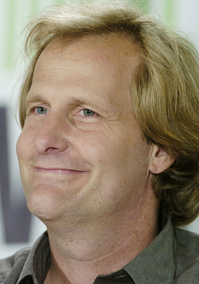
Chelsea native and actor Jeff Daniels
Daniels, a vocal proponent of Michigan's film tax incentives, told the Detroit Free Press that Snyder had privately promised him he didn't want to completely eliminate the incentives.
"It's really disheartening," Daniels said. "It's not what he told me privately, so to be honest, I guess he's a politician after all. Say one thing, do another."
Snyder, speaking to the Detroit News, denied Daniels' claims.
"I didn't make any commitments," Snyder said. "People have a right to say what they want to say, but that's not accurate at all."
Under Snyder's budget proposal, the state's film incentives would be eliminated and replaced with a capped pool of $25 million dedicated to the industry. Companies and film productions that have already received film credits would get to keep them.
Michigan's film incentives program, approved in spring 2008, provides a cash refund of up to 42 percent of the amount a filming company spends in the state. It's considered one of the most aggressive film tax incentives in the country.
The state spent about $100 million in the 2009-10 fiscal year on the incentive. As a result of the film productions — including locally filmed movies like Hilary Swank's "Conviction," for example — the state got an influx of $10.3 million in additional taxes, according to a Senate Fiscal Agency study released in September.
Film companies directly hired 355.5 full-time workers in 2009, activity that resulted in a total of 1,542.2 overall full-time jobs in Michigan, the agency estimated.
Although the film incentives result in a net loss in tax revenue, advocates argue the job creation and the film industry's attractiveness to young people made the incentives worthwhile.
In an interview Thursday, Michigan Economic Development Corp. CEO Michael Finney said the film credits aren't sustainable in their current form. He said a capped pool of incentives was more appropriate.
"It is an effort to manage it more reasonably than we have right now, where there’s an open checkbook with no cap on it. Hopefully it will allow the industry to grow here in the state," Finney said.
Snyder told AnnArbor.com in an interview during his campaign that the incentives were "a dumb thing to do." But he said the incentives should be scaled back gradually and not eliminated immediately.
In January, he told Ann Arbor.com: "We have people that have made investments and built studios and done things like that. I want to give them an opportunity to succeed given the capital investments they’ve made. But I believe there should be opportunities to be more efficient than we are today on how we manage that program."
Snyder's proposal to scale back the incentives drew swift denouncement from a wide assortment of film industry players.
"Effectively what it does is take us out as a player in the film industry," Jeffrey Spilman, a partner in Ferndale-based S3 Entertainment Group, told the Detroit News. "It ceases the momentum immediately. It instantly puts people back in the unemployment line."
Contact AnnArbor.com's Nathan Bomey at (734) 623-2587 or nathanbomey@annarbor.com. You can also follow him on Twitter or subscribe to AnnArbor.com's newsletters.
Comments
wlkate
Mon, Feb 21, 2011 : 2:05 p.m.
Jeff Daniels, but as one of the 1% wealthy American's I guess he just can not see the dollar and "cents" of why the governor is making the cut.
Jimmy Olsen
Sun, Feb 20, 2011 : 12:50 a.m.
Mr. Daniels, So lets limit the salary of the highest paid people on a movie production to 100,000 (to do a craft that they "love"). Lets figure 10 of those salaries per movie - 25 million divided by 1 million = 25 movies we can give a million bucks to do a film in Michigan this year under the cap. Wow!! How about we also limit the salaries of the sports players (who play a game they "love"). 100,000 per player max. Wow!! My ticket price just went down. I gotta say, everyday when I go to my technology job (that I "love"), I have to thank someone for the ability to keep a roof over my head, food on the table, clothes on the kids, my 5 year old car running and some sort of health insurance. Retirement hopes for me...the lottery. Spoiled, arrogant, etc. We all get the picture so to speak !!
Dcam
Sat, Feb 19, 2011 : 7:50 p.m.
Jeff Daniels isn't the only hometown boy wanting to make films in his home state - Tony Shaloub (Monk) is crying the same tears in his home state - and for the same reasons. "We want to come and do more films," he (Tonly Shaloub) told me Thursday evening at RDI Stages in St. Francis, where some of the work on the film was done. "We have a couple projects that we're working on." But one of the things holding up those projects is the very thing that helped make "Feed the Fish" possible: Tax incentives from the State of Wisconsin. "There's no way we could have done this movie for the budget we were working with and the time frame, the schedule, that we had, without those incentives in place," he said. "It was absolutely essential. But those incentives have been greatly reduced, and we need to work to get them reinstated." - OnMilwaukee.com There is a follow-the-leader pattern among the wealthiest industries wanting something for nothing and states wanting to give it to them. But, Milwaukee-raised Spencer Tracy and Kenosha-raised Don Ameche, didn't get tax incentives to make movies.
julieswhimsies
Sat, Feb 19, 2011 : 7:07 p.m.
@Chase Ingersoll How is it, that a person running for office is not a politician? You sound like an aspiring politician to me.
EyeHeartA2
Sat, Feb 19, 2011 : 5:17 p.m.
So, isn't eliminating something and replacing it with something smaller the same is reducing it, or not "completely eliminate the incentives." Weather Hollywood types live in Hollywood or Chelsea, I guess all that money puts them out of touch with reality. Too bad, I really enjoyed his work in "RV". I though it brought the whole, "white trash hillbilly" genre to a new height. Quite frankly, I was heartbroken when he wasn't at least nominated far an academy award for this.
Mike
Sat, Feb 19, 2011 : 4:38 p.m.
This just in.. Chelsea's wealthiest citizen complains that the Governor is a politician for not giving his pals more money.
fredric
Sat, Feb 19, 2011 : 3:33 p.m.
To make is simple: Over $100 million to bring in $ 25 million. Doesn't take a PHD to figure out that this is not a good deal for the people in the state. Yes, is nice to say that "We make movies in the state", but at what cost? The formula that most business's use is : they must get $ 4.00 return for every $1.00 spend on marketing. This is pretty mush standard and from the numbers, the state is doing exactly the opposite!!
jcj
Sat, Feb 19, 2011 : 2:57 p.m.
Funny how the ones that are in favor of this tax break are the same ones that decry most other business tax breaks! Any chance most of the supporters are"Hollywood types"? It it can be shown that a particular tax break puts more money into the tax coffers than it takes out. I am for it. If it take more than it provides get rid of it!
clownfish
Sat, Feb 19, 2011 : 2:24 p.m.
The feds gave $400,000,000,000 in tax breaks to "overpaid Hollywood" types, an extension of Bush era tax cuts that went to millionaires and billionaires. There is little to no proof that this addition to our deficit created any significant job growth, yet many of the same people arguing AGAINST credits for the film industry argued FOR those tax cuts. Seems to be dependent on which segment of the political spectrum is perceived to benefit.
Diagenes
Sat, Feb 19, 2011 : 2:06 p.m.
If tax cuts are good for the film business, how about cutting taxes for small manufacturing companies. Even with the downturn in the auto business, Michigan has thousands of people working in manufacturing that could use help. Many companies are family owed, not multi national entertainment conglomerates. The film tax credit is welfare for the rich. Stop picking winners and give every industry a tax cut.
SonnyDog09
Sat, Feb 19, 2011 : 2:03 p.m.
Putting a cap on corporate welfare for Hollywood billionaires seems like a good idea to me. When folks who get paid millions to appear in schlock complain that they are not getting enough tax payer money, it cracks me up. When folks complain that we are not giving enough tax payer dollars to millionaires, it cracks me up. Thanks for the good laugh.
A2lover
Sat, Feb 19, 2011 : 1:46 p.m.
Mr. Daniels is so incredibly naive, I'm surprised he survives in the hollywood entertainment industry. Mr. Snyder apparently said he wasn't going to "eliminate completely" the film industry incentives, and he hasn't (yet). So Mr. Daniels to complain now is a bit premature. Perhaps $100 million is too much and $25 million is not enough, perhaps some negotiation between the film makers and Michigan Government is what's called for here. The shy hasn't fallen just yet. Also, perhaps Mr. Daniels can convince the filmmakers of the movies he appears in to film in Michigan, he would then be seen as doing something substantive to keep the film tax incentive in place.
Somewhat Concerned
Sat, Feb 19, 2011 : 1:41 p.m.
The Governor's film proposal shows that he is a Governor. Mr. Daniels outburst shows that he used to be an actor. If he wants to run a state, he will need to go back to California, where actors are occasionally believed to be capable of understanding what it takes to lead a state.
utownie
Sat, Feb 19, 2011 : 11:51 a.m.
Gov Snyder has committed to $1 pay for the year. How much did Jeff Daniels charge us for "pure Michigan"? The answer to that question will expose which one is more interested in helping us.
EyeHeartA2
Sat, Feb 19, 2011 : 7:28 p.m.
I thought it was John Kerfoot: <a href="http://www.youtube.com/watch?v=01Kz6Rw99Kk" rel='nofollow'>http://www.youtube.com/watch?v=01Kz6Rw99Kk</a>
Tony Dearing
Sat, Feb 19, 2011 : 1:39 p.m.
A minor point, but Tim Allen is the voice for "Pure Michigan.'' Jeff Daniels does the "Upper Hand'' commercials for the Michigan Economic Development Corp. I'm looking for information on how much he is paid for those spots.
1bit
Sat, Feb 19, 2011 : 3:37 a.m.
I like Mr. Daniels' work, but he needs to understand that this isn't politics, it's business. Read this quote again from the above: "Michigan's film incentives program, approved in spring 2008, provides a cash refund of up to 42 percent of the amount a filming company spends in the state. " Read that again until you get it. The film companies are not getting a 42% break on their taxes - they are being PAID back 42% of whatever they spend in Michigan. That is not only dumb, but we'd be dumber to continue such nonsense. I think all businesses in Michigan would love 42% back - why should we be so beholden to the movie industry? There are much better industries that make more sense for Michigan if we want to offer such a "deal".
magnumpi
Sat, Feb 19, 2011 : 1:52 a.m.
sorry, hard to take anything he says seriously when all i can picture is the bathroom scene from Dumb & Dumber. seriously, where does michigan fit as far as the movie tax exemptions? how many states give equal or more?
average joe
Sat, Feb 19, 2011 : 3:43 a.m.
Last time I checked, Michigan had the most attractive offer compared to other states' programs. Gov. Jen had to stay ahead of the Jones', you know.
tlb1201
Sat, Feb 19, 2011 : 1:37 a.m.
Most jobs here that are created by the film industry are only temporary. They blow into town, do their thing for a while, spend a few dollars, then leave with most of the taxpayers' money that was given to them. Sure, some money gets spent while they are here and they do hire some local people, but that is only for a temporary period of time. It's nothing like when a new office or factory comes to town and stays for many years, continuously employing people and pumping money into the community's economy. I don't believe that the film industry in Michigan has much of an infrastructure that continuously employs people or will sustain on its own if the subsidies go away. It is one thing to pay out some initial seed money to attract a fledgling industry and to nurse it along until it stands on its own and becomes prosperous, but it is an act of complete foolhardiness to keep pouring cash into an industry on a permanent or long-term basis to just keep it here. Don't get me wrong, I think it's a pretty cool thing to see movies and TV shows being made here, but I'm not willing see my tax dollars keep going for it when schools are losing funding, police and fire protection is being cut, and my car is getting beaten up by bad roads. It is a matter of priorities.
Stephen Landes
Sat, Feb 19, 2011 : 12:37 a.m.
$100,000,000 divided by 1542 jobs is nearly $65000 spent per job. The jobs aren't sustainable unless there are more incentives each year, so we can';t really look at this as a one-time hiring/job training expense. For that we got a return of $10,000,000 in taxes. We would do better to buy lottery tickets in other states' games! The film makers are basically taking us for a ride and doing very well by it. We can't afford to get a return of one tenth the spending of tax funds. By contrast the tax return estimate for the "Pure Michigan" campaign is something like $2 for evert $1 in tax money spent. Let's see 2 for 1 or one tenth for one. Which would you put YOUR money into because that is exactly what is being spent -- YOUR MONEY.
average joe
Sat, Feb 19, 2011 : 12:13 a.m.
Gobluebeatosu- What figures do you have that show it "works"? I see a fact that the state gets back a whopping 10 cents for every dollar invested, versus "studies show..." or "it is estimated...", or nothing very clear, numbers wise. Just a lot of opinions on benefits.
jcj
Sat, Feb 19, 2011 : 12:27 a.m.
But Joe you can't put a price on these intangibles! LOL
DonBee
Sat, Feb 19, 2011 : 12:06 a.m.
Lets see..... Spent $100,000,000.00 in tax money collected from the people. Create 1,600 jobs for a part of a year Return $10,300,000.00 in taxes Net taken from the taxpayers $89,700,000.00 Sounds like a good deal for the person doing the taking, I will take the money and create 1,800 jobs and return 12 million. And like the movies I will pretend that Saline or Chelsea is Texas or California. We have to stop the bleeding, it hurts to do it, no one is happy, but these numbers stink. Put the money in the schools or Medicaid (like the Health Care Reform Bill requires the state to do).
Doug
Fri, Feb 18, 2011 : 11:59 p.m.
Anyone associated with the Detroit creative community can tell you this is responsible for far more than 1500 jobs. It's also responsible for thousands of good paying part time jobs and contributes millions to vendors in Michigan. How about a $1.7 billion business tax cut instead of a $1.8 billion business tax cut?
deb
Sun, Feb 20, 2011 : 5:03 p.m.
doug how many of these jobs went to michiganders? I worked on about 5 films and about 90% of the crews would be flown in from out of state. Even for jobs that could have been done by locals. If you are a michigander, and good at your job, then you get asked to come to LA. this dosent beneifit the state
Doug
Sat, Feb 19, 2011 : 7:24 p.m.
To Brian and jcj - you will notice that the Senate Fiscal Agency ESTIMATED 1542.2 jobs were created. Estimates aren't facts. How do you create .2 full time jobs? What was their methodology? FROM THE REPORT - "On an employment basis, the productions for which data were supplied accounted for approximately 2,350 hires in 2008 and 3,867 in 2009. Due to the part-time nature of film production work, the 2,350 jobs equate to just 216 jobs on a full-time-equivalent basis, while the 3,867equate to 355.5 full-time jobs." They just mentioned way more that 1500 jobs there. You will also notice that employment in that sector increased over 50$ from 2008 to 2009. Why did the study choose to multiply these job numbers by a factor of LESS THAN .1? What other sector showed an increase in employment comparable to that? The fact of the matter is that these are extremely good paying part time jobs that can provide a living to freelance artists. Also .1 Billion dollars (#100 million) is a pittance compared to the $1.8 billion being given to Michigan businesses. Why isn't the film industry considered a business? Arts are one of the few things manufactured in Detroit anymore. Let's not kill another industry in Michigan just as it's getting started.
jcj
Sat, Feb 19, 2011 : 2:51 p.m.
Have to agree with Brian on this one. Lets see the proof! So Far the following is the only evidence we have. The state spent about $100 million in the 2009-10 fiscal year on the incentive. As a result of the film productions — including locally filmed movies like Hilary Swank's "Conviction," for example — the state got an influx of $10.3 million in additional taxes, according to a Senate Fiscal Agency study released in September. Film companies directly hired 355.5 full-time workers in 2009, activity that resulted in a total of 1,542.2 overall full-time jobs in Michigan, the agency estimated.
Brian Kuehn
Sat, Feb 19, 2011 : 12:27 a.m.
Doug, please provide some factual information to support your comment or, at minimum, provide statements from people (including their name and postion) in the creative community who can provide anecdotal information to support your statement. The factual data presented indicates that a huge subsidy ($89,700,000) created little in eother direct or indirect employment in Michigan.
GoblueBeatOSU
Fri, Feb 18, 2011 : 10:49 p.m.
Figures...the one thing that comes out of Lansing that works and now they want to kill it. Strike one for Snyder
81wolverine
Sat, Feb 19, 2011 : 12:09 a.m.
Wrongo! Look at the math please. $100 million in cost to the state and a return of $10.3 million. That's a loss of $89.7 million for taxpayers. How do you figure this program "works"? Snyder is doing something most politicians won't - using fiscal common sense and logic.
breadman
Fri, Feb 18, 2011 : 10:22 p.m.
Gee whiz! Who can afford to sit in the theater, a family of four and watch these movies? Q-16 happy hour 6.25 per.....(but) Ok "who wants popcorn with a drink"? Total bill for maybe 90 mins of fun close to 50.00. Minimum wage 7.40 before taxes... A whole day of pay just to see a movie... I will wait for dvd and/or blu ray release... One dollar box of popcorn, box of three and a 0.88 bottle of pop......
Nathan Bomey
Fri, Feb 18, 2011 : 10:19 p.m.
I've updated the story to reflect Snyder's comments to the Detroit News denying Jeff Daniels' claims.
LBH
Fri, Feb 18, 2011 : 9:49 p.m.
Apparently it is only wise to offer tax incentives to wealthy *people* because they may put some of their windfall back into the economy, not industries who have actually hired people. Not surprised by this at all given the absence of logic in much of the rhetoric.
jackson72
Fri, Feb 18, 2011 : 9:32 p.m.
The quote that I keep reading from Mr. Daniels is that Governor Snyder had privately told him that he didn't want to totally eliminate the film incentives. I don't see where the Governor said that he wouldn't totally eliminate them. I'm guessing that Governor Snyder didn't want to totally eliminate the incentives, but once he started looking at our Return On Investment for them and how the total budget looked, there was no choice. Quit whining and sounding like a high-profile prima donna Mr. Daniels. We're all in this together and just because you didn't get your way and the film industry incentives weren't specially protected from the ax doesn't mean that you need to start calling Governor Snyder names...like "Politician". He is anything but that.
FattyJ
Fri, Feb 18, 2011 : 9:31 p.m.
HAVE YOU REALIZED how Liberals realize that tax exemptions for the film industry will mean that they will go elsewhere to film, which costs our state jobs. BUT liberals don't seem to understand how raising taxes on other industries will cause them to go elsewhere. Is it just because most actors are democrats? DOES ANYONE UNDERSTAND THIS?
Edward R Murrow's Ghost
Sat, Feb 19, 2011 : 3:33 a.m.
1) Who are the "liberals" who support the film credit and how do you know they are "liberal"? 2) It is not a tax exemption. Film makers get 42% of their in-state costs paid for by the state. Last year the state PAID filmmakers $100 million and realized $10 million in tax revenue in return. Good Night and Good Luck
average joe
Sat, Feb 19, 2011 : 12:04 a.m.
Totally agree
jcj
Fri, Feb 18, 2011 : 11:30 p.m.
Sounds right to me!
Macabre Sunset
Fri, Feb 18, 2011 : 9 p.m.
Billionaires begging for special tax breaks. Yeah, that really tugs at the old heartstrings here.
Jaime
Fri, Feb 18, 2011 : 8:59 p.m.
If the math is truly correct, the state is giving out a dollar and getting 10 cents in return. How can that be good for the state? Why should my tax dollars go to Hollywood? If the only reason to come to Michigan is because they can take so much and give back so little then we really don't have much to offer. Can you imagine any business selling something for $1.00 that cost it $10.00?
jcj
Fri, Feb 18, 2011 : 11:30 p.m.
Barb WHO are these "other studies" done by? And what do they show? That it gives us prestige? And intangibles ? Take that prestige and those intangibles and try to pay your mortgage with them!
gemsbarb
Fri, Feb 18, 2011 : 10:52 p.m.
Numbers are an interesting thing. You can always find numbers to support an argument - even if the numbers that are being quoted have nothing to do with reality. Other studies, from those who understand the industry, show very VERY different things...
joe golder
Fri, Feb 18, 2011 : 9:06 p.m.
But having a bunch of famous people to stalk is priceless.
AA
Fri, Feb 18, 2011 : 8:59 p.m.
Thank you Mr. Snyder! These Hollywood people are GROSSLY overpaid. The trickle down jobs or monies to the local economy and residents is minimal at best. I would rather give the tax break to companies who need them. Directors, actors and the like make outrageous money, then want you to also heap fame, trophies and accolades on them. If they really cared about Michigan or other states, they would come here anyway, with or without the tax incentives. We support their movies and careers. They are hippocrites, good riddance.
julieswhimsies
Fri, Feb 18, 2011 : 8:53 p.m.
Companies who make films in the area bring workers who need places to eat, stay, and shop. Locals are often hired, as well. A little bit of extra business and money coming in to the area is a big deal for small businesses, hotels, and unemployed locals. I believe it has also boosted Michigan's image, as well. I agree with Jeff. Cutting these incentives is a bad idea. However, I've got to agree with Ghost. If you run for office, you're a politician.
deb
Sun, Feb 20, 2011 : 5:01 p.m.
your correct about this "Companies who make films in the area bring workers who need places to eat, stay, and shop. Locals are often hired, as well" The problem is that these people are coming from california or other states for these jobs. They are not michiganders, so we subsidize them coming and staying and be payed to take the money out of state
Stephen Landes
Sat, Feb 19, 2011 : 12:44 a.m.
Of course people who actually experience having a movie made in their area will see benefits from it and there are benefit. However, the analysis state-wide says the return is ten cents on the dollar -- not ten cents every year for that one dollar, but just ten cents. This is not the kind of investment you would make with your money (I hope) and we shouldn't make it with OUR money.
Brian Kuehn
Sat, Feb 19, 2011 : 12:21 a.m.
The report addressed the spillover economic effect of filming movies in MI. Our $89,700,000 of tax dollars bought us the equivalent of 1,542 FTE jobs (including the est. 356 jobs directly related to the filming, which by the way, were mostly part time and likely without benefits). That is over $58,000 per FTE job. I would like to think my share of the $89,700,000 of tax dollars spent went for something better than a month's salary for an extra in a movie and a part-time catering job.
average joe
Sat, Feb 19, 2011 : 12:02 a.m.
Again, he is not cutting it completely, just capping it at 25 million. I'm all for helping "small businesses, hotels, & unemployed locals", but according to the math, these are too expensive to sustain.
Chase Ingersoll
Fri, Feb 18, 2011 : 11:59 p.m.
Julie: Not everyone who runs for office is a politician. My candidate responses posted on Ann Arbor .com should be case in point.
Elaine F. Owsley
Fri, Feb 18, 2011 : 8:51 p.m.
There are side benefits that aren't immediately considered - those movie folks have to stay somewhere, eat somewhere, get their hair cut, get their clothes cleaned or washed, buy toiletries, smokes, booze, gasoline, use electricity, etc. etc. etc. They work around places no one else goes anymore for atmosphere, the draw attention to the area, and I don't believe you can equate the real benefit of their presence in dollars or in publicity for whatever place they are. They paid Dexter High School $1,000 a day for the use of a small part of the building. Nothing else would have brought in that money. Keep 'em coming!!!
Craig Lounsbury
Sat, Feb 19, 2011 : 4:38 a.m.
The problem is the State of Michigan paid $420 of the $1000.
Dcam
Fri, Feb 18, 2011 : 11:51 p.m.
When I say taxes, its generic and all inclusive - which pockets they go into doesn't change whence the money came - from the ones who can influence the least. The Dexter High reference was a metaphor, nothing more.
jcj
Fri, Feb 18, 2011 : 11:26 p.m.
I hit the wrong button. If anyone believes that there are intangible benefits. I suggest they do not complain about higher taxes.
jcj
Fri, Feb 18, 2011 : 11:24 p.m.
"I don't believe you can equate the real benefit of their presence in dollars or in publicity for whatever place they are"
Elaine F. Owsley
Fri, Feb 18, 2011 : 11:04 p.m.
Dcam - what are you talking about? How do you jump from money paid to rent space at the high school to North Point? What the heck does one have to do with the other?
John B.
Fri, Feb 18, 2011 : 10:33 p.m.
Dcam: How do you figure that? The back taxes in question are Personal Property Taxes. Those are collected by local governments, not the State of MI.
Dcam
Fri, Feb 18, 2011 : 9:28 p.m.
Apparently that $1000 a day rent for Dexter High didn't help pay the taxes for North Point Seafood & Steakhouse, given the taxman seized them (today's story). It's ironic that part of those taxes owed were to cover 40% of the rent at the high school.
E. Manuel Goldstein
Fri, Feb 18, 2011 : 8:47 p.m.
Wow, Annarbor.com apparently does not like my opinion. Just when what I had said was gaining in popularity and was in the top 3 comments. Here is what I said: No Jeff, Snyder is not a politician, he is a 'businessman'. And then I referred to the Governor as a "liar" to boot. OK, maybe that term was a bit over the top. Let's just say then that Rick Snyder was being less than truthful when he told Jeff Daniels he did not want to eliminate film subsidies. And the last thing I said was: So, say farewell to the emerging film industry Michigan, and all of the jobs it would have created.
Lady Audrey
Fri, Feb 18, 2011 : 8:43 p.m.
Really, is it rational to give out more in tax credits to this industry over others? Is it more important to foster growth in the movie industry than, for example, it is to sustain services to citizens in need?
SharonRB
Fri, Feb 18, 2011 : 8:06 p.m.
There is a huge groundswell around this issue. Gov. Snyder is completely wrong on this. The film industry has been helping Michigan so much -- bringing not only film jobs, but keeping other businesses open and starting new ones. If you have a story, go to <a href="http://www.rickswrong.com" rel='nofollow'>http://www.rickswrong.com</a> to tell us about how the film incentives have helped you. Even if you don't have a story to tell, but you support the incentives, sign up. You can also donate to help us get ads on the air. Follow us on Twitter at <a href="http://www.twitter.com/rickswrong" rel='nofollow'>http://www.twitter.com/rickswrong</a> and "like" us on facebook at <a href="http://www.facebook.com/tellrick" rel='nofollow'>http://www.facebook.com/tellrick</a>. You can also use your cell phone to tell us your story in video and send us the video or your YouTube embed code at info@rickswrong.com. We will then upload your video to our YouTube channel at <a href="http://www.youtube.com/user/rickswrong" rel='nofollow'>http://www.youtube.com/user/rickswrong</a>.
Brian Kuehn
Sat, Feb 19, 2011 : 12:40 a.m.
"The subsidy costs us nothing. Without the subsidy, we lose a big industry and everything that goes along with it. Something is better than the nothing we'll get without the subsidy." - Sharon RB Actually Sharon, the subsidy costs us, the taxpayer, $89,700,000. This film incentive is NOT a rebate of taxes paid by film producers. It is a direct subsidy to defray the cost of making films in Michigan. If I made a film and it cost me $1,000,000 in production costs, I send a rebate form to Michigan and they send me a check for up to $420,000 (42%) to reduce my expenses. From that $1,000,000 of production cost, the State of Michigan, on average, receives about $103,000 in additional tax revenue. Let's see, up to $420,000 in rebates versus $103,000 in new tax revenue... doesn't cost us a thing. Thank God you are not a math teacher.
average joe
Fri, Feb 18, 2011 : 11:54 p.m.
So does anyone else think that sharon is getting a good share of the film incentive? Pretty obvious.
Forever27
Fri, Feb 18, 2011 : 8:02 p.m.
I find it ironic that people who constantly call for tax cuts for businesses are the ones who are against this policy. How quickly one's economic argument changes when the political party of the backers is not their own.
mw
Fri, Feb 18, 2011 : 10:03 p.m.
The idea is to create a stable, predictable, attractive, competitive business environment (competitive with Indiana, for example, which has been doing much better than Michigan) -- and not have state government shower subsidies on selected, politically-favored industries. The state government has a dismal record in fostering economic development by trying to pick winners ('life-science corridor', 'cool cities', 'green jobs'). Stop the insanity.
runbum03
Fri, Feb 18, 2011 : 7:49 p.m.
Jeff Daniels is calling the gov a liar. Why doesn't he cut a check for the whole amount? A dumb idea isn't it? So, then, why do I have to pay for this foolish Subsidy? We are broke.
Edward R Murrow's Ghost
Sat, Feb 19, 2011 : 2:17 p.m.
"The subsidy costs us nothing." WRONG! The state GAVE $100 million to filmmaker--welfare for Hollywood. It took in $10 million in taxes as a result of these productions. By my math, the state lost $90 million in the deal. Good Night and Good Luck
tommy_t
Fri, Feb 18, 2011 : 9:44 p.m.
"The subsidy costs us nothing." That's just not true! Read the darn report above! It's a state report .
SharonRB
Fri, Feb 18, 2011 : 8:07 p.m.
The subsidy costs us nothing. Without the subsidy, we lose a big industry and everything that goes along with it. Something is better than the nothing we'll get without the subsidy.
tommy_t
Fri, Feb 18, 2011 : 7:42 p.m.
Seems a bit obvious this does not do anything but cost money . Although it is interesting to see movie stars walking around town or having a good time getting drunk (not you Jeff). From the above State report link: "The tax credit cost for these jobs is significant. When the cost of the credits is measured against the hires made by the productions, the average cost per job was $186,519 in 2008 and $193,333 in 2009. If the employment contribution is broadened to include all of the spin-off employment attributed to the film activity, the average cost per job was $42,991 in 2008 and $44,561 in 2009. The U.S. Bureau of Labor Statistics reports that in 2008, the average Michigan wage across all occupations totaled $42,890. As a result, even when spin-off jobs are included, the tax credit impact of the employment attributable to those credits is approximately 100.2% of the average wage in Michigan. Revenue Impacts On a revenue basis, as indicated previously, the film production activity does generate revenue to offset partially the cost of the credits but the impact of those offsets does not result in a net increase in revenue to the State. The Senate Fiscal Agency estimates that the individually listed productions received approximately $40.3 million in tax credits in 2008 and $68.7 million in 2009, as indicated in Tables 3a and 3b. Direct tax revenue from these productions is estimated at a likely maximum of $3.3 million in 2008 and $5.4 million 2009, while spin-off economic activity generated another $1.2 million in revenue in 2008 and $2.2 million in 2009. As a result, the $40.3 million in tax credits in 2008 is estimated to have been offset by an increase in revenue of $4.6 million, leaving the State with a net revenue loss of $35.7 million, while in 2009 the $68.7 million in credits were offset by $7.6 million in revenue, leaving the State with a net revenue loss of $61.2 million" "
jcj
Fri, Feb 18, 2011 : 7:24 p.m.
Anybody think Jeff's statement was not motivated by something other than common sense?
alan
Fri, Feb 18, 2011 : 7:23 p.m.
It bothers me that we treat government like a for-profit business. I think that the concept of a credit that can be returned far in excess of actual tax liability needs some rethinking, but I don't think the state should ignore the fact that the total economic benefit far outweighs the amount credited. Estimates differ, but are somewhere between 3-4 dollars spent in Michigan by the film industry for every dollar credited. If the government is actually the people of this state then we have made a profit. If we isolate the government as a business separate from the 10 million people who live here then they are experiencing a loss while businesses and individuals profit. To lose this industry would be a net economic loss to the state but not the government. Maybe there are better ways to encourage business other than credits which might decrease tax revenue but not require cash credits. The purpose of the government is to serve for the mutual benefit of its population. That's why the state contributes to higher education. It is not a handout, but a subsidy to make education affordable for the residents of the state, paid for by the residents of the state. The amounts given to the public universities are the difference between in-state and out-state tuition for the portion of students who are residents, nothing more. But when the state has problems containing its own budget they want to cut education as if it's a handout. It is not. I think the state government, including Mr. Snyder, needs to rethink their philosophy and make sure that the money they are entrusted with is actually used for the benefit of the state, not state government.
average joe
Fri, Feb 18, 2011 : 11:50 p.m.
Comparing higher education to the film industry hand-out is a little far-fetched. And if the $3-4 figure is accurate, then why don't we just raise the current level of subsidy to an amount that would literally "spend our way out" of the deficit problems?
jcj
Fri, Feb 18, 2011 : 7:29 p.m.
"It bothers me that we treat government like a for-profit business." It bothers me that there are still people that don't think it's important to invest so as to show a return.
jcj
Fri, Feb 18, 2011 : 7:21 p.m.
"The state spent about $100 million in the 2009-10 fiscal year on the incentive. As a result of the film productions — including locally filmed movies like Hilary Swank's "Conviction," for example — the state got an influx of $10.3 million in additional taxes, according to a Senate Fiscal Agency study " Lets see if I have the math right. Spend $100 million to make $10.3 million! It does not take a politician or a business man to know that does not make sense! How many of you would be happy with that kind of return on your investment? Zero
Top Cat
Fri, Feb 18, 2011 : 7:12 p.m.
I love all the flack that Snyder is taking for his plan. I eagerly await the detailed plans from the opposition to close the budget gap and create jobs and opportunity. Guess what. I'll bet I never see it.
mw
Fri, Feb 18, 2011 : 7:08 p.m.
Look, if we gave *any* industry 40% of the cost of developing new products in Michigan, they'd certainly set up facilities here to take the cash, but that's obviously not a viable way to develop an economy (If you believe that is a ticket to wealth, would you favor a 40% state subsidy to all industries to develop new products in Michigan? If not, why not?) It's not a surprise, either, that Jeff Daniels isn't happy that the state is reducing the subsidies that enrich his industry at all our expense. I don't care if we have a budget deficit or not, larding huge subsidies on politically chosen industries is no way to create prosperity.
frozenhotchocolate
Fri, Feb 18, 2011 : 7:07 p.m.
Since when was the film industry some emerging industry? Oh, like michigan with its grit and rust will become the next hollywood, no. They only came for the low taxes and why should we pay for them. Good goin rick with the common sense.
Dcam
Fri, Feb 18, 2011 : 7:04 p.m.
A letter of mine to AA News' Rick Haglund back in 2004 regarding the same kinds of things. '"Who didn't like Gov. Jennifer Granholm's Jan 27 State of the State speech?" you asked in your column yesterday. Guess what? I didn't like it, I didn't like it one bit, and the reasons are many – all having to do with 100s of millions of dollars she's pouring into the black holes of welfare industries and MEDC. $500 million to MEDC, an organization with a proven track record of feeding its academic friends and mega-corporations, expecting returns that never are. .... I, by the way, got a letter from MEDC in Jan asking if I would want to compete for one of the grants. What a joke. All one has to do is submit a proposal suitable for a full scientific peer review by the American Association for the Advancement of Science. Of course, that's after being screened by the MEDC. When the peer review is completed, the MEDC executive committee will then choose the three winners who will split $24 million in June. Peer review? for innovation in manufacturing? $24 million, what an odd amount. I remember last year when the spokesman for Pfizer complained to Granholm that that amount wouldn't make it worthwhile for Pfizer to set up an infrastructure to manage it – he wanted at least $58 million. He should be very happy that Granholm's put $500 million in the kitty, now it's worthwhile to him. And I'm confident he'll get his share.' Of course, the $500 life sciences corridor spend escalated considerably over the years, and Pfizer too a good portion of that money - and then shut down in Michigan, leaving taxpayers to fund UM research for them. Latest word is that Pfizer is reopening some labs in Kalamazoo that they shut down years ago. More incentives, I presume. One can't give them enough.
alan
Fri, Feb 18, 2011 : 7:28 p.m.
Taxpayers are not funding U of M research. There was a loss of tax revenue because education is non-profit, but the money given to public universities is the subsidy for state residents to attend college at a reduced rate. The scientific research is entirely self funded.
yaah
Fri, Feb 18, 2011 : 6:58 p.m.
A question for Jeff Daniels is why the film industry deserves all this support - is there any evidence that this is benefiting the state at all, other than wishful thinking? I don't doubt that Snyder did want to keep the incentives. That was probably not a lie. But when you look at where you can cut and where you shouldn't do people really think we should continue to fund "wishful thinking" job creation like the film credits?
John of Saline
Fri, Feb 18, 2011 : 6:35 p.m.
People seriously thinking paying vast sums of money to one favored industry that is notoriously transient is a good idea?
andys
Fri, Feb 18, 2011 : 6:25 p.m.
This program is great! Spend a net of $90 million to create 1,500 jobs - that's $60,000 per job that the taxpayer is paying, and the job won't be around next year unless the taxpayers kick in another $90 million ($60,000 per job). Any jobs created are only here as long as they are subsidized, the program is not sustainable, and we can't afford it. This is the same model as the failed federal stimulus - except we paid a lot more for each of the temporary jobs.
joe golder
Fri, Feb 18, 2011 : 6:48 p.m.
You have to use Mr Daniels math. Then everything Mr Daniels says will add up and make sense. You know the math the politicians on both sides have been using that has brought us to the brink of disaster. Maybe these movie types should start packing their lunch like the rest of us. Even if you take all the wealth the top percent have politicians would find away to blow it. Its time for a reality check.
Huh?
Fri, Feb 18, 2011 : 6:16 p.m.
I also wish i could get a 42% refund on the time i spent reading this, Huh?
Huh?
Fri, Feb 18, 2011 : 6:14 p.m.
New Poll: Was the film industry going to pull Michigan out of the deep recession? No He!! No Maybe? Yes? If I could run my household and day to day life forever, spending 100 million per year, while only bringing 10.3 million in, or better yet, 100,000 a year, while only making a wage of 10,300 per year I would do it in a heartbeat, but you know what, it's MATHEMATICALLY IMPOSSIBLE, they should make a law that says everyone going to college should have to minor in business, math, or economics if they want to graduate, then maybe, just maybe we wouldn't have to read articles like this that make zero rational.
Huh?
Fri, Feb 18, 2011 : 10:23 p.m.
And thats what a lot of people dont understand or just ignore as the rational. Times are tough, my budget is balanced, i am doing less with less, not more with less, because its not feasable. Sue your education provider because they failed you, maybe you'll score a judgement to make up the 140,000 deficiet you are in. Huh?
Huh?
Fri, Feb 18, 2011 : 10:21 p.m.
Johnnya2, it doesnt matter whether its a state, Country, home, person, or alien, you cant be sustainable be sustainable at 10/1, The State Budget has told us this, pending you read the reports and or balance sheets. And that goes for Short term too, student loans are a terrible example. your 100,000 to 10,000 in year 1 and then 100,000 to 50,000 is still a fail, spend money to make money, where is the money you are making? You just loss less in year 2, but over the long term horizon are still out 140,000. (which would be the difference) States should have a Zero balance at the end of the year, 0. Thats an efficient Government, if there is a surplus, then the model is readjusted for the next year to make sure you get back to Zero (0).
Huh?
Fri, Feb 18, 2011 : 10:19 p.m.
<a href="http://www.annarbor.com/business-review/jeff-daniels-snyders-film-incentives-proposal-proves-hes-a-politician-after-all/#comments">http://www.annarbor.com/business-review/jeff-daniels-snyders-film-incentives-proposal-proves-hes-a-politician-after-all/#comments</a>
johnnya2
Fri, Feb 18, 2011 : 6:26 p.m.
Ok once and for all. The state is NOT a household. Decisions are made everyday that are not PROFIT based. We could completely shut down the UM, MSU, stop funding roads, stop giving homestead property tax credits, stop police and fire patrols, cut all funding to everything and easily balance the budget. Of course LONG term will mean people will leave the state and go to a place that has the services they DEMAND. The state is NOT A BUSINESS OR FAMILY. In fact, the whole concept of a balanced budget is stupid. When times are good, balancing a budget is fine, when times are tough, the budget should not be balanced. Oh as another aside, no family or business is required to balance their budget. If I spend $100k this year when I only make $10k that same year, BUT next year because I spent that 100k I will make $50k it will be money well spent. Same concept as a student loan. Borrow today so you have the ability to be more valuable later. Most understand this. Those that think short-term (like bad business leaders) usually do not. It is why Toyota and Honda kicked the butts of the US car companies for so long They have a long term vision, not a quarterly report they are caring about
FattyJ
Fri, Feb 18, 2011 : 6:13 p.m.
Good! We need to provide less tax exemptions to big businesses like these!
Wolverine
Fri, Feb 18, 2011 : 6:08 p.m.
Edward R Murrow's Ghost - Actually the first rule of politics is never except a private promise. Nobody knows if Snyder is the liar or Jeff Daniels is the liar. Mr. Daniels should have insisted on a public proclamation. We should not be stealing one persons money and giving to another person. Of course Jeff Daniels wants subsidies. He's probably the one benefiting from the stolen goods.
snapshot
Sat, Feb 19, 2011 : 5:07 p.m.
So anyone who runs for office is a politician...Assessor, Judges, Treasurer, all elected positions removed from political influence. Ghost needs a lesson in civics.
wildchild
Sat, Feb 19, 2011 : 3:07 a.m.
If Snyder does one tenth of the good that Jeff Daniels has done for Michigan, we will be lucky! Jeff and his wife, Kathleen, have put their time and money into their community and have promoted the state in general! I take great offense at anyone calling Jeff a liar! It is not for himself that Jeff wants support but for the industry and the local talent. We are so used to having public a figure be out for himself that we have trouble recognizing somebody whose intensions are honorable! S.S.
Edward R Murrow's Ghost
Fri, Feb 18, 2011 : 8:02 p.m.
Though, yes, a politician saying that they are not a politician is telling a lie. And we don't need to take JD's word on this one--it was the centerpiece of his campaign for governor. Good Night and Good Luck
Edward R Murrow's Ghost
Fri, Feb 18, 2011 : 7:59 p.m.
I've made no judgement as to whether or not Jeff Daniels' story is true, half-true, or completely false. My comment is on the sheer silliness of complaining that a politician is . . . GASP . . . a politician. Good Night and Good Luck
fjord
Fri, Feb 18, 2011 : 6:07 p.m.
Rick "One-Term" Snyder. You heard it here first.
Mike Martin
Fri, Feb 18, 2011 : 9:37 p.m.
There is zero evidence that he won't be re-elected. Jennifer Granholm got re-elected which was crazy enough. Assuming he won't get-elicited after a month is like all the conservatives saying that about Obama. Factually - it's completely unknown.
David Briegel
Fri, Feb 18, 2011 : 6:01 p.m.
Famous Local Actor Accuses Gov of Speaking With Forked Tongue! People voted for him without knowing one single thing about what he would do as Gov! Nobody asked. If asked, he didn't/wouldn't answer. Just like most every other Republican!
julieswhimsies
Fri, Feb 18, 2011 : 8:58 p.m.
Well said, David. Thank you.
Mike
Fri, Feb 18, 2011 : 5:59 p.m.
How did Governor Snyder Lie to him, Snyder had privately promised him he didn't want to completely eliminate the incentives. What is 25,000,000 millions dollars? Plus the Governor Now Film Companies can Also go to the MEDC, under a new deal... Jeff Denials I like you alot but the Governor is doing the right thing. Separate From Jeff its funny how Liberals always cry about politicians taking from the Poor to the Rich but when a politician takes from the Rich to give everyone the same level playing field and it effects their program they complain hmmm
Mike Martin
Fri, Feb 18, 2011 : 5:50 p.m.
$25,000,000 is not enough I guess? There's no money Jeff! It sounds like the governor did exactly what he said he would - preserved a small portion of the program with this limited capped fund. How many different ways are there to express that there is no money and hopefully folks will get the message. We have to cut back everywhere. If there isn't a measurable profit coming in from this program, it has to end. We're broke.
Chase Ingersoll
Fri, Feb 18, 2011 : 5:33 p.m.
Nathan: Could you ask Jeff Daniels if he feels "Dumb" for believing Snyder in the first place, or "Dumber" for being disappointed. I don't know how the irony escapes anyone regarding an ACTOR ...who follows a script... and who is rewarded for being convincing...., complaining about someone running for public office ....who follows a script and is rewarded for being convincing... And I think that you have to ask Mr. Daniels and anyone else who does not seem to understand that the state of Michigan is spending more than the tax base will bear, what Mr. Bing asked of the City of Detroit Labor Union Members - "Can you not add, read or comprehend?"
snapshot
Sat, Feb 19, 2011 : 5 p.m.
Negative Labeling is not productive.
Edward R Murrow's Ghost
Fri, Feb 18, 2011 : 7:57 p.m.
Spoken by an aspiring politician. Good Night and Good Luck
Craig Lounsbury
Fri, Feb 18, 2011 : 5:11 p.m.
The state spent about $100 million in the 2009-10 fiscal year on the incentive. As a result of the film productions the state got an influx of $10.3 million in additional taxes, according to a Senate Fiscal Agency study released in September. If those numbers are accurate we certainly cannot sustain those sorts of loses. Even if that doesn't include the income taxes paid by the newly employed 1600 jobs doesn't put a dent in the deficit numbers
Edward R Murrow's Ghost
Fri, Feb 18, 2011 : 5:01 p.m.
I guess I'm surprised that Jeff Daniels is surprised that Snyder is a politician. It's definitional. He or she who runs for elective office is a politician and, once they do that, should be treated as such, nothing else. Anyone who does otherwise is, at best, incredibly naive. Somewhat like all of those folks who voted him in the first place because he wasn't a politician. Silly People. First rule of politics: NEVER vote for someone running for office who tells you they're not a politician. It's a lie at the most basic of levels and tells you much about their character. Good Night and Good Luck
1bit
Sun, Feb 20, 2011 : 2:09 a.m.
I disagree with your assessment of Gov. Snyder. The first rule in politics is don't do anything to risk your chance of reelection. I think his budget proposal, while consistent with what he spoke about in the campaign, does involve some risk. His actions thus far are of that as a businessman more than a politician - which is exactly what he proclaimed (and campaigned) himself to be. The film tax credit is bad business. I believe you agree with that as well from your other posts.
Scott
Fri, Feb 18, 2011 : 5 p.m.
To quote Billy Joel, "Say goodbye to Hollywood".