

New Ypsilanti financial advising firm urges clients to pull money from Wall Street, invest locally
Pull your money from Wall Street and traditional financial markets and start seriously investing in your local economy.
That’s the advice financial adviser and Ypsilanti Township resident Angela Barbash is giving clients of her new Ypsilanti-based financial firm Reconsider.
The idea is somewhat radical and partially rooted in a new movement called slow money, but Barbash sees it as a viable new way of investing as traditional markets, the political system and infrastructure remain unstable.
Exactly where money could be invested in Washtenaw County’s economy will be determined in a three-month study she is undertaking as the business launches, but Barbash used the example of investing in local farmers through an agricultural consortium.
An arrangement could hypothetically work by investing in local farms, and in return the investor gets a set amount of fresh food every week. That way farmers have a guaranteed source of income and the investor has guaranteed food.
“This is a concept that says ‘Hey instead of us putting money in investment accounts or 401k’s and having that money fly around the globe four times in 24 hours and having it help a businesses you don’t agree with or doesn’t impact you, bring (the money) closer to home and invest in things do have an impact on you,’” Barbash explained.
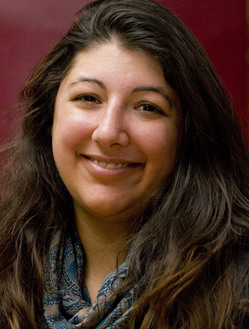
Angela Barbash
Tom Perkins | For AnnArbor.com
“This is about bringing money down to earth and closer to home and putting it to use in things that have an impact locally. It’s about realigning our values with what we’re doing with our money,” she said.
Reconsider wants to change the definition of a financial adviser and what they do for the clients, Barbash said. The ultimate goal and mission statement is to ”attract and engage people passionate about their community, education, and economics who want to support an independent, resilient, and sustainable local economy.”
Barbash’s disillusionment with the financial system grew while working as an advisor over the last 10 years.
Her career started as apprentice at Ypsilanti's A Green Financial as the country rebounded from the dot-com bust. The economy was humming, but Barbash's mentors and bosses at A Green were warning others that the housing bubble would pop, and the mortgage and stock markets would go down.
“People said to us ‘You are the chicken little people,’” Barbash recalls.
She subsequently moved on to a management position at the Edward Jones firm in Livonia. That’s where she was in 2008 when, as A Green’s brokers predicted, the markets crashed and her clients began losing massive amounts of wealth.
She began to question the advice Edward Jones was giving its clients, which she felt was bad for them. But when she took her questions to a managing partner, she got a response that set her on a path to the slow money movement.
"We don’t pay you to think, we pay you to sell," Barbash was told.
“So I got disillusioned with traditional financial firms,” she said. “They had to keep their clients in the market even though it wasn’t in (the clients’) best interest.”
Barbash returned to A Green Financial in 2009. The business is essentially a loose collection of independent advisers already offering their clients different advice than most firms.
But now she feels the financial markets are “at a pivotal moment” and a company like Reconsider could be a success.
“There are no firms that are talking about how things are changing in a very tangible way for people or what financial advisers should now be doing for people,” she said.
The first step is determining how people can invest in Washtenaw County’s economy, and she is working out of Ann Arbor's SPARK's SPARK East incubator in downtown Ypsilanti with an intern while the study is completed.
Aside from investing in the local economy, Reconsider suggests clients invest in gold and silver and advises on how to invest in personal security and wellness.
Barbash said the infrastructures that supply us with our basic needs are, like the financial market, not quite as reliable as they used to be. Reconsider advises that their clients be prepared to protect against a “worst case scenario."
“The systems that we rely on for food, water, energy, electricity; those systems are more delicate, more fragile than most people realize, and a disruption can cause you to not be able to get gasoline, food, or water,” she said. “It doesn’t take much for those systems to get knocked off calibration, and it could be weeks or it could be three months until they’re fixed.
“So we’re telling people that instead of putting money in an IRA, which is heavily rigged anyway, take that $1,000 dollars and buy food or a generator or something like that.”
The ideas are a significant departure from what people are used to doing with their money, so who would be open to such advice? Barbash said she visited a slow money conference in San Francisco in September that was attended by about 800 people.
She was one of 35 financial advisers in attendance, but was the only of that group who advised people on "Main Street." The others were advisers for accredited and wealthy clients, so she says the idea is already gaining some traction with wealthier investors.
But locally, and on a Main Street level, Barbash said the ideas appeal to people who are typically far to one end of the political spectrum and people who are “off the grid” as far as not owing any debt and becoming as self-reliant as possible. Others are people who may have lost a job or baby boomers who are beginning to see that there is a paradigm shift and are questioning the system.
The other type of client Barbash expects to attract are those interested in the local economies who already shop at the Ypsilanti Farmer’s Market, for example, or would be interested in investing Solar Ypsi or other such local projects that could benefit from alternative sources of funding.
“Clients and friends and contacts kept bringing up how disillusioned they were with the market and how they wish they could do something better with money,” Barbash said. “Clearly people want it but no one has cracked it on a financial advising level so I’m going to take a stab. I think there's something here.”
Comments
Kai Petainen
Wed, Jan 18, 2012 : 3:02 a.m.
This stuff is neat. I wish her the best.
Monica R-W
Tue, Jan 17, 2012 : 7:28 p.m.
For one, I FULLY SUPPORT Angela's idea and see where this can be a sound investment for us as a community to support. Pulling our money into corporations that have no real ties (for the most part) to communities they might operate within has been dangerous for our cities, towns, villages and counties statewide. We have some great small business here in Washtenaw County (and in other local Michigan communities) that have been doing their best to manage under financially challenging conditions. Many of these owners are making personal choices daily to keep their workers employed, while attempting to pay for mounting business and personal costs. I STRONGLY BELIEVE we need to pull our monies into supporting LOCAL businesses, as Wall Street has a variety of methods to stay afloat. For one, I plan on promoting Angela's business concept to at least 10 people I know. If everyone that reads this article would do the same, Reconsider should have a flood of new investors AND we'll gain re-stability again within our local communities, without Federal or State Government assistance! What a GREAT IDEA! You go Angela!
Angela Barbash
Tue, Jan 17, 2012 : 4:41 p.m.
I agree, this article could have been written better; it should not have come off as an advertisement and was not intended as such. There are quite a few points about our firm's philosophy that are not shared here, so I understand some of the criticisms. All investors should diversify -- that's the point. Brokerage and Retirement accounts have their place and time, and make sense for some but not all. In 10 years the majority of investors I've come across have put all their eggs in the stock and bond market baskets. We're simply asking people to look at the situation differently. Thanks for the feedback, positive and negative. Angela
getmoney
Tue, Jan 17, 2012 : 1:50 a.m.
How does this differ from reporting on a new Italian restaurant opening in Ypsilanti? Isn't that an advertisement also?
hank
Mon, Jan 16, 2012 : 4:37 p.m.
Pardon my error Jondhall suggested investing in rental property not T Kinks. Both had good ideas though.
hank
Mon, Jan 16, 2012 : 4:31 p.m.
T kinks suggested in investing in rental property and keep the money here. Not a bad idea if you have the money up front for down payments. Check out the credit unions as well for loans. This keeps the big banks hands off your cash as well.
braggslaw
Mon, Jan 16, 2012 : 4:25 p.m.
Wow, be careful who you listen to out there.... This advice is a bit out there. I have no intent on subsidizing local business. If they are competitive and deliver a quality product, I will buy their wares.... if not, no chance. Make wise decisions, diversify, and never put all your eggs in one basket.
hank
Mon, Jan 16, 2012 : 4:21 p.m.
It must be all the investment /fiance types took the day off and landed on this site. I applaud Barbash for her thinking out of the box to enhance the economy locally and deprive wall street of gambling cash and investment money for China.
lkurtz
Mon, Jan 16, 2012 : 4:14 p.m.
I'm taking issue with the most popular comment, not about the story, but about social security. Why do you think it won't be around in 20 years? What do you think older people, no longer able to work, will do without it? I used to say things like that about 40 years ago and guess what, social security is more than half my retirement income. I would not be retired if not for that program.
Goober
Tue, Jan 17, 2012 : 11:12 a.m.
If you're concerned that SS will not be there when you retire, get a government job (local or federal) where your pension will be guaranteed and large compared to most others.
William Flewidity
Mon, Jan 16, 2012 : 10:22 p.m.
Vettedrivers comments about soc. sec. and medicare running out of money are accurate. The comments he made about amnesty to illigals and people living longer are great points I never thought of. Had I given any thought to this topic 40 years ago it would not have been a legitimate fear. Then you knew soc sec would be around and that pensions were a reality. These days you need to look out for yourself! Well said Vette.
Vette96drvr
Mon, Jan 16, 2012 : 7:23 p.m.
I should also add, I do keep an open mind and consider any options where money is involved. The problem I have with this approach, is either the writer left out some very important details to Ms. Barbash's strategy or it simply WILL NOT provide a retirement income for anyone but the farmer. I stated at the end of my original comment that if I was missing something would she please fill me in on what I am not seeing that makes this plan a good idea for investors and not just farmers. I would love to keep my money local if it would grow the same as it does where it is currently invested! I myself am a small business owner and can relate to the struggles of the "little guy".
Vette96drvr
Mon, Jan 16, 2012 : 6:27 p.m.
Ikurtz, I wrote the comment you are referring to. Medicare is projected to run out of money in 2024. Social security will be broke in 2036. That is at the current pace and does not take into account such things that could happen like amnesty for illigal aliens that would make them citizens and eligible to draw on these programs. Government continues to raise the age and lower the benefits collectable in these programs. They are paying out more than they are taking in and with advances in health care likely to extend the life expectancy of many retiring baby boomers it will only get worse than projected (in my opinion). The goverment forces me to pay into these programs with an empty promise I will get something out of them someday. I could do better investing the money myself, after all, I have never run out of money like the goverment and had to tax/charge more for my services or borrow to get by, nor have I ever received a bailout. As a kid I grew up in poverty, even being homeless in my teens due to my parents inability to budget. My goal in life was to be a millionaire by 40. I will miss that goal by about 2 MAYBE 3 years. I have managed all my own investments and money. The government is going to tell me what is best for my money and force me into paying into a dead program like social security??????? I think their track record compared to mine proves who is better at that. I was all for the privitization plan! Let people control their own future as government can't handle it and is not qualified!!!!!
Think!
Mon, Jan 16, 2012 : 4:38 p.m.
For those of us not even close to retirement age, there is a real possibility that Medicare and Social Security will not be much of a safety net. The quagmire that is our present political system is intent upon gutting both of these programs for various reasons. When changes to the system are mentioned, they always include a cut off age which secures the present system for many. It's great that you are able to use your safety net but for those of us that are paying into the system and won't get the same net in the future, it leaves us angry, disillusioned, and scrambling to save for a future that might include useless medical vouchers and a retirement age of 85.
u812
Mon, Jan 16, 2012 : 4:02 p.m.
My small ten year 401K is a joke to wall street, I would have fared better with lotto tickets.
T. Kinks Heiss
Mon, Jan 16, 2012 : 2:03 p.m.
I can't believe all the negative comments on here. The main point I'm getting is take your money out of Wall St. I agree 100%. My small $7000. IRA mutual fund went down $2000 in the last quarter but the statistics show corporations are making more money than they ever did. I think she's really on to something here & I will be looking into alternative investments. The rest of you naysayers can leave your money where it is & keep losing it.
Monica R-W
Tue, Jan 17, 2012 : 7:44 p.m.
The naysayers are the typical bunch that comment on nearly all of Ann Arbor.com articles that FULLY SUPPORT the failed investment concept of Wall Street that amounts to a modern day Ponzi scheme. You, little small investor, put your money into a 401K or IRA. You must invest heavy in stocks when you're younger, a mix of stock/bonds in your middle working years and bonds/money market CD's in your last years of work. Meanwhile....we, without telling you, will funnel your money into wherever we like. Why, because we are required to only provide you a financial accounting statement, quarterly. With that, we could put your money anywhere in between those 90 days and you won't know. Nor, in most cases....will you ask. Now, when the market does its seven, eight or more drops of 100 + points per year...we'll tell you that you just need to give us MORE of YOUR HARD EARNED MONEY and change your 'investment strategies'. Thank you for the additional funds as we are going to continue doing the same to you (as described above) over 30 + years. When you retire, only then you'll learn that you have been a victim or a 30+ years or so modern day Ponzi Scheme. Meanwhile, we are slipping on Pina Coloda's in the Greek Island's with your money. I think looking at that, Angela's Reconsider business concept, make more sense on where to invest my money. Thanks Angela!
Angry Moderate
Mon, Jan 16, 2012 : 11:21 p.m.
And what return did electrical generators and fresh veggies make last quarter?
pseudo
Mon, Jan 16, 2012 : 10:52 p.m.
get better financial advice. My IRA did nothing like that in the last quarter.
hank
Mon, Jan 16, 2012 : 4:26 p.m.
Not a bad Idea,you control your own and no preposterous fees for moving paper around.
jondhall
Mon, Jan 16, 2012 : 1:45 p.m.
I have a sound idea , built on long standing financial principles. Invest in rental real estate now that prices are depressed and slowly grow rich ! It works I have done it and continue to do so. Many of my friends have or are doing the same thing . Leave the farming to the farmers . Get ahead think out of the box .
Thomas
Mon, Jan 16, 2012 : 8:27 a.m.
A better idea would be to set up local micro loans for business owners in the area, that employ people locally, sell goods and services locally, and have an impact on the community directly. I'm with others here in that I'm not sure what giving my money to local farmers will do for me. Encouraging local entrepreneurship and creating jobs locally will getting a return on investment is a better idea.
Goober
Mon, Jan 16, 2012 : 11:51 a.m.
If this is similar to many of the local businesses and companies that have since closed, I would consider this to be similar to high yield, corporate bonds that share high risk. In fact, with many of these small start-up businesses, the risk of a future bankruptcy is even higher. Not a good use of my hard earned money, if you ask me.
Usual Suspect
Mon, Jan 16, 2012 : 4:05 a.m.
"An arrangement could hypothetically work by investing in local farms, and in return the investor gets a set amount of fresh food every week. That way farmers have a guaranteed source of income and the investor has guaranteed food." That's not investing, that's buying. The only difference between that and farmers market is you pay in advance.
getmoney
Tue, Jan 17, 2012 : 1:53 a.m.
Drought hits and the crops don't come in, whatcha buyin,' then?
janeqdoe
Mon, Jan 16, 2012 : 3:46 a.m.
So we should all pull out of the markets because somebody from Ypsilanti thinks its a good idea... I get it now.
Tony Livingston
Mon, Jan 16, 2012 : 2:13 a.m.
The best way to invest locally is to buy real estate. There are some fantastic buys out there for those who can handle being a part time landlord. I bought 15 years ago and my friends are paying half of what I paid. That is without even mentioning the low, low interest rates that are readily available.
Useless
Mon, Jan 16, 2012 : 2:10 a.m.
Buy food or a generator? Really? She wants me to pay her for this advise?
pseudo
Mon, Jan 16, 2012 : 1:55 a.m.
I'm a big one for investing locally and supporting locally grown foods,the farmers who grow food locally. I believe strongly in shopping locally. I believe in Ypsilanti as well. But the advice in the article above not is not competent financial advice. It just isn't.
thinker
Mon, Jan 16, 2012 : 1:45 a.m.
Wouldn't this have been more appropriately placed in an advertising section of AnnArbor.com and paid for, than written up as news?
Angry Moderate
Mon, Jan 16, 2012 : 1:14 a.m.
I wish her good luck when she gets sued for malpractice. The gold bubble can pop just like the housing bubble popped, and investing all of your money in similar businesses in a small geographic area is NOT enough diversification.
Angry Moderate
Mon, Jan 16, 2012 : 1:11 a.m.
She thinks that perishable food from the Farmer's Market is a replacement for retirement savings? And we need to buy a generator and stock up on food? This should be a paid advertisement on one of those militia-type conspiracy theory talk shows, not a news article.
EyeHeartA2
Mon, Jan 16, 2012 : 12:26 a.m.
Angela; You forgot to mention what kind of car you drive?
InsideTheHall
Mon, Jan 16, 2012 : 12:09 a.m.
After 6 months do you get a discount to join the commune???????? History always repeats itself....ah 1966 is comin back, pass the pipe this way.
a2baggagehandler
Mon, Jan 16, 2012 : 12:09 a.m.
"So we're telling people that instead of putting money in an IRA, which is heavily rigged anyway, take that $1,000 dollars and buy food or a generator or something like that." You can never have enough guns and ammo.
Vette96drvr
Sun, Jan 15, 2012 : 11:58 p.m.
Heres my question. You stated that "......... investing in local farms, and in return the investor gets a set amount of fresh food every week. That way farmers have a guaranteed source of income and the investor has guaranteed food." I could go out and buy food from the farmers market anyway and feed myself and still support local farmers. Additionaly, I can only eat so many vegetables. How will investing in local farms in trade for fresh food pay my bills and help to support me when I retire in 20 years. Social security will not be around then, how do I pay my property taxes and utility/medical bills. I may be really healthy from all the fresh veggies I ate over the years but what good is that if I have no retirement income? Maybe I am missing something here, if so, please fill me in.
Steve
Sun, Jan 15, 2012 : 11:19 p.m.
......and this is news because.....? I urge all Wall Street investors to reconsider their current method of diversification and invest 10% in......me. It may not get them any return on their investment either....but maybe annarbor.com will come and interview me too.
Kai Petainen
Wed, Jan 18, 2012 : 3:08 a.m.
Craig -- that was an excellent answer.
Steve
Mon, Jan 16, 2012 : 1:37 p.m.
Haha, Craig. No problem. I support your approach to wise investing!
Craig Lounsbury
Mon, Jan 16, 2012 : 3:42 a.m.
I won't invest in you Steve, but i might day trade you. It depends on what you open for on Tuesday and what sort of volume I see. If I decide to short you please don't take it personally.
Linda Peck
Sun, Jan 15, 2012 : 11:13 p.m.
We definitely need to keep our money at home! Certainly, we need to support our local farmers and businessman, at the very least. What money I have after paying my mortgage will not go to a large corporation run from China or Germany, but will be kept here close to home. If I find a go way to invest to locally, and I will be watching Ms. Angela's efforts, I will do it. I think there are quite a few people who feel this way. A person does not have to have a large sum of money to make a difference in our world here.