

Obama's clean energy goal is 'close to impossible,' University of Michigan's Stephen Forrest says
President Barack Obama's goal for the U.S. to get 80 percent of its electricity from clean energy by 2035 is unrealistic, the University of Michigan's top research executive said.
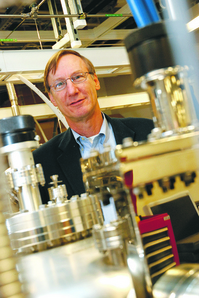
University of Michigan Vice President for Research Stephen Forrest
"It's a huge challenge, one that we are all striving to meet, but it's all based on cost, availability, shifting completely from an oil-based economy from a fossil fuel based economy," Forrest said, according to an interview U-M posted to its website.
"So no, I don't think it's likely. I think it's very good to have an aspiration, but we need to have aspirations that are within reach."
Obama laid out his renewable energy goals in his State of the Union address in January.
"Some folks want wind and solar. Others want nuclear, clean coal and natural gas. To meet this goal, we will need them all -- and I urge Democrats and Republicans to work together to make it happen," Obama said.
Forrest said energy conservation and efficiency improvements are critical ways to reduce fossil fuel energy consumption while renewable energy technology advances. He has been a big proponent of the university's clean energy technology research.
"When you think about the challenge and the opportunity here, there's no larger challenge and opportunity than to come up with methods of energy, conservation and energy generation that are sustainable," Forrest said.
Forrest said he's encouraged by improvements in solar energy technology, including the organic solar cells his lab is developing. For now, solar energy produces electricity at four to five times the cost of traditional energy sources.
"The cost structure is coming down because people are manufacturing more and more solar. It's actually coming down very rapidly," Forrest said. "But it's still very, very difficult to see how we will get through fossil fuels parity in cost within the next, let's say, five years."
Contact AnnArbor.com's Nathan Bomey at (734) 623-2587 or nathanbomey@annarbor.com. You can also follow him on Twitter or subscribe to AnnArbor.com's newsletters.
Comments
PhotonHQ
Fri, Mar 18, 2011 : 3:09 p.m.
President Obama's call for 80% renewable energy by 2035 seems very aggressive. I'm reminded, however, of the observation that progress is often overestimated in the short run but underestimated in the long run. Solar energy for years seemed to many to be far too expensive to compete with traditional energy sources in the next few years. Two trends, however, are causing many professionals to reconsider. First, conventional fuel prices are rising in the face of increasing worldwide demand. Second, solar equipment and installation prices are falling. The solar industry has developed to the point that it realizes it must compete with fossil fuel alternatives. While solar continues to be expensive, the utility Southern California Edison claims that it is now buying solar power under contract at prices lower than Combined Cycle Natural Gas. Industry analysts are confidently predicting that by 2016 the cost of solar energy in locations with good sunlight (e.g. the U.S. Southwest) will be competitive with traditional fuels. Perhaps 80% by 2035 is aggressive. Renewable energy sources, even when less expensive, have the problem of intermittency. There are, however, signs of optimism that the President's vision might come true.
Dennis
Tue, Mar 8, 2011 : 5:19 p.m.
Amazing ! "Can't be done". "He's just a visionary" "Democrats are at fault" "Drill for more oil" Looks like the same old whining from our conservative base. Have you all forgot so quickly what happened in the Gulf Coast with BP, or even closer in Kalamazoo. Maybe 3 Mile Island doesn't ring a bell. Sure nuclear power can be safe, but what is wrong with research for alternative power, or research that would allow us to capture solar, wind, clean coal, etc.. The point is, NOTHING is impossible otherwise there would be no rail system, no airline industry, No automobile industry, we'd still be using candles and oil lamps instead of flipping a switch. Even Hydrogen would be a plausible alternative fuel and it would be better than oil, or even natural gas. All anyone can do is try.....set the goal high and go for it. The country will be better off for making the attempt.
Wolf's Bane
Mon, Mar 7, 2011 : 5:32 p.m.
Use coal. Dirty, filthy coal. Yum!
tim
Sat, Mar 5, 2011 : 11:39 p.m.
Sounds like some people here suffer from Eeyore syndrome --- auto makers from around the world have been developing hydrogen fueled cars, they must have some faith that a cheap source hydrogen can be developed.
Dcam
Sun, Mar 6, 2011 : 3:48 p.m.
brag, you are one negative person, aren't you? You talk of expensive precious metals and membranes in fuel cells, but how about the precious metals in the expensive catalytic converters and light-offs for IC engines? Some converter substrates cost OEMs $400 each, none that cost less than $150 each, and there are many systems that have 6 or more substrates per exhaust system. And you certainly like to narrow the possibilities - right down to: it can't be done - no how, no way. An odd can't do attitude from one who claims the best years are ahead.
braggslaw
Sun, Mar 6, 2011 : 12:18 a.m.
Sorry you are ignorant The hydrogen comes from cracking methane which releases carbon The fuel cell uses an expensive membrane and platinum as a catalyst Itnis amazing how little people know
Dcam
Sat, Mar 5, 2011 : 6:41 p.m.
People don't like hydrogen, they don't like batteries, they don't like biomass - what do they like that will fit their needs? Oil, of course, but no one believes that it will last forever, and no one can deny it's environmentally unfriendly. It's also vastly overpriced, given crude is a natural resource - and natural resources, according to Adam Smith, should never be privately owned and controlled. Water has a much more complicated infrastructure than oil, and it has to be treated before and after use - petroleum just slops around when its pumped and slops around when it's used and slops around when it's returned to the environment, and no one has to clean petro-messes up - but if forced to, they do a slip-shod job while profiting from their messes and blunders. The answers are coming, but they'll take open, creative and brilliant minds to do it - we have such men and women in this country. Perhaps quantum mechanics holds the answer - maybe photons. After all, photons hold an energy charge for 100s of millions of years - a super-duper capacitor waiting to be harnessed by somebody for our energy needs.
braggslaw
Sat, Mar 5, 2011 : 4:48 p.m.
Hydrogen... ha ha ha 99% of hydrogen is created by cracking methane. .... which releases guess what CARBON. I am waiting to hear the liberal non-scientfic crowd start talking about how water is so abundunt and how we could get hydrogen from wahter blah blah. Water has to be split with elecotrolysis which guess what... uses electricity.... Unless you are going to invent fusion or use existing fission reactors it is an enormous waste of energy you might as well directly use the electricity from fossil fuels rather than cracking hydrogen...
Dcam
Sun, Mar 6, 2011 : 5:28 p.m.
I'd say my University of Wisconsin BSME/IE gives me some authority, and given I've designed 100s of dies and assembly machines over the years, saying nothing of large scale data collection and processing systems makes my statements reasonably valid. Find Ann Arbor News from February 1992, you'll find a lengthy interview with me, and you'll find that my statements were correct then and proven by what's happened to manufacturing and Michigan. And attitudes like yours is why. Your blanket statements are unsubstantiated dogma from one who's never tried.
braggslaw
Sun, Mar 6, 2011 : 5:01 p.m.
this is my last post on this subject "Quick change battery" Yeah right... af $15,000 battery embeded in the center of a vehicle weighing thousands of tons. What you propose compromises the structural integrity of a vehicle and is not financially feasible. OEM's (at least this decade) will never do what you propose and frankly most I know have laughed at it. I can see you know little about the business and little about engineering. Thrown around a few key phrases and pretend. for modularity.Good luck
Dcam
Sun, Mar 6, 2011 : 4:51 p.m.
Of course fossil fuel generates electricity, that's not going to change for quite some time, and neither is getting heavy equipment and working trucks off the IC engine going to happen quickly. But, control of energy efficiency at a central generating plant is more predictable and doable than maintaining 100s of millions of individual vehicles efficient. Pollution is more controllable, as well centrally. As to batteries, there will be quick-change stations where one doesn't charge a battery but swaps it - much like a Jiffy-Lube, a robotic 5-minute battery swap. Batteries will have a one time lease license at the vehicle purchase, from then on swaps and charges for energy used. The batteries will be made of block modules for easy checking and replacement of weak or non-working modules. The motors will be part of the wheel and contain controllers and sensors as needed. They'll be mounted on quick-change couplings similar to tool holders on machining centers, making the vehicle frame and suspension quite simple, compared to now. And there will be no drive-train, except the wheel-motors themselves, which will be built similar to mag-lev, only round instead of linear. Shocks and springs will work as linear generators, producing current with every bump in the road, making poorly maintained roads beneficial for increased mileage per charge. Grills would be air ducts for small turbines rather than radiators, which would generate power when the vehicle is moving at a reasonable rate, especially highway speeds. Again, no cost in energy - in fact, it would reduce drag. A vehicle like that could be on the road within a year, and it would not be any more expensive than a typical passenger car. The infrastructure would take time to catch up, but when the need is there, it'll follow quickly. The only things I'm unclear about with electric vehicles are air conditioning and heat, two things that consume a lot of energy.
braggslaw
Sun, Mar 6, 2011 : 3:45 p.m.
A "few" hydrogen fuel cells? That is the main research thrust of most automotive OEM's when using hydrogen. BMW ran a comubustion H2 engine, it was far less efficient than a fuel cell, but cheaper. Batteries are expensive right now LG, Panasonic A123 all make a decent lithium batery but they are not commercially viable. OEM's will make a few hundred thousand cars to pacifiy the far left but there will not be a significant migration until batteries are cheap. BUT youare missing the main point. We. burn goal, gas, and have fission reactors to make electricity. The ultimate source of the super majority of electricty is fossil fuel. Unless you have an idea for cold fusion ...
Dcam
Sun, Mar 6, 2011 : 3:35 p.m.
They talk hydrogen fuel cells, and there are a few hydrogen fuel cells, but the ones promoted are the hydrogen IC engines - such as BMW and Mercedes, and for good, economic reasons. The same goes for the NG alternative for IC engines. Hydrogen fuel cells have been played with for many decades, even Case built a tractor using a fuel cell back in the '40s. Fuel cells will have a future, but they will be oxide fuel cells, not hydrogen. 150 years fiddling with hydrogen fuel cells and not bringing them to market is a bit much. Of course fuel cells run electric motors, but that's not going to be the motive force to get electric vehicles on the road to replace the IC engine, batteries are - but not the way UofM, GM, Ford and Chrysler are going about it. The 2 billion dollars for R&D for them is money down the hole.
braggslaw
Sun, Mar 6, 2011 : 1:32 p.m.
Most hydrogen for vehicle traction uses a fuel cell not hydrogen combustion Wrong again The fuel cell generates electricity to ....guess what....to drive an electric motor Unless you can find an energy tree to shake in the back yard gas coal and nuke are the only practical options
Dcam
Sun, Mar 6, 2011 : 12:54 p.m.
You presume that I'm a fan of hydrogen - I'm not, execpt in a hypothetical fantasy. There is a major problem with hydrogen besides getting it - it still uses the abysmal internal combustion engine in most scenarios, and that has got to change. The electric motor is the future, and the motive force for it is the only problem at the moment, and that problem is not insurmountable. Many designs are workable and at reasonable costs, and they are sustainable. What's insurmountable is the trillion dollar a year IC engine revenues that drive the economy world-wide in OEM and after-market sales. And given the OEMs and major suppliers are owned by the same people via acquisitions and mergers, getting them to look to alternatives is one major draw back to progress. Another critical drawback is the oil cartel. They put on shows, but don't expect them to actually do something. We need a whole new set of players if change is really wanted, but with governments generously supporting the old regimes, that's not going to happen.
braggslaw
Sun, Mar 6, 2011 : 12:20 a.m.
You miss the point Fossil fuels generate the electricity to split water You might as well use that electricity.......as electricity
Dcam
Sat, Mar 5, 2011 : 5:52 p.m.
And just what fossil fuels don't use vast amounts of energy for discovery, drilling, transporting, refining, transporting and pumping at the gas station? Exactly how much energy is consumed making a batch of regular gasoline from well to pump? And what about the 116 pounds of polluted air per gallon (based on 15.5 pounds air per pound of gasoline) going out the tailpipe? Doesn't that count for something? Finally, answer this question. Why does the price at the gas pump skyrocket but the price of petroleum jelly does not? It comes from the same crude.
tim
Sat, Mar 5, 2011 : 3:52 p.m.
It's not out of reach but we're going to need a silver bullet to pull it off ( cheaply produced hydrogen).
Diagenes
Sat, Mar 5, 2011 : 3:27 p.m.
The republican position has always been "all of the above" when it comes to energy production in the U.S. Let the free market determine which source is most cost effective in the long run. The people of Alaska want to drill for oil and gas in ANWAR. The people of Louisianna want to increase production in the Gulf. Build big wind turbines off the coast of Marth's Vineyard. Let the states decide what is best for them. President Obama's top down central planning style will not work in a country that spans 6 time zones (remember Hawaii) and over 300 million people. What substance will fit in a tea cup and can raise 1000 lbs. 1000 feet in the air? oil
Dcam
Sat, Mar 5, 2011 : 3:58 p.m.
What substance takes three gallons to effectively utilize one gallon, not counting the gallons consumed making it consumer ready? Answer: Internal combustion engine gasoline and diesel fuel. Even the best of IC engines pump about two gallons out the exhaust pipe in wasted energy for every gallon that produces effective energy. Nobody would buy three gallons of something to dump two on the ground, but 100s of millions of motorists do it every day at the gas pumps. Dr. David Cole said alternative fuels are against the laws of physics, given either the volume of storage required or the weight or the lack of effectiveness. (oddly enough, he's been given a major role in battery development, in spite of his years of nay saying about them.) But, that's not a law of physics - it's lack knowledge about alternatives. E=MC2 is a law of physics, assuming physicists haven't rewritten it, which means there's are many forms of energy between rubbing two sticks together and an atomic bomb. We won't find the alternatives without first looking, and not many willl look when those in charge start with the postulate that it's an impossible task, compounded with a plethora of reasons why it won't work even if found. Robert Goddard was ridiculed for his liquid fuel rocket - scientists and the NYTimes said it would never work in a vacuum and he should go back and take a course in physics so he understood the problem. Obviously, the NYTimes and the laughing scientists were wrong.
catfishrisin
Sat, Mar 5, 2011 : 3:07 p.m.
One man's opinion. There are other researchers who are more optimistic.
KJMClark
Sat, Mar 5, 2011 : 1:42 p.m.
Peak Oil. This goal is not about climate change, though the aspirational goal is to meet the two challenges combined. The real problem is peak oil. Notice that oil prices have been almost constantly rising since 2001. The only thing that made them fall was the worst recession since the Great Depression. We will continue to play this game of painfully high oil prices crashing the economy, temporary relief, then repeat, until oil is only used for the military, agriculture, and a much smaller air travel sector. Pretty much everything else has to be off of oil in the next 20 years. So, we need a massive expansion of alternatives, and a drastic change in our happy motoring lifestyle. Eventually even climate change deniers will give up and this country will have to deal with climate change. We'll get enough extreme weather that the rest of the world will impose tariffs on us if we don't deal with the problem. So eventually we'll have to move to renewables and nuclear. We might as well get started now.
braggslaw
Sat, Mar 5, 2011 : 12:29 p.m.
BioMASS is a pipedream. not enough output to really effect our use of oil. Plus people don't understand the huge amount of water that goes into making a gallon of bio-diesel or ethanol. Nuclear works but it's cost per Kilowatt hour is more than natural gas or coal. Solar....ha ha ha ha Wind... maybe in some area. But be prepared to pay a lot of money. The only practical source of electricity is shale gas and Michigan is loaded with it. As fossil fuels go it is the best and it is plentiful in North America. Driving electricity prices up an order of magnitude will ruin the country. there will be no manufacturing and the cost of doing business will go up.
WhyCan'tWeBeFriends
Sat, Mar 5, 2011 : 2:32 a.m.
Thank you for removing the racist and condescending comment that was posted at 8:20PM. I logged in specifically to reply to that commenter. Every one of us can disagree with President Obama on every topic, but show some respect. If anyone here thinks they can do a better job in the highest office in our country, please step forward and put your name on the ballot.
braggslaw
Sat, Mar 5, 2011 : 2:09 a.m.
Duh....most of his ideas are impractical or will financially ruin the country
Jeff Westbrooks
Sat, Mar 5, 2011 : 1:26 a.m.
Only is nuclear is included in the definition of clean energy will that goal be possible. If we actually want to reach this goal by 2035 we can do it. Michigan could be on the forefront of this if it weren't for our new luddite Governor Snyder. He's no nerd, he's but one of the herd. Michigan could be carbon free by 2023!
DonBee
Sat, Mar 5, 2011 : 1:58 a.m.
Please tell me how Jeff. Please? I would really like to know. No gasoline, no diesel fuel, no coal, no products manufactured using any of them? Permitting alone for the transmission lines to move the electricity will take longer than that. Then there are all the lawsuits that will crop up from wind power and .... It is not a technology issue. It is a regulatory/political/business case issue.
jcj
Sat, Mar 5, 2011 : 12:24 a.m.
And the democrats answer is you can't drill in our country!
jcj
Sat, Mar 5, 2011 : 2:28 p.m.
Dcam Interesting data. I guess the bottom line for me is this. When the average person is pitted against big oil executives, crooked or inept politicians, foreign oil interest and over the top environmentalist. I loose every time. We certainly need to find affordable alternative ways to provide energy. But when that happens it won't take long for a different set of greedy people to line their pockets.
Dcam
Sat, Mar 5, 2011 : 1:22 p.m.
jcj, that depends on what day of the week it is. When there's nothing in the news to get attention, API says it's the lack of refinery capacity that keeps the prices rising - after all, they're running at 92% capacity, they claim. And any refinery disruption causes an imediate price increase because of that. When there is news - or good rumor - the prices rises because the market is nervous about crude supply disruption, with the needed price increases to make sure it flows. Other times it's the unanticipated holiday driving seasons, unanticipated cold weather, or other unanticipated recurring reason that causes the prices to climb. For my data I happened to have the API production tables from 1947 through 2002, and it includes crude delivered refined and distributed. Unfortunately, after 2002 API no longer makes this table available to the public. It also has the running totals of refineries in operation for the years, and 1985 is a benchmark - as that's when the massive dismantling of them began, when they were running at 68% capacity. Here is the table from 1979 to 2002. Notice the crude bbls, refineries and capacity - especially during the mid-80s. The columns are: year, refineries online, crude, refined, percent capacity. 1979 308 17,441 14,955 84.4 1980 319 17,988 13,796 75.4 1981 324 18,621 12,752 68.6 1982 301 17,890 12,172 69.9 1983 258 16,859 11,947 71.7 1984 247 16,137 12,216 76.2 1985 223 15,659 12,165 77.6 1986 216 15,459 12,826 82.9 1987 219 15,566 13,003 83.1 1988 213 15,915 13,447 84.7 1989 204 15,655 13,551 86.6 1990 205 15,572 13,610 87.1 1991 202 15,676 13,508 86 1992 199 15,696 13,600 87.9 1993 187 15,121 13,851 91.5 1994 179 15,034 14,032 92.6 1995 175 15,434 14,119 92 1996 170 15,333 14,337 94.1 1997 164 15,452 14,838 95.2 1998 163 15,711 15,113 95.6 1999 159 16,261 15,080 92.6 2000 158 16,512 15,299 92.6 2001 155 16,595 15,369 90.6 2002 153 16,785 15,167 90
jcj
Sat, Mar 5, 2011 : 3:53 a.m.
I am not an expert on this but I think that the bigger problem is not refinery capacity so much as crude oil prices.
Dcam
Sat, Mar 5, 2011 : 2:04 a.m.
At the last check, there are at least 3000 permits to drill on leased oil lands in the US, and the eco-freaks are not contesting them. Why haven't they drilled? Why have they dismantled over 250 oil refineries over the past 25 years, but they then complain that the last one they've been able to build was back in 1978, implying that that has caused lack of refinery capacity? Two years ago both Marathon and BP boasted they were investing $5 billion dollars each to upgrade and improve production capacities at their refineries in Texas and LA. But, two years later, nothing has been done and those investments haven't been made. Why? The same with the electric grid upgrades. CMS Energy talked the state into giving them ownership of some of the Dunes on Lake Michigan for building a new power plant in about 1990. But, following the blackout of 2002, CMS Energy said they didn't need more plants and CMS shareholders would be better served by using that property for development for executive retreats. Why? The fact is, when one has control of the supply of a steady demand critical commodity, it's natural to maintain the supplies at the minimum to ensure the highest prices. Cartels and monopolies can do it easily, and they do.
Townie
Sat, Mar 5, 2011 : 12:22 a.m.
And the Republican answer: do nothing, just keep doing what we're doing. Duh. Obama may not have all the answers but we need to move away from oil, etc. - it's obvious.
Heardoc
Sat, Mar 5, 2011 : 1:25 a.m.
Republican answer -- do the correct thing -- do not listen to foolish people who have not a clue as to what they speak of -- Drill Baby Drill! Oil is too high due to the dems and leftists - just ignore folks like you and this country will return to the greatness it has always enjoyed until the likes of you showed up..........
Tarlach
Fri, Mar 4, 2011 : 11:49 p.m.
"Can it"? Sure. "Will it"? No way.
xmo
Fri, Mar 4, 2011 : 11:35 p.m.
Oil, gas, coal and Nuclear are renewal sources of energy! Why don't we use them?
Bogie
Fri, Mar 4, 2011 : 11:29 p.m.
These days are very reminiscient of the Carter years. Gas prices going through the roof, unemployment hovering at 10pct, and a President making unrealistic energy policies. Hang in there folks, maybe we can muster up another Reagan. A leader, who will let the market decide what is most viable. The global warming gig is up- scientist lying. Oh, I'm sorry, the new term, "climate change." They had to change it, after we had the second coldest winter last year. If you think carbon dioxide is a pollutant, you should stop exhaling, and save our world.
Dcam
Sat, Mar 5, 2011 : 2:21 a.m.
Your faith the market is somewhat misplaced. The market demands immediate returns on assets, it cares not for risky, potential returns on R&D - why do you think they're all dumping R&D onto taxpayers via the research universities? In fact, I can give you several quotes from Ford and Borg-Warner that clearly say that it's government's job to figure out what's needed, and it's government's job to pay for it - but it's for the corporate world to market the products, because they know how to do that. But, shareholders shouldn't have to take risks on long-term R&D, that's for government to do. These are not the adventuresome days of the doers who built great industries from the ground up - we've got risk-adverse, old-ladies in the corporate boardrooms today. And they hate risk, to say nothing of their limited vision of what's possible.
Keith A. johnson
Fri, Mar 4, 2011 : 10:47 p.m.
I respect this Gentlemans remarks, but what if we took the same attitude when J.F.K. put forth the challeng to "put a man on the Moon and return him safely to Earth, BEFORE the end of that Decade". These are the challenges that are supose to inspire us to accomplish. Is that what this generation is lacking? A willingnous to take on a tremendous challenge? And right from the get go say, nope it can't be done. Then lets just go ask the Chinese to do it. They already are the Second largest mfg of solar panels..
jcj
Sat, Mar 5, 2011 : 3:37 a.m.
OK maybe "impossible" was a little over the top. But to use your logic what was so great about the last generation? The atomic bomb? The automobile? The horse and buggy had already been invented as a foundation! Internet? Why, I was on an internet of sorts back in the early 60's, it was called CritiCom - somewhat specialized, but it certainly connected me to the world. Yes but so did the telephone and it had already been invented. And they had the telegraph as a foundation. The previous generation of geniuses used to put butter on a burn. I think the medical field in particular has made the last generation look like cave men. Every generation has had the previous generation to lay a foundation of sorts. I really do believe the last generation was responsible for some great things but they also laid the foundation for many of the things that are wrong in the world today. No generation has a monopoly on ingenuity. But to make light of the things this generation has accomplished is wrong. BTW I am getting precariously close to being part of the last generation.
Dcam
Sat, Mar 5, 2011 : 1:22 a.m.
jcj, what are these impossible things your generation come up with everyday that haven't been done years and decades ago? A few enhancements, a few improvements perhaps, but very little that hasn't been done 70 or even 80 years before. Automation? They had electronic automatic machinery back in the 1920s, controlled remotely through telephone lines. Numerical controlled (NC) machines have been around 60 years, and computer automated machining has been around nearly as long. CAD/CAM's not new, and the current generation didn't create it. Internet? Why, I was on an internet of sorts back in the early 60's, it was called CritiCom - somewhat specialized, but it certainly connected me to the world. It's a lot easier building on someone else's foundation than starting with nothing but a vague idea and then having to make it from scratch.
jcj
Sat, Mar 5, 2011 : 12:10 a.m.
"Is that what this generation is lacking? A willingness to take on a tremendous challenge?" What a ridiculous statement! Look around you. Do you see all the technology ? Which generation did it come from? This generation comes up with the impossible every day.
zeeba
Fri, Mar 4, 2011 : 10:32 p.m.
It's amazing how many people here seem to be taking Forrest's remarks as saying renewable energy is a waste of time - far from it. He's just saying 80 percent by 2035 is too ambitious and that he would prefer a more realistic target. The way politics works, though, you have to set a target of 80 percent to get to 50, because you have to fight off all the flat-earth types who would prefer to keep it at zero. Let's face it, even 25 percent renewable would be better for the environment and would save us a bundle of money, given that the developing economies of China and India are going to be increasingly bidding up the price of oil and natural gas. It's an energy source and it's cost-efficient - let's use all we can.
Heardoc
Sat, Mar 5, 2011 : 1:23 a.m.
You are just silly-- the enviromental costs re too high for renewable energy. Food prices are soaring due to ethanol, electric vehicles are powered by coal -- and the Volt, appears to be a big loser-- and wind energy creates such an eyesore that most people do not want to see these (Ted Kennedy kept these out from his view of the Atlantic) and the hypocrisy of the left is comical -- as noted with Teddy. Let's face it -- this is just another boondogle of the left that will amount to no savings and no improvement in the environment and may in fact harm the environment like the CF bulbs do with the mercury vapors when they break. Such silliness from you.........
gsorter
Fri, Mar 4, 2011 : 9:40 p.m.
I'll never understand how solar will replace much of our electricity. At 100 watts/ square meter, it seems like a lot of square meters to power much of our country. It's also crazy to burn food in our tanks, so ethanol and biodiesel are likely dead ends. Food inflation quickly leads to rioting. Much of the turmoil in the Middle East started from massive grain price increases. Nuclear and natural gas seem to be the way to go. We've got a glut of natgas. Next time you are at the Meijers gas stations here, notice the price at the DTE natural gas fuel pump, about $1.95 a gallon, almost half of regular gas, for the same mileage, 40% less CO2 as well
Plubius
Sat, Mar 5, 2011 : 5:07 p.m.
Insolation is 1370 w/m^2 - the issue is our ability to convert it into useful energy. There are photovoltaic cells in the national labs which are converting >40% of this power, but they are not ready for commercial application.
zeeba
Fri, Mar 4, 2011 : 10:34 p.m.
per ethanol, it makes no sense to use corn as we are now - it's just plain wasteful - but there are other biomass crops that offer potential.
poohbah
Fri, Mar 4, 2011 : 9:04 p.m.
I remember reading someplace that France gets 80% of its power from nuclear sources (Don't quote me -- but it was a pretty hefty percentage). If we were not as a nation so frightened of nuclear power, Obama's goal might be reachable. Sure, there are problems dealing with the residual radiation but its effects can be effectively controlled. But can you control as well the air-borne pollution from coal-burning and natural-gas burning power plants? (And I'm not advocating for their dis-use; we will need them.) But we seem to focus on the one-off events like Three-mile Island and forget about the safety record of the Consumers Power plant in Michigan that ran for 30-years without a major problem. And today's nuclear technology is far better than Chernobyl and Three-mile Island, and even the Consumer's plant. As a sidebar, many of our national problems seem to be the product of fear-based scenarios. But don't get me started on that!
DonBee
Fri, Mar 4, 2011 : 9:23 p.m.
Chernobyl was built without any containment and was designed to create plutonium as a by product. It is in no means similar to any operating power reactor in the US. Three Mile Island was contained in the containment (see the engineering worked) area. France is in their 4th Generation of reactors, 2 more than we have built. Their design is being used in China (40 reactors under construction, Finland (who rescinded their no nuclear stance), France, and is in planning for the UK, Sweden and several other European countries. Germany has decided to extend the life of their existing nuclear plants. Japan also has a large fleet of nuclear reactors. Current reactors are more fuel efficient, and provide much more efficiency than the ones we built in the 1970s. We have lots of potential fuel sitting in the ponds next to the plants, all we need to do is reprocess it. Something that France does routinely. Right now France exports most of the global nuclear know how, it used to be that the US was the home of that engineering specialty. We lost tens of thousands of jobs to France and now China is training thousands of nuclear engineers and will export their technology (based on French designs) to the rest of the world. If we want high paying jobs - restarting the nuclear industry would do it.
EyeHeartA2
Fri, Mar 4, 2011 : 9 p.m.
@Greggy_D; And therein lies the beauty of this. Obama gets to be all visionary without actually doing any of the heavy lifting. He is one smart fella. Let them burn cake!
Greggy_D
Fri, Mar 4, 2011 : 8:58 p.m.
These long term "goals" are completely ridiculous and unrealistic. Let's say Obama is out of office (best case for him) in 2017. There is NO way possible his policy will live for another two decades.
John B.
Fri, Mar 4, 2011 : 8:53 p.m.
The biggest obstacles will be the Billions of Dollars that the oil and coal Oligopolies will spend to stop it from *ever* happening, coupled with a Supreme Court that will *always* rule in their favor.
DonBee
Fri, Mar 4, 2011 : 9:15 p.m.
No, the biggest obstacles are: 1) getting the sun to shine 24/7 with no clouds (can you stop the earth spinning for me?) 2) getting the wind to blow between 10 and 20 meters per second 24/7 3) getting more balsa to grow so we can make windmill blades in mass quantity 4) building enough transmission capability into the grid to move the power from the windy and sunny areas to the places people live 5) getting permits to do any of the building of any of the infrastructure we will need 6) finding the money to pay for it 7) finding the money to pay the electric bill each month when it doubles and doubles again because wind and solar are more expensive than coal Seriously Oil money is way down the list. Shell, BP, Exxon and others have major investments in solar and wind.
EyeHeartA2
Fri, Mar 4, 2011 : 8:49 p.m.
Politician =! Engineer
Top Cat
Fri, Mar 4, 2011 : 8:15 p.m.
Close to impossible and closer to ridiculous. The same mindset that puts oil workers in Louisiana and coal miners in West Virginia out of work.
John Q
Sat, Mar 5, 2011 : 4:43 a.m.
Yeah, it's it awful that they don't allow coal companies to strip off the tops of mountains in West Virginia and push them into the adjoining valleys and streams, destroying the landscape and polluting the waters.....oh wait, they still let them do that.
Craig Lounsbury
Fri, Mar 4, 2011 : 8:36 p.m.
The mind set that put the village blacksmith, the buggy whip salesmen and the typewriter and slide rule salesmen out of work too. Wanna buy my 55 gallon drum of whiteout?