

Why aren't businesses adopting mobile apps as fast as consumers?
If you are looking to this Mobile Diva to find out what’s the hippest, most popular mobile app, you’re in the wrong place (though I could probably tell you that it’s Angry Birds and hit the nail on the head). Professionally speaking, I could give a flip about consumer apps that sell for $1.99.
Let’s talk business; the business of mobile technology and using mobile technology for your business.
According to digital analytics experts comScore, an astounding 69.5 million people in the U.S. owned smartphones during the three months ending in February 2011.
If they didn’t own a mobile device, they used one—comScore also says that 234 million Americans ages 13 and older used mobile devices during the same time period.
The Census Bureau estimates that the total current U.S. population is 311,116,299, give or take a human or two. If these numbers are to be believed, that means that roughly 75% of the U.S. population used a mobile device between December 2010 and February 2011.
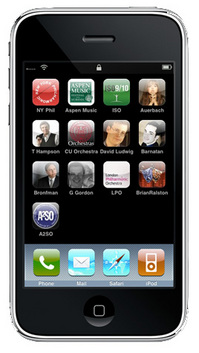
Mobile apps — like those available for Apple's iPhone — can benefit businesses as well as consumers.
Last August, Wired magazine published the infamous “The Web is Dead” cover with a controversial article that debated whether new digital technology, such as mobile apps, will displace the Web as we know (knew?) it, and the hand capitalism has had in the process.
Whichever side of the argument you fall on, one thing is certain: the recent ascendancy of mobile technology utterly obligates the business world to adopt new strategies.
While the B2C sector has jumped on the opportunity, creating more than a half billion apps that are now available for download on various stores, we have seen a significant lag in app development for internal and B2B use.
Anecdotal evidence points to a number of factors that may be inhibiting the implementation of in-house apps:
Cost: Due to the preponderance of entertainment and gaming applications, mobile development is sometimes mistaken as superficial programming. It’s not, especially when you are dealing with streaming video, multiple data sources, etc. Folks looking to spend a couple thousand bucks on a native app are generally in for a harsher reality.
Hesitation About the Validity of Mobile Technology : Which is closely aligned with...
Belligerence: OK, this criticism may just be personal opinion based on a few unpleasant encounters, though I think feet-dragging is standard procedure at some companies. See the stats above if you’re still unsure about the overwhelming acceptance of mobile technology.
Cost 2.0: Budgets are tight right now, and spending money on “unnecessary” internal projects may elicit gales of laughter (or a withering look of scorn) from the CFO. Justifying such expenditure may seem tricky, unless one proposes a mobile strategy that improves efficiency and/or productivity. Don’t forget how much time and money streamlining your processes saves your business.
This is worth repeating; you can design a mobile app to provide your staff, sales force, or clients, that reduces costs by reducing time and effort otherwise expended as overhead.
Let’s say you spend $30,000 on an iPhone app that your entire sales team can use in the field to sign up customers for your services. It eliminates paperwork because the forms process is done on the device and instantly stored on your server. It eliminates a timely string of emails by completing immediately, in the clients’ presence. It sends an automated confirmation to the customer.
Let’s say these enhancements to your processes allow each sales person to complete 25 percent more sales annually.
In addition, your team can use certain devices to give and edit presentations on the fly (by using neat and easy consumer apps). They can quickly respond to email, make phone calls, and use all the other functions inherent on smart devices.
Now can you see how that might justify the price tag?
If the answer is yes, stay tuned for the next article about the different types of applications—mobile web and native apps—and how they might be the right solution for your company’s jump into the mobile fray.
In addition to her duties as marketing director, Angela Kujava, A.K.A. the Mobile Diva, serves as strategic consultant on many of Ann Arbor-based Logic Solutions' mobile development projects. She can be seen around town evangelizing about the benefits of adopting mobile technology.
Comments
leaguebus
Sat, Apr 16, 2011 : 8:15 p.m.
@Macabre, really, unfiltered internet access killed productivity? The only study I could find on that subject says just the opposite. Its an Australian study, maybe they are more serious about work than we are ? It looks like businesess, instead of writing mobile phone apps are going big time to the larger mobile devices like IPads.
WhyCan'tWeBeFriends
Fri, Apr 15, 2011 : 4:17 a.m.
Being slow to acquire new technology, I finally bought a smart phone last year. People 35+ are likely making these business decisions but perhaps aren't as well-versed as those under 30 who were born into the computer era. There are too many choices, and simultaneously, not enough choices. My two most recent problems have been needing to use Internet Explorer to access a vital business program, but my Droid phone is not able to do that, that anyone can tell me, since it is google-based. That's a big problem. Plus, I quizzed a knowledgeable young man in a retail store last night as to why my smart phone that can access nearly everything I need on the internet (but not through Explorer) cannot be used as an air card to transfer the signal to my laptop when I am out of range of any WIFI. He just laughed good-naturedly and said a lot of people would lose a lot of money if it could work that way. Make it work that way! For the moment, I am limiting what I spend on air cards, smart phones, and other devices until industry does a survey in the business world. We don't need 999 weather channels. We need connectivity, in every way imaginable. Plus, my communication charges from various sources really should not total up to nearly the cost of my mortgage!
Macabre Sunset
Thu, Apr 14, 2011 : 6:34 p.m.
Perhaps business leaders have learned from their mistakes, and want to assume that if someone is sitting there playing with a smart phone, he is not doing work. We all know what unfiltered internet access did to productivity. Second, unless you are roaming the aisles of a store or out on a business call, odds are good you have a full computer in front of you. You lose speed and accuracy when you're playing with one of those baby pretend keyboards.