

'Twitter mess' at Dexter chamber offers social media lessons when business mixes with personal
The rules that govern the social media world are constantly evolving, but an episode that led to the resignation of the Dexter Area Chamber of Commerce’s executive director shows that ignorance about that evolution is risky.
Mary Ann Bell Falzon resigned last week after a column in a community newspaper questioned the content of her Twitter account, which she was using to promote local businesses through the chamber’s “Doing Dexter” campaign.
Falzon’s mistakes serve as a lesson for the business community, public officials and others unsure about how to approach social media.
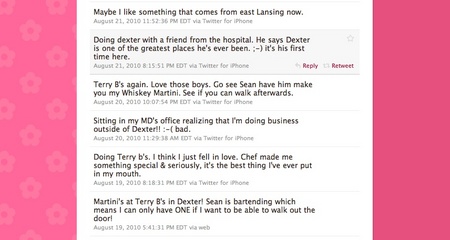
This screencap shows several tweets posted by former Dexter Area Chamber of Commerce Executive Director Mary Ann Bell Falzon about the Doing Dexter campaign.
“Through all of this whole Twitter mess, I was doing what I set out to do with Doing Dexter,” she told AnnArbor.com. “What I didn’t do well was tweet about it.”
The first lesson for business people: Make sure you understand the tool before you start using it. Falzon acknowledged that she erred by launching a Twitter account without understanding the social media tool, which allows users to send 140-character updates to users who choose to follow their accounts or view the Web site version of their account.
Falzon said her voluntary resignation was “mostly” connected to the criticism over her Twitter account, although she said the chamber board never confronted her about it. The chamber board, for its part, ousted the board member in charge of overseeing Falzon and released a statement acknowledging that the Doing Dexter campaign had “gone with too little supervision."
Falzon launched the Twitter account on July 8 specifically to chronicle her efforts to shop locally and eat locally through the Doing Dexter campaign, which started Aug. 1 and will last through Oct. 1.
On Aug. 2, she said she rented her first movie from a Dexter business; on Aug. 3, she lunched at Dexter’s Pub; on Aug. 11, she posted about meeting with a prospective new business for Dexter; and on Aug. 13, she tweeted about the Dexter Daze festival.
Those tweets collectively felt like a genuine effort to generate buzz for Dexter’s business community.
But her Twitter account is lacking a sense of strategy and professionalism. Identifying a defined mission and deciding how to execute that mission is a critical starting point for business people who are newcomers to social media.
Asked by AnnArbor.com to review Falzon’s tweets for this story, two social media experts said Falzon seemed to have good intentions but still misused Twitter.
“It seems to be a very murky blend of personal and professional communication,” said Matt Friedman, co-founder of metro Detroit marketing firm Tanner Friedman. “I didn’t see anything on there that was really objectionable, but it was really personal and it seemed that’s where the objection was.”
Take Aug. 19, for example. Falzon tweeted: “Martini's at Terry B's in Dexter! Sean is bartending which means I can only have ONE if I want to be able to walk out the door!”
Too personal.
“If you wouldn’t have written a press release about it in the heyday of press releases, then it definitely doesn’t belong on that particular Twitter account,” Friedman said.
Derek Mehraban, CEO of Ann Arbor-based Ingenex Digital Marketing, said businesses need to ensure that the message they’re communicating through social media is reflective of their specific brand.
“I think she means well. I think the campaign probably needed a little bit of tighter parameters,” Mehraban said. “You always want to find the tone of voice for the brand, what’s the parameters for the brand, what’s acceptable, what’s not acceptable.”
Mixing personal and professional is the central dilemma for most business people on social media. Divulge too many details about your personal life, and risk alienating prospective clients. Stick to professional messages only and risk being too boring.
Responsibly blending the personal and professional online is a major challenge.
That’s why Larry Osterling, executive director of the Saline Area Chamber of Commerce, said he’s chosen not to use Twitter for now.
“I have some reservations,” he said. “Sometimes I think you can over-connect. Credibility comes into question because you start wading into those big waters called spam, and people don’t listen to you. I try to be very careful about the information I put out, and they know that if it comes from the chamber it has meaning.”
The criticism aimed at Falzon placed a spotlight on the positive references she made to other local communities.
On Aug. 12, she posted, “I do miss Novi~ and Troy~ Still love Dexter!!!!” On Aug. 9, she tweeted: “Why do I love this town? Because three of our business owners today offered to bring contraband to me from A2, shoes of course, that's love!”
The Dexter Leader article took exception with those references: “It’s also disappointing to see so many mentions of Ann Arbor, expression of sentiments for Novi and Troy, and even a tweet about being homesick for Florida,” the reporter, Sean Dalton, wrote.
Falzon said her messages were taken out of context and mischaracterized, but she’s not apologizing.
“A lot of the criticism I got was that I missed those places. Well, I did,” she said. “Truthfully, we don’t want people to stay in Dexter exclusively, but we do want them to do business in Dexter whenever possible. We’re not looking for people to never set foot in Ann Arbor.”
She said the controversy taught her that social media messages can be misconstrued. As a result, she eliminated half of her Facebook friends, she said.
“When you do social media, people only see part of the story. They don’t see the whole story,” she said. “I could have painted a really different picture of what I was doing had I been better with Twitter. But quite frankly I wasn’t that good at it.”
Twitter is pure opportunity if you use it right. It allows you to shape public opinion, communicate directly with customers, gauge the performance of a specific product or service and publicize whatever you want.
But for business people like Falzon, it can also be dicey.
“You do need to take it seriously because it’s very public, people see it, it’s easy for it to be misinterpreted,” Mehraban said.
Organizations that represent a collection of businesses, customers or consumers need to be especially careful.
“Her professional responsibility was to represent a collection of businesses,” Friedman said. “So if every piece of communication is not representing those collection of businesses, that’s when things get pretty gray.”
Contact AnnArbor.com's Nathan Bomey at (734) 623-2587 or nathanbomey@annarbor.com. You can also follow him on Twitter or subscribe to AnnArbor.com's newsletters.
Comments
Missy
Thu, Sep 2, 2010 : 9:09 a.m.
Not sure why she would resign over something like this???? If the Chamber was upset she should have just added a new profile on Twitter for business or personal. Social Media is ALL about engaging, and doing business with people you know, like and trust. I see nothing inappropriate in any of her tweets. We are real people with real lives and her personality was coming through. (((sad)))
Emily
Wed, Sep 1, 2010 : 9:45 a.m.
Some say that all press is good press. The day she posted the tweet below, we sold out of dinner at our family restaurant in Dexter. Hazel's has turkey dinner tonight, Will & Faith's favorite. If you haven't been check it out: Hazel's Home Cookin' on main in Dexter.
Speechless
Tue, Aug 31, 2010 : 6:25 p.m.
The "problem," I suppose, if any, was that Falzon's twittering quickly became all about her to a large degree. The line of division between one person's fun and the business "mission" of her on-the-job Chamber campaign blurred completely. The highly personalized nature of her tweets did lead to some entertaining reading, yet it was more-or-less presented as a form of official representation for the businesses of Dexter. So, yes, she created a little bit of public confusion online. While the personal is always political, it won't necessarily align well with commercial demands. Still, it's hard not to be quite amused by Falzon's Terry B-related comments. While reading them, I could distantly hear a 70-year-old Ringo crooning, "No no no no, I don't drink at Sean's no more, I'm tired of wakin' up on the floor...." ------------ "... Twitter... [ is ]... designed for the self-absorbed anyway." "... Who cares what YOU had for lunch?" "... commenting on annarbor.com, that's what the real visionaries do." 4 score & 7 min bfor, ate a sick grilled cheese deluxe -- then nap time. I have dream -- tht 1 day all tweets r created  =  in charactr length.
John Agno
Tue, Aug 31, 2010 : 4:28 p.m.
Yes, there are no erasers on the Internet. However, the problem here is that the Dexter CofC board members don't understand that Tweets are always a combination of personal & promotional--that's why they are read--because they tell it like it is, not what you want it to be. Back in the 1950s, the sociologist Erving Goffman famously argued that all of life is performance: we act out a role in every interaction, adapting it based on the nature of the relationship or context at hand. Twitter has extended that metaphor to include aspects of our experience that used to be considered off-set: eating pizza in bed, reading a book in the tub, thinking a thought anywhere, flossing. Effectively, it makes the greasepaint permanent, blurring the lines not only between public and private but also between the authentic and contrived self. If all the world was once a stage, it has now become a reality TV show. On Twitter or Facebook youre trying to express something real about who you are, Sherry Turkle, a professor at M.I.T. explained. But because youre also creating something for others consumption, you find yourself imagining and playing to your audience more and more. So those moments in which youre supposed to be showing your true self become a performance. Your psychology becomes a performance. Referring to The Lonely Crowd, the landmark description of the transformation of the American character from inner- to outer-directed, Turkle added, Twitter is outer-directedness cubed. Who can sort out the line between person and persona, the public and the private self?
DagnyJ
Tue, Aug 31, 2010 : 4:18 p.m.
@Rob Pollard...you realize that this is about trying to make *Dexter* seem like a fun, hip, happening place. Like what is she supposed to say, "middle schoolers yucking it up at the DQ" or "moms with toddlers hanging at the A&W" or "saw some cyclists at the coffee place." Yeah, she wasn't perfectly spot on every time, but geez. So fire her, and get some super-professional, stodgy, non-Twittering type who will adhere to the social and business rules of the Dexter C of C. And while you're at it, waste a few bucks on a "communications consultant." Yawn.
Jeanne miller
Tue, Aug 31, 2010 : 3:25 p.m.
Seems to me that Ms. Falzon wasn't qualified for the position she held. The twitter/social networking aspect isn't the real issue here; it is that she showed zero understanding of how to promote Dexter in a fun yet professional way.
Jordan Miller
Tue, Aug 31, 2010 : 2:44 p.m.
@Rob - Point taken. When I went through the feed I didn't see any of those tweets. You're right. They're pretty lame. I was making my argument based on what's currently up on her Twitter feed (and I hadn't gone that far back). I rescind. Every tweet you mentioned is unprofessional.
julieswhimsies
Tue, Aug 31, 2010 : 2:25 p.m.
@jcj You are absolutely correct! I do not care about your whereabouts or what you are doing every single minute.
Rob Pollard
Tue, Aug 31, 2010 : 2:15 p.m.
Those who argue what she was doing was "fun, interesting, and smart" and the only fault was references to other place-- did you actually read her posts? Beyond the already mentioned stuff of "contraband shoes" from Ann Arbor (and all the other non-Dexter stuff) and drinking 'til she falls over: - "Ummm yea. Dexter Daze starts again in just 4.5 hours." She sounds excited! - "I am so wasting my time!!!" Great - what's that have to do with Dexter? - "Back at the pool. Sherrys with me now. Wine, sun, & lots to decide." PARTY!!!! - "Tate has his "wings" back after showing some consistency." Good to know Michigan football is Dexter-related. - "Maybe I like something that comes from east Lansing now." Ummm...what? etc She sounds like a fun lady to hang out/party with. But there are ways to get some personality across w/o sounding like a goofy party girl. This Twitter was in her role as the executive director of the Dexter Chamber and it read like it was from a summer intern. As noted in the article, it needed a strategy and professionalism. These aren't mortal sins and don't make her a bad person - just bad at communicating in her job, and it's worthy to take her to task for that, even, yes firing her. -
Woman in Ypsilanti
Tue, Aug 31, 2010 : 1:43 p.m.
@eclectablog Haha. no I don't work for the Ypsilanti Chamber of Commerce. And by "such people" I mean the people who think that there was so much wrong with this Dexter twitter campaign that there was any kind of pressure for someone to resign. It sounds like Dexter is full of uptight people who are no fun. The point being that it wasn't the "Doing Dexter" twitter campaign that reflects badly on Dexter. It is Dexter's own reaction to it that reflects badly on Dexter.
John Q
Tue, Aug 31, 2010 : 1:11 p.m.
I'll second what Jordan said. No one wants to read phony tweets generated by corporate PR departments that are obviously the product of a marketing dept. But that's what the experts are promoting as the right way to use Twitter. The references to other communities was a mistake and the only place I would find fault with the tweets. Otherwise, it sounds like much ado about nothing.
Jordan Miller
Tue, Aug 31, 2010 : 12:58 p.m.
I have to disagree with both of the media expert opinions presented. I'm also a professional in the industry (I'm the conversation manager at Organic Inc.), and I think what she was doing was fun, interesting, and smart. She made Dexter sound like a cool place to be. She was warm and personable. She was responsive. Okay, so maybe she toed the line a few times. But her strategy was actually REALLY SMART. Example: Martini's at Terry B's in Dexter! Sean is bartending which means I can only have ONE if I want to be able to walk out the door! I don't understand how this was taking it too far. I think it sounds like she's having a good time in Dexter, and it kind of makes me want to have a good time there, too. So maybe a couple of hours with a consultant would have helped her navigate better. But she certainly should not have lost her position over this. She should have been applauded for her effort to embrace new and effective ways of advertising life in her community.
Tom Teague
Tue, Aug 31, 2010 : 12:49 p.m.
It was a simple, straightforward marketing campaign and these content problems should have been addressed with some minor mid-stream adjustments. As it is, Dexter C of C is left explaining why its members over reacted and drew all this negative attention to themselves. And "Doing Dexter" is on its way to becoming a marketing case study for the social media age. But, it did provide a good object lesson: When you are the campaign, you have to live the campaign.
eclectablog
Tue, Aug 31, 2010 : 12:33 p.m.
@Woman In Ypsilanti: "Full of such people"??? Really? Do work for the Ypsi Chamber of Commerce or something?! LOL. What a ridiculous thing to say.
Rod Johnson
Tue, Aug 31, 2010 : 11:48 a.m.
I wouldn't generalize the failure of this to suggest that there's a problem with Dexter writ large. This was a combination of a columnist stirring up trouble and some nervous-nelly city father types at the C of C who don't really get the technology (and, OK, maybe some mild bad judgment on Falzon's part). It could have been fun, wasn't, oh well. Dexter has lots of cool people. Maybe someone who doesn't have to worry about the blessing of a bunch of insecure small-town business people will do something similar. As for Dexter Daze... as far as I could tell, it's just a municipally-sponsored traffic jam.
Peter Moss
Tue, Aug 31, 2010 : 11:12 a.m.
The twitter account seems to be only part of the problem. No website was ever put up with the first 30 days with any business information. Wrong web addresses were published in the Ann Arbor News. Zero mention of the "Doing Dexter" dinner that was supposed to be held at Terry B's made from local food sources...I think only 4 people showed up. No bus trip to the Tiger game (which she went to any way) using local transportation and dinners at local restaurants upon return. All good ideas yet all executed poorly. And I guess finally, "Doing Dexter" shouldn't be a 60 day experiment. It should be more a way of life. It should be about considering shopping in Dexter first.
Machine
Tue, Aug 31, 2010 : 10:44 a.m.
For her to feel compelled to resign over such a non-issue is disappointing. There are countless people who commit far more grievous errors and are allowed to retain their jobs. Learning from our mistakes is what helps us to perform our jobs better (and makes us better people). The reaction by the Dexter business community to this little misadventure speaks volumes to me and I will probably avoid doing business in Dexter for the foreseeable future.
Nathan Bomey
Tue, Aug 31, 2010 : 10:19 a.m.
I should probably note that, for her part, Falzon doesn't seem to be angry at Dexter. She said she's talked to many businesses and community members since her resignation and said they're disappointed she left. "I have loved Dexter my entire life," she told me. "I know these people, they know me. I guarantee most of the people who are talking are not from my community."
Woman in Ypsilanti
Tue, Aug 31, 2010 : 10:01 a.m.
Dexter's reaction to Ms Falzon's tweets is why I now have a very unfavorable opinion of the place. Why would I want to spend any time in a place full of such people?
Dylan
Tue, Aug 31, 2010 : 9:44 a.m.
The whole point of using social media like Twitter and Facebook for business is that they give customers a perceived "vip pass" behind the scenes. As @DagnyJ points out, it was loose and personal and appeals to people on a totally different level than normal PR. You don't turn to twitter to read the same press release you could see in the paper. You go there to find out what got left out of the press release. Did some of the comments go too far? Probably. Does that mean everyone responsible should have been forced out and the whole project rethought or abandoned? Absolutely not. This is nothing that couldn't have been fixed by a quick meeting and establishing a few guidelines. One of the great things about social media, unlike some more traditional marketing channels, is that it's mostly ephemeral. An inappropriate comment on Twitter or Facebook can just be deleted, and by next week no one is going to read it anyway. Instead of overreacting and ousting those responsible for making an honest attempt to improve the community's online presence, how about finding somebody who knows about the subject to provide a quick lesson for everyone involved? There's definitely no shortage of people like that around here if @jcj is to be believed. How about making an apology, ON TWITTER, and laying out the new goals and directions for the project? The lesson here should not be that if you're not careful with a marketing tool like Twitter then you'll pay the consequences. The lesson should be that when you're confronted by something you're unfamiliar with, then take the time to actually learn about it before making snap judgements. I guarantee in another year the Dexter Chamber of Commerce will be back on social media, starting over from square one without having actually learned from this whole mess.
Urban Sombrero
Tue, Aug 31, 2010 : 9:17 a.m.
I personally prefer more personal-ish, "TMI" types of tweets like Falzon posted. It's more down to earth, less stuffy. Professional or not, her tweets had a personal touch. I, for one, enjoy that way more than something boring and "official".
Jan
Tue, Aug 31, 2010 : 9:07 a.m.
- What nights does Sean work? -
DagnyJ
Tue, Aug 31, 2010 : 9:01 a.m.
Dexter sounds like a stuffy, uptight, un-fun place. Doing Dexter is funny. It's harmless. And the kerfuffle over this is stupid. The twitter account was a great idea. It was fun and loose and amusing. It appeals to people who aren't impressed with carefully choreographed PR campaigns with too much professionalism. Yeah, Dexter officials are responsible...and BORING.
jcj
Tue, Aug 31, 2010 : 8:58 a.m.
@SemperFi I apologize I was not running down Dexter at least that was not my intent. I was making too general a statement about the self absorption most users have. Like anybody should care about the whereabouts of me and what I am doing every minute.
SemperFi
Tue, Aug 31, 2010 : 8:37 a.m.
It's actually responsible adults, with lives, running Dexter, thank you very much. The poor judgement displayed by Ms Bell Falzon on her Twitter account only reflects poorly on her, not the Village of Dexter. This effort by the Village Council to tap into the social media network shows that they are not small minded when it comes to promoting Dexter. The fact of the matter is, Dexter is attracting a good crowd to it's downtown and its many offerings. All the weekend bicyclists that make the pedal into the village to enjoy the Dexter Bakery, Lighthouse Cafe and coffee houses are the early arrivals. Many of the folks that head to Hudson Mills for picnics or soccer games, go canoeing on the Huron or head to the Cider Mill come for the afternoon. Then, the evening folks have a fine selection of restaurants, shops, art galleries, music and theater from which to choose. Oh yeah, don't forget that there's a great hardware store in the middle of downtown and the Dexter Mill has everythng you need for gardening, pet supplies(guinea pigs to horses) and work apparel. It's unfortunate that Ms. Bell Falzon couldn't see past her martini glass. She just needs to make it to something other than a watering hole if she plans to promote the entire village. Did I mention that there are some good restaurants and bars, too?
jcj
Tue, Aug 31, 2010 : 8:23 a.m.
@ Rod Johnson Visionaries? Are you kidding me? The numskulls that have to have their lives chronicled on twitter and facebook are certainly not visionaries. They are nothing more than sheep following the crowd. Who cares what YOU had for lunch? Most of these numskulls neglect real responsibilities.
Above AvgCitizen
Tue, Aug 31, 2010 : 8:11 a.m.
I found "Doing Dexter" a terrible title - sleazy -- and even the pictures seemed to focus on the "sensationalized" aspects of the communication - I really don't think that has anything to do with Dexter. It all seemed very unprofessional. Though I love the town, (but not for shopping), the merchants have much to understand it seems to me. They spend a lot of money to have Friday evening events, yet very few of the merchants stay open extended hours. Why bother with the events then? This and many other things about how business is run in Dexter just simply come across as unprofessional. Before they embark on their next image campaign, I hope they take a good look at the old standards of customer service, (including hours of operation that match when your residents are in town), quality, and professionalism. And I have to laugh at Dexter Daze, that has turned into a small merchant expo... a booth(s) for party sales businesses? Why would that draw me to downtown? Where are the parameters that set the mission and then stay accountable to them? Long way to go Dexter.
Rod Johnson
Tue, Aug 31, 2010 : 8:06 a.m.
Yeah, Elaine, commenting on annarbor.com, that's what the real visionaries do.
Elaine F. Owsley
Tue, Aug 31, 2010 : 7:25 a.m.
Twitter and Facebook are both designed for the self-absorbed anyway.
eclectablog
Tue, Aug 31, 2010 : 7:10 a.m.
Babies? Please. It's oh-so-easy to take potshots but Dexter is a fabulous place and I'm proud of our village. I'll repeat here a comment I made elsewhere because it sums up my feelings pretty well: ----------- Ah, well. Every business enterprise, even a collective one like this, makes mistakes. The question is whether or not the Dexter Chamber of Commerce can regroup, learn from this mistake and move forward. My money is on them doing just that. Joe Nowak and others on the Chamber have shown they have the ability to promote Dexter as anyone who has attended Dexter's Friday night live music series can attest. Good live music, a very family-friendly atmosphere and lots of activities for kids and adults alike. As to businesses in Dexter, before you disparage this fine village, perhaps you might stop by and check it out. Several excellent restaurants, an art gallery, two independent coffee shops, a theater showing live productions, boutiques and all the amenities any village could hope to have. This effort may not have gotten off to a good start but it's no reflection on Dexter itself. Just a slip and something I feel sure will be more than compensated for by innovative and creative ideas for promoting Dexter in the future.
Ignatz
Tue, Aug 31, 2010 : 6:56 a.m.
Sounds like a whole bunch of people need to get lives.
Chuck
Tue, Aug 31, 2010 : 6:36 a.m.
What a bunch of babies are running Dexter!