

'Ending the US War in Afghanistan' explains the whys of the war and the hows of peace
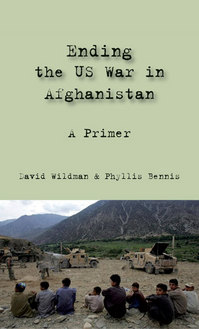
Interfaith Council for Peace and Justice will host a book discussion of Ending the US War in Afghanistan at 7 p.m. July 19 at Dominick's, 812 Monroe St. in Ann Arbor.
When I began interning with the Interfaith Council for Peace and Justice (ICPJ) at the beginning of this summer, I began to learn more about the war in Afghanistan, yet I still didn't know basic information. So when ICPJ started a book group for the month of July on David Wildman and Phyllis Bennis' book Ending the US War in Afghanistan: A Primer I jumped on the opportunity to learn more about the war.
Wildman and Bennis have very impressive bios. Wildman is the executive secretary for human rights and racial justice with the General Board of Global Ministries, United Methodist Church. He has been to Afghanistan many times. Bennis is a fellow of the Institute for Policy Studies in Washington, D.C. and of the Transnational Institute in Amsterdam. She is also the author of Ending the Iraq War.
In six parts, Wildman and Bennis walk the reader through the intricacies of the U.S. war in Afghanistan. The first two sections of the primer discuss the U.S. war in and invasion of Afghanistan. The third section describes the relations between the U.S. and other players in Afghanistan, such as the Taliban. Part four discusses the impact of the war, both in Afghanistan and for the U.S. The fifth section describes how the war has gone global, and in the last section, Wildman and Bennis discuss what needs to be done to end the war, and how to do it.
Set up in a question-and-answer format, the book is an easy read - only 199 pages long. The authors ask four or more questions in each section, such as “What has the US done to help Afghanistan's reconstruction, and what is its plan for the future?” and then answer those questions with facts, including statements from military officials as well as aid workers. Wildman and Bennis' goals are to inform the readers of the facts of the war. As an uninformed citizen, many of the topics the authors touched on prompted me to look up more information on my own. Wildman and Bennis don't throw the president and his policies under the bus, but instead explain why those policies are the way they are, and what we can do as citizens to change them.
My favorite part of the book is the last section. After 172 pages of information about the happenings of the Afghanistan war, the authors tell the readers what they can do to end the war. You can feel the authors' passion in their writing, as they go over carefully researched and multifaceted plans for people to follow to help end the war. After reading books like this one, I often have felt the urge to do something about the issue. Wildman and Bennis understand this need from their readers, and give realistic and easy ways to help promote peace in Afghanistan.
With a slowly recovering economy, U.S. citizens have enough on their plates, so it makes sense that many of us tend to let international issues fall to the side. Wildman and Bennis' primer is the perfect solution. As an easy read that is full of facts, it will get you up to date on the war in Afghanistan quickly, while citing their sources fully so you can find more information on your own.
You can pick up a copy of the book at the ICPJ office for $10, just call 734-663-1870 or e-mail chuck@icpj.net to set a time to get your copy.
ICPJ will be holding an in-person book discussion at Dominick's (812 Monroe St., Ann Arbor) at 7 p.m. July 19. There is also an online book discussion at www.icpj.net with new discussion questions for the book each week during the month of July. ---------------- Liz Sundin is a Junior at the University of Michigan and an intern with the Interfaith Council for Peace and Justice.