

What this generation owes its children
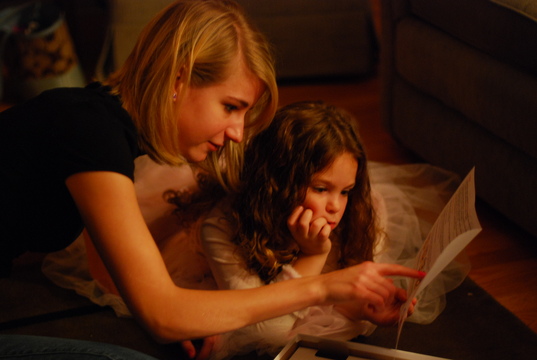
Dennis Sparks/Contributor
Mathews began, “After apparently spending the weekend, as I did, watching the Congressional debate over health care, former diplomat and teacher Dave Rabadan of Annandale asked me this good question: ‘What has happened to the teaching of critical skills, decision-making based on weighing alternative policies or courses of action, and respect for those who hold differing opinions on local and national issues?’”
But Mathews' perspective did surprise me even though I'm fully aware that schools are often blamed by politicians and pundits for whatever ails our country. In this case, though, I thought it was clearly the other way around — that national leaders had the civic and moral responsibility to demonstrate to the school children of this nation the value and practice of civility as a fundamental attribute of our democracy. It just hadn’t occurred to me that schools would be criticized for the incivility displayed by national leaders who attack each other for the basest ideological and political motives.
In addition to its traditional forms, incivility has added many unique 21st century manifestations: loud cell phone conversations, attending to e-mail and text messages rather than the human beings in front of us with whom we are having conversations and hiding behind the anonymity of Internet user names to make disparaging online comments about others are but a few examples.
While schools certainly have a role to play in addressing incivility, the notion that they are somehow responsible for it started me thinking about the obligations this generation has for the well being of young people in this country and around the world. Here’s what came to mind.
• This generation owes its children “a world where the devastating impacts of poverty no longer cripple the ability of individuals and families to sustain themselves and contribute their talents to the world in which they live — where all people have a fair chance at success,” as RESULTS explains it in its mission statement.
• This generation owes its children a life-enhancing, sustainable environment that provides the spiritual sustenance of wilderness and pristine natural areas.
• This generation owes its children an equitable distribution of educational resources — finances, quality teaching and leadership and a challenging, personalized curriculum that enables their full contribution to society as workers and citizens.
• This generation owes its children experiences that prepare them to contribute fully to the civil discourse that democracy requires at the local, state and national levels.
• This generation owes its children the opportunity to play and to develop in age-appropriate ways rather than being trained as consumers by skillful corporate marketing campaigns or compelled at an early age to assume adult concerns and responsibilities.
• This generation owes its children sound teaching regarding the principle of “pay it forward” so that young people learn, for instance, to live within their means, to leave natural areas in better condition than when they found them, and to look in on sick or elderly neighbors as ways of promoting the common good.
All of these obligations, of course, have civility as their bedrock. In Choosing Civility: The Twenty-Five Rules of Considerate Conduct P. M. Forni writes, “Being civil means being constantly aware of others and weaving restraint, respect, and consideration into the very fabric of that awareness.” Forni concludes, “With training in civility we develop the invaluable habit of considering that no action of ours is without consequences for others and anticipating what those consequences will be.”
I offer these ideas to stimulate thought and conversation about what might be added to or subtracted from this list. What’s most important about such a list, however, is that it reminds us that what we do today affects tomorrow. That awareness is a starting point in fulfilling our responsibilities to the generations that follow us on this planet.
Dennis Sparks’ “Things Observed” essays and photos encourage readers to see familiar things in new ways. You can also read his blog on school leadership and contact him at dennis.sparks@comcast.net.
Comments
Paul M Bombach
Sun, Apr 11, 2010 : 1:50 p.m.
Thanks Dennis! I wish it were standard procedure for AnnArbor.com to include those links for all Flickr streams. Again, I really enjoyed your article.
Dennis Sparks
Sun, Apr 11, 2010 : 12:17 p.m.
Here's the URL for the Flickr slideshow, Paul: http://www.flickr.com/photos/22127357@N06/sets/72157623642302769/show/
Paul M Bombach
Sun, Apr 11, 2010 : 10:39 a.m.
This is a great story. I wish that there was a direct link to the Flickr stream so that it would be visible on mobile devices.
MIKE
Sun, Apr 11, 2010 : 9:39 a.m.
I wish everyone would read this article by Sparks and take action to tone down the incivility and the lack of knowledge of what we are doing to our children. I've relayed the article to several friends. An occupational therapist told me that standards set for kindergarteners can't be met because most children are developmentally unable to accomplish them. Extrapolate this through the grades using academic standards and we see a one-size-fits-all mentality setting up many children for failure. Let's think carefully about how our actions affect children. Mike
carol
Sun, Apr 11, 2010 : 6:14 a.m.
This generation owes its children all of the experiences mentioned in this article...enriching childhood--and allowing them to be...children.