

Bridge column, October 12: A pass may reveal as much as a bid
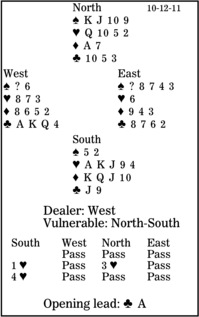
If the dealer passes, it means that his hand does not have 12 high-card points or (probably) a long suit. In addition, though, if that initial pass is in a composed lesson deal or a newspaper column, it will help declarer with the play.
In this layout, how should South plan the play in four hearts after West starts the defense with his three top clubs?
North's three-heart response is a limit raise, guaranteeing a maximum pass and at least four-card support. (If you use Reverse Drury by a passed hand, do not stop; it is recommended. In this instance, North would respond two clubs, showing a near opener with three or more hearts.) In either scenario, South rebids four hearts.
South ruffs the third club, draws trumps and cashes his four diamond tricks, discarding two spades from the dummy. Then, with his contract on the line, he leads a low spade, West playing low. Should declarer finesse dummy's jack or should he go up with the king? Why?
West had nine points in clubs. If he also held the spade ace, he would have opened the bidding. South should call for dummy's jack.
Yes, West might have stopped playing clubs after two rounds, shifting, say, to a trump. Declarer should then draw trumps ending in the dummy and call for the club 10. If East had the queen, it would take an iron nerve to play low smoothly. Also, at trick one, East signaled with the club two. If he had had the queen, he probably would have played a higher, encouraging club.
Copyright 2011, United Feature Syndicate