

Bridge column, September 17: It is easy to get careless
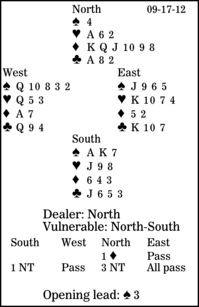
It is easy to get careless at the bridge table. How often have you gone down in a contract, then realized that you could -- and should -- have got home?
It would be easy to get careless in today's deal, especially if there were no warning bells ringing. What should South do in three no-trump after West leads the spade three and East puts up the jack?
North was right to raise to three no-trump. Yes, the singleton spade was a worry, but he was tabling seven tricks. If partner had the diamond ace and a spade trick, that would be sufficient for game.
South starts with four top tricks: two spades, one heart and one club. And there are five winners available in diamonds. So what's the problem? Just take the first trick and play a diamond, right?
Wrong! A clever West will immediately take his ace and return a diamond to lock declarer in the dummy. Then, while South is running the diamonds, the defenders can discard spades and more spades. Declarer will end up with only eight tricks; his spade ace will never score.
What was the lead? The spade three. How are spades breaking? Assuming the three is an honest fourth-highest, spades must be 5-4. So it cannot cost South to take both of his top spades before leading a diamond. He will lose three spades and one diamond, but take the rest.
** ** **
COPYRIGHT: 2012, UNITED FEATURE SYNDICATE
DISTRIBUTED BY UNIVERSAL UCLICK FOR UFS