

George Washington Carver saw agriculture as a path toward 'health, beauty and prosperity for all'
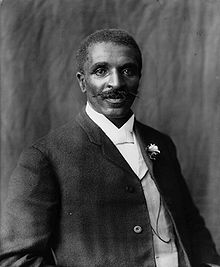
George Washington Carver
Photo | From Wikipedia
Beyond his relationship with the peanut, I didn't know much about the indomitable George Washington Carver before I attended the George Washington Carver Symposium hosted by the Henry Ford Museum in January this year.
He was truly a remarkable human being — a scientist, an inventor, a teacher, and a humanitarian far ahead of his time. Chicago's Field Museum says, "Carver’s famous peanut research was just one of many different scientific endeavors designed to realize his 'Mighty Vision' — health, beauty, and prosperity for all."
What was most amazing to me about Carver (aside from the facts that he was born into slavery, orphaned as a baby and still managed to become the first African American student and then faculty member at Iowa State College) was that his discoveries and subsequent advancement of science and agriculture were not based on rare earth elements or electron micrographs or any advanced technology — they were based on work with the common materials he had close at hand.
Ink from sweet potatoes, soy-based plastics, anti-cancer materials from willow trees. Carver, according to the Field Museum, "has special relevance today amid concerns about climate change and energy resources. His teachings promoted the use of agricultural products over fossil fuels and the adoption of nature’s model of zero waste…Carver experimented with crop rotation, composting, and integrated pest management. His work and writings shaped the organic agriculture movement in the United States, and they continue to offer solutions to problems today."
Agricultural products over fossil fuels and the adoption of nature's model of zero waste. Using what we have at hand in abundance to create "health, beauty and prosperity for all." In Michigan that could be food.
According to the Michigan Department of Agriculture's County Food System Profiles for 2009, Washtenaw County spent $1,066,500,000 on its food — most of which came from elsewhere. In 2009, 60 percent of the county's cropland was in corn, soy and wheat, with 1.2 percent used to grow vegetables.
This county profile assigns Washtenaw County a Local Food Production Index of 9 (out of 100). Noting "The local food production index describes both the quantity and diversity of agricultural production in a county. It is obtained by comparing county per capita production of major food crops with national per capita consumption of those crops. The highest possible index score of 100 indicates that sufficient quantities of all included crops are produced within the county to meet local demand. Michigan’s statewide production index score is 30."
So even though Michigan is the country's second most agriculturally diverse state, we rate 30 percent in our ability to provide food to all our residents. And Washtenaw County is 9 percent. It seems like there's some untapped potential there — for our health and for our economy.
That's why I'm going to voice my support this week to the Washtenaw County Board of Commissioners for renewing Act 88's millage for Economic Development that funds a small but crucial portion of the Food System Economic Partnership's budget, as well as MSU Extension services, some part of the Greenbelt funds, and Ann Arbor SPARK.
And I'm going to be attending the HomeGrown Festival on Sept. 10 and participating in Slow Food USA's $5 Challenge on Sept. 17, to create a fresh, healthy all-Michigan meal for $5 per person or less.
In the early 1900s, Carver wrote: "I believe the Great Creator has put oils and ores on this earth to give us a breathing spell. As we exhaust them, we must be prepared to fall back on our farms… For we can learn to synthesize materials for every human need from the things that grow."
I don't believe Carver meant ethanol, but I heartily agree with the sentiment that resource extraction is a limited time option, and our salvation can only come from the sustainable systems embodied in the best of our farms.
Everything we need is close at hand, if we can only be resourceful enough to organize ourselves toward and demand that Mighty Vision of "health, beauty, and prosperity for all."
Kim Bayer is a freelance writer and culinary researcher. Email her at kimbayer at gmail dot com.
Comments
Diana Dyer
Wed, Sep 7, 2011 : 11:41 p.m.
Thank you, Kim, for highlighting the enormous potential benefits for our state and county's health, economy, food security, and environment by producing much, much more of its own food to eat. As 'old-new farmers', we chose to stay in Michigan with our 'encore career' as organic garlic farmers (The Dyer Family Organic Farm/Dick's "Pretty Good!" Garlic, located in Superior Township). One of our reasons to stay here was to help re-build and diversify Michigan's economy with locally grown, organic food. George Washington Carver was certainly a visionary who saw the big picture and the long view.
vaniloup
Wed, Sep 7, 2011 : 2:40 p.m.
Another great place to visit is the George Washington Carver National park outsde of Joplin Missouri. He grew up there & it's a wonderful experience.
Ann English
Wed, Sep 7, 2011 : 11:33 p.m.
I knew he was familiar with the Ozarks, living there before starting school, and I knew Joplin is right at the southwestern corner of Missouri, just east of Kansas, but never put Joplin and the Ozarks together until now. Carver tried farming in Kansas later on, before getting the call to move to Alabama.
Not from around here
Wed, Sep 7, 2011 : 12:57 a.m.
G W Carter was truely a man ahead of his times. If you take the time to read any of his works they are as revolutionary now as they were then. He truely understood that a nation that cannot feed itself was doomed. I love the fact that he could use what was at hand to see the future. If you ever have a chance to go to Greenfield village and see his childhood home and read about his relationship with Henry Ford, make sure you take advantage of it.
KeepingItReal
Tue, Sep 6, 2011 : 7:34 p.m.
Thank you Kim for paying homage to this truly great American. Few people know of his contributions especially African Americans...African American youth need to know that such people existed way back when and that not everyone use their negative beginnings as an excuse to bail out.