

Wildcrafting: Stealth nutrition - kids, wild foods and green dips
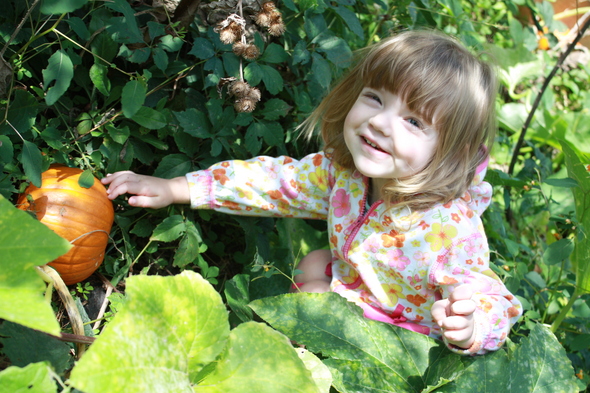
Photo by Laura Meisler
- Model what you want to teach.
- Kids naturally want to help and to do. Let them.
- Make it taste great.
- Let food be fun.
- Do it kid friendly.
It’s pretty simple really. Here’s an analogy you’ve likely not heard before. Kids are like honeybees. The way to get bees to do what you want is to only want them to do what they would do naturally. You can’t ask 20,000 to 30,000 stinging insects to behave. But if you know how they naturally behave, you can use that knowledge to accomplish what you need to do: open the hive, sort out frames, even take honey and pollen. You can move them without incident, you can add supers, all without any fuss if you do it their way, on their terms. If you force the issue and don’t respect what they naturally can do, you’ll get stung.
If you bring home wild food and present it as dinner, you’re likely to get “Ick!” or a similar response. If you serve dark green leafy vegetables and explain how healthy they are, your family will be immediately suspicious of the food.
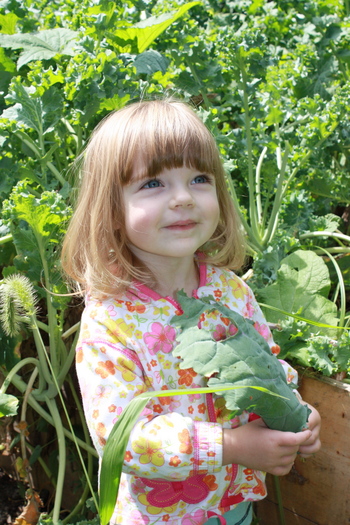
Photo by Laura Meisler
If you take the kid out with you, show them how to forage, and let them go, they will more than likely be the one pushing everyone to try this new and wonderful wild food for dinner. If you grow the veggies and your child is part of planting, weeding, watering, and of course admiring the garden, your chances of getting the food into him or her are greatly enhanced. Kids who learn to cook are more likely to learn to eat well. Most kids like to participate, they like to have a part in creating something.
I had a young client - I think she was about 6 - whose mom wanted her to take Echinacea tincture regularly. This kid could detect in it anything. Juice, water, milk -- she would find it and refuse to drink whatever it was in. So I had her over to learn to make the tincture. She dug up the roots, she helped clean and chop them, she even helped poor the 100 proof vodka over them. Then she took a jar home, watched over it for six weeks and helped strain it. And what happened? She started asking for her mom to give her some “’nacea." There was never a conflict over using it again.
So how do kids like to eat? They like food to look normal and familiar, and they like food they can manipulate. So following are three recipes for dipping sauces and a salad dressing that take advantage of how a kid likes to eat. If the great nutrition is in the dip, who cares if they lick it off the vegetable and go again? (As long as everyone has their own bowl of dip that is…).
Green Dipping SauceServes: 10-12
Time: about 20 minutes to prepare and 2-3 hours to chill
Type of dish: dip
Equipment: basic
Leftovers: use within 2 days, does not freezeIngredients: ½ bunch fresh or ½ package frozen greens, parsley, tarragon, yogurt
Instructions: Prepare 1/2 bunch of greens, or 1/2 package greens. Swiss chard, collard, spinach and watercress are all good choices and can be combined as well. If using fresh, wash and chop fine. If using frozen, chop as they are thawing.
Saute in a bit of water over medium heat until just softened, about 5-10 minutes depending on the greens used. Remove from heat and drain (reserve liquid for soup stock). Add 1/4 cup parsley finely chopped and 2 tablespoons of fresh tarragon. Let cool a few minutes and add to 1 1/2 cups strained organic yogurt. (Let yogurt drip for 1-2 hours through cheesecloth or a jelly bag on a stand. This makes a firmer yogurt great for sauces and spreads.). Refrigerate 2-3 hours before serving
Green dipServes: 12-16
Time: 15 minutes to steam, mix, and 30 minutes to chill
Type of dish: dip
Equipment: Food processor or blender
Leftovers: will keep for up to 3 days, does not freezeIngredients: greens, cream chese, sour cream, garlic, hot sauce, Parmesan or Romano cheese, miso
Instructions: Use fresh or frozen greens, about 2 cups, that have been thawed or lightly steamed. Pulse in a food processor or blend long enough to chop fine. Mix into 1 package softened cream cheese, 1 cup sour cream, 2 cloves of garlic pressed, a dash of your favorite hot pepper sauce, 1/2 cup grated Parmesan or Ramono cheese, 1 tablespoon miso. Mix well and chill for at least 30 minutes to blend flavors. Serve with crackers, or as a vegetable dip.
Clancy’s Fancy Hot Sauce is a great addition to this dip, as well as to many of the soups and other dishes. It is made locally - in Ann Arbor.
Wild Green Tahini DressingServes: 4-6
Time: 10-15 minutes, including picking weeds
Type of dish: dressing
Equipment: blender or food processor or blender stick
Leftovers: will keep refrigerated for 3-5 daysIngredients: raisins, wild greens, tamari, garlic, olive oil
Instructions: Set about 1/8 of cup of raisins to soak in 1/2 cup warm water. While they are soaking, gather 10-15 dandelion leaves, or use 1/2 cup chickweed, or 10-15 small yellow dock leaves. You can use a blender, a food processor or a stick blender (also called a hand blender) to make this. I prefer the stick blender.Â
In the food processor, blender, or in a jar that the blender stick will fit into combine 1 tablespoon of tamari, 1-3 whole cloves garlic (depending on your preference), 1/3 cup olive oil, 1/4 cup vinegar, and 3 tablespoons of tahini.Â
Blend, then add the greens and the rehydrated raisins. Blend until smooth, and the greens have been fully incorporated.Â
The olive oil will cause this to be semi-solid when it is cold, spoon it onto your salad and, as it warms up, it will turn more liquid.
This dressing is great as a dip, over grains and, of course, as a salad dressing over greens and veggies.
All recipes are from my cookbook, “Spinach and Beyond: Loving Life and Dark Green Leafy Vegetables” available locally at Morgan and York, Crazy Wisdom Bookstore Tearoom, Indigo Forest and Nicola’s Books or from Amazon.com. Stop by my demo at the HomeGrown Festival this Saturday.
Linda Diane Feldt is a local Holistic Health Practitioner, teacher and writer. She’ll be demonstrating how to make acorn pancakes and other foods incorporating dark green leafy vegetables at The HomeGrown Festival this Saturday, at the Farmer’s Market from 7:45-9 p.m.. You can follow Linda Diane on Twitter, visit her Web site, or e-mail her directly ldfeldt (at) holisticwisdom.org.