

Violin master Mark O'Connor playing The Ark with the Saline Fiddlers
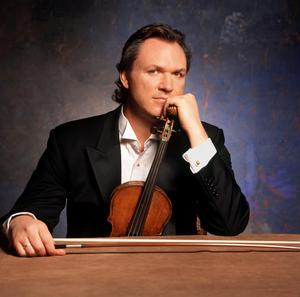
Mark O'Connor
In the early ‘90s, he went in a new direction, starting a solo career, and creating groundbreaking music that was a hybrid of folk, country, jazz and classical. And he began composing concertos that were a unique mix of these styles. His first, the “Fiddle Concerto,” in 1993, was a piece that, more than anything before it, busted down the walls that had previously separated American folk music from European classical music.
O’Connor, who comes to The Ark on Saturday, has composed many concertos and symphonies since then, like the “Double Violin Concerto,” “Double Concerto for Violin and Cello,” “The American Seasons” and “Americana Symphony.”
At the same time, he’s recorded jazz albums like “Hot Swing”—a tribute to Grappelli—and highly improvisational albums, like “Jam Session,” a blazing live disc. But in 2004, he also began to focus on instruction and education, and created The O’Connor Method, his approach to string-instrument instruction that emphasizes creativity, improvisation and composing in addition to technique.
Since 2009, he’s introduced three books on The O’Connor Method, the most recent in February. That third book was accompanied by a CD, “American Classics,” which was recorded for instructional purposes.
PREVIEW
Mark O'Connor with the Saline Fiddlers
- Who: O'Connor, who was a fiddle / violin prodigy as a child, has created what he calls “American Classical music” by combining folk, jazz and classical styles.
- What: For the first half of the show, O’Connor will play songs from “American Classics,” his latest album, accompanied by a pianist. For the second half, he’ll be joined by the Saline Fiddlers.
- Where: The Ark, 316 S. Main St.
- When: Saturday, Aug. 25, 8 p.m.
- How much: $30. Tickets available from The Ark box office (with no service charge); Michigan Union Ticket Office, 530 S. State St; Herb David Guitar Studio, 302 E. Liberty St. or online from MUTO.
“My method stresses that American music is as rich in history, and in the breadth of styles, as the European classical music that has typically been the focus of string-music instruction,” says O’Connor. “So, I wanted to release an album that was an affirmation of that - and include a lot of the music that inspired me and affected me and wanted me to learn more about the violin.”
The traditional songs on the disc include “America The Beautiful,” “We Shall Overcome,” “Hava Nagila,” “Deep River,” “Liberty,” “Boil That Cabbage Down,” “Old Folks At Home” and “Simple Gifts.” The disc includes a generous 21 songs in all. He and pianist Rieko Aizawa perform them in simple, straightforward fashion, as opposed to the way O’Connor typically approaches songs on his recordings - which is to play the melody and then take off on a heady, dazzling improvisational flight.
“Yeah, I’ve never recorded traditional songs in this fashion before—playing classics for the sake of playing classics, and just presenting the melodies, and not doing any improvising,” says O’Connor by phone from his home in New York City.
While he's in Ann Arbor for The Ark show, he'll also be conducting one of the many teacher-training seminars he holds for string-instrument instructors. This one will be at the Ann Arbor School for the Performing Arts, Friday through Sunday. These seminars consist of 15 hours of teaching, by various instructors that O’Connor has hired, and also include a 90-minute presentation by O’Connor himself.
For the first half of The Ark show, O’Connor will play songs from “American Classics,” accompanied by a pianist. For the second half, he’ll be joined by the Saline Fiddlers.
In addition to developing his method and holding these teacher-training programs, O’Connor, for about 20 years now, also been conducting his summertime Mark O’Connor String Camps in New York, Los Angeles and Burns, Tennessee. Those are attended by a mix of teachers and students, and consist of “four different pillars—classical, folk, jazz and world music,” explains O’Connor.
O’Connor was inspired to create his instruction method, and write the books, by many of the parents and students he spoke to at these camps—and after his concerts.
“I would often hear from a young person, or from their parents, that they were quitting the violin, because they didn’t like it, or they were bored, or didn’t like their teacher,” says O’Connor.
“What I came to realize is that music programs in the schools have done a good job of teaching string players proper technique—the fingering and bow training. And, that’s fine, if the student wants to be part of a symphony. But once you get outside of the European classical tradition, and play anything other than the standard European classical repertoire, you need to be able to contribute creatively, so you need to have creative chops as well as technical chops.
“If these students want to be part of any other ensemble, like jazz, or bluegrass, or world music, or a quartet that creates music that draws on jazz and folk traditions as well as classical, we haven’t prepared them very well for that, because we haven’t been teaching them improvisation, or creativity, or composing.”
So, O’Connor’s method focuses on those aspects as much as it does on teaching technique.
And O’Connor’s method also draws on American traditional music —something he has a great passion for, and which he refers to as American Classical music.
And, in his compositions, O’Connor has drank deeply from that well of traditional American music. His hybrid of folk, jazz and classical idioms—“which isn’t that much different from what George Gershwin and Leonard Bernstein were doing, is essentially composed of our own musical language—this indigenous, wonderful music that Americans have created, and which has kept on developing."
Recently, O’Connor gave performances of his “American Seasons” violin concerto in Rostack, Germany and Bern, Switzerland.
“The responses from the audiences were amazing,” says O’Connor. “We got eight curtain calls at one performance. To go to Europe, and perform orchestral music in an American style—and get that kind of response—was a wonderful experience. And it was a great affirmation of American Classical music.”
Kevin Ransom is a freelance writer who covers music for AnnArbor.com. He can be reached at KevinRansom10@aol.com.