

Making the Christmas haul equal between kids is a tricky task
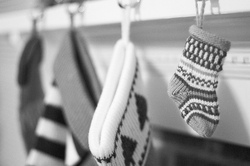
Photo courtesy of Flickr user jacreative
Everything was as it should be.
Except that I couldn't relax, because I could see our daughter's eyes darting back and forth every time she or her younger brother opened a gift, mentally comparing her presents to his.
I suppose that too was as it should be; or at least, as it inevitably will be. She is six, she can count, and she's biologically programmed to be in competition with her sibling.
I remembered feelings from my own childhood Christmases, suspecting my brother got more presents, or better presents, than me. What I didn't know was that our parents meticulously counted every present, every penny spent, to make sure things were even-Steven. They still do.
I also now know that making things equal isn't an easy thing. Trying to buy the same number of gifts and spend the same amount of money for two children who are different ages, different genders and into completely different things is quite a challenge.
Truth be told, we weren't exactly equal in terms of money spent this year. They each got a "big" present from Santa, but Belle's big present (an American Girl doll) actually cost a lot more than Wes's (the DC Superfriends Bat Cave).
But since they are 6 and 3, it's not about the money at this point. It's more about the number and volume.
When all the presents were opened, Belle got out her Blendy Pens and Wes settled in with a new Playmobil set. He turned around to check out what she was coloring, and she instinctively pulled it away. He retaliated by saying she couldn't play with his Playmobil. At which point I reminded them that if they shared, they'd essentially get twice the amount of presents.
But I knew something more was needed to put Belle's mind at ease. So I pulled her aside and told her all about how her dad and I work really hard to ensure that they receive an equal amount of gifts. I also told her that her grandparents, whom we were going to see later that day, do the same thing.
It felt sort of crass to openly discuss this, but it seemed to put her at ease. And later that day at their grandparents' house, she really did not seem to be preoccupied with keeping score.
Of course, she's also at the age where she and her friends will probably compare what they got for Christmas, and what Santa brought them. Although these conversations won't carry the baggage of sibling rivalry, they could result in some uncomfortable questions.
In our house, Santa brings one nice gift, and fills the stockings with small items. Everything else is from, well, who it's from. But every family has a different way of doing things, and I'm sure some of her friends have multiple presents from Santa under their tree on Christmas morning.
I can just hear the question now. "Does that mean I wasn't good enough this year?"
I honestly don't know yet how I would explain this. Parents of older children, have you encountered this situation before? How did you handle it?
Ice Houses, from MomsToday.com:
You'll need: Cans of all sizes Plastic bowls of all sizes Milk cartons Coke bottles Here's what you do: Help your child fill the containers with water, being sure to leave some room for expansion. Place them in the freezer overnight. The next day, show your child how to dip them into warm water to help remove the ice blocks. Then the fun begins. Let your child manipulate them to make houses and communities. This would be a fun activity to do outside on a cold day so their masterpiece lasts longer.
Painting, from Songs4Teachers.com:
What to paint with: Paint with pine tree branches. Paint with pinecones. Paint with cotton balls. Paint with snowballs and dry tempera paints. Make ice cubes with food coloring and paint with the colored ice cubes.Puffy Paint for Textured Snow Place equal parts glue and shaving cream in small paper cups (one for each child). Have the child vigorously stir the mixture with a popsicle stick. Then have the children paint their snow scenes with the popsicle stick. Sprinkle with clear or silver glitter after they're done painting. The paint will dry puffy. The next day, they can add more details with paint or other art materials.
Painting On Snow Materials: Watercolors, tempera paint or food coloring mixed with water, brushes, paint containers, snow Preparation: Pour paint into containers suitable for use outdoors. Activity: Take the children outside when the snow is a few inches deep. Allow them to freely explore the effects of paint on snow, using both small and large brushes. The colors will spread as the paint touches the snow. Encourage children to create splashed colors with wide, sweeping movements or to make snow sculptures and paint them. The snow will hold the paint cans and brushes firmly in place.
Snow Color Squirts Materials: Foodcolor, Water, Spraybottles Activity: Fill empty plastic squeeze bottles with water and different colors of food coloring. Let the children squirt the colors onto the snow. Children will enjoy watching as the snow becomes a rainbow of colors. The next day, examine the snow to observe the melting process
Painting with Ice, from About.com:
Materials Needed: Heavy Paper (fingerpainting paper) Tempera Paint Ice Cube Tree Toothpicks, Drinking Straws, or Popsicle SticksFill the ice cube tray with water and place in freezer. When it is about 1/2 way frozen, stick a toothpick into each cube. You can also cut drinking straws or popsicle sticks in half and put those in the ice cubes. Freeze ice cubes completely.
Once ice cubes are completely frozen you can paint with them by using the toothpick or straw as a handle! Put some blobs of paint on a piece of heavy paper (you can also used powdered tempera paint). Make fun designs and scenes by running an ice cube around on the paper through the paint. Swirl it, drag it, get creative!
Jen Eyer is on the Community Team at AnnArbor.com. She oversees the Parenting and Home & Garden sections, and writes feature stories, blog posts and opinion pieces. She can be reached at 734-623-2577 or jeneyer@annarbor.com.
Comments
KirQ
Mon, Dec 28, 2009 : 8:46 p.m.
Our kids got one each from Santa plus stockings. Now, I did not intend for this to happen, but this year, our 4 year old son's "Mil-lil-in-num" Falcon cost FAR more than our 8 year old's LIV doll + outfits. However, when you consider that my husband will likely play with the MF for many hours AFTER the 4 year old goes to sleep, I guess that gift should consider to have had two recipients. Sad, but true.
citrus
Mon, Dec 28, 2009 : 3:46 p.m.
This topic is related, it seems, to the earlier articles about how hard to work to keep/get your child believing in Santa. In our house, the big "really really want this" gifts come from us, or other family, with the explanation that your family loves you, and we show it in all kinds of ways (including $$ in our fortunate family.) This year and last, Santa brought some lesser small gifts. The first 3 years, zero--he just wasn't on the radar. Stockings are filled with small tokens exchanged between family members, some selected by children. Santa love is tentative at best, but friends and family will always be around. When Santa gifts are simple, kids aren't left high and dry if they stop believing. If you can figure out how to keep them from comparing their lot (at Christmas and in life) to the kids at school, let us know! "Every family makes the choices that are best for them" cuts it at the grocery store, but doesn't do much when a classmate has a pony. Really, a classmate has a pony!
LAH
Mon, Dec 28, 2009 : 3:01 p.m.
We only do stocking stuffers from Santa. We told our children as early as they would understand, that Santa makes sure the same amount is spent making their gifts in stockings, but that some things were more expensive than others to make, so maybe not exactly the same amount of items in each stocking (although we tried!) Gifts were from parents, etc. never santa. We kept those equally even and they were given same explanation as Stocking gifts. It really never bothered them if one got a gift or two more than they did because they knew it was fair.
Bryan123
Mon, Dec 28, 2009 : 2:41 p.m.
We try to be roughly equal with our three kids in regards to Christmas presents. Each of the three kids get three presents: one book, one outfit, and one toy. We make sure they feel blessed without going overboard with the presents.
anonamoose
Mon, Dec 28, 2009 : 10:35 a.m.
I chose Multiple gifts from Santa, but that really only means 2. They get 2 presents and then stocking stuffers. My daughter received a nice dress and tights from Elephant Ears from her grandparents, but she was upset she did not get a toy. A panda was found upstairs and all was well. But I know that the outfit was at least $60.00, which is very nice, but still NOT a toy.