

End corporal punishment, which is still legal in schools in 20 states
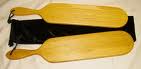
That was back in the late 1970's and seems ancient these days amid all of the fear of what is or is not politically correct. Imagine my surprise then, when I learned corporal punishment in schools, with a paddle, belt or strap, is still legal in 20 U.S. states.
According to reports, the numbers are staggering, with more than 200,000 kids hit in schools in 2007. Turns out, 150 years after the first state banned such actions, the matter is being brought to the congressional floor to follow suit. U. S. Rep. Carolyn McCarthy (D-N.Y.) is sponsoring legislation to end abuse in schools in all 50 states.
"Hitting children does not make them feel safe in school," McCarthy said in her opening statement of a congressional hearing on the issue, held April 15. She added, "Hitting children makes them feel humiliated, helpless, depressed, and angry."
Several expert witnesses in education and psychology testified at the hearing.
I, for one, can't believe corporal punishment is still allowed in schools as an accepted form of discipline. Physical abuse of any kind or severity is outlawed in prisons, jails and medical facilities. It is unfathomable to me that kids don't have the same federal protection.
It's about time.
April Scarlett is a freelance writer. Find her work at www.fromherdesk.com, www.successfulwomenweekly.com, www.aprilscarlettwrites.blogspot.com, www.aprilscarlettmotherboard.blogspot.com, www.positivelyaprilscarlett.blogspot.com, on Facebook search ASW-April Scarlett Writes and on Twitter @ajscarlett.
Comments
Heidi Hess Saxton
Sat, Jun 12, 2010 : 11:17 a.m.
Abolishing corporal punishment across the board (pardon the pun) would certainly be consistent with the current values of our culture. However, once one form of discipline is removed, what will take its place? What are parents going to do to ensure that teachers and administrators can maintain a learning environment that is not routinely disrupted by a few bad apples? Are the parents of those "apples" going to step up and resolve the issue at home? And when they don't... what then? No form of school discipline will work for long if it doesn't receive support from home. My school didn't have corporal punishment. We knew that all a teacher had to do was send a note home and my parents would see to it the behavior was never repeated. We were not allowed to bad-mouth our teachers because our parents ALWAYS took the teacher's side. How many households can you say that about now? We want our kids to have self-esteem; however, the true path to self-esteem is through achievement and self-discipline. There is nothing wrong with a child experiencing real consequences for wrongdoing -- though it is usually the parent that can most effectively administer consequences. However, if the parent abdicates this responsibility, the school MUST have a way to maintain order. Yes, there are methods besides corporal punishment, and there are schools that use positive reinforcement methods that work for the vast majority of students. Even so, there need to be stronger consequences for students that cannot be reached with conventional means. (Besides rewarding the student for misbehavior by simply removing him frequently from the classroom -- away from the teacher's influence.) It's important to distinguish between "humiliation" and the burn of a guilty conscience. The latter (which is formed not in a classroom but in a loving, consistent home) is what helps a child respond positively and appropriately to adult authority (parents and teachers alike). Kids crave boundaries -- and they will keep pushing for those limits until they get what they need. I've been in quite a number of classrooms as a substitute teacher, and have been dismayed to see the lack of self-discipline and disregard that kids show to their teachers and to each other. To give just one example of many, in one class a student used the "F-bomb" (that's what another teacher called it later, leading me to realize this was not an isolated occurrance) four times in two minutes - and when he was sent to the office, returned within fifteen minutes bragging that "they didn't do anything." (The teaching aide in class with me called the student's parent, but didn't seem the least bit optimistic that anything would come of it.) If you want to get upset about some aspect of classroom management, our students would be much better off if we parents focused on the other end of the spectrum -- the LACK of self-discipline and self-respect and self-control. We need to do a better job of backing up our teachers and schools. When that happens, corporal punishment will go away of its own accord -- in all fifty states.