

Ann Arbor Symphony takes listeners on a trip to far-off lands
Dreary March in Ann Arbor is not a bad time for a trip abroad. Anyone looking for a transporting experience in town, though, could have done no better than the Ann Arbor Symphony Orchestra’s “Scheherazade” program Friday night at the Michigan Theater.
Just as the “Arabian Nights” stories whisked readers off to exotic adventures, so, too, the did orchestra succeed on Friday in placing us elsewhere while we were fixed in our seats: most of all in Rimsky-Korsakov’s Arabian Nights-inspired symphonic suite “Scheherazade,” which gave the program its title; but also in Evan Chambers’ “Crazed for the Flame,” which opened the program; and in the Elgar Cello Concerto, with cellist Amit Peled as soloist. With their decidedly Eastern flavor, “Crazed for the Flame” and “Scheherazade” were an inspired pairing and a terrific frame for the concert.

Evan Chambers
If the Chambers’ piece was new to the audience—he created it in 2001 for the Detroit Chamber Winds and Strings and then completed a full orchestral version for the U-M Philharmonia Orchestra in 2005—Rimsky-Korsakov’s “Scheherazade” has had more than 100 years of musical life to become familiar. Even if this was your thousand and first hearing of the piece, Friday night’s performance would have seemed fresh.
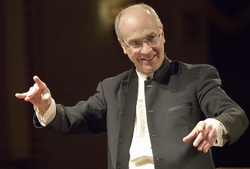
Arie Lipsky
courtesy of the Ann Arbor Symphony Orchestra
The Elgar Cello Concerto transports to a less happy place than either of the works that framed it Friday. In 1919, the year of its composition, the world, and England and Elgar, too, were still reeling from World War I. The concerto, autumnal in feeling, bears witness to the war’s emotional toll and to the end of an era.
Peled’s playing, resonant and deep and direct, was eloquent and affecting. Early on, his body language was distracting, but as he settled in, he quieted physically, letting the music speak for him and to us. His encore, simple, direct, and evocative, was a movement from Joachim Stutschewsky’s “Hasidic Suite.”
Comments
betablogger
Wed, Mar 20, 2013 : 5:55 p.m.
I agree with the other commentators that the Sheherazade was the highlight of the program. Besides the great solo work of the players already mentioned, so should mention be made of the excellent principal trumpet player. His tone was beautiful and he blended with the section as needed as well as standing out to the appropriate amount for the solo passages. No strident, overbearing, biting tone, no passage too loud, no edge, just good musicianship. What a refreshing change.
anonymous
Wed, Mar 20, 2013 : 1:04 p.m.
Looking forward to the season finale - Mahler Symphony No. 6! Congratulations A2SO!
RRB
Sun, Mar 17, 2013 : 10:15 p.m.
Very little in the review about the Sheherazade performance.. the best part of the concert in my opinion. Aaron Berofsky plays with such artistry and mastery of his instrument.. Ann Arbor is very fortunate to be able to hear such a sound on a regular basis! Sheherazade has such lovely melody's, dynamic percussion and pace. Combine that with Berofsky's intonation .. what more could be hoped for in a A2SO concert. As always Maestro Lipsky brought together another program worth remembering.
a2xarob
Sat, Mar 16, 2013 : 7:27 p.m.
It was a wonderful concert. And I was pleased to see that the Sheherazade was dedicated to Sherman Funk, World War II veteran and POW, and Inspector General in the Commerce and State Depts under several presidents. This beautiful, complex, difficult composition was a fitting tribute to a fine man.
glenn
Sat, Mar 16, 2013 : 3:25 p.m.
This was one of the nicest A2SO concerts I have seen. The cello soloist, Amit Peled, was superb and the Elgar Cello concerto was beautiful. I loved the encore and it is rare to hear soloists play encores these days. Maestro Lipsky has so much control and understanding of the music. Also, Aaron Berofsky demonstrated he is not just the concertmaster, but he is a virtuoso in his own right.