

Tipping in Ann Arbor - Is 20 percent too much?
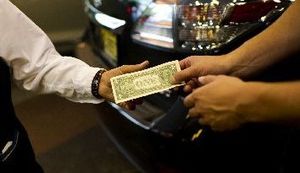
file photo
“You forgot this,” she said, handing my dad back a dollar bill or two and some coins. The old bastard had tipped somewhere around 3 percent—not because he’s cheap or mean, but because he just didn’t know any better. I took over the tipping duties from that day forward.
I have a lot of friends in the service industry. Bartenders, servers, baristas—do teachers count? I never talk to them about tipping, but following some grumbling around Restaurant Week and the recent Applebee’s flap, I decided to ask some of them about their own experiences with tipping in Ann Arbor and their thoughts on gratuities.
Two things before we start. First is a quick look at how much many of your servers and bartenders get paid per hour. The typical hourly wage for a service industry worker in this town is between $2.50 and $4. That’s before taxes. Tips round out the difference, but those are taxable just like the hourly wage.
The second thing is that Ann Arbor’s servers are not nearly as down on their clientele as I thought they might be. Yes, I got some horror stories, but the vast majority of anecdotes and information was positive. They make some really good points, you’ll see.
Tipping in bars
Husband and wife bartenders Jessica and Giancarlo Aversa have been slinging drinks in Ann Arbor for the last 10 years. Jessica has tended bar since 2002, working on South University and currently at Alley Bar, while Giancarlo has been behind the bar at Babs' and The Last Word. Perhaps because of their great personalities or drink-making skills, both have nothing but good things to say about Ann Arbor’s tipping ways.
“I started at the Brown Jug,” says Jessica, “and I’m sure it would surprise quite a few people how well the majority of our clientele tipped—20-30 percent on average.
"When Oregon football fans were here, another bartender and I waited on a group the whole weekend. They were over-tipping everyone ridiculously—buying a beer for $5, paying with a $50 bill and telling me to keep the change. The Friday before the game, one gentleman in particular wanted to buy us out of Jagermeister (which isn't possible, I assure you). He bought 100 shots to pass out, which cost him roughly $500, then tipped $200 and gave me another $500 to let him stand on the bar while he passed them out. We split that $500 among our door staff and kitchen staff.
"The next day, after the Wolverines’ unfortunate defeat, the same Oregon fans spent most of the rest of their evening at our bar. The same man from the night before ran up a rather large bar tab with me and tipped $1,000. That hasn't happened to me since, but I don't expect it to. If Oregon ever plays Michigan again though, no matter where I am, I will come out of retirement to wait on them."
Giancarlo may not have been the recipient of quite the same largesse, but he’s happy with the consistency of tipping.
“I think Ann Arbor tips well,” Giancarlo says. “It seems that over the past few years it's been 20-30 percent and it really hasn't mattered what bar I was behind. At Babs', we received good tips because we were fast, and made people smile and generally created a fun environment. It's still early in The Last Word’s life to get a good grasp, but we make good tips and people appreciate the care and knowledge that go into our drinks. I think it's a fun atmosphere and we try to get cocktails out as fast as we can.”
Jessica’s experiences at Alley Bar are similar.
“We’re blessed to have the most wonderfully eclectic clientele that also tips us in the upper 20 percent on average,” says Jessica. “Long gone are the days of 15 percent.”
“We work hard for our tips,” says Giancarlo. “I've never expected anything just for being there. Honestly, I try not to worry about how much someone tips me or what percent I make. I do take notice, and if it is consistently bad, I might be a little slower refilling your water or taking your next order. But I’ll serve everyone as long as they are respectful and pay for what they order. We feel good about receiving a nice tip. It lets us know people appreciate what we do.”
“Many people in the service industry have a sense of entitlement when it comes to their tips,” says Jessica.
“They forget that they have to earn them, and even if the customer is rude to you, you can't let them see you sweat. You have to still smile and do your job to the best of your ability. They are out to treat themselves, not worry about your bad day. It’s our job to brighten their day and take care of them while they’re patronizing our business. We stay in business because of them, whether they tip well or not. And in the end, if you do your job well, the good outweighs the bad.
"Some people may share badge of honor stories about people tipping poorly and how they chased them down. That’s not something to be proud of. Those people are in the wrong industry. I love my job. It provides me with the opportunity to meet fascinating people, with a creative outlet, and lastly, money to pay my bills."
Tipping in restaurants
Two servers working in the food industry shared their thoughts on tipping in their respective establishments. Both work at medium-end eateries downtown that appeal to a wide socioeconomic base.
“Each serving/bartending experience is unique,” says server number one, who we’ll call Megan.
“I get pretty good tips across the board. It's not uncommon to get $6-$8 on a $30 tab, which is generally the check for a table of two at dinner. Tables of six also tend to be good, hovering around 20 percent (usually $15-$20 on a $90 or $100 bill). Tables of four are often the worst offenders; a lot of time they’re families, and I see a lot of $8 tips on $50-$60 checks. Anything with eight or more people, we automatically add 18 percent, so those are always desirable tables, although I personally would rather take those two- and six-tops all night.”
“Most of the people I work with have been at my restaurant for one year or less or more than four years,” says server number two, who we’ll call Amy.
“The ones that stay have the ability to make a connection with a table in the short amount of time we spend with them. If you can make conversation with complete strangers and even make friends with them, then the service industry can be great. I don’t think servers should go into any situation expecting to be making 20 percent of their sales. I think most people still hold 15 percent as their standard, so I expect to put in the extra effort that make them stop and think about the excellent service they got, even if it’s only slinging food.”
“As far as tipping stories go, I've really seen everything,” Megan says.
“Before we started the automatic gratuity policy on larger parties (which is pretty standard at almost every restaurant I've ever been to), it wasn't uncommon to have an entire table of prom-goers or an office dinner outing completely stiff me on a $200+ bill. When people expect that gratuity added for them, often they don't look carefully enough at the receipt. On the other end of the spectrum, I had several regulars leave me very generous tips around the holidays, including an absolutely wonderful $50 from an awesome guy who comes in for lunch a couple of times a week. (he always tips very well as it is, but this was unexpected and so, so appreciated).
“In general, I come into every shift knowing that it's a crapshoot at almost every table,” Megan continues.
“I do my absolute best to get a read on my guests and create the environment or experience that they want. Sometimes people want to eat and be left alone and won't make much of an effort to connect with me. They might even come off as kind of a jerk, but tip 15 percent to 20 percent. Other times, I might spend extra time with a table, go above and beyond to tend to their needs, and get the dreaded "verbal tip," which usually includes praise regarding their experience, but an inappropriately low monetary tip.”
“I think that people who think tipping isn’t mandatory are very ignorant to the lives that most servers lead,” says Amy.
“A lot of people are going through school, or worse, they made it through school, racked up debt, and now can’t find a job with that nice bachelor’s degree. A restaurant couldn’t function without being able to pay their serving staff $2.65 per hour. Without that factored in, prices for going out to eat would skyrocket. By choosing to go out to eat and have a person wait on you, you enter into a social contract where you’re expected to tip the wait staff so everyone can enjoy socializing over food and drink at public establishments.
“People need to think about the servers that are, in essence, working for them. We get paid next to nothing, work up to 14-hour shifts with no breaks, and where I work, there are no smoke breaks. We never know what time we’re going to be done with work. We don’t have weekends or vacations for that matter. And every now and then, you get the customer that comes in with the attitude that you don’t deserve their hard-earned money. I work very hard for the money I make, and believe me, I’m no royalty.
“I guess what bums me out the most is this scenario,” says Megan. “A couple or a family comes in. No one smiles. Everyone's noses are buried in their phones for the whole meal. Someone hands me a coupon at some point. Someone else doesn't like their food, but won't admit it. I'm not having fun. They're not having fun. I get a crappy tip on their discounted check. It's the worst. I just wish people would treat going out to eat as something to look forward to and enjoy. Know that you're going to spend some money. Consider what you're tipping in the scope of what you're spending. Often, a few more dollars on that tip line makes a huge difference to the server, and most people won't miss an extra $5. If you're spending $50 on dinner, spend $60 and tip 20 percent and celebrate that you had a night out and reward your server for their service.”
“A good tipper can make your whole week,” says Amy.
“I had a 12-top party a few weeks ago on a Saturday afternoon. They were celebrating three birthdays with one extended family and were out to have a good time. I did everything I could to make their experience great. At the end of the meal, I handed out three separate checks with an automatic 18 percent gratuity added on, which I circle and draw attention to for every large party I have. My guests all acknowledged the automatic gratuity, and tipped me on top. I ended up getting around 35 percent on that table. It made me feel so great to be appreciated, and it's experiences like those that remind me why I am pursuing a serious career in the hospitality industry.”
Richard Retyi returns to AnnArbor.com with his new column Hidden Ann Arbor. Rich will write about the hidden side of Ann Arbor and the things locals take for granted. In his day job, Rich is a social media director for a digital marketing agency in Ann Arbor. Read more of his stuff at RichRetyi.com or follow him on Twitter.
Comments
4321spoken
Mon, Feb 11, 2013 : 6:59 p.m.
It use to be 10% then %15 percent now 20%? I'm sorry I make $8.75 an hour working I can't afford 20%. That's why I go to Wendy's or Mcdonald's Why doesn't the restaurant pay for there help?? Why do I have to pay for the restaurants help? What really bothers me is going to Mongolian Barbecue downtown. I get my food, I stand in line and I carry it back to my table. Why am I paying a 20% tip??? Sorry some people don't make enough money to pay a 20% tip.
1959Viking
Sun, Feb 10, 2013 : 6:07 p.m.
I'm just shocked that "depends on service" only polled 6%. My tipping will range from 10% to 50% (usually 20%+) entirely dependent on the quality of service received. I know they can't control a slow or overwhelmed kitchen; however, stopping by to refill drinks and to acknowledge the delay is appreciated. Something that always impresses me is when a server will actually pause to let me swallow my food before asking if everything is OK. Effort is all I ask, if you try to earn it you will.
Hesh Breakstone
Sun, Feb 10, 2013 : 1:25 p.m.
Don't be a Mr. Pink... http://www.youtube.com/watch?v=Z-qV9wVGb38
Hesh Breakstone
Sun, Feb 10, 2013 : 1:23 p.m.
I tend to tip pretty well for two reasons: First I don't want to be like Mr. Pink in the film Reservoir Dogs.... And second wait staff are typically compensated poorly by their employers knowing or expecting the customers to tip the staff. They are often sons and daughters too, especially in the A2 community, and my hope is that we would treat them well as we would wish our own sons and daughters to be treated. As such IMHO 20% is too low, way low....
SusieJ
Sun, Feb 10, 2013 : 12:17 a.m.
It's too bad we tip servers because owners don't even pay their employees minimum wage. How many of us could get by on $2.00 an hour for the hours we weren't tipped.
cheef16
Sun, Feb 10, 2013 : 12:14 a.m.
This quote in the article doesn't make any sense: "A restaurant couldn't function without being able to pay their serving staff $2.65 per hour. Without that factored in, prices for going out to eat would skyrocket." Waitstaff expect the difference between the discounted wage and a living wage to made up by patrons. Adding this cost directly to the bill wouldn't change the cost of going out to eat. Either way, the expectation is that the diner will ensure the waitstaff and others receive an adequate wage. Adding the labor cost directly to the bill, however, would impact a customer's ability to evaluate whether waitstaff earned a reasonable wage through his/her delivery of services. The belief that adding the cost of the average tip to the menu price of a meal will stifle demand may have some psychological merit but there really isn't an economic basis for the argument that I can see. Twenty percent as a tip is equal to a 20% labor surcharge being included in the menu price. Either way, the total cost of the meal is equivalent.
javajolt1
Sat, Feb 9, 2013 : 5:49 p.m.
I think it is criminal to under tip or stiff a hard working wait-person. On the other hand, the story doesn't address the other side of the coin: rude and abysmal service. It's rare but happens. The expectation that one should tip well should be aligned with the expectation service should be decent as well. Frankly, I've seen wait people that have the expectation their tip should be great without doing anything but less than the bare minimum. I tip much better for a much better experience. I'd prefer to have mediocre food and excellent service rather than excellent food and awful service.
javajolt1
Sat, Feb 9, 2013 : 11:30 p.m.
True that
JGS
Sat, Feb 9, 2013 : 7:47 p.m.
Agreed, but I'd rather have excellent food and excellent service. This isn't rocket science. There are exceptions, but 99% of the time I expect excellent food and excellent service. Not too much to ask if I'm tipping as well as I am.
PersonX
Sat, Feb 9, 2013 : 4:57 p.m.
The whole tipping thing is a crazy way of putting off part of the wages for staff onto the customer. In most European countries the salaries of waiters are higher and are therefore counted in the price of a meal. You tip a small amount to reward good service. Tipping here has little to do with evaluating service as it is simply expected, so the prices you see on the menu seem less than they really are.
Middy
Sat, Feb 9, 2013 : 4:43 p.m.
I tip above 20%, partly to make up for the people in this world who are cheap and mean and shouldn't be eating out if they are not planning on tipping. Also, you should consider that your waiter/waitress is paying out her busboys and bartenders from that 20%. That is a very tough job and at the end of the day they have no fame or fortune, they only have tired feet and an aching back. When you go out to eat, you should be thankful that you were waited on and that someone cooked you a wonderful meal. The fact that you paid for it does not make it any less terrific, it's just an agreed upon way to show your gratitude. You've paid for your food, now pay for your service or stay home.
DannnyA
Sat, Feb 9, 2013 : 11:59 p.m.
you have it completely backwards. it's the servers who need to appreciate the people they are serving. not the other way around. they're the ones who need to learn how to provide good service or stay the F home!
JGS
Sat, Feb 9, 2013 : 1:49 p.m.
A great story and some great comments (213 at this point). My two cents on how I tip. I set my base tip at 20% for a meal and / or drinks whether it's an upscale restaurant or a coney island. If the service provided is outstanding, I'll tip more. If it's average or even a bit below average I'll still tip 20%. I have a hard time leaving someone less than 20% even if I get terrible service. Yep I'm a sucker and I'm born every day, but right now in my life I have the ability to do this. I know of people that live for their tips and if they don't get what they have come to *expect* then their week/month is tight. Oh and my wife tips at the mani/pedi place at least 20% - what's the standard on that? I'm good with it as they are paid with tips too. Bottom line - if you can afford it, do it. If not, then don't. I'm not the authority on this and I don't pretend to be, so don't shoot me. :)
Tru2Blu76
Sat, Feb 9, 2013 : 5:55 a.m.
I'm in favor of adequate tipping, provided the server is at least competent. One of our family has been a waitress since high school: she started in burger shops and went to the top of the restaurants in Bloomfield Hills /Birmingham. She made a good living - enough even to support mortgage payments and other living costs when her husband was out of work for a time. Her KEY to success was a friendly approach to everyone and an absolute competence in "how to be a good/great waitress." I judge every waiter and waitress based on what I've learned from our family member. I also of course judge based partly on how good the food is. I do not penalize the wait person for poor food - sticking to a 20% tip which I learned from other people is about standard. I just don't go back to that restaurant - there are too many others serving wonderful food. Otherwise: I think this topic is too deep and broad to be spanned by any one article. I will say that I think every restaurant meal should be considered (and remembered as) some kind of celebration. Just being able to afford a restaurant meal (or even a good pizza delivery) is cause for that much. And I do believe that restaurant dining is a two-way street: the customer and the service people should always be at least polite and act as if there's reason to be happy about being there. Count the number of your years and deduct the ones you've already spent: means making the most of the time we have left.
nunya III
Sat, Feb 9, 2013 : 2:26 p.m.
Very nice
Jaime Magiera
Sat, Feb 9, 2013 : 4:40 a.m.
If people actually spent time watching how U.S. citizens treat waitstaff, waste food and generally act likes maroons when they eat out, the poll would be unnecessary. Try it some time. Instead of focusing on your food and conversation at a restaurant, watch the people around you. Watch how they treat waitstaff, how much food they waste and how self-immersed they are. At least 20 times a day, a waitstaff has to ask if a customer wants a side and then iterate through all the options because the moron behind the menu can't read "comes with a side from our side menu...", then, take the time to move their eyes 10 inches to the other part of the menu where the sides are and make a decision *before* they try to order. Each day waitstaff have to deal with that. Tip well. Extremely well.
Paul Taylor
Sat, Feb 9, 2013 : 4:38 a.m.
I know this will cause certain people acid reflux, but I never tip less than 10%, and usually come in around 20%. I have had friends who waited tables, and know how hard it can be. I also tend to be a softie, and can see if a server is having a bad night. I just like to send a harried server home with a smile. Anyone who will stiff on a tip is soulless, and one step above a dine-and-dash.
GetRealA2
Sat, Feb 9, 2013 : 1:29 a.m.
In my opinion, 15% on the pre-tax amount of the bill is fair for acceptable service, 18% for very good service. However, automatically deduct 1% each for "How're you guys doing?" (even more when "gals" are present), "What kin I getcha?", spiky dyed hair, excessive body art, any kind of visible piercing (I don't want nose ring drops falling into my soup), excessively slow or rushed service, and a poor, "I wish I was doing something else" attitude.
Richard Retyi
Sat, Feb 9, 2013 : 1:39 a.m.
Solid points. Let me add to your gratuity deduction list. -1%: Too short hair on ladies, too long hair on gentlemen -1%: Use of the word "appeteasers" -1%: Too shiny shoes -4%: Skirt above the knee for women, loose pants for men
DJBudSonic
Sat, Feb 9, 2013 : 1:02 a.m.
TIP means To Insure Promptness with your service, right? So how many people tip when they sit down, before the bill comes? Anybody? Also, I tip my barber. Anybody else?
music to my ear
Sat, Feb 9, 2013 : 2:08 p.m.
I never knew that thanks that is what tip means
Paul Wiener
Sat, Feb 9, 2013 : 1 a.m.
I have never tipped 20 percent and never will, until I see proof that service for anything has improved by 5% since the 15% norm was established.
MjC
Sat, Feb 9, 2013 : 2:48 p.m.
Until you get a job as a waiter you probably will never "get it"... I say you stay home and eat in.
C.C. Ingersoll
Sat, Feb 9, 2013 : 12:09 a.m.
A couple days ago I got my tax return so I treated myself to $30.00 worth of pizza (+ free delivery). I tipped the driver who delivered it $6.00 and he thanked me graciously. According to him roughly %50 of the people he makes deliveries to don't tip. If I don't feel like leaving the house and I call to have someone deliver hot food to me through 3" of snow I make damn well sure to tip them!
DannnyA
Fri, Feb 8, 2013 : 11:58 p.m.
if you're a sever and you're reading this, here's something to keep in mind. you may think you have a charming and interesting personality, but honestly, you don't. so just do your job, be polite, and get out of the way so i can enjoy my meal. I am not there because of you. and quite frankly i couldn't care less if you were there or not. so stop thinking you're so special and that i'm there to make YOU happy. i will tip you well if you remember this and I will not tip you well if don't or if you talk to me like i'm retarded or an infant. treat me like an adult and I will tip you like an adult. and one more thing, lose that ridiculously over-enthusiastic attitude. you may think people enjoy having their butts kissed, but seriously, they don't. so knock it off.
DannnyA
Sat, Feb 9, 2013 : 11:55 p.m.
Music, you need to see a shrink if thats what get you off. MjC, I'm tired of spoiled Americans who think everything they do is special and that waiting tables is so difficult. It's not! I did it for 3 years in college. Servers are there to SERVE people so do it and stop complaining and stop pretending you care so much! Servers don't CARE about their customers. They are there to make money, so why am I supposed to act like I care about them? I am polite, I tip above average, but I dont 'care' about them. What I care about is getting a nice meal in a pleasant environment. A good server should understand this, the less seen the better. Like an umpire. in baseball You're doing a good job when you're not noticed. And by the way, i have plenty of friends who are servers. But when I'm in a restaurant, I'm not there to be friends.
MjC
Sat, Feb 9, 2013 : 2:46 p.m.
@DannyA - Ahh, yes. You are the reason I tip my servers over 20% - because I know they have to put up with people who "don't care". I'm sure they know you don't care - good job for making this a kinder world to live in. You know you can have a pizza delivered and just stay home.
music to my ear
Sat, Feb 9, 2013 : 2:06 p.m.
kissing butt is part of the job,and sorry to here you dont like it butt some of us who never get thier butts kissed enjoy it. it helps lift my self esteem.and shows me they care to please me what is wrong with that butt I am just sayin,
Sandy Castle
Fri, Feb 8, 2013 : 11:30 p.m.
My philosophy is to never piss off your waitperson or your hairdresser for obvious reasons, one more obvious than the other...lol. Joking aside, I very rarely tip less than 20%, but my pet peeve is when the dishes are not cleared from the table, and that's a definite deduction. If the service is above average I tip more.
Ann Arbor Nurse
Fri, Feb 8, 2013 : 11:12 p.m.
I am wondering if you should tip more if you stay a longer time, or don't order very expensive meals? My boyfriend and I often spit meals due to portion sizes being so large. We usually do get drinks too, so that adds a little to the price. We always tip at least 20%, but could we still be viewed as "cheap" for not racking up a very expensive bill?
Morty Seinfeld
Fri, Feb 8, 2013 : 10:48 p.m.
My son Jerry got me a hot Wizard tip calculator, so I usually go by what it tells me.
JRW
Fri, Feb 8, 2013 : 10:46 p.m.
In the past, my wife and I would go to one particular local restaurant and split a meal (before the prime dinner hour), which in the past has had generous portions on several dishes. We also tipped 20%+. After doing this a few times, the restaurant starting service us the same dishes we had ordered in the past with smaller portions. We got the feeling they resented us sharing a dinner and decided to make the portions smaller and discourage sharing. So on the last visit, we tipped zero and decided to not go back. Too bad. We were loyal customers. There were not many people eating dinner between 4 and 6 pm, and now they have another empty table on a permanent basis.
JRW
Fri, Feb 8, 2013 : 10:34 p.m.
Tips should be based on service and the amount of the bill, pre-tax. If it's dreadful service, my wife and I leave nothing. If it's marginal, we leave 10%. If it's good, we leave 15% and if it's great, we leave 20% and sometimes more. The concept of a gratuity is to pay extra for the service provided. If the service is good or bad, the amount of the tip will reflect that. Otherwise, there is no motivation for servers to do their job well. And no, I don't agree with adding tips into the price of food. No incentive for good service. Food prices are already inflated in restaurants and they should only reflect food, not service.
A2Hallie
Fri, Feb 8, 2013 : 9:50 p.m.
Extracting credit card processing fees is ILLEGAL, though I hear many restaurants do it. Don't tip on tax. When ordering delivery, I hate it when the order taker asks me if I want to leave a tip? What the heck? I haven't even gotten my food yet. Then there's Relax Station where upon cashing out, your cashier which is often the same person who just gave you a massage, asks if you want to leave a tip "because their system is not built so the gratuity can be processed later. B.S. $2 to the counter person for throwing your falafel into a paper bag? I love J Garden, but over the years service has been downright rude. If a worker hates their job, get the hell outta the kitchen.
seldon
Sun, Feb 10, 2013 : 2:09 p.m.
It has NEVER been illegal. What it may be is a violation of the agreement between the merchant and the credit card company, which makes it potentially breach of contract. They could get their ability to accept the card removed, but it's not illegal.
Jonathan Blutarsky
Sat, Feb 9, 2013 : 12:07 a.m.
http://business.time.com/2013/01/25/a-4-surcharge-for-using-a-credit-card-legal-but-not-likely/
Machine
Fri, Feb 8, 2013 : 9:40 p.m.
I tip waiters and waitresses well. I realize that their hourly wage is less than minimum because tips are expected to make up the difference. What I don't appreciate is all the other people that seem to expect a tip these days. There seems to be a tip jar on every sales counter in town and it's actually sort of offensive. You took my money and gave me a bag with a sandwich in it. Congrats. Why should I give you a tip?
Doug
Sat, Feb 9, 2013 : 6:42 p.m.
Agree with all of the above - I feel like I'm being panhandled.
JRW
Fri, Feb 8, 2013 : 10:51 p.m.
I agree. I resent being asked for "extra" money at every turn. We often use the self-check out lanes at Meijer and Kroger. Unfortunately, Kroger will occasionally have clerks "working the crowd" in the self-check-out lanes, asking for "donations" for this or that. The answer is "no" and "don't bother me while I'm trying to scan my groceries." The other obnoxious money scam is being asked constantly at Whole Foods in the check out lane if we want to "donate our change" or "donate our bag credit." The answer is always, "no thank you" but we resent being constantly asked.
awesomeblue
Fri, Feb 8, 2013 : 9:45 p.m.
totally agree...by these standards we should start tipping the cashiers at meijer for helping take the money out of our hands and putting it into the cash drawer so we didn't have to do it ourselves and then they handed us the bagged groceries!
Jaime
Fri, Feb 8, 2013 : 9:34 p.m.
The amount I tip depends upon the service I receive, the time of day and how much time I spend at the restaurant. A quick in and out lunch is usually closer to 15%. An evening meal before 6:30 is closer to 18% and after 7:00PM is usually 20%. If I am with friends and spend extra time chit-chatting I add to the tip. I deduct for crummy service and add for exceptional service. In many countries, especially in Europe and the UK, you don't tip at all. They must pay their service people a decent enough wage. I wonder how many of the wait staff declare all of their tips to their employer and the IRS. Employers are supposed to contribute their share to social security for tips.
cookiemom
Fri, Feb 8, 2013 : 10:26 p.m.
How much do you add to your tip (approx) when chit-chatting with friends? I try to be generous when in this situation, and also try to monitor the crowd at the restaurant, but I never know if I am leaving enough to compensate for the "lingering".
A2comments
Fri, Feb 8, 2013 : 9:40 p.m.
Why is "after 7PM" a bigger tip than 6:45? I don't get that logic.
A2comments
Fri, Feb 8, 2013 : 9:08 p.m.
The new math. An "upwards of $30" bill with a tip of a "dollar bill or two and some coins" is "somewhere around 3 percent". I hope you went to Michigan State... If the bill was $30 and he left $2.50, that's 8.3%. If he left $1.50, the tip was 5%. And, since you don't know the actual tab, nor can you remember the amount of the tip, you don't know what "the old bastard" really tipped. Nor do you know the opinion he held of the service. I'll be he loves you calling him "the old bastard".
Richard Retyi
Fri, Feb 8, 2013 : 10:07 p.m.
CincoDeMayo: I'm not sure you heard. My dad. Is dead. (I'm just being stupid, sorry. Dead Dad would understand). To flesh out that little open a bit more. My dad had probably in the neighborhood of three beers and at least a brandy or two. I'm sure my mom and I had a few drinks. We had three meals and dad is/was notorious for leaving terrible tips. I believe he only left change, but I wanted to give him the benefit of the doubt in my piece. But it was probably something like an 80 cent tip on a $50-plus bill. Again - it was 2004. A long time ago. And I can't ask my dad for the particulars. You know why.
CincoDeMayo
Fri, Feb 8, 2013 : 9:49 p.m.
Seriously Richard, haha, that was my first thought, too - that I wasn't sure that you should be the one to take over the tipping since your description left open the possibility of at least $2.99 on a $30. bill, so closer to 10% than 3% --- and that was probably some years ago when 10% might not have even been so bad. Alas, I was thinking logically and my son chastised me for ruining the great opening story to your very interesting article.
Richard Retyi
Fri, Feb 8, 2013 : 9:32 p.m.
A2comments: It was a long time ago. My dad is dead now. I hope you're happy.
kris
Fri, Feb 8, 2013 : 9:07 p.m.
I almost always tip 20%, occasionally going a bit lower if the server never checks back and occasionally going higher if the server is exceptional. I've made sure to tell my high school kids who are starting to drive and going out to eat by themselves to be sure to always tip appropriately...if you can't afford to tip, you shouldn't eat out. What I wonder about is what to do about tipping at places like Frita Batidos...you place your order at the counter but a server brings you the food and will wrap up your leftovers? They have a tip bowl...what percentage...what's expected?
awesomeblue
Fri, Feb 8, 2013 : 9:06 p.m.
I never understood why tips are based on the amount of a bill if I go to a restaurant and order an entree whether this entree is at a Dennys, Applebee or Grange, the server does the same amount of work in taking my order, bringing me a plate of food, refilling my water, checking on me, and bringing me the bill at the end. The contents of the plate should not matter, that is where the chef's job is (and they are paid well). Just because a steak is more expensive than a chicken entree, the server did not cook any of that, they simply take the plate and bring it to the table, nothing more nothing less so why am I paying more in tips to eat steak versus chicken at the same restaurant when the server did the SAME AMOUNT OF WORK? Tips are earned by servers not entitled which means tips are for the service they provide so if they are providing the same service of setting a plate of chicken or steak in front of me, the tip should not be different. Same concept if you order a plate of chilli cheese fries at Dennys and you order a entree of pork at the Grange, they're all served on a plate that the server carries over which means SAME AMOUNT OF WORK DONE however the tip based on percentage would mean the server at the Grange would get a lot more in tip than the server at Dennys. How is that fair to servers or customers? I think there should be a universal set amount of tip for the service servers provide on an average meal since it is the same stuff they do at different restaurants. Unless it is a 5 course dinner or something special where the waiter has to provide more work than the usual protocol of taking your order, briging you your food, refilling you water, checking in with you and then briging you a bill, that universally accepted tip amount for that work done should be the same. It is my choice of what I want the chef to cook for me and that is why I am paying more for more expensive food items but that has NOTHING to do with the server.
A2Hallie
Fri, Feb 8, 2013 : 10:32 p.m.
Repetitive.
CincoDeMayo
Fri, Feb 8, 2013 : 9:44 p.m.
Well, awesome blue, I agree with your thinking, but I don't think there needs to be a "standard tip amount". I think we can just use the 15% - 20% as an average guideline and realize that if you are dining in a less expensive restaurant, or eating a less expensive meal, to be fair to the wait staff, the percentage of your tip is going to be greater.
awesomeblue
Fri, Feb 8, 2013 : 9:20 p.m.
just to make it clear, I am not saying we should tip servers less or more just that there should be a set amount for the work servers have to do so that it is fair to all servers and customers and you should definitely tip more when you get exceptional service but we need to have a standard tip amount not based on percentage because that is not a fair way to do it
awesomeblue
Fri, Feb 8, 2013 : 9:11 p.m.
servers please tell me if I am wrong, are you doing more work by taking a plate of steak to me and walking the same distance to my table from the kitchen versus doing that same walk and taking a plate of chicken to me?
Sooze
Fri, Feb 8, 2013 : 8:49 p.m.
I was a waitress in college (way back when) and got .50/hour with pooled tips, maybe $1.50 total. But it was more useful than my classes: I learned to be efficient, pleasant even when the customers weren't, and good at prioritizing. I have been tipping 20% for several years now and always try to notice how the waitstaff is managing: don't punish them if the kitchen is the problem!
J. Zarman
Fri, Feb 8, 2013 : 9:39 p.m.
@Sooze. I like your approach. Tell those of us who have never waited tables, how we can tell if the kitchen is the problem, or if the server is the problem. Also, what about when a server apologizes the first time at the table, says something like, "Two servers called in, so there are only three of us this shift."
buvda fray
Fri, Feb 8, 2013 : 8:47 p.m.
20% is pretty standard. If a waitress gets sticky sweet for the first time all night when she brings the check, and writes her name with a cute smily face on the check, then I will shoot for 18%. Sorry, but being nice and thoughtful during the entire meal is where it's at and 15% on the credit card plus a 20 in cash is not out of the question. It's really fun to tip people who don't expect it, like a 5 or 10 to the guy in the lumberyard who picks through crummy 2x4's to find the straight ones and puts them in the car for you.
DeeDee
Fri, Feb 8, 2013 : 8:42 p.m.
Just remember that the servers get taxed based on the ASSUMED amount of tips they receive - calculated on restaurant revenue etc. So, if you don't tip appropriately they get a double penalty by being taxed on the amount you didn't tip. Restaurant work is hard - treat the servers with kindness!
jasna
Fri, Feb 8, 2013 : 8:36 p.m.
You should NEVER stiff your waitperson. That is simply rude and arrogant. Unless, of course, you had to physically get your own drinks, your own food, clean and set your own table, vacuum or sweep your personal dining area and wash your dishes when you were done. 15% is the basic tip. Decent service gets a decent tip. 20% is what I usually tip because i usually have good service. 10% is the minimum tip - even for crappy service. As long as they brought you food and water, then you should show minimum appreciation. 10% implies you were not happy enough to give a basic tip, but not arrogant enough to think another human should wait on you for free.
A2Hallie
Fri, Feb 8, 2013 : 10:30 p.m.
Many servers don't even bring a water to start. Servers do not wash their guests' dishes. 10% implies "your service was not up to par". TIP: to insure prompt service.
A2comments
Fri, Feb 8, 2013 : 9:25 p.m.
I don't agree. A server with an attitude gets a LOUSY tip. If the experience is bad, go tell the Manager to tip the server if they want a tip. I'll ask for a new waiter/waitress if my service is awful. And I write "slow kitchen" or "bad service" on my receipt if applicable, so the boss sees it.
Frustrated in A2
Fri, Feb 8, 2013 : 8:36 p.m.
I tip at the 20% rate or a little higher unless the service is bad but even then I know the person has bills like I do so I will at least do 15%. Always tip off of the original bill amount not the discounted coupon rate.
John of Saline
Fri, Feb 8, 2013 : 8:28 p.m.
Some academic research on tipping: http://tippingresearch.com/most_recent_tipping_papers.html
thinker
Fri, Feb 8, 2013 : 8:27 p.m.
Pay the was it staff minimum wage, and the tip--15%-should go to them too!
southsiderez
Fri, Feb 8, 2013 : 7:54 p.m.
I don't understand the headline. Why would tipping 20% in Ann Arbor be too much? (The answer is no. The standard in the U.S. is 15-20%.)
Huron74
Fri, Feb 8, 2013 : 7:54 p.m.
Tipping, AKA "begging," is a demeaning bourgeois practice imported from Europe that should tossed in the ash bin of historical progress. Same for cab drivers, hotel staff, cab drivers, food delivery and the rest. Tippees: Tough noogies wage slaves. Get a job where you don't have to beg. And to the bar/restaurant owners: Pay the minimum wage to these people at least. Quit exploiting your employees.
seldon
Sun, Feb 10, 2013 : 2:08 p.m.
Wow, I'm going to guess that Huron74 has only ever seen Europe in the movies. In real life, they do a lot less tipping there.
nunya III
Sat, Feb 9, 2013 : 2:15 p.m.
I know you want to be civil and all a2.sham but sometimes you just have to call a donkey a donkey
nunya III
Sat, Feb 9, 2013 : 2:12 p.m.
And while you're at it 74, if you do eat out, please inform your server you consider tipping "begging". Enjoy your meal!
vivian
Sat, Feb 9, 2013 : 1:41 p.m.
'Demeaning bourgeois practice imported from Europe'? I don't think that's accurate--I've spent a fair amount of time overseas, and I've more frequently seen small charges--around a euro for bistros, pizzerias, and the like, a few euros for fancier places--automatically added to the check. Many Europeans I've talked to say that they may leave some additional cash on the table for a particularly good server, but they consider the built-in charge sufficient in ordinary circumstances. Some have expressed puzzlement, in fact, by what they consider the peculiarly American practice of discretionary tipping. Huron74 didn't say where his (her?) information came from, but s/he must not be frequenting the same places I do.
Tru2Blu76
Sat, Feb 9, 2013 : 7:16 a.m.
Dripping generalities and bad attitude, he comes forth pretending to know something about making a living. Really lame. And if "Huron74" is a reference to your college and graduation year: now we know why EMU is considered by one an all a bottom of the barrel educational institution. Didja have to beg for that diploma? ha-ha. ;-)
A2Hallie
Fri, Feb 8, 2013 : 10:27 p.m.
Oh yeah. And to the restaurant owners who want their tipped employees to do extra cleaning tonight so they can feel a sense of ownership......what the hell are you talking about? $2.65/hr to clean so I can feel like I own...what, a piece of silverware? Unreal.
Chris Carpenter
Fri, Feb 8, 2013 : 7:39 p.m.
I tip based on service. If the service is , they get 5-10%. By bad I mean, they stand around talking while my glass is empty and after my plate is finished, leave it for me to stare at. After they drop off the food, they never come back and ask how it is. If the service is average, fake smile and small talk, minimal follow up on refills and clearing. I give the standard 15%. If the server is really trying, making my meal a pleasant experience for us, then I will tip anywhere from 20-30%. Sorta the server reaps what they sow.
A2Hallie
Fri, Feb 8, 2013 : 10:25 p.m.
Sounds like my last experience at Macaroni Grill. Emphasis on Last. The waiter was lazy as all get out. Arrives at table, says nothing. Sits around eating his own meal while my drink glasses are ice cubes only. Brings a check without a simple would you like dessert or anything else this evening? Grrr.
drewk
Fri, Feb 8, 2013 : 7:39 p.m.
I don't understand the increase from 15% to 20 %. The cost of the meal continues to go up, so the total dollar amount climbs as well. I know many waitstaff, and they aren't ashamed to admit that they bring in 20t dollars an hour.
nunya III
Sat, Feb 9, 2013 : 2 p.m.
I'm ok with a server making 20 bucks an hour as long as they are good. They work hard and put up with a ton of shi.... I mean stuff
Chris Carpenter
Fri, Feb 8, 2013 : 7:45 p.m.
I feel 15% is the standard tip for average service. If someone goes beyond and makes your meal extra enjoyable, loosen up on your coin purse scrooge and give them a little extra.
1201SouthMain
Fri, Feb 8, 2013 : 7:33 p.m.
My wife and I eat out too much and we tip too much. That's our choice but I wouldn't expect everyone to feel obligated to tip 20%. One thing I do think about is the difference in the money the staff is making based solely off the price of the food. We can decide to go cheap one night and stop into a Big Boy or Denny's and our total bill won't be $20. Great waitress. Great service. I leave $5 or $6. Waitress has 20 tables over the course of a busy night and makes less than $100. We go downtown to Logan's, Chop, etc and our bill is $100 plus. Great waitress. But not better than waitress at Denny's. Great service. But not better than service at Denny's. I leave $25. Waitress makes same number of trips to my table. Probably a trip or two less at Chop, etc. Carries same amount of plates, refills, napkins, etc. Chop waitress has 8 tables a night and walks with $200 plus. Not always I know, but it's not rare to walk with that much on 8 tables. Why the difference. I'm not tipping more for the quality of the food or the ambiance. That is built into the price of the food. Am I paying more just because my waitress tends to be a little younger or maybe more attractive than the older waiter/waitress at Denny's? There is poor service at Denny's but there is less than great service at Chop on some nights. My question is if the service is equally great why should I tip based on the price of the food? Seems to me great service on a two top deserves $10 - $15 bucks regardless what the cost of the food on the plates.
justcurious
Sun, Feb 10, 2013 : 5:01 p.m.
Interesting thought. I'm going to keep this in mind. Maybe the formula is not really fair?
CincoDeMayo
Fri, Feb 8, 2013 : 9:34 p.m.
I'm with you 1201SouthMain.
Chris Carpenter
Fri, Feb 8, 2013 : 7:43 p.m.
I guess the server makes a choice where they work. Never could understand why a good server would work where the food bills are low. That would be a good place for a first server job to gain experience, but if your good , why not move up to the big leagues. Look at sports, someone in the minors gets chump change to play and major leagues are millionaires. If you choose to be a server in the minors, you won't get big tips.
Becky H
Fri, Feb 8, 2013 : 7:30 p.m.
When I eat out, my tip amount starts at a base of 20% on the post-tax amount (more if it's happy hour and menu items are especially cheap). The waitstaff has to REALLY ruin my meal for me to start dropping it to 15%, but it has happened occasionally. But a 15% tip after the 6% tax still works out to a 15.9% tip on the pre-tax amount.
Becky H
Sat, Feb 9, 2013 : 8:51 p.m.
I tip on tax for two reasons: 1.) Generosity, and if the service was good, I'm happy to tip the waitstaff more. 2.) A lot of times you just get the credit card charge receipt back which only lists the amount that was charged on your card (not the pre-tax amount), and it's easier to do the math in my head on the post-tax total than to divide by 1.06 and THEN calculate the 15-20%.
A2Hallie
Fri, Feb 8, 2013 : 10:21 p.m.
Cannot believe all the people who tip on tax....why?
rasquat
Fri, Feb 8, 2013 : 7:01 p.m.
Question: what about places like Mongolian BBQ? That place in particular has always confused me - the servers just bring drinks and the like (unless you're ordering apps and desserts, which I don't), not the meal. Do the servers there get paid the avg. $2.50? What about the grillers?
A2Hallie
Fri, Feb 8, 2013 : 10:20 p.m.
The grillers make a cook's wage and the servers make $2.65hr. Who wants to get their own food?
Edward Green
Fri, Feb 8, 2013 : 6:59 p.m.
I thought the protocol was this: 0-5% for attitude and extremely lousy service 10% for crappy service 15% for mediocre service 20% for great service When someone pulls attitude and makes false charges, I feel no way afraid to confront them and tell them they're getting a lousy tip. But usually I am 15-20%. If I know the restaurant or bar well, it's almost always 20% and above. People who pay 20% no matter what are probably bleeding hearts that reward poor to excellent service blindly. I think you should reward people for their effort. Most people in this town do a great job, but when you a. try to give me back incorrect change multiple times b. add 2 or 3 drinks to my tab c. forget to check on the table for 30-45 minuntes d. sell me crappy wine because you think younger ppl know nothing. or d. say everything on the menu (at an expensive restaurant) is great then you get a lousy tip...
A2Hallie
Fri, Feb 8, 2013 : 10:18 p.m.
Great post. Or, for me, e. when I used a restaurant.com coupon that was a perk from my new credit card company and the broad at Sweet Lorraine's near Livonia adds a 20% up charge to my original subtotal but only brings back the credit card slip for me to sign, you better believe I will bring it up to the manager's attention.
Chris Carpenter
Fri, Feb 8, 2013 : 7:47 p.m.
Hi Edward. Great point. If enough people gave the crappy servers 5 to 10%, eventually they would quit being servers and find a job they enjoy.
independent1
Fri, Feb 8, 2013 : 6:58 p.m.
When we, a family of four, eat out in Ann Arbor, my wife and I often split the meal, to save money and calories. The bill is often in the $30-$40 range. Since I don't think wait staff work less hard at inexpensive restaurants than expensive ones, I minimally tip in the neighborhood of $8. But if the service is so good that I notice it (and very often it is), my typical tip is $10. The wait staff should not be rewarded a mere 20% of a bill that's cheap, due to our meal sharing or the restaurant's great prices. If I go to a more expensive restaurant, the tip will be closer to 20%.
JBK
Fri, Feb 8, 2013 : 6:32 p.m.
Here is another "tipping" question for the readers. I have heard from bar maids / servers, etc.. that we should always pay our tip in CASH, because if it goes on a credit card, it goes not a "tip pool" and at the end of the night, the waitress does not get the full amount, and that in some cases (very rare), the manager or owner will actually steal the tip off of the charge receipt. So my question is! Should we pay cash for our tip? Or does it really not matter?
Tru2Blu76
Sat, Feb 9, 2013 : 6:55 a.m.
Nothing says APPRECIATION like cash. It's just built into human nature. Tipping in cash is also another way of showing you're not snobbish toward restaurant service workers. Some of the hardest working people I've known are in the restaurant business - if there's going to be class warfare I want those people on my side. :-)
Phil
Sat, Feb 9, 2013 : 2:51 a.m.
I agree with A2comments. I don't get to decide how much I report to the IRS. Pay your taxes like everyone else!
C.C. Ingersoll
Sat, Feb 9, 2013 : 12:27 a.m.
I made a point of asking my driver this just a couple days ago (pizza delivery) He said that they get their cash at the end of the night when the boss cashes out all of the charge slips. Not sure if that gets figured into their AGI though for taxes or whatnot. I guess it all depends on the business -- but it's been years since I had asked previously. Back then the driver said he got to keep his cash but the CC slips were added to his paycheck and doled out every two weeks with the rest of their pay.
A2Hallie
Fri, Feb 8, 2013 : 10:12 p.m.
It matters. However, extracting credit card processing fees from servers is illegal. Mandating that servers tip the kitchen is the definition of a cheap house. Pooling tips? Yeah, right. Not all servers are honest on this stupid plan.
A2comments
Fri, Feb 8, 2013 : 9:23 p.m.
I put it all on the credit card. No cash. Pay your taxes.
Ann23
Fri, Feb 8, 2013 : 9:01 p.m.
The servers also loose the percentage that the credit card company takes off as their fee when you pay and tip with credit card. So the server gets more when you tip with cash. But, then there is the possibility of somebody else pocketing the cash before the server gets it off the table, it sounds paranoid but, it is possible.
rasquat
Fri, Feb 8, 2013 : 6:58 p.m.
As I said elsewhere, they usually have to wait to get the tips with their paycheck, then. It is then, of course, automatically taxed (I have heard grumblings of servers not being totally honest when they report their tips for the taxes, but I have never known of anyone who did this). Some places split those tips among all the servers or all the kitchen staff as well (not fair in my opinion). Some skeevy managers and owners have been known to take them altogether. In any case, I try to tip cash because it's instant gratification for the server. Sometimes you just need the gas money, you know?
Richard Retyi
Fri, Feb 8, 2013 : 6:42 p.m.
I asked one of my subjects about this and I didn't quite understand the answer so I left it out. It's my undereducated understanding that credit card tips are automatically tracked and cashed out by the business, meaning servers can't fudge how much money they're receiving like they could with cash. I'm not sure the percentage of tips that servers don't generally declare to avoid taxation, but I know they prefer cash.
Fredster
Fri, Feb 8, 2013 : 6:19 p.m.
Do any of you ever eat at Frita Batido's? If so, what percentage do you tip? You place your order at the counter, but they bring your food to you. I never know what to tip, and I don't want to offend.
justcurious
Sun, Feb 10, 2013 : 4:58 p.m.
My first waitress job was at the old Frontier Beef Buffet on east Stadium years ago. The customer went down the line with their tray, paid at the end and then you would carry their try to their table and remove the food from it. Seems strange now, but they did tip. I kept a jar in my glove compartment and I felt rich!! Later the owner fired me when I had a car accident and broke my hand. I was in high school.
DJBudSonic
Sat, Feb 9, 2013 : 12:56 a.m.
Save your money for Tums.
A2Hallie
Fri, Feb 8, 2013 : 10:08 p.m.
Good question. 10%, it's not table service. It's strange to see a huge plate used for their tips. Psychologically it influences the next customer's tip. A jar is more considerate.
cornbread
Fri, Feb 8, 2013 : 6:11 p.m.
Ever worked as a server? Ever come home smelling of food, feet swollen & sore, hands burned here and there with tiny cuts and cracks? Strung out from trying to please... it is HARD. Tip, people.
justcurious
Sun, Feb 10, 2013 : 4:55 p.m.
Not only that but you hear it from rude customers, other waitstaff, the cooks and the owner if you screw up or do anything they don't like. Not an easy job to do well and enjoy.
a2susan
Fri, Feb 8, 2013 : 6:08 p.m.
Yesterday I ate out and the waitress just put the silverware at one end of the table, making the four of us who were eating responsible for passing it around. I don't consider that appropriate and I did tip less. So how much I tip really does depend on the service. In general I'm apt to be more generous than not, because I appreciate that serving is a hard job and especially in Ann Arbor there are a lot of students who are working to contribute toward their education.
justcurious
Sun, Feb 10, 2013 : 4:53 p.m.
Where was that Susan? I didn't know things had gotten that bad..
BlueEyesGirl
Fri, Feb 8, 2013 : 5:43 p.m.
When ordering pizza - I tip $2/min or $1 per item if more then two. Restaurants are 15 - 20, occasionally a little more, depending on service and how much math I feel like doing :)
A2Hallie
Fri, Feb 8, 2013 : 10:02 p.m.
Many tabs now include tip percentages on the bottom!
Dr. Fate
Fri, Feb 8, 2013 : 5:43 p.m.
I honestly don't care to talk or socialize with the server (no offense, I'm just not a talker), and often I'm part of that 4-person family table but my tip is always 20-35%. I could never do what waitstaff do - I tried it for a couple of weeks a long time ago and it was a nightmare, from the overbearing manager to the rude and annoying customers. One day I had had enough, I took my bowtie off, tossed it at the blowhard manager's corpulent belly in front of the entire kitchen staff, and quit (picking up my check a week later from the manager was um... awkward). Anyways, even if the service is not so great, I'll assume the server is having a bad day or is swamped or tired, so it's still 20% or more tip. I don't always tip for the service I get, I tip for the service I want to get next time and I have always gotten better service the next time. I tip well when travelling to show that out-of-towners can tip well. I tip well locally to make someone's day a little lighter. I tip for appreciation for a very underappreciated and difficult job.
Tom Teague
Fri, Feb 8, 2013 : 6:04 p.m.
I think you've got the key: Tip for the service you want next time.
AlwaysLate
Fri, Feb 8, 2013 : 5:41 p.m.
I'm surprised to hear how low the average hourly wage is... I thought A2 had a "living wage" ordinance...which, I believe, is a little higher than minimum wage. How do area restaurants get around the "living wage" requirement?
Tru2Blu76
Sat, Feb 9, 2013 : 6:46 a.m.
They get away with more than that (in the name of bringing visitors to A2). Sidewalk space on both sides of Main Street now belongs to restaurants - despite that it's space with is supposed to enhance walking downtown. I feel sorry for the wait staff at those sidewalk eateries - they have to dodge pedestrians and occasional cyclists while carrying trays of food & drink. We had a restaurant manager in the family, he was excellent in the way he treated his staff and ran the restaurant. OTH: we've had a few really crappy restaurant managers in this town and their places often close which ends up penalizing the people who had jobs there. If there ever was a job class which should have a strong union - restaurant staffing is the one.
A2Hallie
Fri, Feb 8, 2013 : 10:01 p.m.
It doesn't apply to tipped employees, rather, it covers non-tipped employees.
CynicA2
Fri, Feb 8, 2013 : 8:05 p.m.
"Living Wage" is an invention of the City of Ann Arbor's municipal government, and only applies to businesses doing business with the city - it is a local ordinance and has no legal standing outside with private businesses like bars or restaurants. I believe that jobs like server or bartender are exempt from federal minimum wage laws because most of their income is derived from tips.
Tom Teague
Fri, Feb 8, 2013 : 5:39 p.m.
Obviously the key to a brisk economic recovery is to play Oregon in Ann Arbor every season.
Tom Teague
Fri, Feb 8, 2013 : 6 p.m.
Another observation about the generosity of visiting fans: Friends in the trade in Knoxville were generally under tipped by fans of other SEC schools, but were always surprised at the generous tips left by the traveling fans from the University of Alabama.
music to my ear
Fri, Feb 8, 2013 : 5:38 p.m.
most good tippers are wait staff themselves it is like a Karma thing what goes around comes around 20% is not that much more ,also keep in mind.how prices on every thing has gone up so yes they to deserve an increase in wages, lord knows the company is not going to increase their wages unless they have to. I say" pay away"
A2GastroBoy
Fri, Feb 8, 2013 : 5:37 p.m.
You've certainly lit the fuse on a hot topic... Here's a thought: Why tip based on percentages? Why not tip a flat fee, say $5 per person at a casual dining joint. If I split an entre and drop the ticket does the wait staff work less? No. Conversely, if I go hog wild and buy a $200 bottle of wine does the corkage service really exceed that of a $75 dollar bottle? In either scenario - over tip. It's a small jesture that has a huge impact on the livlihood of others. And anyone who doesn't round-up to whole integers is silly. Bob Needham: From my perspective, delivery drivers are similar to serviers; same % or fee applies
CincoDeMayo
Fri, Feb 8, 2013 : 9:25 p.m.
I know, I always have to tip more on breakfast food....
pstvoutlook
Fri, Feb 8, 2013 : 8:24 p.m.
I too have a problem with tipping based on a percentage of the tab. The waitstaff that serves me breakfast and keeps my coffee cup full deserves more than 20% of the $5.99 breakfast special price.
fjord
Fri, Feb 8, 2013 : 5:34 p.m.
My baseline is 20%, and I'll go higher for really good service and lower for noticeably bad service or a bad attitude. You have to screw up pretty badly to get less than 15% from me, and if I only leave you 10% that's a sign that you may want to re-think this whole waitstaff thing.
Hmm
Fri, Feb 8, 2013 : 5:40 p.m.
Tipping for bad service is not going to change the bad service. Then again not tipping might be what caused the bad service in the first place. Catch 22 I guess
fjord
Fri, Feb 8, 2013 : 5:36 p.m.
Also, I tip in cash whenever possible, regardless of how I pay for my meal.
bunnyabbot
Fri, Feb 8, 2013 : 5:27 p.m.
I want to add something about using coupons in restaurants, because someone mentioned it in their interview. I am an avid restaurant couponer, the owners place those ads to get customers in the door. I hope the person interviewed wasn't annoyed with getting coupons. When I use a coupon I tip based on the pretax total before the coupon was applied to the bill. So if the coupon was good for BOGO (buy one get one) free entree I'll tip for the total food amount actually ordered, not based on the final amount of the bill.
seldon
Sun, Feb 10, 2013 : 2:06 p.m.
Always, always, always tip on the PRE-coupon amount.
smb
Fri, Feb 8, 2013 : 5:22 p.m.
I was brought up that 15% was customary. It's only recently that I've started to hear 20%. Says who? Why? Sorry, I still tip 15%. I generally do a quick mental calculation and round up though, so it's usually going to be a little higher than that. If a server is exceptionally good, they might get 20% or more. And a server would have to be exceptionally bad and/or rude to get less than 15% from me, just out of general sympathy for the toughness of the job. Minimum tip is a dollar. Even if I just had a soda. Never tip on take out. C'mon, they didn't have to wait on me. They spent a minute putting food in a bag and taking my credit card. Sorry, I'm with Mr. Pink on this one. Generally give something to the pizza delivery guy but not 15%. Maybe I should. Sometimes feel like a a cheepskate there, I admit. On the other hand, I'm betting that's not a tip-dependent job where they're making less than minimum with expectations of tips. Still...could be more generous there, I suppose.
smb
Mon, Feb 11, 2013 : 6:43 p.m.
justcurious, you and Sandy Castle need some remedial math. We're talking about percentages here so cost of living increases are built in. The cost of dining out has gone up over the years with everything else in the world. Hence my tips have gone up accordingly in absolute numbers. Unless you're arguing that the inflation rate for dining out has not kept up with the general cost of living inflation rate, your argument doesn't have a leg to stand on.
justcurious
Sun, Feb 10, 2013 : 4:51 p.m.
smb, have you had a raise in the last 15 years?
Sandy Castle
Fri, Feb 8, 2013 : 11:23 p.m.
It was 15% 25 years ago. Consider it a cost of living increase ;o)
nunya III
Fri, Feb 8, 2013 : 5:52 p.m.
You were right about the cheapskate part
Bob Needham
Fri, Feb 8, 2013 : 5:19 p.m.
This column touched off another side discussion in the newsroom about tipping delivery drivers -- what does everybody think about that?
C.C. Ingersoll
Sat, Feb 9, 2013 : 12:33 a.m.
20-30% depending on if there's a pre-set delivery fee. If I'm demanding someone deliver me hot food through 3" of snow in the middle of the night I make darn sure I tip them well! I figure I can afford a dollar or two extra, especially if they have to deal with the neighbor's mean dog.
UpperDecker
Fri, Feb 8, 2013 : 6:48 p.m.
I tip the drivers for sure, I tip less if there is a delivery fee though.
bunnyabbot
Fri, Feb 8, 2013 : 6:04 p.m.
$2-3, $5 max for a larger order. Don't go by the % method.
Bob Needham
Fri, Feb 8, 2013 : 6:03 p.m.
@Hmm, No, sorry, that wasn't what I meant. We were debating percentages/minimums etc.
Molly Jean
Fri, Feb 8, 2013 : 6:02 p.m.
Definitely tip them. They are probably using their own cars and paying for the gas used to deliver the pizza.
Billy
Fri, Feb 8, 2013 : 5:44 p.m.
A simple answer to all those people who like to say they couldn't afford the tip....If you can't afford the tip....why don't you go pick the food up yourself? Do NOT misconstue the "delivery charge" on your bill as something the driver gets. They don't. Ok....sometimes they may get a percentage of it...but ALSO don't think that even begins to compensate them for fuel cost and wear to vehicle....because it doesn't. $0.75 doesn't cover the fuel it takes to run the food to your door in many cases. I drove pie for many years. I only remember two types of customers. Ones that were insufferably rude and ignorant.....and ones that were exceptionally nice. The bad FAR FAR FAR outweighs the good. I've got at least 3 really good stories about terrible tippers...but only 2 stories about really good ones. I think there's a constant in the food service industry of customers that truly think that because you are their "server" you are beneath them and a lesser human being. That you don't matter because you are there for THEM. Kind of that entitled "customer is always right" mentality.
dotdash
Fri, Feb 8, 2013 : 5:40 p.m.
I always tip a driver. They drive all over and possibly knock on the houses of crazy people. They deserve a tip. I tip 20% I guess, more if it's bad weather.
Hmm
Fri, Feb 8, 2013 : 5:39 p.m.
You're supposed to tip the delivery guy Bob that really shouldn't be debatable. Are people seriously arguing they shouldn't be tipped? Now tipping when you go to pick the food up yourself seems to be over the top in my opinion. I have never done that and will not start anytime soon.
Tom Teague
Fri, Feb 8, 2013 : 5:37 p.m.
My rule is 15% rounded up to the nearest dollar for delivery drivers with a $5 minimum. I also take the weather into account and usually add a couple of dollars if it's raining or snowing. I've noticed that we see the same drivers over and over, so I think we're getting it about right.
J. Zarman
Fri, Feb 8, 2013 : 5:13 p.m.
What do you servers (and former servers) say about distinguishing between server problems and kitchen/management problems? I have friends who will tip less than 5% if it took a long time for their food to arrive after ordering. I cringe at that -- I give the server the benefit of the doubt. If food is slow to come, it probably has more to do with the competency or staffing of the kitchen than anything with the server. Also, when management has too few servers on a shift (or other servers have called in), I don't want to penalize my server for that. And if the food doesn't suit you or is poorly prepared/seasoned, it surely is not the server's fault. If the server is competent, helpful, and checks in with us (even if stretched by too many tables that day), then I say 15-20%, at least.
Chris Carpenter
Fri, Feb 8, 2013 : 7:52 p.m.
Hi J, It depends. Did server check to see what the hold up on the food is? Did they apologize for slow food? If they do that I still tip 15 to 20%. If they just ignore the issue of slow food, dock them 5%.
JBK
Fri, Feb 8, 2013 : 6:50 p.m.
J - Here is the problem. It it takes a long time for food to get to you and it is COLD, then it was sitting on a shelf for a period of time (server issue). The server is not doing their job checking with the kitchen on the status of an oder. However, it it takes a long time to get food, but it is HOT, then you know the kitchen was backed up and you do not penalize the server.
bunnyabbot
Fri, Feb 8, 2013 : 6:03 p.m.
if the servers tips suffer due to the kitchen they will go off on them. Sometimes the best way to get the kitchen on their game is to give the waitress a crappy tip.
SonnyDog09
Fri, Feb 8, 2013 : 5:12 p.m.
I try to tip in cash, even if I pay for the meal with a credit card, because I know the servers will only claim enough tips as income to reach minimum wage.
Sparty
Sat, Feb 9, 2013 : 8:28 a.m.
Restaurants look to see if reported tips for cash payments are approximately the same same size as credit card payments, for that very reason. False reporting on cash tips is a very serious but probably issue.
A2Hallie
Fri, Feb 8, 2013 : 9:55 p.m.
Many restaurants give their servers their credit card tips the same night. Which is what they should do.
Chris Carpenter
Fri, Feb 8, 2013 : 7:52 p.m.
Basically you are saying they should cheat on their taxes. Great policy!
Boo Radley
Fri, Feb 8, 2013 : 6:53 p.m.
Are you suggesting that a restaurant server would think of cheating the IRS? :O
rasquat
Fri, Feb 8, 2013 : 6:50 p.m.
They also have to wait for that money to be added to their check at the end of the pay period. Cash tips are instant gratification! And for some servers, if they aren't leaving with a decent amount of cash at the end of the night, their shift wasn't even worth the gas money it took to drive to work.
Melanie Maxwell
Fri, Feb 8, 2013 : 5:02 p.m.
Is there a standard practice for tipping a barista? Should I be tipping my coffee slinger at Starbucks, Lab., etc. as I would a bartender or server?
snark12
Sat, Feb 9, 2013 : 10:13 p.m.
I have a theory that Starbucks stored value cards are harmful to the baristas. When paying cash it's very natural to drop some of the change into the tip cup. But when you use one of their cards, how many people fish out an extra $1 bill to put in there? What about when you're using your phone to pay and you don't even take your wallet out of your pants or purse? I'm sure these new payment technologies are reducing tips on those situations.
A2comments
Fri, Feb 8, 2013 : 9:21 p.m.
I don't go to fru fru coffee houses...
Richard Retyi
Fri, Feb 8, 2013 : 5:28 p.m.
Melanie: Carrying a bunch of singles around just in case is a whole other story. Maybe I'll get to write that one next week!
Melanie Maxwell
Fri, Feb 8, 2013 : 5:22 p.m.
Rich, mostly drip but I've been known to pony up for fancy drink. I also find that there is not always a way to discreetly tip when paying by card. I think I need to start carrying a stack of singles!
Jessica Webster
Fri, Feb 8, 2013 : 5:05 p.m.
I wrote about that way back when: http://www.annarbor.com/entertainment/food-drink/do-you-tip-your-barista/
Richard Retyi
Fri, Feb 8, 2013 : 5:04 p.m.
My one barista friend didn't get their insights into me quick enough, so I couldn't add. My rule of thumb - if I get drip coffee that takes 12 seconds to pull, I'll tip once in a while for places I frequent. If you need to prepare something (some of those drinks are complicated!) I'd drop a buck into the little tip thing. Are you drip or fancy, Melanie?
JPLewis
Fri, Feb 8, 2013 : 5 p.m.
I'm waiting for Mr. Pink to chime in.
Billy
Fri, Feb 8, 2013 : 5:32 p.m.
Here's a tip...he don't tip...
Roy Munson
Fri, Feb 8, 2013 : 4:52 p.m.
"Tables of four are often the worst offenders; a lot of time they're families, and I see a lot of $8 tips on $50-$60 checks" Complaining about 8 bucks on a $50 check? Seriously? I worked in the industry for years and would have certainly taken that. Getting 8 bucks on 60 isn't great, but I wouldn't be complaining in the paper about that. That sounds like some serious entitlement mentality.
Chris Carpenter
Fri, Feb 8, 2013 : 7:55 p.m.
My math shows 15% of $50 is 7.50 so $8 is more than 15%. My math shows 15% of $55 is $8.25, so $8 is only 25 cents short. I think the server needs to quit complaining about $8 and do a better job, so the customer will think I will give them more than 15%!
rasquat
Fri, Feb 8, 2013 : 6:48 p.m.
I agree. I would have the mentality that something is better than nothing. That is over 15% (for $50, obv) and it's not as if a family of 4 is a large party or something. Unless they have totally obnoxious, loud, messy kids, $8 for a $50 bill should be standard (admittedly the low end of standard).
seldon
Fri, Feb 8, 2013 : 4:51 p.m.
20% here, and I round up. Sometimes higher.
Oregon39_Michigan7
Fri, Feb 8, 2013 : 4:51 p.m.
I always tip bartenders at least 30-40%, because they can get paid less than minimum wage. Also, check out how awesome Oregon fans are. GO DUCKS
ef7880
Sun, Feb 10, 2013 : 12:33 a.m.
Bartenders usually make more than servers. Every restaurant I've worked at bartenders would range from $5/hour to $7/hour. This is while the servers still only made $2.50/hour to $4.00/hour. Keep taking good care of them though!
A2comments
Fri, Feb 8, 2013 : 9:20 p.m.
If I order a $5 beer, and the bartender spends 15 seconds pouring it, I'm not giving them $1.50 - $2.00 for that effort. The waiter that brings you your food spends a lot more effort per dollar than the bartender.
Chris Carpenter
Fri, Feb 8, 2013 : 7:56 p.m.
Go anybody who play the Wolverines!
Jessica Webster
Fri, Feb 8, 2013 : 4:51 p.m.
I worked swing shift at Denny's as a freshman in college, and I know how much work is involved and how many people are incredibly stingy. If it takes just a few extra bucks from me to make someone's day a little better, I'm happy to be a little more generous. We usually tip in the neighborhood of 25-30%.
snark12
Sat, Feb 9, 2013 : 10:09 p.m.
I agree with Jessica completely and follow the same practice. I'm confident such thoughts earn rewards for us elsewhere in our lives.
Jessica Webster
Sat, Feb 9, 2013 : 4:31 p.m.
I figure I am making up for cheapskates. I know what it's like to count out your tips at the end of the night and realize that you've made far less than minimum wage. In many cases, the difference between 20 and 30 percent is just a buck or two. I try to think about how much happier those few dollars would make me if I kept them in my wallet, versus how happy they would make the recipient. But that's just my philosophy. It makes me feel good to give a little bit more.
A2comments
Fri, Feb 8, 2013 : 9:19 p.m.
25 - 30% is ridiculous, but that's just my opinion, you're allowed to tip what you want to.
Richard Retyi
Fri, Feb 8, 2013 : 5:06 p.m.
I was a server for a few months at a mom and pop diner in Canada, working the graveyard/breakfast shift. Breakfast is the worst meal to serve. So many plates. So many beverages with so many refills. Serving four full breakfast tables is like playing Tapper. Almost impossible not to have one person complain about a slow coffee refill.
Greg
Fri, Feb 8, 2013 : 4:49 p.m.
Personally we are a one income family. I tip 15% for a decent server, 20% for excellent and will never stay home if I can't tip 30% as someone suggested.
Boo Radley
Fri, Feb 8, 2013 : 4:45 p.m.
I always tip at least 20% when eating out, and usually round it up to a little more than that. In general, I find the service to be excellent at establishments in and around Ann Arbor. I do not feel the same way about drinks in bars and restaurants, however. With the ridiculous mark-up on cocktails in this area, I will not add another 20% to the already over inflated price. I generally deal with this by just not ordering drinks when dining out.
Boo Radley
Fri, Feb 8, 2013 : 9:01 p.m.
Actually quite good, smb .... I'm sorry I was just too slow today to pick up on it.
smb
Fri, Feb 8, 2013 : 8:04 p.m.
It was a joke on your handle. Boo Radley was a recluse in To Kill a Mockingbird. Sorry, too obscure. If I had started it with "Hey Boo." would you have gotten it? :)
Boo Radley
Fri, Feb 8, 2013 : 7:02 p.m.
Did I imply that I am getting out more?
smb
Fri, Feb 8, 2013 : 6:13 p.m.
Glad to hear you're getting out more these days, Boo.
George K
Fri, Feb 8, 2013 : 4:44 p.m.
I only go out to eat around once per month, tops, so when I tip it's usually pretty good (assuming the service was average or better). My dad is the type who is a big pain in the rear for waiters. He will send his meal back if it's not exactly perfect the way he wants, and then after causing a fuss about it keeps grumbling to the end, and then leaves a paltry tip. I wonder how much crap the servers do to his food when he eats out... Unlike my dad, I am empathetic towards the servers. I don't want to make their day miserable, and actually I want them to look forward to serving me the next time I come in.
buildergirl
Fri, Feb 8, 2013 : 4:41 p.m.
I think it depends where you eat. Most of my servers are very good, though I frequent some of the yuppier restaurants downtown. I think servers at chain restaurants are, in general, not as invested in their tasks. Most of my horror stories are from chains. The Red Robin by Briarwood is the absolute worst. The chain vs. independent is not a hard rule, just my experience. If you can take my order, refill my drinks and take care of any issue in a timely polite manner, you've done your job. Some problems are not the server, but an issue with the bartender or kitchen. If the server is attentive and helpful in resolving/keeping us informed he has again done his job.
treetowncartel
Fri, Feb 8, 2013 : 8:35 p.m.
Stop by the Italian place for "friend", good food and good service, free parking as well.
beeswing
Fri, Feb 8, 2013 : 6:57 p.m.
Oh, I agree Fjord. That they still pack them in just amazes me. A very long time ago it was one of my favorites but I have not been there for years. Bad food, bad service, high prices--I just don't get it!
fjord
Fri, Feb 8, 2013 : 5:25 p.m.
The worst service I've ever had wasn't at a chain. I won't name names, but it was a certain restaurant downtown that everyone seems to love but that I think is absolutely awful. (They can't even spell the Italian for "thank you" correctly.)
samshoe
Fri, Feb 8, 2013 : 5:12 p.m.
I have never had a bad server experience at the Red Robin Briarwood location. You should mention it to the manager. My servers have always been prompt and courteous.
treetowncartel
Fri, Feb 8, 2013 : 4:38 p.m.
You know you are treating the bartender and waitstaff well when you get the "buy back". Sadly though, that is not as common as it once was.
DJBudSonic
Sat, Feb 9, 2013 : 12:50 a.m.
I have been known to tip near the full value of the comp'ed drink. It really does depend on service. I say don't be afraid to tip or shirk, it's your money.
1201SouthMain
Fri, Feb 8, 2013 : 7:19 p.m.
I have know a few bartenders and I have heard that most establishments allow the bartender to give away a free drink here and there for regulars or customers they would like to return. Obviously some establishments try to control every ounce of liquor and would not allow a free drink. But I don't think it's always stealing if you get a buy back.
justalittleone12
Fri, Feb 8, 2013 : 6:58 p.m.
How is a "buy back" not stealing? Giving away the establishments products in order to receive a larger tip sounds like stealing to me.
Richard Retyi
Fri, Feb 8, 2013 : 6:47 p.m.
Dr. Fate: A buyback is a free drink from a bartender. If you have two or three drinks in a given night, they'll leave one off the bill. It's a really, really great way to tell a patron you appreciate them and I can tell you from experience that if a bartender is good with buybacks, I'll follow him, even into the depths of Rush Street. Cough, cough, Andy Garris.
treetowncartel
Fri, Feb 8, 2013 : 6:36 p.m.
Dr. Fate, here you will find what a "buy back" is http://proof.blogs.nytimes.com/2008/12/21/buybacks/
Dr. Fate
Fri, Feb 8, 2013 : 5:20 p.m.
What's the "buy back?" Oops, does this mean I never treated the waitstaff well?
a2miguy
Fri, Feb 8, 2013 : 4:37 p.m.
I'm with mgoscottie (above). I really wish the US would adopt a practice of service being included in the bill, and the waitstaff is paid accordingly. It wouldn't stop you from paying extra for especially good service, but it would make sure tips were handled fairly. If I can afford a $50 dinner, what does it matter if the bill is $60? I was gonna pay $60 anyway to include the tip.
mgoscottie
Sat, Feb 9, 2013 : 12:47 p.m.
I also agree with mgoscottie (above), I don't really get the I need control over my pay for a meal. If it's really bad service, just complain about it to the wait person. I only waited tables for a little bit, but I never felt like I should work hard to get tips, I just got people food because that's what you're supposed to do. Some of the waitstaff was really obnoxious about tips behind the scenes too and phony when at the table.
David
Fri, Feb 8, 2013 : 10:24 p.m.
I'm with you Chris, I prefer the current system because it gives me control. If the service was bad, I have the choice to tip less. On a trip to Ireland a few years ago, I recall receiving terrible service (there was more, but having to get up to refill my own water glass, after looking for a waiter for nearly 10 minutes, stands out in my mind). I was upset that I couldn't be compensated for it (with a smaller tip) the same way I can in the US. I like the control I have here.
Chris Carpenter
Fri, Feb 8, 2013 : 8:01 p.m.
The trouble with that is, what happens if you get crappy service? What is the servers stand around talking instead of refilling drinks, clearing your plates and checking to see if your food was good? If I get crummy service, I am only tipping 5-10% - not $10 on a $50 bill. 15% of $7.50 not $10. 15 is still the norm. 20-30% is for extra good service.
AA Middle Class
Fri, Feb 8, 2013 : 4:21 p.m.
I always tip 20% or more, but the elephant in the room here is that customer service in AA is, on a whole, deplorable. I've wondered why, and the only conclusion I can draw is that with so many out of towners packing restaurants seven nights a week, restaurants and bars simply don't need to provide good customer service. People just keep coming. Knight's is the lone exception, but of course it's full of townies. I'm curious to hear the thoughts of other readers.
seldon
Sun, Feb 10, 2013 : 2:04 p.m.
My wife and I usually get good to great service here, and I travel a lot, so it's not that I'm sheltered and only know Ann Arbor. It's that we genuinely get good to great service. Maybe there's something about the way you ("AA Middle Class") interact with the servers that causes you to get poor service.
VillageDweller
Fri, Feb 8, 2013 : 10:32 p.m.
In my 25 years of living in AA, I've really only encountered awful service a few times. Once at Seva, the server was so bad I asked another server if there was something going on. It was just one person having a really awful day. Many times I've seen basic, adequate service and many other times really good service. Over all, I have a good impression of servers here. And I tip in the 20-30% range most of the time. 15% is for someone who really has been barely functional.
BobbyJohn
Fri, Feb 8, 2013 : 8:31 p.m.
Well, AA, if you always tip 20% or more no matter what kind of service you receive, that is why you don't get good service. Tip based on the quality of the service. If enough people do that, we will see better service.
UpperDecker
Fri, Feb 8, 2013 : 6:52 p.m.
I don't know, maybe it is because people can tell you are middle class. For us in high society I am generally treated rather well here in A2.
Proleptically Living
Fri, Feb 8, 2013 : 6:01 p.m.
Most of the servers I come in contact with (in Ann Arbor) have a better vocabulary and disposition than I have. I'm impressed by most of the service I get in this town. I tip 20% most of the time.
bunnyabbot
Fri, Feb 8, 2013 : 5:51 p.m.
I LOVE Knights, always excellent customer service, probably because they love working there, all of their waitstaff (and other positions) have retained employees for a long period of time. I find what you say to be true, a lot of places have waitstaff that feel entitled to tips just for showing up. If I have bad service I do mention it to the manager either in person, by email or phone. Someone might have an off night but that could be enough for me to NOT return. It is harder to get a new customer than retain an old one.
fjord
Fri, Feb 8, 2013 : 5:20 p.m.
Obviously you need to go to different restaurants.
Lizzy Alfs
Fri, Feb 8, 2013 : 4:16 p.m.
Do people usually tip for carry out? Never sure the protocol
4 Fingers
Sat, Feb 9, 2013 : 12:51 p.m.
Tips for carry outs should go to the cooks. They did the work on it.
C.C. Ingersoll
Sat, Feb 9, 2013 : 12:04 a.m.
I rarely use carry-out, but the time I did the cashier at the Little Caesars on Stadium turned my $3.00 tip (for $10.00) into an $8.00 tip on the charge slip. Took me 3 months to balance my checkbook right.
VillageDweller
Fri, Feb 8, 2013 : 10:24 p.m.
Generally if there's a tip jar on the counter, I put in any handy change I have. I always give the Dairy Queen staffers a bit more because they're making me extra happy and always will give me a bit more hot fudge if I ask for it. I tip food deliverers $3.00 mainly based on the fact that I only order delivery that's within a couple miles of my house. They don't have to use much gas. And the food order usually never tops $25 or so.
B Ellis
Fri, Feb 8, 2013 : 8:45 p.m.
Lizzy- It really does depend upon the place. If you are going to a restaurant, even a Coney, that has sit down eating, it's a nice idea to tip the person who does your carryout. It certainly doesn't have to be the 20% you leave for a server, but it should be based on how much work your order takes them to put together. There are no hard, fast rules as you can see from everyone's comments. But at a lot of restaurants, the to-go orders are handed to one of the regular servers who then has to add that to taking care of the people at their tables as well. It takes some effort to make sure that your order comes out right, complete, and then is packaged up with condiments, utensils, etc. If I'm picking up my lunch to go, I generally leave a buck. But on those days that I have an order where I've asked for extra this and hold that, and make sure it has this but not that, I'm inclined to leave more!
Angry Moderate
Fri, Feb 8, 2013 : 8:42 p.m.
I know lots of people who work at take-out restaurants (small ethnic places, pizza places, etc). They all get paid more than minimum wage, not the $3/hr. that some waitresses get. So I just tip a dollar for good service.
southsiderez
Fri, Feb 8, 2013 : 7:56 p.m.
Yes, usually about 10% if it's a less expensive meal. Less than 10% if it's a $50 carryout.
rasquat
Fri, Feb 8, 2013 : 6:43 p.m.
Assuming it's not a sit-down restaurant with servers who are packing up my food, and is instead a kitchen staff/cashier/etc., no. Are they not paid at least minimum wage? However, if they have a tip jar out and are consistently pleasant people, and I have cash on me, I will leave them a tip.
bunnyabbot
Fri, Feb 8, 2013 : 5:47 p.m.
@Billy, I thankfully don't believe in "buying" my friends or buying people affections or seek approval based on how much money I tip someone. there is NO reason to tip a barrista, there is no reason to tip the Dairy Queen girl, there is no reason to tip the hot dog man or the concessions at the movies, or any other take out person. OR the car wash attendant or the dry cleaners.
bunnyabbot
Fri, Feb 8, 2013 : 5:43 p.m.
Lizzy, it is up to you, there is no protocol (and if you can find one, ignore it). More people order Chinese for take out than eat in. The bulk of their business is orders out, therefore they usually have someone dedicated to taking phone orders and this is figured into the price. We usually don't tip there and they don't expect it. If you frequent a place and they recognize you they will smile at you and be just as helpful all the same (and glad to have a repeat customer). I did order a take out pizza recently, at a place I do not frequent and had a half off coupon, the worker was just as pleasant so I rounded up my tab so he had a few bucks tip. I don't think his service would suck better or less because of it next time. places that have a dedicated waitstaff with tables that serve you food are the ones making $3 an hour, places that have a counter or make your food infront of you on the spot for you to carry out aren't making $3 an hour.
Billy
Fri, Feb 8, 2013 : 5:30 p.m.
Simple rule....if the staff sees you stuff a dollar into the tip container...they like you more. PERIOD. They will remember that you put something in the tip jar. This might get your food brought out to you...this might get you extra condiments...whatever. At the minimum it'll get you a thank you.
EyeHeartA2
Fri, Feb 8, 2013 : 5:17 p.m.
Do you tip at McDonald's? Same thing.
a2miguy
Fri, Feb 8, 2013 : 4:56 p.m.
I would probably be more inclined to tip for a carry-out order if it's a restaurant whose normal m.o. is sit-down dining. But a place that is primarily delivery/carry-out? No. (I would tip the delivery person, but not if I go pick it up myself).
Boo Radley
Fri, Feb 8, 2013 : 4:50 p.m.
I have not tipped for carry out in the past, and my recent experience in doing so is not likely to change that. When picking up my carry out pizza, I remembered how busy the call taker sounded when on the phone with me. I added a $2 tip to the credit card receipt. She took two $1 bills out of the register and never once even looked up at me, nor did she say a word. No thank you, have a nice day, nothing.
Jessica Webster
Fri, Feb 8, 2013 : 4:45 p.m.
I only really started thinking about it a few years ago, and I range from $2 to the Jerusalem Garden cashier who throws my falafel into a bag with a few napkins to 10-15% for the person at the sushi restaurant who packages up the soy sauce, the chopsticks, etc.
dotdash
Fri, Feb 8, 2013 : 4:42 p.m.
I've never tipped for carry out; never thought about it. But it must take someone's time to pack all that up, I guess. I'll start tipping something. Sorry, everybody, it wasn't personal.
Richard Retyi
Fri, Feb 8, 2013 : 4:18 p.m.
I've heard different things for different restaurants. Some servers are asked to gather all the takeout orders, package them, make sure there are napkins and utensils and all the rest, and some kitchen staffs do it. I never tipped for carryout until I heard that it was done different ways and now to be safe I baseline 15%.
Ann Arbor Nurse
Fri, Feb 8, 2013 : 4:01 p.m.
Nice Article! I am always embarrassed to dine with people who tip extremely low when they find the service poor. I tip 20% minimum, if the service is horrible I won't eat there again. For good service I go above 20%
Ann Arbor Nurse
Fri, Feb 8, 2013 : 4:20 p.m.
It's me, Liz!
Richard Retyi
Fri, Feb 8, 2013 : 4:02 p.m.
Thanks A2 Nurse!
grimmk
Fri, Feb 8, 2013 : 3:59 p.m.
If you can't afford the tip DON'T EAT OUT. If you are budgeting, save up but always remember to add the amount of the tip into it. So if you think you are going to spend $10 add in the extra $2. $20 add in $4. It's a few measley bucks but it means the world to the servers. I personally think servers and waitstaff should be at least on min wage ($7 something?). Tips should be extra bonuses. And some places pool their tips as well. So if a few people have a bad night, everyone gets a bad night. If a few get a good night, everyone gets a good night. Put yourself in their shoes. Could you do what they do?
Molly Jean
Fri, Feb 8, 2013 : 5:59 p.m.
I used to work in a restaurant that pooled tips and I hated it. One of my fellow servers got a $100 tip and the owner forced her to split it with us. It made me feel awful.
Robert Granville
Fri, Feb 8, 2013 : 5:18 p.m.
I've always hated the idea of pooling 100% of a server's tips. If I tip extra to one person in particular because they went above and beyond, I expect they'll receive the benefit of the tip.
Balthazar Tarantula
Fri, Feb 8, 2013 : 3:52 p.m.
whojix: do you get paid between $2.50 and $4.00 an hour at your job? I would guess not. Until the time (likely never) that restaurants pay servers a "regular" wage, tipping seems like it's here to stay.
whojix
Fri, Feb 8, 2013 : 3:47 p.m.
The tip for being affable at my job is not being fired.
cmdvimes
Fri, Feb 8, 2013 : 6:45 p.m.
Perhaps you would be better off eating at Mickey D.
seldon
Fri, Feb 8, 2013 : 4:50 p.m.
Yeah, but unlike restaurant servers, you get at least the minimum wage. Their legal wage floor is lower, and they get paid less.
Richard Retyi
Fri, Feb 8, 2013 : 4:06 p.m.
It's not about being affable, it's about delivering good service. If your server does a decent job, why wouldn't you pay a standard gratuity? And if they went above and beyond, why not add a little extra for their work?
bunnyabbot
Fri, Feb 8, 2013 : 3:45 p.m.
I tip 15-20% of the pre-tax amount. It's 20% if it was above average service. For Coney Islands where the average bill is smaller we tend to leave more. For take out where their was less service and no waiting we tend to leave $1-2 to the phone girl. For pizza delivery (some places now charge $3.50 for delivery!) we give $2-5 (max) as a tip to the driver regardless of the %. Only once did I ever participate in stiffing on the tip, but it was due to horrible service. PS: 20% is not the new 15%
thanksboss
Sat, Feb 9, 2013 : 6 a.m.
Tipping on a percentage basis for food delivery is absurd. Tip at least $3. max $5 is fine. It's funny how UM students notoriously stiff delivery drivers, but I'm sure the same kids are leaving %15+ when they dine out. Definitely a double standard going on. Also please be generous if you are forcing drivers to come all the way up to your apt. A lot of regulars at Landmark on South U expect drivers to come up to the 11th floor for a $1 tip, we do all we can to try to make sure they don't continue to patronize us (pun intended) :)
A2comments
Fri, Feb 8, 2013 : 9:16 p.m.
If people are tipping on the after tax amount, that's crazy. Yes, pre-tax, and yes 15% unless great service. I do not tip on takeout at all. I don't get pizza delivery, I pick it up myself for the reasons you note. Really bad service should be noted on the credit card receipt also, as should great service. I write it on the receipt.
Chris Carpenter
Fri, Feb 8, 2013 : 8:03 p.m.
I totally agree 15% is still the rule. 5-10% for crummy service and 20-30% great service.
Molly Jean
Fri, Feb 8, 2013 : 5:57 p.m.
Also, many pizza delivery folks use their own cars and have to pay for the gas on top of that.
bunnyabbot
Fri, Feb 8, 2013 : 5:36 p.m.
@Ghost, I know the "delivery charge" is for the house to get, not the driver. I also know a lot of places in Ann Arbor have high delivery charges due to the amount of students that order and barely tip a delivery driver if at all. BUT. $3.50 for one place to charge is outrageous when a similar place a few blocks away is only doing a $2.00 delivery charge. Example, Pizza House, we here at work would order from them more often if they had a lower delivery charge, instead we order from NYPD who has a lower delivery charge and who have a coupon in their menu that effectively equals the amount of a delivery charge if you hit a certain amount (which always happens when we order from work). As far as capping a pizza deliver of a $5 tip, you can order 3 pizzas in this town that come to $50, it is no more effort to deliver 3 pizzas than it is 1, $8-10 tip to deliver 3 pizzas is way too much, $5 is sufficient.
JBK
Fri, Feb 8, 2013 : 4:58 p.m.
Bunny - great point on tipping based off of the "pre-tax" amount! The premise of the tip is twofold! The service and the product. The tax on a bill can get outrageous.
Ghost of Tom Joad
Fri, Feb 8, 2013 : 4:38 p.m.
fyi, your pizza delivery tip should increase if your order is large. Also, even when they charge a delivery fee, it doesn't all go to the driver. The store pockets some of that cash too, of course.
Bryan Ellinger
Fri, Feb 8, 2013 : 3:42 p.m.
Never punish your server by basing their tip on a discounted check (happy hour, Groupon etc.). Tip them based what the check would have been without the discount.
Stuart Brown
Mon, Feb 11, 2013 : 5:20 a.m.
Cash tips are better. My favorite story is about a neighbor who was having carpeting installed and declined the charge the store wanted to add to haul away the old carpet. The neighbor paid the workmen who showed up to install the new carpet a large tip to remove the old carpet. This meant the people who actually did the work got paid rather than the store.
Bryan Ellinger
Sat, Feb 9, 2013 : 4:06 p.m.
1bit, This is a special case. Call it a bribe if you like. It works well for me. YMMV.
1bit
Fri, Feb 8, 2013 : 11:51 p.m.
@Bryan: I agree completely with your first comment, but your second point about tipping the bartender in advance is curious. So, tipping isn't to reward good service but to get good service?
jns131
Fri, Feb 8, 2013 : 11:20 p.m.
AND make sure it is before tax, not after. Makes it just that much more expensive.
A2comments
Fri, Feb 8, 2013 : 9:14 p.m.
I agree that I tip based on what it would have cost without the coupon I have. But if a $5 beer is $3 at Happy Hour, I tip on $3. Now, if you go to Bar Louie's Burger Night, where you get $1.00 burgers, I tip as if they were $6 burgers.
Bryan Ellinger
Fri, Feb 8, 2013 : 7:35 p.m.
Happy hour appeals to me. Does that make me cheap? My happy-hour tips are around 40 percent. Another thing: at nightclubs, tip the bartender up front in cash for the night's festivities. It's a good way to avoid being ignored on subsequent trips to the bar.
bunnyabbot
Fri, Feb 8, 2013 : 6:06 p.m.
@ Billy, not true, I am an avid coupon/discount seeker. I still tip based on the full amount, not the discounted amount.
Billy
Fri, Feb 8, 2013 : 5:27 p.m.
The problem is people are looking for a discount because they're being cheap. People who are being cheap don't tip well....ever. The only cheap person I know who will tip well.....also works or has worked in food service...
kmgeb2000
Fri, Feb 8, 2013 : 4:25 p.m.
I would add to tip with cash verses adding to a credit card. Some restaurant handle this diffently and can extract CC processing fees from server tip.
mgoscottie
Fri, Feb 8, 2013 : 3:28 p.m.
I'd love to see a restaurant pay their wait-staff a normal wage and tip by included in the price of the food. Not that it's the end of the world or anything, but what would the difference be if I just got charged an extra 2 bucks on an entree.....
jns131
Fri, Feb 8, 2013 : 11:19 p.m.
That Chinese buffet that just closed did that to us when we had lousy service. No tip yet they added it in after we left the resturant. We start with 15% and deduct for service that inadequate. We do not tip well if they are not top notch. At the holiday time we do tip starting at 20 then see what they get at the end. I have ended up leaving a quarter because service was so bad.
mightywombat
Fri, Feb 8, 2013 : 10:40 p.m.
One could argue that the high prices at Zingerman's are, at least in part, due to the fact that they pay their staff a very fair wage - as well as offer benefits to all employees.
Jayzoh
Fri, Feb 8, 2013 : 9:32 p.m.
I would object to this automatic, built-in tip, because a tip is meant to be a message of personal appreciation and thanks to the server. If the server messed up the order, was surly or disrespectful, or made mistakes with the order, I would strongly consider paying less than 20% as a tip. On the other hand, if everything went well, I would be happy to pay 20% or more! But it has to be my call as the patron, and the server needs to know that there is an incentive to be excellent at what he or she does.