

Why EMU professor Pirooz Aghssa isn't a fan of Oscar winner 'Argo'
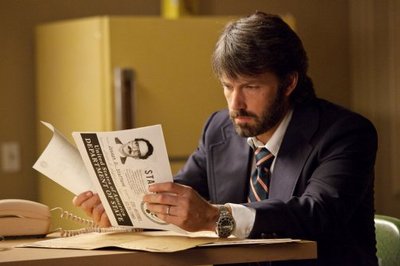
Ben Affleck in "Argo," which won the Oscar for Best Picture on Sunday.
Warner Bros.
But the much-celebrated film about how a CIA agent, in 1980, smuggled a handful of American embassy diplomats out of Iran during the hostage crisis hasn’t exactly earned accolades from Eastern Michigan University theater professor (and Iranian-American) Pirooz Aghssa.
“A movie can’t tell all stories, but it was very upsetting to see that the entirety of a nation had been turned into a coarse, shrill, savage-like people on the attack,” said Aghssa. “To me, the movie—having lived through that experience, and lost members of my family—it was like an action-slash-chase movie that happened to use that story as background.”
Aghssa was 16 when his family left Iran for America in 1976, “a year or so before what’s called the Islamic Revolution happened,” Aghssa explained. “Because my father was a military man, a general under the Shah, it was impossible for us to go back, because it was ‘payback time.’ People who'd worked for the Shah were being executed right and left.”
The American embassy in Iran depicted in “Argo” was, in fact, where Aghssa and his family went to get visas to travel to America—“Everything has such a strong emotional memory to it,” Aghssa said—and he hasn’t been able to return to Iran since.
“I haven’t been able to go back at all, because my family, along with many, many other Iranians, left Iran because it became impossible to live there under the circumstances,” said Aghssa. “It’s like the way we hear now about how educated, upper class Iraqis left or are leaving Iraq because they can't function there any longer. Not because of executions and brutality, but because, within a short amount of time, one culture and sensibility was completely replaced by another. In one moment, women were part of the workforce, … then after the revolution, they were forced to go to their homes and cover up. … Whomever could get out (of Iran) did.”
Most of Aghssa’s relatives left for places like England, Australia and America, among others. And Aghssa views “Zero Dark Thirty” as a recent movie that handled a complex global situation with more nuance and care.
“What is now called the Islamic Revolution (in Iran) was not started by Islamic forces,” said Ahssa. “It started as left-wing uprising—Socialists, Marxists, Communists—and then, just like any other revolution, … it was stolen away by a gang of people who just had the force of brutality behind them. And in fact, one of the rebels, so to speak, who instigated the attack on the American embassy … was Mahmoud Ahmadinedjad, who’s now the leader of Iran.”
You might think Aghssa’s personal ties to Iran made him expect the worst upon entering a theater to see “Argo,” but the professor says he went “with an open mind.”
“This is the country I came from, and what I lived through, and what led to my coming to America,” said Aghssa. “I’m interested. But when you’re dealing with any group that’s marginalized in society, the manner of artistic depiction is foremost and should be done with great care. People should know there were thousands upon thousands of Iranians who couldn’t be part of what was happening at that time. … To turn this into a melodrama about good guys and bad guys adds nothing to the debate. Also, the historical context is questionable. To Iranians, the dust hasn’t settled yet.”
Indeed, Aghssa noted that any movie that deals with the Middle East “is very touchy, because the facts are subject to interpretation. The entire region is like a volatile chess game.”
By way of an example, Aghssa points to “Argo”’s preface, which depicts Prime Minister Mohammad Mossadegh—most famous for nationalizing Iran’s oil industry—as leading Iran in a national movement toward freedom and democracy; but another version of the story casts Mossadegh as an agent for the Soviet Union at the height of the Cold War.
“(‘Argo’’s preface) is only one version of the story,” said Aghssa. “I’d be interested in finding out why he chose that version. … It negates the decades that followed that intro, and almost makes the brutality of the current system understandable.”
Aghssa concedes, though, that he might be particularly sensitive to depictions of Iran and its people in the time of the Revolution because he was still in his formative years when he had to leave his homeland.
“Because I was so young, … and it affected my family and everyone I knew, my reaction is always going to be an emotional reaction,” said Aghssa. “When the hostages were taken, I would get anonymous phone calls. I was at the University of Illinois (as an undergraduate student), and after the hostages were taken, I went to the bank to take money out of my account, and they told me my money was frozen. And I do remember when Jimmy Carter said that every Iranian in America should be fingerprinted. I’m not saying whether it’s right or wrong. Just like, in a terrorist situation, you have to do what you think you have to do to protect yourself. But those were dark times for many of us. And the movie has no indication of any of that. I look at that movie, and I have to assume that I am part of the screaming mob wanting to lynch America. I’m not.”
Jenn McKee is the entertainment digital journalist for AnnArbor.com. Reach her at jennmckee@annarbor.com or 734-623-2546, and follow her on Twitter @jennmckee.
Comments
cindy1
Wed, Feb 27, 2013 : 4:07 p.m.
Here are two articles which mention the role propaganda plays in Argo -- http://www.counterpunch.org/2013/02/20/hollywoods-imperial-propaganda/ "Argo...begins with some historical perspective to 1979's Iranian Revolution, explicitly stating the US role in the Shah's brutal dictatorship, this only serves as a platform from which to redeem the reputation of the CIA. Again, dramatic licence is to be expected, but the decisions made in bringing Operation Argo to the screen specifically increase the role of the CIA at the expense of other major players, turn its agents into maverick heroes, and artificially ramp up fear of Iran." Quote from: http://www.counterpunch.org/2013/02/08/zero-dark-thirty-lincoln-and-the-myth-of-hollywood/
mrk
Wed, Feb 27, 2013 : 2:35 p.m.
Dr. Aghssa is a very intelligent and creative man - I applaud his courage in opening up in this forum which certainly lends itself to criticism and potentially exposes him to personal attacks... of which I am sure he is acutely aware. I haven't spoken to him in years, but I still feel comfortable asserting that he is a man who revels in the freedom allowed here. He's not attacking Affleck, but rather lending a personally held alternate view of a film that has been seen by millions of Americans.
Robert Granville
Wed, Feb 27, 2013 : 1:58 p.m.
Let's play guess the ethnicity of the commenter by ability to understand the viewpoint of the author! Wait what's the point!
Dr. Fate
Wed, Feb 27, 2013 : 12:48 p.m.
The perspective in this article would be more interesting if it didn't seem to contradict itself in parts, but I understand the point at least. I read a graphic novel called Nylon Road (from our own Ann Arbor Public Library) that described growing up in the same transitional period into Islamic Iran. It's a fascinating and entertaining read with good artwork. I found Argo on the other hand, okay but kind of formulaic (despite the basis on real events). I feel like they gave the award to Ben Affleck as appreciation of his sum total of directorial works rather than this particular one.
Jenn McKee
Wed, Feb 27, 2013 : 2:12 p.m.
Another excellent graphic novel set during the Revolution is "Persepolis" - which was also made into a film.
Tru2Blu76
Wed, Feb 27, 2013 : 4:35 a.m.
I'm sure the Prof. Aghssa feels much like some Jewish people did when the Nazi Party systematically demonized them. Suddenly, honest, hard-working non-criminals are pointed out as suspects and "The Problem" and everything goes downhill from there. I'm sure that recent examples of this kind of demagoguery coming from one political party's high officials in this country has a lot of Americans feeling the same way. It's too tempting for some political leaders to do this, it provides a visceral emotional rather than rational impetus for them to carry out their prejudiced views (aka, 'agendas'). When Hollywood joins in the same kind of painting-with-black-brush tactic to sell movie tickets and get an oscar, I think people like Professor Aghssa have good reason to disagree and protest. And for those who say that it's a movie, not a history lesson: it should be noted that "suspension of disbelief" is a key to movie success. Movies which use "poetic license" to create false or one-sided images of others are also promoting false & potentially dangerous public perceptions.
OutfieldDan
Wed, Feb 27, 2013 : 4:03 p.m.
Really? Aghssa feels like the Jews who were sent to the gas chambers by the Nazis? You talk about one political party's demagoguery and political motivation? In this case, based on my own knowledge of the mobs and the terrorism a the time, the movie does not require a suspension of belief. There are other movies that fit into that category such as "Fair Game" and lots of Michael Moore's stuff.
SEC Fan
Wed, Feb 27, 2013 : 3:23 a.m.
Guess i just don't understand the issue. This was a "movie" right? If i want "facts" and "truth", i'll go see a documentary. Otherwise, it's called "entertainment"...
Tru2Blu76
Wed, Feb 27, 2013 : 5:32 a.m.
Otherwise: it can be called "entertainment" OR it can be called manipulating emotions to create a negative view of certain groups like: Iranian-Americans, black people, the German Jews of the 1930s, American gun owners or American Indians. (BTW: The Lakota I know who live on and around the S.D. Pine Ridge Reservation call themselves "Indians," so don't get the wrong impression.) But I can see why you'd take the position you do: movies ARE supposed to be entertaining. Prof. Ahssa is just trying to point out that "Argo" could have dealt more accurately with the impression it was conveying regarding Iranians. A kind of reverse example of such "entertainments" are the Disney movies which depict various species of animals as having all good and worthy traits and, as such, deserving of all the rights and privileges of human beings. This is just"children's' entertainment" but it also causes some adult people to believe pro-animal propaganda. That's the distinction which Prof. Aghssa is making in his comments.
4mytown
Wed, Feb 27, 2013 : 2:47 a.m.
I found the article to be a bit hard to follow, which did not do much to make sense of the sometimes conflicting statements by Aghasa.
Dog Guy
Wed, Feb 27, 2013 : 1:10 a.m.
In the 1960's a young Peace Corps volunteer in Iran smoked a cigarette brand named after the world-famous 12th Century Persian Renaissance Man, Omar Khayyam. A Michigander new to Farsi, she would approach vendors with "Do you have Khayyams?" or "I see you have Khayyams." Some aspects of social situations are very difficult these days to avoid offense.
Marissa Kurtzhals
Wed, Feb 27, 2013 : 12:19 a.m.
I know Pirooz personally and I believe he is simply showcasing a different perspective on the "story". Many times Pirooz has opened my eyes to aspects of social situations that I have completely missed and I am grateful for those observations. It's very difficult these days to avoid offense across the board, but it's worth starting a conversation and trying to be understanding as a society. Thank you Jenn and Pirooz for this article and raising awareness on this viewpoint.
JGTRUEBLUE
Tue, Feb 26, 2013 : 11:54 p.m.
Mr. Aghassa - Iranians here may have had their bank accounts frozen, FOR NATIONAL SECURITY!!!! but they were not blindfolded or brutally imprisoned. THAT is the truth. I must add that hollywood is THE tool for political agendas and propaganda because the ignorant in our society would rather believe an actor on the cover of a magazine, than the truth. Afterall, "film makers (aka hollywood)" in Argo were the saviors!! Enough has been written how it WAS fiction and a little statement that the movie is BASED on events means nothing and generally ignored. Hollywood does as it pleases. Zero Dark Thirty being snuffed is proof of the sanctimonious. For those "won over" by anything hollywood - please, get a life. For those "rescued" from the horrors in the Middle East and that means you too Mr. Aghassa, thank God. Only wish the "mighty saviors" in Argo could have saved Ambassador Chris Stevens. Can't see THAT movie being released in our lifetime, because, oh, I forgot... It was NO BIG DEAL.
Stephen Landes
Wed, Feb 27, 2013 : 3:44 p.m.
We won't see a Benghazi movie because the Hollywood Libs won't want to point out that their favorite President didn't lift a finger to save or rescue four Americans.
Jenn McKee
Wed, Feb 27, 2013 : 2:38 p.m.
If you re-read the section about Dr. Aghssa's account being frozen, you'll see he obviously understands the reasons why it happened, and in fact, tried not to judge the American government too harshly for doing so.
Paul Taylor
Wed, Feb 27, 2013 : 8:03 a.m.
You love the caps, don't you?
notnecessary
Tue, Feb 26, 2013 : 11:31 p.m.
I think most of the comments above are slightly misreading what this professor has said. I read it that he wasn't pleased with the way the movie portrayed his people -- not that he was anti American or wasn't happy for the freedoms he has here. It would be like a movie that portrays Michigan as a desolate place full of poor dumb people after you moved out of Michigan because you couldn't find a job here for an educated person ... It might be upsetting to see Michigan portrayed that way even though that's why you left. The relevancy of the article on the other hand is questionable but my guess is annarbor.com sought out the professor's opinion not the other way around -- who knows though
Jenn McKee
Wed, Feb 27, 2013 : 2:40 p.m.
For the record, I did seek out Dr. Aghssa's perspectives, because I thought it might launch an interesting discussion about "Argo" that I wasn't seeing elsewhere in the media.
tosviol8or
Wed, Feb 27, 2013 : 4:43 a.m.
It's one thing to be upset by an accurate depiction. It's another to deny the accuracy.
Rick Taylor
Tue, Feb 26, 2013 : 10:59 p.m.
Maybe it's just me but I don't really care about how this professor feels; especially since he's condemning or complaining about the narrative of the movie. My point is very simple...there are some countries out there like Iran that think its completely appropriate to kidnap people for their political gain. I understand this professor doesn't condone it. But to feel slighted is ridiculous too. Whether its this situation or the many other middle eastern countries who have done this as examples in history. The point is no country should kidnap people and years later have a citizen complain in how the country was depicted in a movie. My dad worked in Libya from 1977 to 1981 and the stories he told when he got home were nothing short of stunning. The brutality he witnessed on the streets, the beatings just because you may have looked at a woman walking down the streets is beyond comprehension. One more thing, I'm Canadian and so is my family. I see this movie as two countries that have worked together for years and we're all the better for it. But hey, what do I know.
Stephen Landes
Wed, Feb 27, 2013 : 3:42 p.m.
What do you know? More than most! Thank you for adding to the light on this subject.
Jenn McKee
Wed, Feb 27, 2013 : 2:44 p.m.
Absolutely agree about your last point re: Canada. I thought many times, while watching the movie, that none of it would have even been possible had the Canadian embassy not been willing to provide shelter, food, and cover. And Dr. Aghssa never denied the brutality that existed in Iran at the time; his point, I think, is that not everyone participated or believed in it.
DAVETGC
Tue, Feb 26, 2013 : 10:34 p.m.
Just think of the irony in your statement, "it was very upsetting to see that the entirety of a nation had been turned into a coarse, shrill, savage-like people on the attack." Then, you state, "Because my father was a military man, a general under the Shah, it was impossible for us to go back, because it was 'payback time.' People who'd worked for the Shah were being executed right and left." Then, you were quoted, "I haven't been able to go back at all, because my family, along with many, many other Iranians, left Iran because it became impossible to live there under the circumstances." If Iran isn't at least somewhat of a "savage" nation, you and others could return. Little has changed in Iran under Mahmoud Ahmadinejad or others, it is still a rogue nation with little freedom, and there are no imminent plans for change. You should feel fortunate to live in America where people may freely express their points of view, you couldn't do this in Iran. You should also feel fortunate that there are creative people who could produce a film about the heroic efforts of some to free people who may have been murdered otherwise by "savages." It was not made to cast a "realistic" perception of the Iranian culture. You are a theatre professor, perhaps you can make your own movie about the Iranian culture to give us all a more accurate perception. You could put it up on YouTube and/or enter it in the Sundance Festival.
Jenn McKee
Wed, Feb 27, 2013 : 2:48 p.m.
A country's government may be "savage" while many of its citizens are not. I think this is the point.
Paul Taylor
Wed, Feb 27, 2013 : 8:02 a.m.
What part of "entirety" escapes you?
Laura
Wed, Feb 27, 2013 : 3:45 a.m.
Why would you assume Professor Aghssa doesn't "feel fortunate" to live in America? Not only is he an American, he has contributed so much to our culture through education and art, he deserves more respect and less condescension. Only those who have BEEN in countries like Iran can TRULY appreciate America. YOU and I are the fortunate ones to have someone in our country who cares enough to GIVE. All he was doing was providing his point of view, which you can choose to acknowledge or ignore.
Dog Guy
Tue, Feb 26, 2013 : 10:27 p.m.
I don't know about Iran, but i do know of several "Islamicist" movements started and directed by KGB officers, so Professor Ahssa's analysis has a familiarity to me: "What is now called the Islamic Revolution (in Iran) was not started by Islamic forces," said Ahssa. "It started as left-wing uprising—Socialists, Marxists, Communists . . ."
Nick Danger
Tue, Feb 26, 2013 : 10:23 p.m.
a movie is simply a movie,to attach any political significance to the film is a waste of time.Do directors need to appease everyone or be held accountable to an ideology. Movies are simpl y entertainment
Tyrone Shoelaces
Tue, Feb 26, 2013 : 10:23 p.m.
There are movies of which I'm not a fan. When will you be doing an article on me?
Paul Taylor
Wed, Feb 27, 2013 : 8 a.m.
Perhaps when you become something newsworthy on her beat, entertainment.
Gail
Tue, Feb 26, 2013 : 9:51 p.m.
What I remember of that time is that 3 housemates left Ann Arbor for their homes -- towns surrounding Tehran -- as I started the second semester of my sophomore year at Michigan. They, and their families, were never heard from again. We had rumours that they'd been buried in a mass grave under what is now the soccer stadium. I've not been able to watch Argo, documentary or fiction.
free form
Tue, Feb 26, 2013 : 9:45 p.m.
I've heard other stories of Iranian Americans upset over the "depiction" of Iranians in Argo. I think a mix of hyper sensitivity and misguided anger. Admittedly many of the facts of the "rescue" were dramatized, but the facts of the hostage situation and the violence in Iran were accurately represented in the film. Sometimes recreated EXACTLY from historical photos. If Aghssa is upset by the way Iran comes off in the film, perhaps he should actually hold the people who took part in the violence accountable. Instead he blames the people who made a movie about it...
justcurious
Tue, Feb 26, 2013 : 9:19 p.m.
"I look at that movie, and I have to assume that I am part of the screaming mob wanting to lynch America. I'm not." You were not because your father worked for the Shah and the Shah was propped up my the Americans. If anyone wants to know what really happened listen to our former President Jimmy Carter. He is someone who lived it and knows the truth about what happened.
Sam S Smith
Wed, Feb 27, 2013 : 2:04 a.m.
Jimmy Carter? I wonder if he would admit the truth about what really happened, why and why it took so long for the hostages to be released...
Shoes04
Tue, Feb 26, 2013 : 9:16 p.m.
I am sure you could find a Russian or two that is upset about how Russians are portrayed in just about every action flik since 1980. When you are showing a conflict with a specific country, its just easier on the viewer to see that country as one unit that all believes and acts the same. It would be much too complex to go through all the different factions in a 2-3 hour period.
Michigan Man
Tue, Feb 26, 2013 : 8:54 p.m.
Doesn't really matter much what he thinks of the movie. Four fine free Americans with the help of our Canadian sisters and brothers back home safe and sound in the USA is all I need to think it was a fantastic movie!
northside
Wed, Feb 27, 2013 : 3:11 a.m.
File under "ignorance is bliss."
deletedcomment
Tue, Feb 26, 2013 : 8:52 p.m.
Yawn
hmsp
Tue, Feb 26, 2013 : 8:49 p.m.
@ Karen, re: "As a Canadian, I am a fan of the Oscar winner "Argo"." Yeah, well how proud are you of Mahmoud Turneroverdrive?
Mike
Tue, Feb 26, 2013 : 8:36 p.m.
"A movie can't tell all stories, but it was very upsetting to see that the entirety of a nation had been turned into a coarse, shrill, savage-like people on the attack," said Aghssa If his family was not part of the chaos and treatment of the hostages then this doesn't affect him. I was a student here in the united Staes at the time this all happened and had to listen to a group of Iranian (my assumption) students cheer the kidnapping of my fellow Americans. It was all I could do not to get into an altercation with them. We are way too tolerant in this country. Many are too young and indoctinated to understand what happened. I saw it on TV with my own two eyes, it was brutal and animalistic, there is no other way to describe it. Try going there as an American today and you will be despised, especially if you are a Christian. Best thing I can say to Mr. Aghssa is to assimilate himself into our culture as thoroughly as possible and distance himself from behaviour that would create a bad light cast upon himself. Many people in America left behind their countries and assimilated here, became part of our culture, and left the old country behind. Too many people come here and the first thing they want to do is change things to be more like the country they can from and knock our country down. Pick a side and/or country. Too many conflicted loyalties in this country and too many hyphen Americans.....................In my eyes you are an American or not. African-American, Italian-American, German-American, Arab-American, etc. is not the same. If you want to be American it means you are all in..................it just doesn't work otherwise and leads to all of the divisions we have in this country - united we stand, divided we fall...............make a choice.
Paul Taylor
Wed, Feb 27, 2013 : 8:13 a.m.
By your logic, if your own family was not part of the 9/11 attacks in this country, then 9/11 doesn't affect you. Yes, you may have seen it "on tv" with your own eyes. But, guess what? If it bleeds, it leads, brother. You got a picture framed by producers and execs looking for ratings. You didn't see reality on the ground with your own eyes. You saw reality as edited. Sheesh.
JGTRUEBLUE
Tue, Feb 26, 2013 : 11:36 p.m.
Thank you Mike. United we MUST stand. We have to.
clownfish
Tue, Feb 26, 2013 : 11:29 p.m.
This comment is so full of misinformation and propaganda it is hard to know where to start. Many, many Americans go to Iran and are treated with respect by The People. Thousands upon thousands of people came from Other Places and did NOT assimilate overnight. Many, many people never mastered English, never joined Rotary or the Moose Lodge. They lived in neighborhoods filled with similar immigrants. In most cases their children assimilated. In many places Irish Catholics were prohibited from voting, how much "assimilation" do you think took place? Then of course there is the African American story. The really cool thing about America is that we can all live our lives as we deem fit, we do NOT have to become WASPS if we don't want to. Forcing assimilation and conformation is what places like Iran do. As far as "the story not affecting him", I think his families fleeing their country and never being able to return probably created a greater affect on him than your seeing it play out on TV and having -assumed- Iranians insult your ideals. IMHO.
oyxclean
Tue, Feb 26, 2013 : 10:31 p.m.
Applause! Perfectly stated.
mr_annarbor
Tue, Feb 26, 2013 : 8:32 p.m.
I'm sorry, but I don't get the point of this article. Why should we care what this guy thinks? He left Iran at the age of 16, three or four years before the events shown in the movie took place. I can see where he might object to the way some Iranians were depicted, but I doubt that those who saw the movie think that all Iranians are like the revolutionaries shown in the movie. I certainly don't.
Karen
Tue, Feb 26, 2013 : 8:27 p.m.
As a Canadian, I am a fan of the Oscar winner "Argo". Haven't seen it, but plan to. I have heard that the film is heavy on "CIA involvement" and light on "Canadian involvement" - Ken Taylor, the Canadian Ambassador to Iran who was there at the time clarified this in a recent Globe and Mail interview (the Globe and Mail is a major newspaper in Canada). There was no life or death interrogation at the airport - the Americans walked out in a low key exodus of other Canadians returning home, the documentation was prepared in Ottawa, not by a CIA agent, and the Canadian ambassador would never have dreamed of closing the embassy while the Americans were there. But I guess Ben Afflack felt it wouldn't be very exciting to see a low key exit of "Canadians". If those of you reading this would like to see what actually happened (or very close to it), get hold of "The Canadian Caper", a 1981 TV movie about the whole hostage incident and the smuggling of the Americans out of Iran. As for Professor Aghssa's comments - I can't tell what the point is. Are you upset that your country turned into an unpleasant place to live, or are you upset that people in the US were angry about how they were treated by the mob that took over Iran? I am sorry you got blamed (even a little), but have you done anything since to help the women in Iran?
Stephen Landes
Wed, Feb 27, 2013 : 3:37 p.m.
Well written. I remember the great positive feeling toward Canada when those first hostages made it out of Iran (even more positive than usual). The Canadians were heroes and we can never forget that.
OutfieldDan
Wed, Feb 27, 2013 : 3:19 p.m.
Thank you Karen for putting this discussion in the proper perspective. i remember the events at the time. I particularly remember the violent mobs that captured the embassy and took hostages. I remember that the hostages were held for over a year and I was angry. I'm still angry with Iran and I think I'm completely justified. I'm disappointed in the Iranians for putting up with the tyranny, and I'm disappointed in our own government for allowing Iran to bully the rest of the Mideast. The Shah of Iran may have been a dictator, but he was much better for Iran than the Ali Khamenei dictatorship they have now. I could care less about Aghssa's comments.
jns131
Wed, Feb 27, 2013 : 3:23 a.m.
Good point. Quite right on all counts.
G-Man
Tue, Feb 26, 2013 : 8:09 p.m.
i haven't seen the movie, but it is fiction as opposed to a documentary, right?
Jenn McKee
Tue, Feb 26, 2013 : 8:18 p.m.
It's a fictional feature based on true story. But often, when that's the case, especially where history is concerned, a movie has the ability to make us "feel" like it's all true. And therein lies a conundrum.
Macabre Sunset
Tue, Feb 26, 2013 : 7:49 p.m.
Isn't it nice that Aghssa lives in a country where we're all free to comment on the accuracy of a movie, or on the integrity of our government? I hope he recognizes this freedom. It's not one his former country offers its citizens.
northside
Wed, Feb 27, 2013 : 3:10 a.m.
@ Macabre: His family moved here to escape a lack of freedom, so it's safe to guess that he recognizes the presence of it here. He seems one of the last people who would need such a reminder.
Jenn McKee
Tue, Feb 26, 2013 : 8 p.m.
During our interview, Aghssa mentioned that he feels American above all else now; but you never forget where you grew up, either.
just a voice
Tue, Feb 26, 2013 : 7:45 p.m.
so, he didn't like the movie because it wasn't historically accurate? or, almost self admittingly, not accurate to his version of the story. This is fiction, of an event that happened long ago, that is well known for not being historically accurate (give more credit to CIA where that should be given more to Canada).
JMA2Y
Tue, Feb 26, 2013 : 7:36 p.m.
Aghssa ignores the mob violence in Iran at the time of the revolution. It looked back then on the news as it has for the last two years on the news in the various Middle East countries. There was a violent overthrow. They raided the US embassy and took hostages. They burned effigies about the US in the streets. There were signs that said death to Americans. The Americans had reason to be afraid. To depict Iranians as anything other than a mob would be inaccurate. Argo isn't about an Iranian family dealing with the revolution or about individuals who participated in the revolution. Individuals might be kind. A mob never is.
jns131
Wed, Feb 27, 2013 : 3:22 a.m.
Any time US does anything to tick off Iran? The US is to blame as usual. Right now they have nukes to nuke a few countries including us. So for now? I question anything to do with history of Iran after the over throw of the Shah. Iran is and always has been a very unstable country.
clownfish
Tue, Feb 26, 2013 : 11:20 p.m.
To portray ALL Iranians as part of the mob would be inaccurate. That is the Prof point, I think. To portray ALL Iranians as supporting Ahmadinejad today would be equally inaccurate.
Jenn McKee
Tue, Feb 26, 2013 : 8:02 p.m.
Aghssa never denied that mob violence occurred at this time; he just felt that while it was part of the story, it wasn't the whole story of how Iranians were responding to the changes happening around them.
greg, too
Tue, Feb 26, 2013 : 7:22 p.m.
Argo is a movie BASED upon the events of the hostage crisis, not an actual blow-by-blow recreation of the events. It's a movie, it's mostly fiction, and it was made to entertain. And, I would imagine most westerners did see the events in the movie as Affleck portrayed it. It's not his job to teach people anything...he's just making a movie. I haven't seen it yet, but i'm looking forward to it. And, as a person with a background in history, I am going to watch it for what it is. A fictional movie based on real life events.
B2Pilot
Wed, Feb 27, 2013 : 1:41 a.m.
Greg2 - The point is the re-writing of history by Hollywood. Look at the movie Lincoln people actually believe this stuff is true. The HBO movies Bush, Reagan, Sarah Palin. The point is you have a very Left leaning industry pumping out propaganda movies and yes people do believe this stuff is factual as silly as that sounds people are naive and do believe this stuff
Jenn McKee
Tue, Feb 26, 2013 : 8:08 p.m.
I mentioned in a reply above that the question of a movie's accuracy, in regard to its depiction of history, is an interesting and complicated one. You mention having a background in history, so you're well prepared to take the movie at face value, and not as a blow-by-blow account. But does your typical moviegoer do the same? I'm not sure. But movies are a powerful cultural force in America.
justcurious
Tue, Feb 26, 2013 : 7:10 p.m.
According to Wikipedia: "By 1975, he abolished the multi-party system of government in favor of a one-party state under the Rastakhiz (Resurrection) Party. The Shah's own words on its justification was; "We must straighten out Iranians' ranks. To do so, we divide them into two categories: those who believe in Monarchy, the constitution and the Six Bahman Revolution and those who don't ... A person who does not enter the new political party and does not believe in the three cardinal principles will have only two choices. He is either an individual who belongs to an illegal organization, or is related to the outlawed Tudeh Party, or in other words a traitor. Such an individual belongs to an Iranian prison, or if he desires he can leave the country tomorrow, without even paying exit fees; he can go anywhere he likes, because he is not Iranian, he has no nation, and his activities are illegal and punishable according to the law."[31] In addition, the Shah had decreed that all Iranian citizens and the few remaining political parties become part of Rastakhiz.[32]"
DennisP
Wed, Feb 27, 2013 : 2:59 p.m.
All that said about Wikipedia, I did google the beginning part of the quote (up to the word "traitor") and found it also in what appears to be a respectable treatise called: Forces of Fortune: The Rise of the New Muslim Middle Class and What It Will Mean for Our World by Sayed Vali Reza Nasr who has authored many books about Islam and the Middle East. So, it does not appear that the quote is unsubstantiated.
DennisP
Wed, Feb 27, 2013 : 2:54 p.m.
I sense the reliability of Wikipedia goes down when the article or topic is one that has a lot of political or social positioning. The reliability tends to be higher for those topics that are more strongly unambiguous or well-established. For instance, many articles on scientific topics are done well. The large number of potential contributors polices errors and helps dice out unsubstantiated opinion. In contrast, you'll probably find a lot of hokum added to sites on hot button issues like gun rights, etc. Again, the ability for many contributors to police such stuff is good. But, it can get out of hand. It is useful for garnering some information and culling through references cited to expand or start a search. But, with it as with any source of information (even peer-reviewed) the reader does well to look at things with a measure of skepticism. We all should be from Missouri at times.
jns131
Wed, Feb 27, 2013 : 3:19 a.m.
Wipedia? I know if the children at the public schools use this? They are down graded. This area is very grey to a lot of teachers.
justcurious
Tue, Feb 26, 2013 : 9:14 p.m.
Well, I guess if you have the time and energy you can look up multiple sources at the library (if you can believe those sources as well). It should be a simple matter to see if he indeed said this or not.
greg, too
Tue, Feb 26, 2013 : 8:32 p.m.
I guess the best description I have read is that it has what the popular opinion of a topic is, not necessarily the right answer. So it begs the question of are we looking for the right answer or what the most people believe? Interesting discussion on wikipedia from NPR a couple days ago.. http://www.npr.org/2012/02/22/147261659/gauging-the-reliability-of-facts-on-wikipedia
greg, too
Tue, Feb 26, 2013 : 8:25 p.m.
I will need to look those up because all that I have read, and seen, points most of the lesser articles as being easily way off target. The larger ones for presidents or hot topic items, are usually more spot on because they limit who can post on them. The rest are left to the brute force of poster attrition.
Craig Lounsbury
Tue, Feb 26, 2013 : 7:45 p.m.
actually greg,too there have been more than a few independent studies on the accuracy of Wikipedia. The truth is you actually can trust a good deal of what is on there. While not without errors it is far from the free for all you evidently think.
greg, too
Tue, Feb 26, 2013 : 7:23 p.m.
Sorry to annoy, but never quote wikipedia. It is edited by non experts, and experts as well, who sign up for free, anonymous accounts. Create and account and see how much you can change and you will lose faith in using their entries as fact. I wouldn't trust a good deal of what is on there, but it is great for bar trivia.
Bcar
Tue, Feb 26, 2013 : 7:03 p.m.
All that is necessary for the triumph of evil is that good men do nothing.
Macabre Sunset
Tue, Feb 26, 2013 : 7:47 p.m.
But Goodman apparently did rush to answer a phone, so evil had to wait for another opportunity.
Craig Lounsbury
Tue, Feb 26, 2013 : 7:03 p.m.
maybe Mr. Affleck should be dragged before the Ministry of Historic Revisionism and after he is found guilty of crimes against the Revolution he can be sentenced to 30 years of hard labor. But since this is America I think I'll just whine about why a box of jujube's and a coke costs 12 bucks at the theater.
Craig Lounsbury
Wed, Feb 27, 2013 : 12:48 p.m.
I do have a netflix streaming account. I have never done Red Box (yet) though I pass 2 in Krogers several times a week.. But seeing a movie on the big screen is definatly the best way to go. Its just something we can only do occasionally.
jns131
Wed, Feb 27, 2013 : 3:18 a.m.
You can always do a red box or a net flix for about 1/3 of what I don't do at the movies. I get my own chair, my own popcorn and no one talking. So, yes, I can't wait to see Argo on my own television.
yukis
Tue, Feb 26, 2013 : 6:46 p.m.
I didn't think Argo was a very good movie, never mind worth of "Best Picture". It was a good story, easy to follow and kept one interested, but it used such tired formulae and props that it got to be a bit silly and insulting. Are we really supposed to believe a John Goodman character had to rush to answer the call from the Iranian airport security to the studio, as opposed to having the CIA staff the line 24/7? Police cars chasing a plane on a runway? A shredded photo gets pieced together while they are being interrogated in the airport? Please, it was comical at that point. Maybe "Best Formulaic American Action Pic with an Obligatory Chase Scene" but not the best picture to come out in this country last year, by far. It was a "clever plan" initiated by the Canadians, not simply aided by them. And they simply walked through the airport and got on the plane.
yukis
Tue, Feb 26, 2013 : 7:40 p.m.
I have no problem with Ben Affleck taking liberties to make a movie that is more interesting or fun to watch; I do have a problem with doing so in such a predictable, tired way. I do think it was a good movie, but not very good, and definitely not the best I saw. I think the movie got a lot of traction out of 1) the fact that Americans fear Iran, and know almost nothing about that country; 2) there was a small success story hidden inside one of the biggest national embarassments of recent memory; and 3) the vintage look of the film - seriously, I think viewers enjoyed his take on the clothing, hair and cars of that period, despite the polyester not being nearly ugly enough to be truly authentic. I think Professor Aghssa put it right when he described Zero Dark Thirty as being more nuanced.
JMA2Y
Tue, Feb 26, 2013 : 7:22 p.m.
They did have a staff in the Hollywood office to answer the phone in case Iran did call. No, not CIAs but actually Hollywood people who might be known to Iranians if they were called to verify the story. (I don't know if Goodman's character was there but his character was well known to the CIA and worked with them as well as in movies.)
Jenn McKee
Tue, Feb 26, 2013 : 7:10 p.m.
As Blue Marker noted above, Affleck has been very open about the liberties he took with the story to make it more cinematic and suspenseful. (I looked into this myself after seeing the movie, thinking it was unlikely that the airport shuttle stalled, the police cars chased the plane on the runway, etc.) It did feel a little forced as the tension ratcheted up near the end, I guess, but overall, I was so engrossed by the story and the pacing that "Argo" completely won me over.
Blue Marker
Tue, Feb 26, 2013 : 6:23 p.m.
Interesting but I don't think the depiction of Iran was really the point of the movie. What I took away was a clever plan that worked because of the help from Canada. Affleck has been very forward about the fiction in the script. It's a movie, not a history lesson.
DennisP
Wed, Feb 27, 2013 : 4:43 a.m.
Ms. McKee, I would then argue that we, as an audience, need to do a better job of keeping in mind the distinction between fiction--no matter how compelling or how strongly based on reality--and fact. The movies Lincoln and Zero Dark Thirty also make subtle or wide distortions of fact for cinematic purposes. TV, books, film and other sources of fiction have always and will continue to distort historical and scientific fact from the days of the Greeks. A lot of fiction, most of the best fiction, draws from real events. Much of Shakespeare's works drew on history but no one would reasonably critique him for historical discrepancies. As has often been said, don't let facts get in the way of a good story. Just as there is "science fiction", there is historical and even contemporary fiction. Good story tellers try to make it as realistic as possible but, in the end, they are still trying to tell a story for entertainment or to make some illustrative point. Affleck never professed Argo to be a documentary. He took artistic license with the setting while holding strongly onto a core of truth that he saw to be cinematically compelling: http://www.stuff.co.nz/entertainment/film/8336823/Ben-Affleck-knows-the-truth-about-Argo This "power" you allude to is our own act of surrendering common sense to gullibility when we walk out of the theater. No film has such power unless we willingly grant it. You and the good Professor do a general service by reminding us that there is a larger real story that underlies the film and that we'd do well to study the history of that event as it unfolded back in 1979 and 198--an event that still strongly shapes events in our world today. But, with regard to fiction from Tinseltown, I offer this old saying--"Fool me once, shame on you, fool me twice, shame on me."
Jenn McKee
Tue, Feb 26, 2013 : 6:54 p.m.
I don't think Iran and its people are the film's primary focus, either, but inevitably, because the events happened there, it's necessarily a key part of the equation. And the question of something being "a movie, not a history lesson" is a really important point of discussion. My husband was furious about Oliver Stone's "JFK" because as many times as people said, "It's just a movie, just a possible version of history," my husband felt that a large portion of the public would absorb it as fact. At the time, I argued that he wasn't giving moviegoers enough credit, but even so, I do believe that the power of cinema to shape our sense of history is potent.
DennisP
Tue, Feb 26, 2013 : 6:28 p.m.
Point well made.
UpperDecker
Tue, Feb 26, 2013 : 6:05 p.m.
hmm