

Local Baha’is urge co-sponsorship of resolution for Iranian rights violations
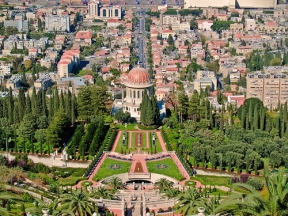
The Shrine of the Bab, shown above, is an important place of pilgrimage for Baha’is and is located in Israel. The Bab is the forerunner of the Baha’i faith, and his remains were brought in secret from Iran to Israel. The site of the shrine was specifically designated by Baha’u’llah, the founder of the Baha’i faith.
Photo courtesy of flickr
“We had no idea when it would be up for vote, but as we were sitting in our meeting, it passed with unanimous support,” said Thomas. “Many human rights are in violation here.”
According to Iranian native and Ann Arbor Baha’i Sasha Meshinchi, the passage of this resolution - and the raising of awareness of the situation in Iran - is the best method for hopes of easing the persecution of Baha’is.
“The reason why the Iranian government doesn’t just kill more Baha’is is because of international pressure - it likes to give a nice picture of itself, and what it doesn’t want is other countries, particularly Western countries, to know about this,” he said. “It’s a very systematic fight, so letting people know what is really going on is very important.”
The persecution of Baha’is in Iran has been an issue since the religion arose in the country in the mid-19th century, although negative actions during the past few decades have increased dramatically. This year, Baha’is have been arrested, detained or interrogated in almost two dozen cities and towns in Iran, and most currently, seven Baha’i leaders have been imprisoned since the spring of 2008. The seven imprisoned Baha’i leaders were formerly the Friends in Iran, and although a trial date was scheduled for Oct. 18 of this year, no trial was held and no new date was provided. In addition, the Iranian government just withheld the right for any Baha’i to obtain a higher education.
According to Meshinchi, his family was driven out of its home, harassed, robbed and imprisoned by Iranian government officials decades ago.
“When I was 9 years old, they fired my mom after 25 years of teaching at a primary school and fired my dad after 28 years of working at the National Bank of Iran. They confiscated all of our property and later imprisoned my dad, saying that he had to repay all of the money of his salaries because they claimed he had been paid with the money of the Muslim people,” said Meshinchi. “After three months in prison, they realized they couldn’t squeeze anything more out of this guy who had absolutely nothing, so they let him go.”
Senate Resolution 71 was introduced to the U.S. Senate on March 9, as the 11th resolution by the U.S. Congress since 1982 to address the religious oppression of Baha’is in Iran. Although the resolution focused on violations of human rights in regards to the treatment of multiple minorities, including Arabs, Azeris, Baluchis, Kurds, Christians, Jews, Sufis and Sunni Muslims, particular focus was upon Baha’is. The resolution states that “attacks on Baha’is and their faith in State-sponsored media, increasing evidence of efforts by the State to identify, monitor and arbitrarily detain Baha’is, preventing members of the Baha’i Faith from attending university and from sustaining themselves economically.”
Contrary to the Iranian treatment, Baha’is are known for their all-inclusive acceptance of peoples of different races, belief systems and preferences. June Thomas, for example, says she joined the Baha’i faith largely because of its peaceful mission.
“I’ve been a Baha’i since I was 21, because I was particularly drawn to the teachings on racial unity,” said Thomas. “It’s a peaceful worldwide religion that believes in the unity of all races and religions. Baha’is aren’t usually so politically involved, but changes have to be made when 1/3 of a million people in Iran are being denied human rights.”
Humiliation of schoolchildren, hospitals’ refusal of the release of a deceased family member’s remains and execution are more of the persecutions that Baha’is continue to face in Iran. According to the Associated Press, authorities recently shut down Iran’s largest-circulation newspaper, Hamshahri, after it published an advertisement containing a photograph of a Baha’i temple.
“The situation in Iran is still going on, so this is an ongoing fight,” said Sasha Mashinchi.
June Thomas said she wants local residents to know that many Baha’is are in their midst, and that these international issues weigh of great importance.
“Baha’is do live in this city [Ann Arbor], and all over the world,” said Thomas. “There’s still plenty to do - we’re just not sure what the next step is yet. This is a continuing story.”
Stephanie Fenton is a contributor to the faith section of AnnArbor.com.