

Many Heavens, One Earth: World religions heed call to “go green”
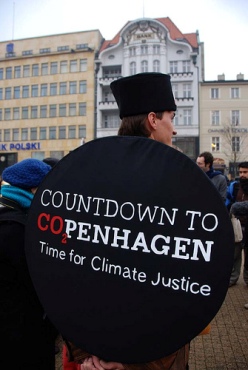
World leaders will gather at the Copenhagen conference in December to decide on a new environmental protocol. As religion reaches 85 percent of the world's population, religious leaders recently created dozens of "green" initiatives to help the environment.
Photo courtesy of flickr
Windsor was host to an international summit Nov. 2-4 that hosted leaders from Baha’ism, Buddhism, Christianity, Daoism, Hinduism, Islam, Judaism, Shintoism and Sikhism, all in favor of addressing issues facing the environment today. The United Nations Secretary-General, Ban Ki-moon, spoke at the gathering that launched dozens of short-term green initiatives, as well as five-, seven-, eight- and nine-year plans. General “green” initiatives included everything from printing holy books on environmentally-friendly paper to constructing buildings out of eco-friendly materials to stressing eco-tourism for pilgrimages. Other initiatives were more specific and based on the preservation of natural resources, such as the advancement of all Daoist Temples in China toward 100 percent solar power and the attempt to sustainably fuel all Sikh gurdwaras in India.
In Ann Arbor, the message to “go green” doesn’t fall on deaf ears.
“We got new boilers that run at 90 percent efficiency, and we’re working on insulating the church better,” says Pastor Bill Peppard of Ann Arbor Assembly of God. “We recycle papers, and we’re trying to work with Ann Arbor on projects to clean up the city. Mostly, we’re just trying to be conscious of the environment. We feel very strongly about the fact that the environment is important to us. We stress using God’s resources wisely.”
At the Jewel Heart Tibetan Buddhist Center, faith practices may differ from those of the Ann Arbor Assembly of God, but the appreciation for the environment does not.
“We continue to move in a greener direction,” says Kathy Laritz, program director at Jewel Heart. “We’ve painted with Lo-Voc paints, installed bamboo flooring and prefer to use scent-free soaps in the bathrooms … we’re moving in many directions like that.”
The summit in Windsor followed a statement at Lambeth Palace in London, and precedes the 2009 Copenhagen Summit. Several days ago, leaders from world faiths - this time including Jainism and Zoroastrianism, too - announced global warming as a “very real threat to the world’s poor.” As many religious traditions aim to help the poor, leaders strongly addressed this issue. According to Tom Picken, international climate campaigner for Friends of the Earth, “Rich countries account for just a fifth of the world’s population but are responsible for three-quarters of the emissions in the atmosphere today.”
In December, world leaders will gather at the United Nations Climate Change Conference in Copenhagen, at which a new international climate change deal will be decided upon. Amidst the estimated 8,000 persons present during the conference, a protocol will be created that replaces the Kyoto Protocol.
To complement global initiatives, places of worship around the country are acting locally to help the environment. Christ the King Catholic Church in Ann Arbor currently recycles batteries, has replaced many of its less-efficient light bulbs with compact fluorescent ones and began recycling cans as an eco-project.
Whether one reads the Bible, the Quran, the Torah, Vedas or something else, it appears that all faith traditions have accepted - and are acting upon - this vital environmental message.
Stephanie Fenton covers Faith for AnnArbor.com. Stephanie can be reached at Fenton.Stephanie@gmail.com.