

The American debate over the size of government, through a spiritual lens
Partisan debates that arise in America often worm their ways into issues we’d never before considered political. But, despite the things Americans manage to argue about, we’ve always had one underlying debate that has served as the foundation of our political structure since our nation’s inception. That battle raging beneath every opinion we have is the question whether — at any moment — we need more government or less government.
We have our opinions on the war, the economy, healthcare, etc. but we all fall into one of two camps once our opinions are completely deconstructed and analyzed: more government or less government.
It’s always made the most sense to me for the government to be the first entity we trust to fix the broken parts of our country. It’s as simple, to me, as saying: “When your car breaks, you hire a mechanic, and then your car works again.” The government has power to solve problems, and it should use that power to solve those problems. Case closed, right?
So then where do these people get off making statements like Henry David Thoreau’s: “The government is best which governs least”? How does that make sense? How does a government — a body with the means to enact the most sweeping changes to our country — become better at doing its job by doing less? How does something powerful increase in power (i.e. becoming the “best” government) without using its power to the fullest?

This dilemma reminds me of a similar paradox I wrestled with when I took my first karate classes as a kindergartener. I don’t remember much about the lessons save for how cool it felt to show my parents my moves each night. I’d kick and spin and punch until my dad thought I was going to break something, and, for a moment, I felt unstoppable. I felt like I could be a hero. Karate, I suppose, was the first time I felt powerful.
However, the most memorable part of my brief experience with karate was the ideology behind the kicks and punches. We were taught ways to defend ourselves, turning into little 5-year-old weapons, but our instructors all preached one message about practicing karate. That message was this: “Karate is something you learn so that you don’t have to use it.”
Obviously, my over-stimulated mind could not wrap itself around a concept as existentialist and pacifist-sounding as this. I may have heard this message over and over but it never altered my reason why someone learned something like karate. The only reason I could see for learning karate was to kick butts.

It made less sense to me the more I thought about it: “Karate is something you learn so that you don’t have to use it.” What? Why would I learn to punch and kick and fly through the air if I’m never going to do these things? Why know how to fight and never get into one?
I see that my questions regarding karate were never resolved. They transposed themselves into new, more adult, questions about power and what it means to use one’s power. I couldn’t reason why karate was something I was taught but told not to use any more than I can explain why people who recognize problems in their country don’t want their government to extend itself to solve them.
When I look for answers in the one place that’s never let me down — God’s Word — I can’t say I’m brought any closer to a single way I believe government, and karate centers, should operate. But I think the questions we have about power, how to distribute it, or what “power” means, should always involve God: the source of all power.
Now, getting into senseless fights to show off one’s karate skills isn’t the same as governments stepping in to solve problems. The karate instructors I had didn’t say we should never use karate, as Thoreau didn’t say government should be completely powerless. Karate, like sound governmental action, is extremely helpful when necessary, when the stakes are high enough to warrant the use of such power.
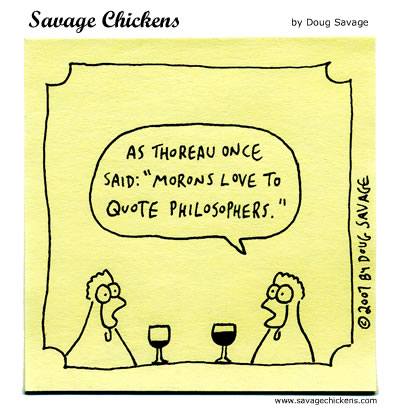
Although I’m quick to accuse our government of inaction in the face of certain issues, I see a truth in this “best which governs least” concept when looking at how God uses His power.
While on the surface it seems as though someone is most powerful at the moment they enact their power, God does not seem to see things that way. In fact, God allows for things to happen in our lives that are completely against His will. He doesn’t even use His power to force us to believe in Him! But, is a God that has to force His creations to believe in Him more or less powerful than one who doesn’t?
Is a God that needs His creations to follow His will in order for it to be done more or less powerful than one who doesn’t need help enacting His plans?
God can kick, punch, conquer and create better than anyone when He wants to. But is that really the way we should measure His power — or our own? Or is the unending discipline, love and wisdom of God to restrain Himself from short-sighted, superficial power trips — for the good of us all, to bring as many of us into His presence in Heaven as possible — the greatest power of all?

Ben Verdi is a man with a Bible and a laptop and a nasty curveball. He can be reached at jetboiz@aol.com.