Dry Eye: Millions have it. What can be done to about it?
Dry eye occurs when the eyes do not produce enough tears or the tears that are produced have a chemical composition which causes them to evaporate too quickly. The tear film has three layers: the outer oily, lipid layer; the middle watery, lacrimal layer; and the inner mucus, or mucin layer. Each layer is produced by different glands inside the eyelids. If there is a problem with any of these glands it can lead to a poor tear film and dry eye symptoms.
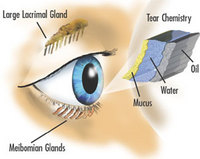
The tear film is composed of three layers: the oily layer, the watery layer, and the mucus layer
www.gardenstateeyemd.com
Dry eye can produce many different symptoms in different people. These symptoms may include burning, itching, redness, foreign body sensation, and blurred vision. Excessive tearing of the eyes may also be a symptom of dryness because it causes an over stimulation of the lacrimal gland which produces the watery component of the tear film.
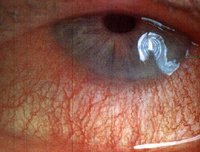
One symptom of dry eye is redness.
www.dryeyeprogram.com
The most common cause of dry eye is the eyes’ normal aging process. Women seem to be affected more than men, possibly due to hormonal fluctuations especially during menopause. A dry windy climate can produce symptoms of dry eye. Other contributing factors are certain medications like antihistamines, oral contraceptives, antidepressants, some blood pressure medications, and Parkinson’s medications. People with health problems like rheumatoid arthritis, lupus, and Sjogren’s syndrome (a combination of dry eyes, dry mouth, and rheumatoid arthritis or lupus) are more susceptible to dry eye. Long term contact lens wear can cause dryness since the contact acts like a sponge and absorbs moisture from the eyes.
An optometrist evaluates a patient’s eyes for dryness during an eye exam. The doctor will measure the amount of fluid in the eye using a microscope specifically designed for looking at the eyes. A Schirmer test may be performed, in which a small piece of filter paper is inserted in the lower eye lid to measure tear production. The optometrist will also put dye in the eye to evaluate tear evaporation and to locate areas on the eye that are driest.
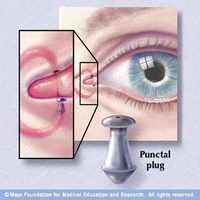
Punctal plugs slow drainage of the natural tears, keeping them in the eye for a longer period of time.
Mayo Clinic
Unfortunately, dry eye cannot be cured but there are several treatment options that can minimize symptoms. One option is lubricating eye drops or artificial tears to supplement the eyes’ natural tears. There are many different artificial tear formulations. Some work better than others for different types of dry eye. An eye doctor can make the appropriate recommendation. Changing environmental factors like avoiding wind and fans and taking frequent breaks from computer work can also reduce dryness in the eyes. Certain vitamins or supplements may improve the quality of the tear film and reduce tear evaporation.
Other treatment options include prescription eye drops and punctal plugs. Several prescription eye drops can help increase tear production in some people by reducing inflammation in the eyes. Punctal plugs are inserted into the tear ducts to keep the natural tears in the eyes for longer by slowing tear drainage. If dry eye is related to contact lens wear, the doctor may prescribe a different lens material, a different lens solution, or reduce the number of hours the lenses are worn. In rare cases surgery may be necessary to treat dry eye.
Dry eye is a chronic eye disease that cannot be cured. Most treatments must be maintained indefinitely. An optometrist can prescribe an individualized therapy program to keep the eyes healthy and the vision clear.