

Posted on Tue, May 3, 2011 : 12:10 p.m.
8 food marketing claims that make me crazy
By Eva Johnson
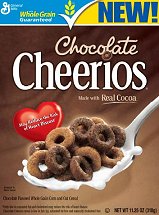
Seriously? This is not a "heart healthy" food!
- "Multigrain" This only means that they use several types of grain. This could be a combo of corn and wheat, but it isn't whole grain necessarily. Most marketers use this so that they can claim you are getting grains. If they aren't whole, they aren't worth much.
- "Fat Free" I hate fat-free anything. Food companies take out the fat and substitute in a lot of junk and extra calories. Just get lighter products, like light sour cream. That way, you get a bit of fat and some flavor without a lot of added processed chemicals. Also, many products don't have fat naturally, but that doesn't make them healthy. For example? Gummi Bears are fat-free. (Enough said ...)
- "Whole Grain" Yes, Lucky Charms and Chocolate Cheerios have whole grains. Who cares? If it looks like a "sugar shock" food, skip it, regardless of any whole grains in there.
- "No High Fructose Corn Syrup" Well, that's great, however, if it is substituted with lots of sugar, even the organic evaporated kind, it will still be high in calories. Sugar may be more natural, but it isn't good for you.
- "Low Carb" Why are carbs so hated? I love whole-grain pasta, bread and cereal. Go ahead and have some good, complex carbs! However, if you are trying to avoid junk food, avoid those "low carb" cookies. They may have few carbs, but they probably have a ton of calories. It is best to stick to the back label for a true picture of this food.
- "Natural" I feel very strongly about this. If you see natural written on something, it isn't natural. Grapes don't have "natural" written on them because they don't come in a box. If it doesn't come in the produce aisle, it probably isn't natural. Does this mean that I only buy from the produce aisle? No, but I also don't delude myself that those crackers are natural.
- "Low Cholesterol" This doesn't mean that the food is low in calories or fat. It just means that it doesn't have as much cholesterol as ... yeah, I don't know either. If this is the best phrase that they can come up with on a box, I breeze right past it!
- "Contains Organic" Seems like a money waster to purchase something that just has some organic stuff in there. If you are going organic, go all the way with a product.
These claims on packages are just ridiculous! Part of the reason that it is hard to eat healthy is that everything is so misleading. It makes me wonder: How do you navigate the grocery marketing schemes and still stay healthy?
Eva Johnson is an ACE (American Council on Exercise) certified personal trainer, who is always arguing over the Chocolate Cheerios purchase with her kids. She lives in chaos with her husband and two boys. To see her complete blog about how to stay sane and in shape in the real world, visit www.fitnessbyeva.com.
Comments
Craig Lounsbury
Wed, May 4, 2011 : 11:25 a.m.
My morning Oatmeal * comes in a box that says... * whole grain * low cholesterol * heart healthy Not all health claims on boxes are false.
Adam Jaskiewicz
Tue, May 3, 2011 : 11:46 p.m.
I once bought fat free sugar. Yeah, they printed "fat free" on the bag. It was just a typical 5lb bag of white sugar.
Eva Johnson
Wed, May 4, 2011 : 12:16 a.m.
This is exactly my point. Thanks!
81wolverine
Tue, May 3, 2011 : 8:03 p.m.
There's some very good advice in this article. And it points at the degree to which Big Food dictates the misinformation on food labels and packaging. They've been able to strong-arm the government into ridiculously lenient, phased-in implementation of greater accuracy on food labels. Until the government gets really tough, you'll keep seeing this harmfully, deceptive misinformation. Take the Cheerios for an example. Their claim that the product is "heart healthy" and that it lowers cholesterol is blatantly untrue and the FDA has even told them they couldn't make this claim legally. So, why do you see them still advertising it and the product on the shelf with the deceptive packaging? If General Mills were a small vitamin maker, they would have had to pull their product off the shelf immediately, and probably had their facility visited by armed federal agents. Different standard for Big Food obviously with their huge advertising budgets and large legal departments. Basically, all heavily processed foods should be avoided as much as possible. Despite the impressive efforts of the marketing spin-doctors to con us into buying this junk, the truth is starting to emerge gradually. They're like skilled magicians who dangle something in front of you with one hand while the other hand is concealing something else. Like taking out some fat out of a product, calling it low-fat, and dumping a ton of sodium or sugar (or both) into it. You almost have to be a scientist to read food labels nowadays to see where they're disguising harmful ingredients.
phelvie
Tue, May 3, 2011 : 8 p.m.
7 words: "eat food, not too much, mostly plants." -Michael Pollan
bg
Tue, May 3, 2011 : 7:49 p.m.
Not sure why you would think "low cholesterol" means anything other than the food is low in cholesterol. Correct, the food may not be low in fat or calories, but why would you assume that? Many, if not all, terms are defined by the FDA and available online to look up. If the product is not really "low cholesterol" or "fat free" then it would not be allowed to be labelled as such - the FDA has strict guidelines for this.
Eva Johnson
Wed, May 4, 2011 : 12:17 a.m.
I think that the FDA allows food companies to be pretty vague at times. Eggs can be considered a high cholesterol food, but they are very healthy, for example.
Grace1
Tue, May 3, 2011 : 6:45 p.m.
Labels can be very deceptive. Try to take some extra time to read the INGREDIENTS when grocery shopping. Teach your children to do this as well. This is an invaluable lesson in NUTRITIONAL CONTENTS and SERVING SIZES.
Lola
Tue, May 3, 2011 : 6:10 p.m.
I try to avoid processed foods as much as possible. The thing that disgusts me the most in recent years is the products that advertise themselves as reduced calorie (yogurts, breads, etc.). Upon careful examination I find that the calories are reduced by substituting sugar with artificial sweeteners. Sometimes this substitution is difficult to find on the package label. Personally, I have a very violent reaction to Sucralose. Really, is it necessary to replace the tiny amount of sugar in gum and chewable medications with artificial sugar? In fact it's almost impossible to find gum without artificial sugars (I also have a bad reaction to Aspartame, although not as bad as from Sucralose.). It worries me that the rise in certain health problems (allergies, Autism Spectrum Disorders) seems to coincide with the increase in artificial sweeteners. And before you get the idea that my adverse reactions to Sucralose and Aspartame are psychological due to my bias against them I'd like to state that I never had negative issues with Saccharine.
mentalNomad
Tue, May 3, 2011 : 5:53 p.m.
Others to be careful of: "No Trans Fat" while listing partially hydrogenated oil as one of the ingredients. This means it does have trans fat, but that they can round it down to zero. "Contains calcium" on products such as macaroni and cheese. "Contains real fruit juice" on candies.
Eva Johnson
Wed, May 4, 2011 : 12:14 a.m.
@mentalNomad, I agree with the "no trans fat, and contains calcium and fruit juice." I would add in that "contains X servings of vegetables" on Spaghetti O's is also ridiculous!
mentalNomad
Tue, May 3, 2011 : 5:54 p.m.
And, yes, I am still working on it too.
southern gentleman
Tue, May 3, 2011 : 12:16 p.m.
I'm still working on it, but I've found sticking to the outer aisles of the grocery to work for me - produce, dairy, meat, seafood, etc. An occasional foray into the inner area is to be expected, but I try to limit those trips to one or two aisles.