A cataract is a clouding of the natural lens inside the eye. The lens is located behind the iris, or colored part of the eye. The clouding interferes with the focusing of light onto the back of the eye, called the retina. This makes it harder for a person to see. Cataracts normally start out small, but grow larger and denser over time. They affect the vision more and more the larger they get. It is thought that this clouding occurs when lens proteins bind together as we age. During an eye exam your optometrist can determine whether or not you have cataracts.
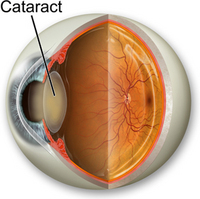
A cataract forms in the lens inside the eye
herzig-eye.com
There are three types of cataracts; nuclear, cortical, and subcapsular. Nuclear cataracts are the most common type, developing in the center part of the lens called the nucleus. Generally, this type forms due to the normal aging process. Subcapsular cataracts form in the back of the lens or the capsule. People with diabetes, high farsightedness, or those on high doses of steroids are more likely to develop subcapsular cataracts. Cortical cataracts form in the cortex of the lens. They form spoke-like opacities starting at the outside of the lens and extending toward the inside. Many diabetics get cortical cataracts.
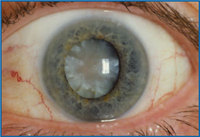
A mature cataract as seen through a dilated pupil
Environmental Health Perspectives
Symptoms of cataracts include hazy or distorted vision, increased sensitivity to glare especially with nighttime driving, and colors may appear dimmer or more yellowed. Oftentimes vision without glasses will improve temporarily with early cataracts. This phenomenon is called “second sight” but it is often short lived and vision declines as the cataract worsens. The type of cataract you have will affect exactly which symptoms you have and how soon they will occur.
No one knows for sure what causes cataracts and currently there is no way to prevent them. Ultraviolet light from the sun may cause cataracts to progress more rapidly so wearing sunglasses could slow the progression of some cataracts. Other types of radiation might play a role in cataract formation.
Once a cataract degrades the vision to a point where glasses no longer help and daily activities are impaired, your optometrist can refer you to an eye surgeon who can remove the cataract. Cataract surgery is a safe, relatively painless surgery that restores vision. It is the most common surgery performed in the United States and has a 95% success rate.
During cataract surgery, the eye’s clouded lens is removed and is usually replaced with a clear, plastic intraocular lens (IOL). A standard, monofocal IOL corrects the distance vision, but reading glasses are needed for close work. Some new multifocal IOLs can restore some focusing ability to reduce dependency on glasses. In rare cases an IOL cannot be inserted and the vision is corrected using contact lenses or glasses. Annual eye exams are important before and after surgery to monitor the overall health of the eyes.

Bennett Optometry
My name is Jamie Barnes, O.D. and I am an associate optometrist at Bennett Optometry. We have two offices in Ann Arbor. Please visit our website at http://www.bennettoptometry.com

