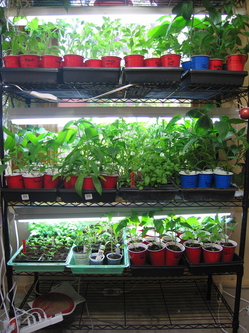
Indoor seedlings in May 2010
Kevin Dorn | Contributor
Hi, I’m Kevin Dorn, back with the second installment of the biweekly garden blog.
Thank you for reading and commenting on the
first installment; I am thrilled with the level of interest and excitement about gardening in our community. Some ideas that came up in the comments on my first post included transplanting, harvesting, recipes and planting time. I will do my best to incorporate these topics.
This entry will focus primarily on some of the essential resources that I have grown to depend on for my garden system: compost, cold frame, literature and local knowledge.
Composting is a wonderful process that breaks down organic matter into nutrient-rich material that is readily used by plants. Organic matter holds three times as much water as mineral soil. Therefore compost improves the soil environment’s ability to provide nutrients and water to the plant community.
Compost needs a basic input recipe of 2/3 browns (dry leaves, dry grass, shredded paper) and 1/3 greens (food scraps, green grass). I avoid cooked food, oils and meats in my backyard pile; these additives can attract rodents and increase the odor. Turn your pile when you can to distribute the moisture and aerate the contents.
Finished compost is dark, rich and sweet smelling. If you don’t have the resources to make your own compost you can buy copious amounts from the City of Ann Arbor Drop-Off Station or smaller quantities from many local hardware stores. Also, ask you friends. It’s quite possible there is a pile sitting in a backyard just waiting for a gardener to haul it off.
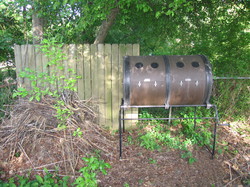
Compost bin and pile May 2010
Kevin Dorn | Contributor
The cold frame is a resource for hardening off transplants. Seedlings grown indoors can be shocked and stressed by the outside environment. Using the cold frame as an intermediary step before the field is a way to graduate the transition. My cold frame is built from recovered wood and a glass storm door I found at the Ann Arbor
ReUse Center on South Industrial Highway. When the door is open I cover the seedlings with a screen door for added protection - we have some very curious squirrels. I close the cold frame door to various degrees to control the environment inside the frame. Heavy rain and below-freezing temperatures can damage the seedlings.
There are some resources that I have come to depend on for my gardening pursuits. During gardening season I consult the book,
The Midwest Fruit and Vegetable Book: Michigan Edition by James A. Fizzell practically every day. This text is an outstanding guide! I do not follow it to the letter, but take is as general guidelines for what works. Use your intuition.
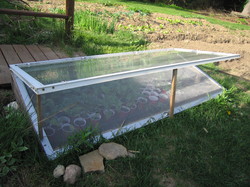
Cold frame May 2010
Kevin Dorn | Contributor
My other main resource during gardening season is
Downtown Home and Garden. I seemed to be there about every day this spring. The staff is friendly and knowledgeable and the products are diverse and reasonable. This is where I buy my seed starting mix. This year I used Sunshine organic potting soil with Dr. Earth Starter Fertilizer to great success. I also stock a steady supply of sea bird guano. This balanced organic fertilizer goes a long way in the fields.
Perhaps the greatest local knowledge resource is my friends, neighbors and gardening community. We share ideas, seeds, plants and skills. Gardening can create a social network that is real and viable.
What fertilizing methods do you use? What resources are essential for your backyard garden? What other topics would you like me to discuss in future entries? Thank you for reading and I appreciate your comments. We have a wonderful gardening community. Happy planting!
Remember the frost free date for Michigan is May 21. Sensitive crops such as tomatoes, peppers, squash and basil can be damaged by frost. I leave you with some pictures taken over the past two weeks.
This is the second entry of the garden blog; thank you for reading it. Look for updates every two weeks. I appreciate your comments.
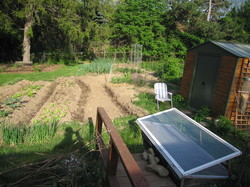
Garden fields and cold frame May 2010
Kevin Dorn | Contributor
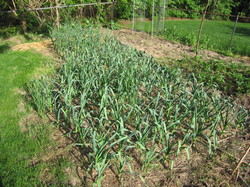
Garlic May 2010
Kevin Dorn | Contributor
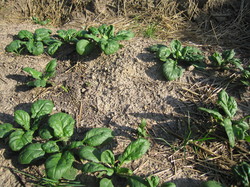
Spinach May 2010
Kevin Dorn | Contributor
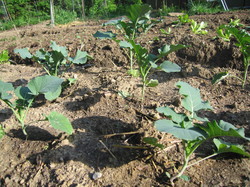
Broccoli May 2010
Kevin Dorn | Contributor


Comments
Kevin Dorn
Wed, May 12, 2010 : 12:05 p.m.
Thanks for commenting. Bear, I will do my best to be informative and interesting. A note about compost: I confirmed with the drop-off station at Ellsworth that there is compost available for purchase. It is wet right now due to the rain, but it is there. The city did run out, and is using a supplier. However, the city will have their own compost to sell again around the end of August. Good luck! I swear by compost and manure in my garden.
Bear
Mon, May 10, 2010 : 7:20 a.m.
Hey Kevin! Great article. Well thought out and awesome information. Looking forward to a great growing season this year. Your garden always looks lush and full of interesting plants & vegetables! Look forward to seeing more articles from you in the future. Keep up the good work!
Prometheus
Sat, May 8, 2010 : 9:11 p.m.
Speaking of compost, I was totally bummed last week to hear the city sold out. The same nurseries that scooped it all up for under $3 a yard are now charging $28-38. I'm bummed indeed. I'll have to try the other options provided in the link. Any idea if the City of Ann Arbor is looking to change their future policy so they can actually serve the residents who contribute (and often pay to do so) to their stockpile. I hope they limit the amount one can take in the future. Anyone at Annarbor.com looking into this?
Kevin Dorn
Sat, May 8, 2010 : 6:17 p.m.
Townie: Apparently the city did sell out of compost. Wow! http://www.annarbor.com/passions-pursuits/municipal-compost-sold-out-for-spring-2010/ The above link does mention other sources for compost, and there are usually bags available at local hardware and garden stores. I have also heard that Domino's Farms has compost available. Good luck and thanks for the information.
townie
Sat, May 8, 2010 : 5:03 p.m.
I heard the City is completely out of compost until next year because they sold it all to contractors in huge quantities at a very low price. True?
Kevin Dorn
Sat, May 8, 2010 : 2:23 p.m.
Thanks, Vivienne. Great advice that we can all take to heart to help our local tomato crop flourish. I take the May 21st frost free date as approximate and appreciate your hashing out the temperature specifics relating to May 26th. I am usually cautious about putting my plants outside too soon after investing so much time and energy propagating from seed. I do get antsy sometimes though and find a big sheet of plastic can help ease the stress of cold nights for warm weather crops.
Vivienne Armentrout
Sat, May 8, 2010 : 1:47 p.m.
It's good that you warned against planting sensitive crops so soon. Apparently vendors at the Farmers' Market are already selling these transplants and people are assuming that it is safe to put them out. I already wrote a long comment on Peggy Lampman's column about this. Where did you get the May 21 frost-free date? My information is May 26 for Ann Arbor. May 14 is the 10% probability of 32 or below so some people say our frost-free date is May 15, but the later date is safer for really sensitive plants like tomatoes and basil. (It is the 10% probability of temperatures 36 and below.) Maybe this is a good moment to remind everyone to buy tomato starts grown locally (if you haven't grown your own). Last year's tomato late blight apparently came into the Northeast via transplants from the South. Plants at chain discount stores are more likely to be from such places.