

Rain schmain, Ypsilanti gardens shine on tour
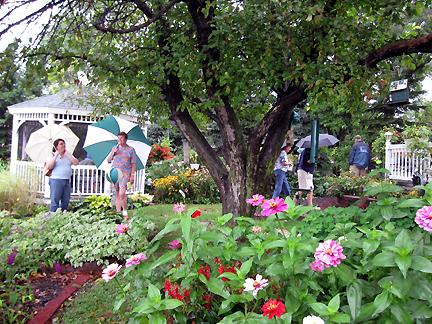
A little rain never stops a gardener from going outside, and two friends and I greatly enjoyed the Ypsilanti Garden Walk on Saturday. I noticed the six gardens on the tour reflected trends I've seen elsewhere: More people are growing veggies, reducing the size of their lawns and using native plants.
Monica Milla | Contributor
I've been known to weed or transplant shrubs in the rain (easier to pull/dig), so it never even occurred to me to let a little rain stop me from attending the Ypsilanti Garden Walk. Besides, I'd already paid for my ticket!
The rain gave plants a different look. I thought this wet Caladium looked almost like a sculpture.

Monica Milla | Contributor
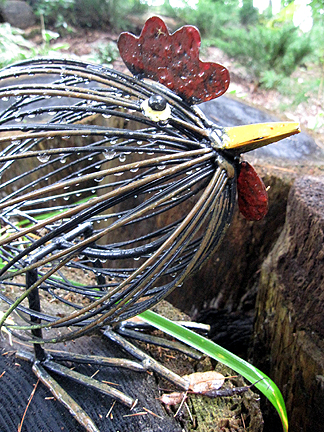
And I loved the raindrops on this garden decoration. (It looks expensive but the gardener got it at Meijer!)
Monica Milla | Contributor
I was happy to see that many of the gardeners were growing vegetables. Some had dedicated vegetable beds, some had integrated vegetables in with ornamental annuals and perennials, and some had vegetables in containers or hanging baskets (or any combination thereof).
Sometimes people tell me they don't have enough room for vegetables, but you really don't need a whole bed. This gardener had plenty of space but very little sun, but that didn't stop him from tucking in two container tomatoes in one of the few sunnier spots in the garden. I, too, grow vegetables in less than optimal sun (less than 6 hours a day) and they do fine. They may not produce as many fruit, but it's still enough for me.

Monica Milla | Contributor
I was also pleased that many of the gardens on the tour had very little lawn. I admit I'm a lawn hater; in my world, it just requires too many natural resources and provides too little enjoyment (unless you enjoy mowing, which I don't). Lawns also don't attract beneficial insects or provide flowers or food. I like my yard to be a natural place, a living, breathing ecosystem with plant and wildlife diversity.
Getting rid of lawn also creates a larger planting area for people in small city lots.
Monica Milla | Contributor
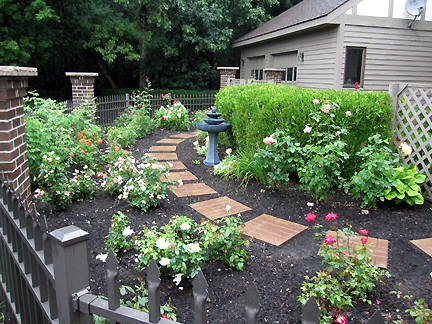
Even this more formal rose garden doesn't have any lawn.
Monica Milla | Contributor
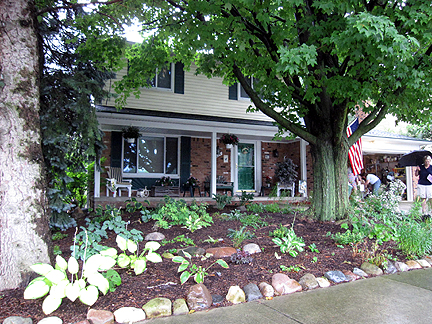
This subdivision homeowner dug up his front yard three years ago and planted it primarily with shade-tolerant plants, some native, some not. Native plants are those that grew here before European settlers came. As such, they are well adapted to the soil and temperature conditions and don't need a lot of help from us. They have really long roots and can survive periods of drought and even flooding.
Monica Milla | Contributor
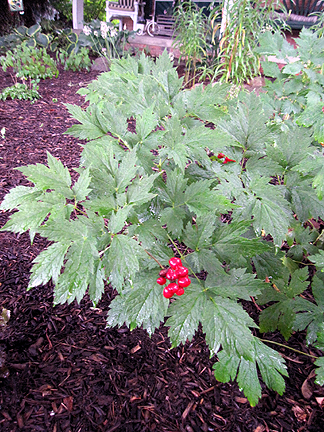
The native red baneberry (also called doll's eyes, Actaea rubra) is shade tolerant ...
Monica Milla | Contributor
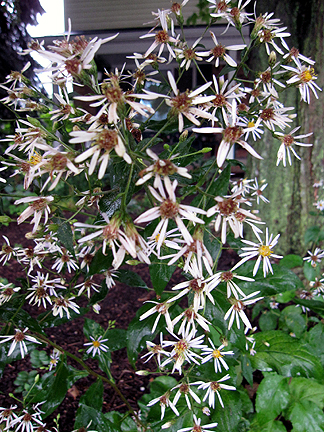
... as is this native bigleaf aster (Eurybia macrophylla).
Monica Milla | Contributor
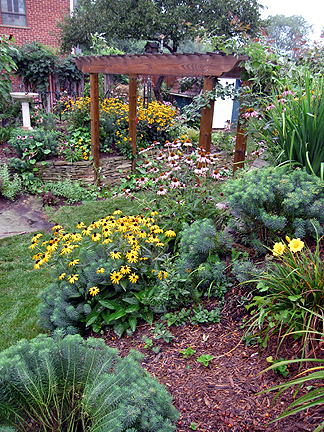
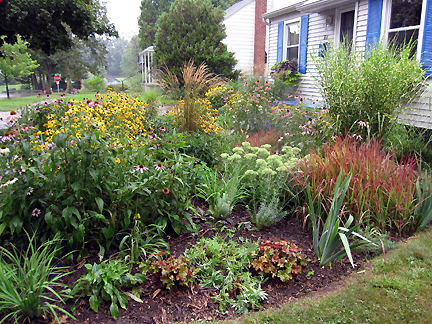
This front garden contains plants (black-eyed Susans, coneflowers, sedum, grasses) that require little water, attract birds and beneficial insects, and more or less look after themselves.
Monica Milla | Contributor
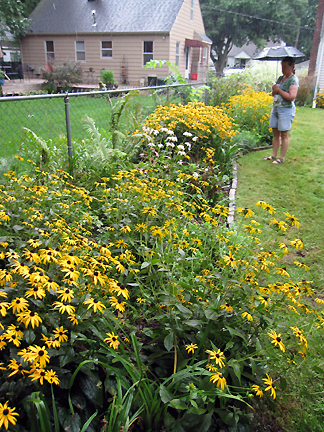
Tall, drought-tolerant plants (black-eyed Susans, coneflowers, grasses) are also a low-maintenance way to hide a chainlink fence.
Monica Milla | Contributor
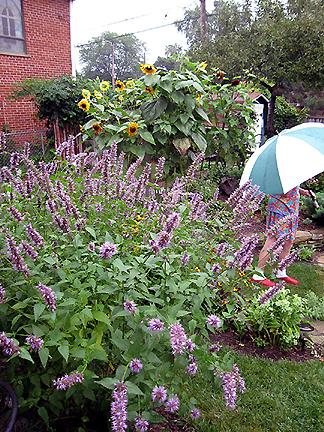
Anise hyssop and sunflowers don't require excess watering. The former is a magnet for bees and butterflies, while the latter attracts birds.
Monica Milla | Contributor
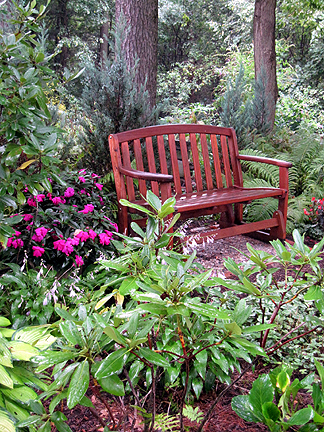
This homeowner started planting shade-tolerant plants into her wooded backyard after a windstorm knocked down some of the trees.
Monica Milla | Contributor
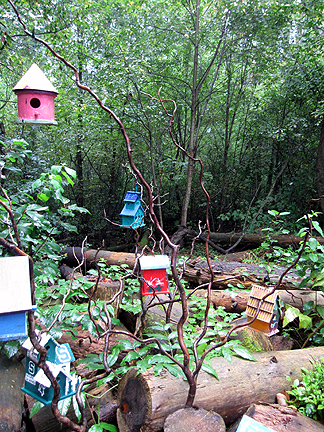
Garden decorations don't have to be expensive. The gardener's grandchildren painted these birdhouses, which are hung from pruned corkscrew willow branches.
Monica Milla | Contributor
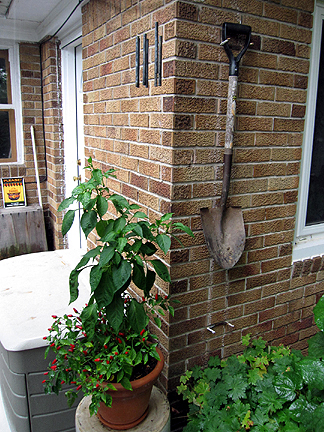
This is a clever way to keep a shovel close at hand, while also creating free garden ornamentation!
Monica Milla | Contributor
More photos of the tour are here.
Monica Milla, the Garden Faerie, is a master gardener volunteer, garden speaker, garden coach, and author of "Fun with Winter Seed Sowing."