

Walks in the woods can inspire native plantings in your yard
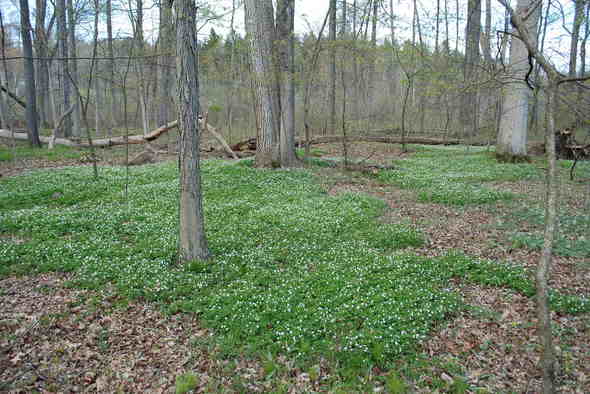
Thousands of False Rue Anemone (Enemion biternatum) carpet the floor of Dexter-Huron Metropark
Rick Meader | Contributor
Early to mid-spring is, to me, the best time to take a walk in the woods. Many would argue that the colors of fall make that the best time; it really can be showy, and shuffling through newly fallen leaves is always fun, for kids and immature adults such as myself.
But, the optimism of spring, and the chance to see the delicate, tough, little spring flowers breaking through last fall's leaf cover to make a mass of whites (with the occasional lavender or pink), and the return of the bumblebee and other early season pollinators making their rounds, make it my favorite time.
Last Wednesday, a gathering of Wild Ones (in name only, we’re really a rather tame bunch of native plant lovers) took a walk through the forest between the parking lots of Dexter Huron Metropark. I know, walking between parking lots doesn’t sound like a terribly natural thing to do, but the wildflowers there were, and probably still are, truly impressive in their cover of the landscape. It’s always nice to find a place where wildflowers outnumber, by far, garlic mustard and other alien invasives, and that is what this place is.
Cutleaf toothwort (Dentaria laciniata), Wild ginger (Asarum canadense), Yellow trout lily (Erythronium americanum) and Mayapple (Podophyllum peltatum) are all wildflowers I’m used to seeing in a rich woods setting, and they didn’t disappoint. The ground abounded with them, and the nodding white flowers of toothwort could be seen far and wide across the low woodland landscape. There were even a few trillium (Trillium grandiflorum) blooming, but their big show is still a little ways off, and marsh marigold (Caltha palustris) were showing their stuff in a wet area of the woods.
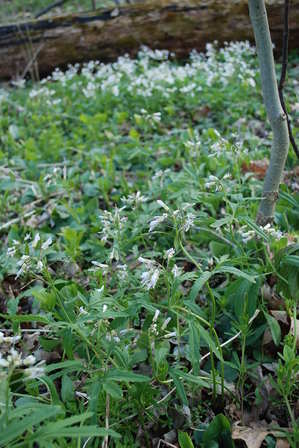
Cutleaf Toothwort (Dentaria laciniata) forms a welcome mat in the woods
Rick Meader | Contributor
A bonus to a walk in an ecologically healthy habitat where you don’t usually go is that you may see some species unfamiliar to you, and thanks to some knowledgeable folks along for the walk, we saw a small cluster of Harbinger of Spring (Erigenia bulbosa) a diminuitive member of the Carrot family, Two-leaved Toothwort (Dentaria diphylla), and some truly impressive mats of False Rue Anemone (Enemion biternatum).
This latter wildflower was a real show-stopper, in a short sort of way. I’m a big fan of Rue anemone (Thalictrum thalictroides) and have it growing in my yard, here and there, but it grows a little more solitarily, while some of these mats of false rue anemone were at least 30 feet in diameter, partially overtaking large rocks in the soil in a very artistic manner. Unfortunately, it’s not available from local native nurseries, so a visit to Dexter Huron Metropark will have to be your "satellite garden" for this species.
Besides restoring your senses and providing some great oxygen, such a walk in the woods can give you tips for your own yard, if you’re looking to increase its native look.
First, notice the soil and conditions the plants are growing in. They don’t grow in full sun, and the plants mentioned here like a humus-rich soil with plenty of broken down leaves and leaves on the surface. These plants don’t like immaculate, clean, raked gardens.
If you want these plants in a place that is currently lawn, or garden, get rid of the garden plants, lay down a few inches (at least) of compost, and let the leaves stay where they are in the fall after you plant them, and don’t rake the leaves in that spot again. Make sure you’re not putting them in notoriously dry areas, either.
Also, notice their natural growth patterns. Mayapples, Wild ginger and False Rue Anemone spread via rhizomes, so they form mats, or at least clusters. If you plant any of them in your yard, plan for that. If you want a dense mat or groundcover, don’t plan on Rue Anemone, Trout Lily, Spring Beauty, Cutleaf Toothwort or Trillium to fight off an encroachment of Garlic Mustard. Unfortunately, even in our little (and I do mean little) "woodland," I have to fight off occasional violations of our habitat by garlic mustard, so you should too.
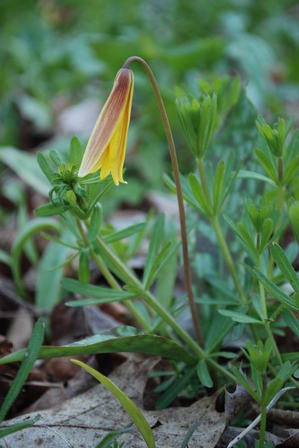
Yellow Trout Lily (Erythronium americanum) flowers provide some deep-colored contrast to the myriad of white flowers populating the woods at this time of year.
Rick Meader | Contributor
Finally, remember that the spring show we enjoy in the woods is truly ephemeral, as are many of the plants, so plan for the “second show” later in the year put on by other native woodland plants that are likely taller and don’t compete with the little sparklers of the spring woodland floor. Make your yard a multi-seasonal show stopper!
This week, blooming in our woodland and pseudo-wild habitat, are Rue anemone, Trillium, Woodland phlox, Spring beauty, Virginia bluebells, violets, foamflower, wild strawberry and bellwort. Ferns, mayapples and Early meadowrue are emerging. The cooler weather has been great for slowing down the native plant flowering progression somewhat, so get out and enjoy them while they’re here!
Rick is a local landscape architect with a special interest in all things natural, including creating designs that include a lot of native plants (and the critters they support). You can contact him at yourland1824@gmail.com.
Comments
Rick Meader
Tue, Apr 17, 2012 : 3:24 a.m.
Thanks for your comments, Rork. How does the public get to the area you're talking about? It sounds quite interesting. Is it kind of an oak savanna, or some other habitat? Thanks for the work you're doing to curb the cursed garlic mustard!
Rork Kuick
Mon, Apr 16, 2012 : 12:49 p.m.
Excellent article, as usual. There are white trout lily down the river a bit farther, by Zeeb, where there's a newish trail with pretty good flowers, but it needs some help with invasives. Don't molest the native plants there, or you will be composted. The open land across the river from Dexter-Huron parking lots is must-see for native plant enthusiasts, perhaps a bit later in the year. I've not been getting out as much this spring, since there was a wind experiment at my place Mar 15. I did make time to volunteer to go kill garlic mustard though. There are many opportunities to do that: stewardshipnetwork.org knows all and tells all.