

What's hiding in your home? Be wary of lead dust during home remodeling projects
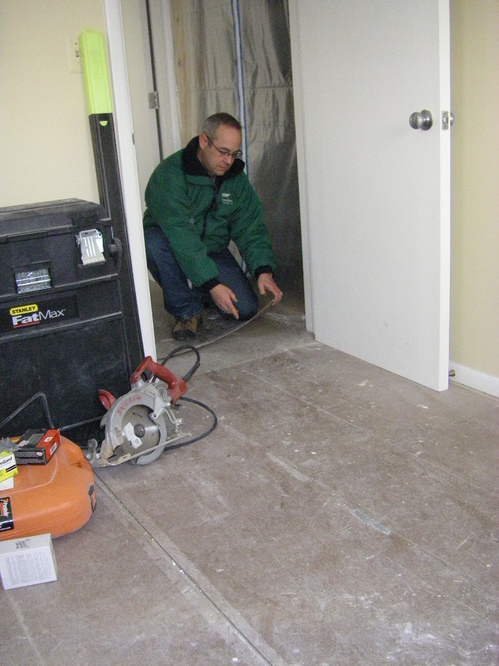
Lead in paint and other finishes can cause health risks during remodeling projects if not managed by a US EPA Certified Renovator.
Photo courtesy of Rochman Design-Build
Thinking of getting some home improvements or repairs done this season?
Whether it’s re-doing window or door trim, electrical improvements or a larger project, there are hidden dangers and health risks to watch out for. Lead exposure is one of the most common, and new regulations are going into effect on April 22 to help protect homeowners.
In older houses and apartments it’s everywhere. You can’t see it or smell it. But it’s there and could be a danger to your family’s health.
“As homeowners learn about the dangers of microscopic lead dust, they'll learn how and why to be cautious and how it should be handled safely,” said Gary Grabowski of Greater Home, Certified Remodeler and President-Elect of the National Association of the Remodeling Industry (NARI) of Southeast Michigan.
Lead exposure can lead to nerve disorders, high blood pressure and digestive problems in adults. In children, it can reduce IQ, decrease growth and lead to hyperactivity (ADD or ADHD).
“It's especially harmful to children 6 years old or less because their rapidly growing bodies crave the good minerals they get from their food,” says Grabowski. “Lead…can displace healthy nutritional minerals - the body can't tell the difference - and it can cause long-term brain damage."
In older houses and buildings, the biggest culprit is paint, but lead also hides in varnishes and other clear finishes as well. No houses built or renovated after 1978 have lead paint, but those built before do.
Dust is the biggest danger. Common tasks like scraping, sanding and using a heat gun all put lead particles in the air. That dust can then be inhaled or absorbed through the skin. Lead dust is so fine, even microscopic, that it can only be detected by chemical testing.
So what should you do when it’s time to renovate or repair your home? It’s a good idea to call the professionals, people who are specially trained to control lead dust to keep you and your family safer - trained as a Certified Renovator by the Environmental Protection Agency's eight-hour lead course.
According to Marty Lewis, Production Manager at Rochman Design-Build, an Ann Arbor based company, all their lead carpenters/supervisors will be certified in lead-safe work practices and dust control procedures before the April 22 deadline when the new Environmental Protection Agency (EPA) law goes into effect.
“EPA is the regulatory agency right now,” says Lewis. “And it will be until authority is delegated to Michigan.” Lewis says that it’s unclear when that may happen, but it may be by October 2010.
After April 22, all job sites must have a certified renovator on site to insure that any lead dust from the work is handled and cleaned up to EPA standards. There must also be a certificate for that person on the job site as well.
Current law requires renovators to give homeowners an EPA lead brochure to sign, indicating that the homeowners are aware of the lead dangers in their home.
According to Lewis, once the decision is made to remodel, homeowners should make sure the remodeler/builder follows three main safety procedures.
- Containing the work area - usually with heavy plastic tape and zipper “dust doors” leading to the work area.
- Minimizing dust - are the workers sanding or using other techniques? Techniques that use greater friction create more dust and increase exposure.
- Cleaning up thoroughly - daily sweeping and cleanup to control dust. Final cleaning should also be with a HEPA vacuum to help control lead particles.
"Following lead-safe work practices eliminates many dust problems and costs during and after the remodeling project as well," adds Lewis.
As a homeowner, it is important to ask your remodeler if they are an EPA certified renovator. “There will be contractors who do not buckle down and get the EPA's certified renovator training," says Grabowski. "As of April 22, they will be breaking the law."
Click here for more information about the US EPA's Certified Renovator, email Steve Smith at Michigan's Healthy Homes or call Michigan's Healthy Homes at 517-335-9470.
Both Greater Home and Rochman Design-Build are members of the National Association of the Remodeling Industry (NARI) of Southeast Michigan, a not-for-profit trade association committed exclusively to the service of the professional remodeling industry and its customers.
Article written by Jotham Tausig.
Comments
NARI of Southeast Michigan, a chapter of the National Association of the Remodeling Industry
Tue, Mar 9, 2010 : 7:22 p.m.
While generalizations are not entirely accurate, as mentioned, the guidelines do give the homeowner a "heads up" about a potentially harmful issue. Thank you for your comments.
rbschreib
Tue, Mar 9, 2010 : 2:02 p.m.
Great article. Well written and very informative.
BobbyJohn
Tue, Mar 9, 2010 : 1:47 p.m.
there are homes from the 1920's that have no lead based paint in them because they used 'cheap' paint.
Straw House
Tue, Mar 9, 2010 : 9:56 a.m.
It is not an accurate statement to say, No houses built or renovated after 1978 have lead paint, but those built before do. Although the ban on lead based paint (LBP) took place in 1978, cans of LBP still existed in peoples basements and garages, and has been discovered on homes as late as 1982. Conversely, not all homes built prior to 1978 have LBP on them. LBP was considered a premium product and therefore was purchased by people who could afford such a luxury. Additionally, paint companies anticipated the ban and started reducing or removing lead from paint by the late 60s early 70s. With the banning of leaded gasoline, consumers became more aware of lead in the environment and stopped their use of LBP.