

Why Do I Like Native Plants? Let me count the ways!
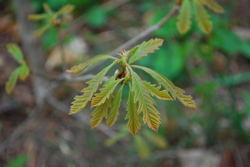
A young bur oak (Quercus macrocarpa)
Rick Meader|Contributor
Only after college, after graduate school really, did I learn about native plants. Still, it was just kind of an interesting thing when I read about prairie remnants along railroads, kind of like hearing about an old cemetery where people who had been born at the same time as Abraham Lincoln were buried. It was a relic of the past, but not something that gave me a sense of hope, or regret. My reaction was more of a “huh, how about that?” when I read how the fires sparked by trains had kept some of the remnants and their plants alive. Native plants were still just a passing item in my mind.
I started to get the bug when I became interested in ecological restoration. For me, ecological restoration meant stream restoration - adding bends to streams that had been straightened long ago, or converting lawns to forests, not really thinking about what would be in the forests. Native plants were still not a thing occupying my mind. As I volunteered for various restoration projects, which were mostly focused on invasive species removal, I began to see the beauty of an opened-up oak forest versus the buckthorn and honeysuckle-choked woods that had been comforting tunnels only a few years before. I learned of the variety of grasses and wildflowers that make up a prairie, and of the relative monotony of an overgrown field with its “family” of non-native grasses and weeds, like Queen Anne’s Lace. I even slowly began to see and hear the diversity of insect life in the prairies and restored forests that were missing, or less prevalent, in their unrestored cousins.
Finally, we bought a house, and my real love for native plants developed. It’s a little house in the middle of a grid neighborhood on a lot approximately 60’ x 130’. When we bought it, I was entranced by the trees on it - trees casting an open shade on the little cottage-like house. In my Woody Plants course, I soon learned that most of the entrancing trees were the non-native invasive Siberian Elm, with a non native White Mulberry, plus a native cottonwood and a few native silver maples rounding out the mix. Barberry, lilacs, cotoneaster, boxwoods and azaleas formed the bulk of our shrubbery. Lilies of the valley and non-native Snow-on-the mountain dominated the ground layer. All very pretty, and all typically suburban.
But, the couple from whom we had bought the house loved camping and the outdoors, and had planted a few native plants they had found. Dutchman’s breeches and ostrich ferns accented the lilies of the valley in the spring. As part of our class research, I learned that the pre-settlement vegetation on our lot had been “black oak barrens”, though the closest remaining oak was a massive bur oak over 3 blocks away. Thus, our “cottage in the woods” landscaping concept was born. I would attempt to create, on our little slice of suburbia, the habitat that had been there before it had been cleared for farming and subdivided for residences.
(The rest of this riveting two-part saga will appear in next week’s blog entry. Stay tuned!)
Rick is a local landscape architect with a special interest in all things natural, including native plants and the critters that eat them. You can contact him at yourland1824@gmail.com.
Comments
Rick Meader
Wed, Feb 3, 2010 : 9:51 p.m.
Thanks for your comment, and mention of the Stewardship Network. They are a great resource for learning more about native plants through activities that include restoration projects. Ann Arbor's and the Washtenaw County Parks Natural Areas Preservation workdays, along with workdays at Matthaei Botanical Gardens and the Nichols Arboretum are great ways to get up close and personal with native plants and their ugly cousins, non-native invasives.
Rork Kuick
Tue, Feb 2, 2010 : 1:42 p.m.
Strange, was there a fashion that non-native trees were more interesting ("cooler") than native ones, that is only now finally changing? For example it's hard for me to see how European maple beats sugar maple, unless it is pollution tolerance, which might not have been well known 50 or 100 years ago. Now for a shameless plug for volunteering on local restoration projects: http://www.stewardshipnetwork.org has a listing of many projects under "find an event". We are blessed to have such a resource.