

Ann Arbor approves $93 million contract with Walsh Construction Co. for wastewater plant rebuild
Ann Arbor has tapped Chicago-based Walsh Construction Co. to undertake the largest capital project in the city’s recent history.
City Council on Monday unanimously approved a $92.9 million construction contract with Walsh to rebuild half of its wastewater treatment plant and renovate the other half. The project could cost up to $120 million total and require five years to complete.
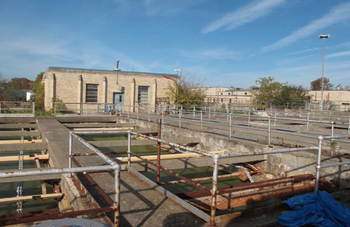
Earl Kenzie, the city's wastewater treatment services manager, said Walsh, which has a regional office in downtown Detroit, had more experience than two other companies interviewed during the bidding process. Six companies bid.
Parts of the plant will have to remain functional and treating wastewater, while other parts are demolished or renovated, creating a highly complex situation.
Kenzie said he city needed a company with experience in coordinating with multiple sub-contractors on a complex project over a long period of time, and he felt Walsh was the best selection.
“Clearly they have and continue to have that kind of experience,” he said.
Walsh recently completed two similar projects for the Detroit Water and Sewerage Department with price tags of $190 million and $290 million that were done while wastewater plants continued operating.
“Those were operational plants and that’s the biggest crux of our situation: the plant has to be operating,” Kenzie said. “Some of the work requires shutdowns that could affect our ability to treat wastewater … and that’s the biggest concern about having the right contractor.”
During public comment, a representative from Granger, which put in a bid of $90 million, asked why the city would pay over $2 million more when his company has experience with building large water treatment facilities.
Responding to questions from council later in the meeting about the selection of Walsh over Granger, Kenzie said he didn’t have an issue with Granger’s experience as a general contractor, but said Walsh had more experience working on projects where a wastewater plant remained operational.
Because the city has been approved for a $109 million loan from a revolving fund managed by the Michigan Department of Environmental Quality, Walsh is listed as the “tentative” contractor until the DEQ approves the city's application.
City Council recently approved a notice of intent to issue up to $120 million in sewage disposal system revenue bonds for the project, though officials estimate the final cost between $100 million and $110 million.
The aging facility is located just east of the city limits and US-23, off Dixboro Road along the Huron River, mostly in Ann Arbor Township. It consists of a West Plant constructed in the 1930s and a newer East Plant built in the late 1970s. The West Plant is shut down and it will be demolished and replaced. The plant’s electrical grid and stand-by generators will also be replaced.
The plant serves about 130,000 people in the city of Ann Arbor and portions of Ann Arbor, Pittsfield and Scio townships.
Kenzie said the part of the plant that is operational can handle around 20 million gallons per day and takes in between 18 million and 18.5 million gallons per day.
Starting the project now instead of when it nears full capacity is crucial so that the plant can continue treating those levels of wastewater while portions are shut down, Kenzie said.
The renovations to the East Plant include rehabilitating existing flow control structures, complete demolition and replacement of primary and secondary treatment equipment, and construction of new buildings. Other improvements include installation of a new electrical distribution system and two new emergency power generators, utilities relocation, replacement of stormwater collection system equipment, installation of new roadways, and replacement of aeration systems with energy efficient blowers.
The project comes as the city completes another project replacing worn out and inefficient residual solids processing equipment and other upgrades at a cost of more than $50 million.
Council Member Jane Lumm praised staff for their work and selection of Walsh.
“The rationale seems sound … and I think the bid and application process were quite robust,” she said.
Comments
Val
Tue, Feb 7, 2012 : 5:35 p.m.
I must of missed reading this, Where is the money coming from? I certainly hope the city is not going to ask the home owners to foot the bill when only about 45% of Ann Arbor is taxable. I almost forgot got the accessor can raise the money just by reassessing the value of all property in Ann Arbor. No vote needed. Isn't property tax wonderful. You don't own your property and the government can raise the lease fee anytime it wants to raise millions of dollars.
foobar417
Tue, Feb 7, 2012 : 6:57 p.m.
It's coming from *fees* not *taxes* on usage. They've been planning this for years and settings fees appropriate to that.
justdontgetit
Tue, Feb 7, 2012 : 4:54 p.m.
SHAME ON YOU ANN ARBOR! Couldn't they find a Michigan based company to do this?? Why do we always get companies from somewhere else? This STINKS!
Epengar
Tue, Feb 7, 2012 : 8:29 p.m.
Read more. ""Those were operational plants and that's the biggest crux of our situation: the plant has to be operating," Kenzie said. "Some of the work requires shutdowns that could affect our ability to treat wastewater … and that's the biggest concern about having the right contractor." During public comment, a representative from Granger, which put in a bid of $90 million, asked why the city would pay over $2 million more when his company has experience with building large water treatment facilities. Responding to questions from council later in the meeting about the selection of Walsh over Granger, Kenzie said he didn't have an issue with Granger's experience as a general contractor, but said Walsh had more experience working on projects where a wastewater plant remained operational. "
Buster43
Tue, Feb 7, 2012 : 6:01 p.m.
Quit WHINING! It doesn't "STINK"! I have friends that work at Walsh Construction. They are all from Michigan. Most of the people over there have graduated from MSU and U of M. They have had a large office in Detroit for like 15 years. They just happen to be a national company. Don't we want the most qualified company to do our work?!? In construction, the unqualified, low bidders are the ones that make mistakes, charge more, and don't get done on time. AA has lots of jobs like that! By the way, look at all the companies that got banned from working with the Detroit Water Dept. I've never seen Walsh's name come up, even though they obviously did a lot of work there.
DR
Tue, Feb 7, 2012 : 2:48 p.m.
Walsh may use local labor, etc. but the company profits go back to Illinois and subsequent monies and taxes stay in that state. If you use a Michigan contractor the money stays here. Why should we give money to Illinois?
foobar417
Tue, Feb 7, 2012 : 3:02 p.m.
Because the experts think it will result in a better product. "Kenzie said the city needed a company with experience in coordinating with multiple sub-contractors on a complex project over a long period of time, and he felt Walsh was the best selection. " That's not necessarily a sufficient reason, but it is a compelling one.
vaseline
Tue, Feb 7, 2012 : 2:40 p.m.
has the city said anything about what will it's plans for the $80 million in the water and sewage funds? I cannot stand the fact that we are going to borrow money, and take 1% of that borrowed money and spend it on the art fund
say it plain
Wed, Feb 8, 2012 : 2:56 a.m.
That's a good point about borrowed money... shouldn't the 1%, if it's on *borrowed* money, work out how much *interest* will be paid for that 1% sum and lessen the amount available for more folly fountains accordingly?!
blahblahblah
Tue, Feb 7, 2012 : 2:36 p.m.
Based on the unexpected problems and delays from other capital projects such as West Park and the Library Lot, I hope the construction contract covers the cost of road repair and possible bridge damage. The site has a single access road and it's own dedicated bridge over the river. Replacing the road and repairing any bridge damage will be costly. Hopefully the bridge crossing will result in stricter weight limit enforcement on all construction traffic. Can we safely assume Walsh has taken this into consideration - ie: no excuses for overruns relayed to this transportation issue? I also disagree with 1.) adding another $1 million to the art fund given all the other budget cuts and challenges facing the city! 2.) remaining in the dark as to why we are not spending any of the $100 million saved in the water dept. and incurring millions in interest charges by taking on more debt?
manbearpig
Tue, Feb 7, 2012 : 2:16 p.m.
Will this project be subject to the % for art ordinance?
speerhawk
Tue, Feb 7, 2012 : 2:11 p.m.
It was not awarded to the other two becouse of qualification issues and experience in wastewater and Walsh will hire local labor (Union Labor) so why does it matter where they are based they will use the local workforce. This was not quck this project has been in the works for the last 10 years.
Steve
Tue, Feb 7, 2012 : 1:54 p.m.
That was pretty quick...where was the usual debate, deliberation and delay that is the hallmark of this council. Or does that only take place when they are trying to evict a squatter from Liberty Square?
Steve
Wed, Feb 8, 2012 : 1:23 a.m.
I was talking about the council approval part...not the pre-planning.
foobar417
Tue, Feb 7, 2012 : 3 p.m.
Did you miss the "... has been in planning and design stages since March 2005 ..."? Hardly quick ...
DR
Tue, Feb 7, 2012 : 12:53 p.m.
Putting all the below stated facts aside, my big question is why does the city council award this job to a company that is Chicago based while passing over two lower bidders that are Michigan based? Seems that Ann Arbor's money should support local and in-state companies. There are several companies in this State that can do these jobs.
Epengar
Tue, Feb 7, 2012 : 8:28 p.m.
Read more closely: ""Those were operational plants and that's the biggest crux of our situation: the plant has to be operating," Kenzie said. "Some of the work requires shutdowns that could affect our ability to treat wastewater … and that's the biggest concern about having the right contractor." During public comment, a representative from Granger, which put in a bid of $90 million, asked why the city would pay over $2 million more when his company has experience with building large water treatment facilities. Responding to questions from council later in the meeting about the selection of Walsh over Granger, Kenzie said he didn't have an issue with Granger's experience as a general contractor, but said Walsh had more experience working on projects where a wastewater plant remained operational. "
Stephen Lange Ranzini
Tue, Feb 7, 2012 : 12:19 p.m.
Another question, related to the last one, would $10 million or $20 million spent instead on water conservation efforts such as fixing and replacing leaking mains, *incentives* for homeowners to fix leaks and to install new technology low flow toilets, etc., reduce some the current flow of water to the plant and eliminate the need for some or all of this $100 million plant, and by reducing the drawdown on our aquifers and the drawdown on the Huron River, improve our long term environment and the downriver ecology more than the proposed water treatment plant rebuild? Does anyone have any data on that?
DonBee
Fri, Feb 10, 2012 : 2:09 a.m.
The Ann Arbor system is relatively "tight" - the American Water Works Association (AWWA) indicates that approximately a 13% non-revenue water (e.g. total water made - total water billed/total water made) is best practice. This seeming high number results from fire departments using water, flushing mains and other things that are not metered. Ann Arbor is at approximately 15% NRW - in the top quartile of the municipal water districts according to AWWA. There is a significant amount of water and sewer main replacement coming, as pipes age out. Ypsi has spent several years and had a special millage to upgrade their mains. Ann Arbor was in better shape to start and had a more active maintenance program, so the special millage probably will not be required. As to getting people to reduce water usage - better understanding of lawn watering, when to let faucets run and when to shut them off, and other habit changes would do more than spending $10 to 20 million dollars. LADWP has gotten homeowners to reduce the average demand for water by over 20 percent in the last decade, and most of them spent little or nothing, they only changed their habits.
Stephen Lange Ranzini
Tue, Feb 7, 2012 : 11:44 a.m.
While on the surface this project sounds very reasonable and necessary, there are some unanswered questions. If the existing plant is operating well every day at 90% to 92.5% of permitted capacity, why do we need to expand it by 47.5%? Where is the growth going to come from since Ann Arbor is land locked and according to SEMCOG, the region's official planning agency, "The population in Ann Arbor is projected to stay essentially flat" over the next 28 years. The June 2010 annual audited financial statement of the city of Ann Arbor (CAFR) indicates on page 30, that there are cash resources available to the water and sewerage systems of the city of $82.7 million and that they are running an annual surplus of $9.5 million (see page 32). So, 2 years later by the time this project starts, it will have accumulated $100 million of the funds required. We've been told for years by the Mayor that the accumulation of $100 million in cash is to pay for this project, yet the city now plans to borrow $109 million to fund it. What's the point of that? Is the city planning other large future capital projects we are not yet aware of? If the plan was to borrow the money & there are no other undisclosed large projects, $100 million could be refunded to the residents who pay water and sewer fees (or never collected in the first place) because the annual surplus covers the cost of the debt. Will $1 million go to the 1% for art program from this project? The answer appears to be yes. One poster to yesterday's article opined that since Ann Arbor is not expected to grow, the real reason for spending this money was to gain environmental benefits because at times when there is heavy rain, the additional water cannot be handled by the current system. How much impact will the $100 million expenditure have on improving the ecology downriver for fish and wildlife? Is there are any data that estimates the benefit, to compare versus the cost?
Epengar
Wed, Feb 8, 2012 : 8:04 p.m.
I don't think the plant has overflowed at all. If it did, note that the article actually says "the fines can hit $25,000 a day." not that they top out at 25k. Here's an example of a city in California facing up to 2.8 million in fines for a series of small releases over 4 years that total less than 200,000 gallons. <a href="http://www.sgvtribune.com/news/ci_19242775" rel='nofollow'>http://www.sgvtribune.com/news/ci_19242775</a> re your 2), McCormick was being quoted about the wastewater budget, you seem to be looking at the combined sewer and water funds. I don't think they are the same thing.
Stephen Lange Ranzini
Wed, Feb 8, 2012 : 12:27 p.m.
@snapshot: A very interesting thought. If so, are we pricing the sewer and water hook-ups for these new units too cheap?
snapshot
Wed, Feb 8, 2012 : 7:07 a.m.
High rise apartments.
Stephen Lange Ranzini
Wed, Feb 8, 2012 : 4:44 a.m.
@Epengar: I really appreciate the link to the Ann Arbor Observer story. It has some interesting data: 1) The daily fines are "up to $25,000 a day" for overflow. It would be interesting to know how many days a year the plant has overflowed. 0? 2? 5? 10? At 10 that would be $250,000 a year. The interest alone on the bonds would be over $2.5 million a year and the principal if paid in equal installments over 20 years would be $5 million a year more, for a total of $7.5 million, enough for 300 days a year of fines. 2) "[E]ven as the rest of the city budget shrinks, the wastewater budget is flush-McCormick says it has $39 million in cash reserves and user fees are generating an extra $5 million a year above operating costs. At the planned rate of spending, the reserves will be exhausted sometime next year [2010]--leaving the city needing to borrow close to $100 million." Wow, McCormick's budget projections were awful. The city ended up with a surplus of $9.5 million for the year ended June 30, 2010, and cash reserves in the sewer and water fund of $82.7 million. 3) McCormick told the reporter "The Stadium [Boulevard] bridge is a forty-million-dollar project that needs to be done soon". Here she was only off by a factor of $17 million! The Stadium Bridge replacement is a $23 million project. 4) This article says the West Plant was taken off line in January 2009 ("last January"), while AnnArbor.com says "2006". Who is correct?
Epengar
Tue, Feb 7, 2012 : 11:56 p.m.
The article includes an interview with a senior utility engineer at the treatment plant. He mentions that one day the week of the story (during spring) rapid snowmelt sent over 34 million gallons of sewage to the plant. That's an awful lot more than the plant's 29.5 million gallon capacity. Fortunately they have 17 million gallons of temporary storage. Had that extra flow continued for more than another day, the plant could have been overwhelmed.
Epengar
Tue, Feb 7, 2012 : 11:47 p.m.
Fair enough, to answer your question we would need to know the variation around the average. I'm quite sure that the Wastewater Treatment Dept. has those numbers. My understanding from the previous article is that the plant is not "operating well". The older 1930's plant was last updated in 1964 and has been totally offline since 2006. The newer plant is a little over 30 years old. I think the main point of the project is to pretty much replace the offline older plant and so restore redundancy and reliability. If one plant fails, the other can then handle the load. There was an article in the Ann Arbor Observer in 2009 that gives a lot of useful background on the situation: <a href="http://arborweb.com/articles/the_flow_never_stops_full_article.html" rel='nofollow'>http://arborweb.com/articles/the_flow_never_stops_full_article.html</a>
Stephen Lange Ranzini
Tue, Feb 7, 2012 : 10:45 p.m.
@epengar: How many times in 10 years would we expect the plant to overflow? By how much? Would it not overflow if we added 10% to capacity? What about 20%? 30? Is 47.5% actually necessary? In fact, how many times will the plan at 47.5% increased capacity overflow over that same period of time? What level would the fines be? How would they be different at 10%, 20%, 30% or 47.5%? Lastly, if we reduced plant usage by conservation efforts (please see my post below), would we see fewer overflow events, and how many fewer and how much fewer fines at 10%, 20%, 30% and 47.5%? If we drew less water from the Huron River every day because of those water conservation efforts, how would that *positively* impact the ecology of the river and would that higher daily water flow offset the bad impacts of the occasional but inevitable overflows (even at 47.5%)? Is there an analysis of the environmental cost benefit options considered and rejected, or is this another Big Dig based on outdated and questionable assumptions? Remember we are dealing with Ann Arbor city government here and they have a long track record of overspending on big capital projects that sound wonderful but are of questionable need.
Epengar
Tue, Feb 7, 2012 : 8:25 p.m.
A previous article noted that the 18-18.5 million gallons/day (the number you use for your 90% capacity) is an *average*. That means some days more, some days less. If it's too much more, and the plant's capacity is overwhelmed, the excess sewage would end up in the river. That would create a public health threat and exposes the city to fines and penalties by state and federal environmental protection agencies for excess pollution. Those seem like good arguments to me for making sure we have plenty of extra capacity in the plant.