

Not an idle threat: Ann Arbor considers ban on idling vehicles
A driver pulls up to the U.S. Post Office in downtown Ann Arbor and leaves the car running in a parking spot to go in and drop off a package in the outgoing mail.
Another driver walks outside before leaving for work on a winter morning and starts their car to try and warm the car up before leaving for the office
Upon returning, both drivers - in these typical Ann Arbor scenarios - could find a $100 ticket pinned under a windshield wiper under a new ordinance that would ban idling vehicles in the city.
The new law is being recommended to the Ann Arbor City Council Monday by the City of Ann Arbor Environmental Commission.
The proposed ordinance would make a $100 ticket the minimum punishment for a driver who leaves a vehicle running while unoccupied for any amount of time or running for five minutes while occupied. For commercial vehicles, that minimum fine increases to $500.
Council Member Margie Teall, D-4th Ward and a member of the city's environmental commission, said the main goal of the ordinance is to educate people on how idling affects the environment.
Enforcement, she said, would follow.
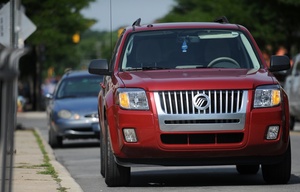
Cars sit parked outside the U.S. Post Office on East Liberty in Ann Arbor. Cars are often left idling outside the building.
Angela Cesere | AnnArbor.com
“We’re not intending at all to come after people about this,” she said. “What we really want to do is educate the public and enforce at some point down the road when people have had a chance to take it all in."
The ordinance would not apply in many situations, such as if a vehicle is idling due to traffic, at the direction of law enforcement or when idling is necessary to operate defrosters, heaters and air conditioners to prevent any kind of health problem.
In addition, vehicles will be allowed to idle to provide heat when the temperature is below zero degrees.
There would be a six-month grace period after the ordinance is passed for city officials to run an educational campaign about the new ban.
• To view city documents related to the ordinance, click here. •
Teall said the ordinance has been in the works since at least 2002, with discussions taking place on the Environmental Commission and among local activists. She said the City Council directed city staff to draft an ordinance a few years ago and the proposed ordinance being brought back before the council is the result of that direction.
Exceptions to the proposed ordinance
Here are some exceptions to the proposed ordinance
- A motor vehicle is forced to remain stationary because of traffic, under direction from law enforcement.
- Idling is necessary to operate defrosters, heaters or air conditioners to prevent a safety or health emergency
- Idling is necessary to provide heat to an occupied vehicle when outside temperature is below 0 degrees
- Motor vehicle designed to carry 16 or more passengers can idle to maintain a comfortable cabin temperatures for up to five minutes before departure
- Idling is necessary when a vehicle is immobilized beyond an operator’s control
- Emergency or law enforcement vehicles can idle in preparation for duty
- A licensed security provider idles in the course of performing security actions
- Armored vehicles can idle in the course of business
- Idling is allowed when necessary for any maintenance, service, repair, inspection, research and development or diagnostics
The new ordinance might actually help out some local taxicab companies, one driver said. Fred Peebles of Blue Cab Company in Ann Arbor said the ordinance could affect companies not based in Ann Arbor.
Peebles said out-of-town companies often idle on streets near bars to attract customers, whereas local companies often just respond to customers' calls.
With the promise of a $500 ticket deterring competitors from idling at the curb waiting for customers, Peebles said he would expect many out-of-town, unlicensed companies to stay out of Ann Arbor.
“It won’t affect our business, but it will effect the out-of-town taxis,” Peebles said, adding that Main Street and South University Avenue can become so clogged with cabs waiting for customers coming out of local bars that traffic almost has to stop.
A ban on idling wouldn’t be unique to Ann Arbor, according to documents provided by the city.
There are many cities from around the country that have idling bans in place, including major cities like Chicago, Washington D.C. and New York City. Towns such as Aspen, Colo. and Cambridge, Mass. have officials patrol the streets looking for cars that are idling in order to enforce their bans.
Teall said looking at other cities around the country and how they've approached their idling bans was a major influence on city officials when shaping the ordinance.
"It was great and very interesting to see. It shows how we are not always at the cutting edge of things,” she said. “It makes it easier, I think, for people to vote on something when they know it’s been successful in other cities.”
One of the major benefits city officials see from putting in an ordinance banning idling is the possible effects on the environment and air quality.
Estimates from the Hinkle Charitable Foundation, an advocate for environmental education, show that eliminating five minutes of idling each day can, depending on engine size, decrease the amount of gasoline burned by a vehicle each year by between 10 and 20 gallons, reduce the amount of money spent on gasoline by between $30 and $60 and results in between 220 and 440 pounds of carbon dioxide not being emitted to the atmosphere.
One of the popular arguments against turning a car off as opposed to idling is the argument that turning a car off and restarting a car is bad for the engine and a waste of gasoline. Not true, according to the U.S. Environmental Protection Agency and the Hinkle foundation.
The EPA and Hinkle foundation both estimate that the annual wear and tear from turning a vehicle off and on again in order to reduce idling amounts to between $9 and $10. The Hinkle Charitable Foundation study states that idling a vehicle for longer than 10 seconds is actually worse for the engine than turning the car off and restarting it.
Here are some previous moves:
-
Greet Fleets policy - Prohibts using unnecessary idling by all vehicles in the city’s fleet to reduce gasoline and diesel use by 10 percent by 2012.
-
UM Plant Operations idling guidelines - Requires all drivers of plant operations vehicles to turn off the ignition of their vehicle if they will be away from it for more than five minutes or they don’t know when they will return
Here are some previous moves:
- Greet Fleets policy - Prohibts using unnecessary idling by all vehicles in the city’s fleet to reduce gasoline and diesel use by 10 percent by 2012.
- UM Plant Operations idling guidelines - Requires all drivers of plant operations vehicles to turn off the ignition of their vehicle if they will be away from it for more than five minutes or they don’t know when they will return
One of the areas that the city point to as a growing concern is around schools, with documents stating recent studies showing elevated levels of air toxins like benzene at schools.
Ann Arbor schools spokesperson Liz Margolis said district officials were unaware of the proposed ordinance and has reached out to city officials to see how it would be enforced on school grounds.
Margolis said many parents do idle their vehicles while waiting for their students to be released from school and would need time to educate parents in the district.
“AAPS is aware of the environmental issue and we support those, but we would ask for time to educate our families if this is passed,” Margolis said.
The Environmental Commission’s resolution recommending the ordinance is on the agenda for the City Council’s meeting at 7 p.m. Monday at the Ann Arbor Municipal Center, 301 E. Huron St.
Kyle Feldscher covers K-12 education for AnnArbor.com. He can be reached at kylefeldscher@annarbor.com or you can follow him on Twitter.
Comments
nixon41
Wed, Aug 17, 2011 : 2:01 a.m.
You've got to be kidding. How stupid is that?
j5
Tue, Aug 16, 2011 : 1:20 a.m.
More creeping crud of government intrusion into our lives. This is the kind of nonsense that happens when some busy body strains their little peanut brain, opens their ignorant mouth, and utters these words: "There ought to be a law!"
Ron Granger
Mon, Aug 15, 2011 : 7:05 p.m.
This is Ann Arbor. We're trying to be a green city. The city has long articulated an intent to reduce the number of autos downtown, and I support that. We like to walk in Ann Arbor, we like to bike, and most of all, we like to breathe. So less idling? Great. People who want car-centric cities are welcome to them. There are vast numbers of such cities, but few like Ann Arbor. We pay for a greenbelt around the city - many cities have a belt of strip malls. Places like Dearborn have very few sidewalks. They embrace the auto. People who share the view that the car is king should support those cities. Though the above does seem at odds with the city's plan to use taxpayer dollars to build parking structures on public parkland for the University...
Original Ann Arborite
Mon, Aug 15, 2011 : 6:12 p.m.
Well, I like the way Jefferson, Woodward, Michigan Ave. etc. move, it's more like u get through more than a few lights without having 2 stop, u can actually pace urself. Now here in A2, it's more like vroom-stop-wait (idle), vroom-stop-wait (idle), vroom-stop-wait (idle) aaarrrggghhhh!!!! So, anyway, I wish Maple/Stadium/Washtenaw AND Main/Ann Arbor-Saline Rd. (Liberty and Jackson Rd./Huron st. doesn't seem 2 bad) would move a little faster...ugh...would u go, the light is green! I'm runnin late again... Also, this has a lot of bearing on exactly where it is that the authorities will patrol in order 2 possibly enforce this...I can c them in certain neighborhoods/apartment complexes already. Um Ma'am/Sir, ur car has been idling for about 10 minutes and r u aware of the city ordinance on idling cars? yada yada yada
Ron Granger
Mon, Aug 15, 2011 : 7:06 p.m.
If you want to drive fast, take the highway. It circles the entire city. In the city, you might try biking or walking.
djacks24
Mon, Aug 15, 2011 : 5:56 p.m.
continued...(character limitations) If you know anything about engines its pure common sense. Oil is much thicker and slower moving than gas. Oil lubricates the cylinder walls and needs time and low rpms to move from the bottom of the oil pan and be pumped through the engine and then coat the cylinder walls. This is best and most efficiently achieved at idle because the engine rpms will not exceed 1500 rpm. Also, the drive train will not be placing more demands on the engine when it has not reached optimal operating temperatures. I can go on and on but you get the point of how important warming up is and how little it makes a difference in average fuel consumption. Actually sitting in stop and go traffic is far more wear and tear along with mass fuel consumption. While in stop and go traffic, wear and tear on brakes, suspensions, and transmissions in combination with the fuel needed to propel the vehicle from a dead stop every couple of seconds with a line of several vehicles if far worse on fuel consumption, wear and tear, and emissions than a responsible person warming up a vehicle twice a day for 5 mins would do in a year. This is a pure money grab plain and simple. If the city counsel actually had fuel savings and the environment in mind they would not nit-pick on residents leaving their vehicles running for a little while and start by educating where the most difference can be made: -Properly timing traffic lights -Leading by example requiring all city vehicles follow the same mandates -Educating drivers that hammering on the accelerator only to hurry up and and hit the brakes again if far less fuel efficient and harder on your vehicle then stating off gradually when you know you will be stopping soon and then coasting to a red light. -Educating drivers that keeping their cars idling for excessive amounts of times (with air or heat blasting) or when already warmed up is wasteful.
Robert Coon
Mon, Aug 15, 2011 : 5:36 p.m.
First, turn the properties of the mayor and city council into parks. Second, re-open the fire stations with the park money. Best of all, provide a more intelligible traffic system so motorists can move east and west in order to prevent... idling.
djacks24
Mon, Aug 15, 2011 : 5:35 p.m.
"One of the popular arguments against turning a car off as opposed to idling is the argument that turning a car off and restarting a car is bad for the engine and a waste of gasoline. Not true, according to the U.S. Environmental Protection Agency and the Hinkle foundation. The EPA and Hinkle foundation both estimate that the annual wear and tear from turning a vehicle off and on again in order to reduce idling amounts to between $9 and $10. The Hinkle Charitable Foundation study states that idling a vehicle for longer than 10 seconds is actually worse for the engine than turning the car off and restarting it." I'd really like to see an unbiased answer on this. I've been a car guy all of my life, even spending nearly 20 years in the auto industry. Yes, today's fuel injected engines do not require the burst amounts of fuel to start up as the old carburetor fuel systems, but wear and tear of stop and start has always been a constant. For years every vehicle I've owned has been in excess of 100k miles (my last vehicle was over 250k miles and was still running great when I sold it). Every one of these vehicles I've responsibly warmed up first in my driveway in the morning for 5 minutes (unattended but only while I run back in my house to grab my stuff and lock up), then later on before leaving work (while attended) for another 5 minutes since the vehicle has been sitting cold for several hours. These habits, in combination with responsible driving habits have made each of my high mileage vehicles require very little repairs beyond scheduled maintenance. On top of all this, I've always been able to maintain an average fuel consumption of 35mpg even with vehicles that when brand new were rated at 35mpg only for highway driving. Again, each of my vehicles were mostly over 10 years old and far over 100k miles.
mun
Mon, Aug 15, 2011 : 3:06 p.m.
To all those concerned about the weather, "The ordinance would not apply in many situations, such as if a vehicle is idling due to traffic, at the direction of law enforcement or when idling is necessary to operate defrosters, heaters and air conditioners to prevent any kind of health problem. In addition, vehicles will be allowed to idle to provide heat when the temperature is below zero degrees."
GoneGoneGone
Mon, Aug 15, 2011 : 2:45 p.m.
I am literally laughing out loud. This is the best thing the wisefolks on the City Council of Ann Arbor can consider as a way to raise revenue? NO wonder people don;t come out and vote; you're all too funny to take seriously. I propose $1000 fine for any councilperson who proposes such asinine legislation under the guise of "environmental concern" from now on. Add to this $1000 fine for each stupid statement made by the DDA to the press (which will literally be all of them.) This will raise revenue much faster than the "idling citation." Ann Arbor, you've really got to get a clue about what living in the real world means.
mun
Mon, Aug 15, 2011 : 2:45 p.m.
Isn't this the same City of Ann Arbor that had the police force working in the ground floor with radon at 7 times the dangerous limit? Vada Murray, anyone?
Ron Granger
Mon, Aug 15, 2011 : 2:03 p.m.
This reminds me of the people who will drive to a park and then sit in their cars with the engine running; with zero regard for the exhaust fumes and the heat from the car on the people around them. They do it at parks, they do it at the beach, their sense of entitlement and disregard for others is limitless. It isn't all about you. And it is more telling that the mere suggestion that such behavior might be regulated sends some people into an absolute tizzy.
j5
Tue, Aug 16, 2011 : 1:27 a.m.
Ron, it's even more telling that you feel so compelled to micromanage other people. I'd say your sense of entitlement and disregard for others is raging compared to some schmuck sitting in his idling car in a parking lot oblivious to the egregious offense of blowing fumes at you. It's clearly all about you isn't it?
1bit
Mon, Aug 15, 2011 : 2:24 p.m.
Ron, I appreciate your point but would respectfully suggest that you are missing the points by most commenters. Some commenters are completely in favor of reducing idling time but instead of a law/fine would prefer simply an educational campaign. Some commenters believe we are overregulated as it is and this is just another example of frivolity over substance. Some commenters are worried about the vagueness of the ordinance and how those with health conditions will fare. Some commenters, including myself, believe that there is no evidence that the ordinance will substantially improve air quality in Ann Arbor. The draft ordinance also empowers just about every city employee to write a citation. Yes, some people overindulge on idling their vehicle but others may have a good reason. Please forgive those of us who want meaningful and well-written laws rather than 'feel good' measures that are lacking.
Buddy Holly
Mon, Aug 15, 2011 : 5:39 a.m.
This is stupid. City officials need to find something better to do with their time. If this gets passed, they might as well start looking for a new job, because they are going to be voted out.
Stuart Brown
Mon, Aug 15, 2011 : 4:38 a.m.
I forgot to mention that while it is true that restarting an engine saves fuel, if the catalytic converter cools off too much, this will increase emissions of CO (carbon monoxide), hydrocarbons and NOX (Nitrous Oxide). If the city were truly interested in reducing CO2 emissions, why not tax all of us fairly and equitably and use the money to buy carbon credits? Why do we need to make it so painful? Using law enforcement to achieve a reduction in CO2 is about as inefficient a method as one could think of; but yet, this is the course the city picks! Here is an example of a better plan: pass a millage to purchase solar panels and geothermal heating for AAPS buildings and dump the IT millage. This would be two-fer, Ann Arbor saves CO2 emissions and frees up more operating revenue to pay for more teachers in the classroom.
nicole
Mon, Aug 15, 2011 : 4:35 a.m.
Yes, let's vote them out of office. But the problem around here is that the only people that run for office are liberals, so you are just going to get more of the same.
Macabre Sunset
Mon, Aug 15, 2011 : 3:41 a.m.
How 'bout synchronizing the traffic lights? You'd save more gas in one day than this stupid, ridiculous, offensive plan would save in 20 years.
Andrea
Mon, Aug 15, 2011 : 3:25 a.m.
While I don't agree with the overall tone of the ban, my biggest concern would be who decides what the temperature range is for health and safety? Not all people are able to tolerate heat. Reading some of the comments I saw some disdain for those who use remote starters for air conditioners, but I am one of those people. I use it to cool an unreasonably hot car off for my severely multiply impaired, extremely medically fragile sister who can't control her body temperature. So if it's over 75 degrees you'd better believe that I'm doing my best to keep my car cool for her. So now I'm going to have to carry around additional paperwork to prove that her health and safety requirements are different than yours? I get so tired of all the people who think they can "educate" or judge me based on one or two actions they see me make. My actions have a reason that, as long as they aren't breaking laws, are none of your business. But now, if this passes I will be continually forced to justify the need for a car to run whenever the temperature is above 75 or below 60. Could something be added to the lisence plate information giving information like that? I can understand the concern since fuel is a limited resource, but it seems that there should be other ways to do it.
Stuart Brown
Mon, Aug 15, 2011 : 3:13 a.m.
Great timing, just as new, tougher CAFE regulations requiring about 54 MPG by 2025 kick-in, the city decides its time to use local law enforcement to help the effort. Me thinks this has almost nothing to do with carbon emissions since the improvement in CO2 emissions will not even be measured with this ordinance but, the thing that will be counted is the money from the fines collected. There is an old saying that things that get measured get managed and if you want to see what is getting managed, look at what is getting measured (and just as importantly, what is not getting measured)! But wait; it only gets worse: just think of all the ways an ordinance like this can be used by police to enforce sundry forms of bigotry and prejudice when it comes to dumping on so called "undesirables". The method the city's environmental people have chosen to restrict carbon emissions is at one and the same time about as painful to the populace and cost ineffective a method as possible; where do they get the geniuses who think this stuff up? I am already educated, thank you! The city's plan is nothing but bald-faced repression ala Jello Biafra's "suede denim secret police, who've come for your uncool niece" dressed up in pseudoscientific hogwash arguments. The city increasingly looks like it is taking its lessons from organized crime when it comes to shaking down citizens for cash. This ordinance will hit the less fortunate amongst us particularly hard as it appears is the true intention, making this measure particularly heartless and cruel. People should remember to vote no on renewing the streets millage this November(drain this $28 million dollar bucket), vote for Jane Lumm in the second ward and fire not only Rick but his DINO supporters in city government ASAP!
Bulldog
Mon, Aug 15, 2011 : 2:56 a.m.
And what about the idling school buses in the school parking lots?
L
Mon, Aug 15, 2011 : 2:49 a.m.
Absolutely Insidious. This is nothing more than another money grab by our local government, disguised as a noble attempt to aid in air quality improvement. Laughable at best. Given the way local government thinking of late goes, it may be beneficial for our local winter drivers head off to work without proper visibility. The more accidents the better, even more money for the city's coffers, via fines and penalties generated as a result of a certain increase in traffic citations. Further, what thought has been given to our public transportation systems, our school buses, our emergency response teams, or as others have already stated, our law enforcement officials. Our we to presume these and other public services will be exempt? The upcoming elections bring to mind Anti-Drug ads from days past...Just Say No.
CynicA2
Mon, Aug 15, 2011 : 2:44 a.m.
Instead of doing their jobs, the micromanaging crackpots in city hall are focused on trifles and fluff. Get the tar and feathers, and torches and pitchforks , and run these morons out of town completely.
a2chrisp
Mon, Aug 15, 2011 : 1:11 a.m.
This may be the most moronic law ever proposed. As a registered democrat, I hate to say this but maybe its time to elect some republicans. These council members and the mayor have grown delusional.
G
Mon, Aug 15, 2011 : 1:11 a.m.
Now I truly have a reason to hit the polls in November. Too bad dissolving the City Council isn't on the ballot.
Jon
Mon, Aug 15, 2011 : 12:02 a.m.
I think the priorities of the Ann Arbor City government are sorely misplaced. I myself don't believe idling vehicles are a major concern of the city. Everyone at some point has there car idle while they are either present with the vehicle or close by. Who wants to get into a car that is 10 degrees...no one does...as for police officers leaving there vehicles running...this is a common practice done by 98% of officers in this country...they do it so you don't have to search for keys and to keep the car charged for most cars have laptops that will eventually drain the battery. And at that police officers want to respond/investigate crimes and handle life threatening emergencies who honestly cares about someone leaving there car running. I swear the city just trys to think up dumb stuff to make an ordinance about to try an generate money because they done used all the money for public art and consulting firms, while taking patrol cars off the street and limiting the abilities of the fire department's fire suppression and EMS capabilities....this is why i stay out in the scio township
Cendra Lynn
Sun, Aug 14, 2011 : 11:53 p.m.
Zero degrees? Zero??? How about 25 degrees including wind chill? Cars do not retain heat. They also don't retain cool in the summer -- the heat skyrockets with doors and windows closed. This needs to go back to the drawingboards.
Diana
Sun, Aug 14, 2011 : 11:47 p.m.
If they pass this, I will be regularly harassed by the police. I have Raynaud's Syndrome and Lupus. It's not like you can look at me or my car and know about my medical condition. I can't stand the cold and my office is so cold that I like to sit in my car and eat my lunch to get warmed up. My car has to be turned on to get heat. I need to be able to warm up the car steering wheel in the winter before I drive. The cold wheel will cause my fingers to loose blood circulation. They go numb and turn white. Some patients can lose their fingers and toes because of this condition and it doesn't qualify you for a Michigan handicap license plate.
Andrea
Mon, Aug 15, 2011 : 3:31 a.m.
I'm with you! My sister has about 15 degrees where she can maintain a body temperature and I go right into heat stroke when it's hot. It's not something that can be seen just by looking at a person. The lower end of this temperature thing seems ridiculous. Good luck!
15crown00
Sun, Aug 14, 2011 : 11:12 p.m.
you don't have enough cops to take care of real crime.this stuff is pety.leave it alone
grye
Sun, Aug 14, 2011 : 11:01 p.m.
Good grief! Has our city govt lost their collective minds? Anyone on the council that even remotely agrees with this potential ordinance has got to go. Why would anyone think that idling cars in Ann Arbor are a major problem? If 100 cities with populations greater than Ann Arbor were to adopt such a law, I could see some a potential for conformance. But this is the most idiotic recommendation I have ever heard. We need a city government that has a solid economic and fiscal responsibility plan, not one that's been smoking something in their pipes at hash bash.
Bob W
Sun, Aug 14, 2011 : 9:19 p.m.
I'm again appalled by what our mayor and council consider priorities in these times. We need some folks with common sense in city government. It's been gone for too long. Who exactly is going to be running around ticketing these "idlers?" Whoever they are, I would think they have far better things to be doing. Dumb, dumb, dumb!!
David Cahill
Sun, Aug 14, 2011 : 9:17 p.m.
The Environmental Commission is also the group that brought us the disastrously failed idea of removing Argo Dam. Plus the useless RecycleBank Coupons. And now this. For its next trick....
RU4A2
Sun, Aug 14, 2011 : 9:05 p.m.
I can't believe council wastes the time on these unrealistic ordinances. A few questions have crossed my mind. 1. With a reduced staff, how will A2 police have time to enforce this issue. 2 .How will People with health concerns be able to address these ordinances. ( Heart Disease, Diabetes,poor circulation, etc.) 3. Will city and school buses have to conform regardless if they have a full bus or five passengers. 4. Has council spent thousands for a study on this issue. 5. How will delivery trucks be able to do this with dessil engines that have to be kept running. 6. Will A2 have to spend thousands on signage for people unawre of this new ordinance.o 7. Isn't it unrealiztic for police to respond eveytime I complain about my neighbor. 8. Won't these stupid complaints add more polution. I'm sure I could think of more, but my brain is starting to smoke and I can't afford a $100.00 fine!
CobraII
Sun, Aug 14, 2011 : 9:02 p.m.
Lets have another A2 law, next thing they'll want to tell us what kind of car we can drive!!
djm12652
Mon, Aug 15, 2011 : 12:51 a.m.
oh my you're right...and then how many children you and your partner are allowed to have in your family, to reduce your familia carbon footprint...
julieswhimsies
Sun, Aug 14, 2011 : 8:59 p.m.
I KNEW this post would draw a gazillion comments. Again. SO Ann Arbor. I don't idle my car ever, as it saves fuel...but a city ordinance? LOL!
Ann English
Sun, Aug 14, 2011 : 8:46 p.m.
I don't see anything wrong with idling your vehicle in the special paved curved at both the Pittsfield and Mallett's Creek Library branches, while you return library materials at their outside drop slots. That isn't another parking space. If idling a vehicle there is prohibited, we may as well park in those areas, especially if no parking spaces are available. It takes less than a minute to return library materials from the outside.
1bit
Sun, Aug 14, 2011 : 8:03 p.m.
Kyle linked the draft ordinance, <a href="http://www.annarbor.com/idlindordinance.pdf">http://www.annarbor.com/idlindordinance.pdf</a> , and I'd suggest you take the time to read it for comic relief. To me, it comes across as if it were written as a high school report. The data is sparse with silly assumptions such as imagining cars idle the same amount as buses/trucks (of course, not taking into account their own definitions of necessary and unnecessary idling). In one breath, the argument is that cold starts with cold vehicles is bad (emitting more heavy particulate matter) and in the next it suggests that stopping the car in cold weather after you've been running it and then restarting it is better than keeping it warm. My favorite part is that they go through the trouble of listing AATA and AAPS steps taken to reduce idling - which amount to exactly nothing according to the document. The draft ordinance is classic pseudoscientific garbage where an "enlightened" committee has preordained an outcome because they feel they know what is best rather than performing the process scientifically and letting actual data guide the process.
Fatkitty
Sun, Aug 14, 2011 : 7:57 p.m.
Enforcement? With what? A Rottweiler on a long leash? (since the AAPD is too busy helping the FBI track down the rapist)....
EyeHeartA2
Sun, Aug 14, 2011 : 7:57 p.m.
Once, just once, I would like to read something like: 'Due to the overwhelming opposition of our constituents to this proposal, we have dropped it from further consideration" instead of: (thought bubble) ' we know what right for the great unwashed masses ' City council is a joke.
djm12652
Mon, Aug 15, 2011 : 12:48 a.m.
yes it is....but why aren't we laughing more? Oh wait, I forgot...there isn't one constituent of our local Council and Maya...even remotely intelligent enough to get the joke...they, City Council and Mayor Heftie will tell you...a couple of things...1. you can't possibly understand the complexities of running A2 government..2. we do what's best for you as long as it is what we, the elected, want and that's what really matters...and the absolutely pathetic part is they really believe their own "campaign promises" and press releases...
just a voice
Sun, Aug 14, 2011 : 7:56 p.m.
Uh, many diesel trucks never shut off during operation, I don't know why but I'm guessing there is a valid reason. Also, we could do more positive change by making students recycle and giving fines to those who regularly throw recyclable material away.
Macabre Sunset
Mon, Aug 15, 2011 : 3:43 a.m.
How 'bout we fine people for sanctimonious suggestions?
Homeland Conspiracy
Sun, Aug 14, 2011 : 7:54 p.m.
Ann Arbor Six square miles surrounded by reality
djm12652
Sun, Aug 14, 2011 : 7:17 p.m.
To quote Margie Teall...."We're not intending at all to come after people about this," she said. "What we really want to do is educate the public and enforce at some point down the road when people have had a chance to take it all in." I personally appreciate the efforts of council and ugly hall to try to educate those here denied an education or that have no access to any schoolin....oh my, the unfortunate dumb people of Ann Arbor. After all is said and done we all know this backwoods town is not known to have a high graduation rate or many people with a lot of smarts. I applaud all of their attempts to edyamakate the common folks here in our littler holler... I would much rather see money go to some ticket enforcer than cops patrolling our streets...I mean c'mon, the city can make more money to fill another ridiculous bucket and lay off more police and then not worry about those vehicles using gas and polluting through idling... ;o]
Old Salt
Sun, Aug 14, 2011 : 7:16 p.m.
Fine: The next time I have to go shopping and have my dog with me,I will do all of my shopping outside of AA so I can keep my dog cool and also me when I get back to the Car...Sorry AA shop keepers..Another stupid law for us if it becomes law..
Homeland Conspiracy
Sun, Aug 14, 2011 : 7:59 p.m.
Just leave the dog at home!
Kk Ichikawa
Sun, Aug 14, 2011 : 7:16 p.m.
....another USELESS ordinance, similar to the "texting while driving" ordinance. That was already covered under CARELESS DRIVING. State law also already prohibits leaving a vehicle running and unattended with the keys in the ignition.!!! As for the redundant "texting"ordinance, State law prohibits doing "anything" which adversely affects, and can be shown to have affected your ability to drive...it's called "CARELESS DRIVING!".....e.g. there is no local ordinance which prohibits ANY of the following activities while driving; reading, putting on make-up, shaving, eating, reading, thumb wrestling, playing a portable video game etc... BUT any of those activities could result in a CARELESS DRIVING citation. City Council has no integrity or accountability!!
Mark Stettler
Sun, Aug 14, 2011 : 7:09 p.m.
I think that the city/county (perhaps the whole state) should focus their attention on removing unnecessary "No Turn On Red" signs and making the yellow left turn lane signal lights blink (turn with caution), when oncoming traffic has a green light! I Have lost count on the number of times that I have been stuck at the light heading north on Ann Arbor Saline Road waiting to turn onto I-94 West, with not a car in sight. This is just plain ridiculous! These lights are all programmable and it should be very simple to change the signal so that it flashes yellow! A good example of a wasted "No Turn on Red Sign" is the North Territorial Road exit off from US-23 South. These situations are a huge waste of fuel, not to mention the unnecessary additional emissions. Perhaps the AA News should do an article on this!!!
djm12652
Sun, Aug 14, 2011 : 10:06 p.m.
Mark, wait no more....you can turn left on red when turning onto a one way roadway including entrance ramps....travel in any number of Oakland/Macomb county municipalities and you will have the flashing left turn when clear arrows...but perhaps they care more about pollution then we do...I dunno...
breadman
Sun, Aug 14, 2011 : 8:05 p.m.
I have been stuck waiting for the light at K-Mart on S. Maple!!! WAITING
paul wiener
Sun, Aug 14, 2011 : 7:05 p.m.
I hope it's just a rumor that you will be fined for flushing the toilet before it's completely full.
FredMax
Sun, Aug 14, 2011 : 7:01 p.m.
Question: if one gets stuck behind the bus going down liberty street, i.e. that bus that has a stop every fifty feet, will one be required to turn off their engine at each stop?
LarryJ
Sun, Aug 14, 2011 : 6:40 p.m.
The majority of comments are along the lines of "get the government off my back", but I don't think a single comment refutes the notion that most idling is wasteful and stupid. If turning off the engine decreases fuel consumption and CO2 generation and $$$ spent on gas by ?2-3%, at no inconvenience to anyone, then it's is a good thing. And with or without a city law, this discussion is serving a good purpose by educating people on this. A couple tweaks to any proposed city law: 1. If the purpose is education, how about reducing the cost to the level of a traffic ticket, ~$10-25. That would answer those who, rightfully, think the city is trying to make money on this. 2. I agree with those who say it should not apply below ~32 F rather than 0 F.
Mike
Sun, Aug 14, 2011 : 6:39 p.m.
Well, this sounds like a good reason to vote Margie Teall out of office.
Ming Bucibei
Sun, Aug 14, 2011 : 6:27 p.m.
Vote out all incumbents !!! The council and mayor are a pack of (to misquote lenin) useless idiots!! Ming Bucibei
grimmk
Sun, Aug 14, 2011 : 6:24 p.m.
You're KIDDING, right? What a bunch of hogwash, baloney, pig swell and tripe. At this rate we won't even be able to drive our cars IN Ann Arbor. And they wonder why revenue is down? You can't park your car, you can't drive it, so why bother going to Ann Arbor/Downtown? Thank god I moved to Ypsi.
Beverly Klooster
Sun, Aug 14, 2011 : 6:19 p.m.
Give me a break! Don't you people have anything better to work on?
breadman
Sun, Aug 14, 2011 : 6:16 p.m.
O OO O.K. Law markers made it so you may not text while driving! So you pull over in a (?) safe area to do yur texting, and now you will get a ticket for a idle in the car! Just keeping texting!!!!!!!!!!!
julieswhimsies
Sun, Aug 14, 2011 : 9:13 p.m.
I agree Fatkitty! People pull up in front of my house multiple times daily, and idle their big stinky SUVs while texting or yacking on their cells. It's an annoyance to me, and if they're out there for more than 10 minutes, I generally step outside and ask politely for these drivers to please turn off their engines. They always are very courteous and apologetic. Honestly. Cell phones and texting drive me nuts! I never answer or pull over to use my cell or text when I'm in the car. Quite frankly, I'm getting ready to dump my smart phone and get a dumb phone. The only reason I use one at all is for safety reasons...in the car or on my horse.
Fatkitty
Sun, Aug 14, 2011 : 8:03 p.m.
Personally, I can't imagine any text being THAT urgent that one could not wait until they have exited their vehicle. Hurray for the good old days, phone booths, and people actually TALKED to each other - and enunciated their words so they were understood! Unlike some people I know who spk lk th txt. No vowels...... uh what did you say?
Mick52
Sun, Aug 14, 2011 : 6:13 p.m.
Frankly I think leaving an unoccupied vehicle running is foolish. It greatly increases the chances your car will be stolen. And it does cost you money over time by lost fuel. But to make it a law is unbelievable. An ordinance like this and the dumber crosswalk ordinance are perfect examples of why amateur politicians in elected office are a huge problem in this country. Most fiscal issues facing local government are due to elected officials agreeing with programs, policies and contractual agreements that should never have been put in place. Another SURPRISE to people who visit Ann Arbor for a first or occasion time. I nearly slammed on my brakes the other day when I happened to spot a woman and a child waiting to cross Miller. Glad there was no one behind me. I am really surprised the police union has not come out against the cross walk ordinance and now this one as too bad to enforce. People do not need any more reasons to hate police officers.
leezee
Sun, Aug 14, 2011 : 6:04 p.m.
I truly think we need to begin a movement to oppose these ridiculous ideas. I am a member of the majority party in the city and I am completely ashamed that these potential laws are even entertained. My future votes will support removing the current mayor, city council members.... I let my car idle for about 5 minutes on icy winter days to let the ice melt so I don't have to scrape my windshield and car windows. I have timed it and it actually takes LESS time to do that than going out, starting the car and the scraping. Oh my, I just had a thought. If I start the car and then scrape, does that mean I could get a ticket while I'm scraping? I used to have a pretty even pro/con list connected to living in Ann Arbor, but the con list has grown just in the last few months: requirement to stop at crosswalks, more art needed downtown, $150,000 budget for art in new admin. building, reduction of fire response and police and now this.
Mick52
Sun, Aug 14, 2011 : 6:18 p.m.
I think state law should bar a local govt (and voter initiatives) from passing laws that conflict with state law. It is just too unfair to visitors to find out an action legal statewide is illegal in a particular municipality. In Troy, you can get a ticket for not only texting, the state law, but for doing anything that a police officer feels impedes your driving.
kay
Sun, Aug 14, 2011 : 5:53 p.m.
All the abuse, neglect, and other horror that people are living with, and we worry about idling!!!??
Stephen Landes
Sun, Aug 14, 2011 : 5:51 p.m.
The headline writer hits a home run: this ordinance is a threat by the do-gooders and control freaks on Council to every citizen and visitor to Ann Arbor -- you must live the way we think is best for you or pay the penalty. I don't leave my car idling generally although I have done so in winter weather when I deemed it necessary (I don't remember whether it was zero degrees or not). The key here is "wen I deemed it necessary": it is my choice and responsibility to balance my needs with the needs of others and do what I think is best at that moment. As a culture we have made some agreed on limits to making choices and balancing needs -- we do not accept or condone murder, theft, or other serious crimes. We do need to draw the line between commonly agreed on limits and the frivolous actions of people who seem to believe that controlling every aspect of life of other peoples' lives is their special mission. The proposal for this anti-idling ordinance falls far below that line.
Alan Goldsmith
Sun, Aug 14, 2011 : 5:37 p.m.
"If my neighbors left their car running for 20 minutes to warm up (to make the scraping easier or just to be comfortable)...I would knock on the door and have a conversation. They are polluting my air." And I'd tell you get get off property or I'd call the police. Lol.
skirthoop
Sun, Aug 14, 2011 : 5:31 p.m.
We all should stop complaining and be thankful that the members of the City of Ann Arbor Environmental Commission know what is best for all of us. One suggestion: According to the U.S. Environmental Protection Agency website, "Operating a typical gasoline-powered lawn mower for one hour produces the same amount of smog-forming hydrocarbons as driving an average care [sic] almost 200 miles under typical driving conditions." Given that the intent of the City of Ann Arbor Environmental Commission is to educate the irresponsible and ignorant, they should first recommend an ordinance banning gasoline-powered lawn mowers in the City of Ann Arbor. Such a ban would be a more powerful educational tool; banning idling before gasoline-powered lawn mowers would be clearly hypocritical. As a bonus, the City of Ann Arbor would be a quieter place.
bunnyabbot
Sun, Aug 14, 2011 : 4:47 p.m.
this is a big concern? really? b/c I haven't noticed it all that much. from the article "In addition, vehicles will be allowed to idle to provide heat when the temperature is below zero degrees" really so below zero? how about when it's 1 degree? are cops going to walk around with thermometers on their utility belts? and below zero degrees? so that doesn't include windchill? another STUPID idea.
BernieP
Sun, Aug 14, 2011 : 4:31 p.m.
To those opposed to this proposal, I ask if they could chime in on the enforcement of other ordinances to control nuisances like emissions from manufacturing operations, the bark of dogs or keeping the muffler on your vehicle in state of functional repair. I see many parallels, not an agenda to limit our lives, liberties or pursuit of happiness.
Tom Joad
Sun, Aug 14, 2011 : 4:30 p.m.
Read your owners manual...most say don't leave car idling for long periods of time. It's not good for your engine...the emissions system and most certainly the environment. Also, it's fundamentally not safe to sit in inside an enclosed idling car...I don't care how new the car is. CO is the silent killer for good reasons. You can't smell it or detect it; you fall asleep, and you're dead.
shanedr
Sun, Aug 14, 2011 : 4:28 p.m.
Fuel consumption and thus pollution from vehicles is minimal when idling. It is much more while traveling down the road. You can idle a vehicle quite awhile before fuel consumption exceeds that of driving 35mph. It would be far more effective to institute a per mile charge for private vehicles operating in the city, doing so would result in people combining multiple trips into one trip to several locations. Commercial vehicles frequently must idle while stopped to use things like power lifts, refrigeration, etc. Large commercial vehicles with sleeping bunks also use their engines to provide heat. This is one of the reasons they use diesel engines because of their low fuel consumption at idle. Outlawing such use is the same as requiring people to turn off their furnaces when leaving their home or even regulating their thermostat settings. This entire idea is the result of petty minds, who are devoid of common sense and believe they are entitled to tell others what to do when instead they should be told what to do by those who actually have common sense.
Charlie Brown's Ghost
Mon, Aug 15, 2011 : 12:46 a.m.
"Outlawing such use is the same as requiring people to turn off their furnaces when leaving their home or even regulating their thermostat settings." Thanks. Now you gave the global warming alarmists another idea. It will be next.
a2roots
Sun, Aug 14, 2011 : 4:28 p.m.
A movie sequel to Dumb and Dumber is being filmed and will soon be out. Not only filmed in Ann Arbor but based on the incomprehensible actions of our city council.
newsboy
Sun, Aug 14, 2011 : 4:22 p.m.
Every year In the United States alone there are thousands of people incarcerated, including some former City Council members. The charge; too much idle time!
clara
Sun, Aug 14, 2011 : 4:20 p.m.
What about when we have to idle due to traffic congestion and there is no police involved? What about when we wait at a green light to turn right for pedestrians to completely cross the street?
Brian M.
Sun, Aug 14, 2011 : 4:17 p.m.
Can't idle the car in my own driveway in the winter so it can be warm? Oh my goodness Ann Arbor. Why are you trying to infuriate people?
golfer
Sun, Aug 14, 2011 : 4:16 p.m.
take a limo that is waiting for some kids to take to the prom. it is winter and they are not done with dinner. the car sits and waits for them without running. windows freeze up. now you got kids lives in danger because they can not see out the windows. the law say you have to be able to see infront of your car. how do you warm up a car let it run. ooops you can not do this because you will get a ticket. by the way freezing is 32 degrees. so you are taking it to 0. i have lived in aa for 70 some years. this is the dumbest yet to come out of the city council.
MikeyP
Sun, Aug 14, 2011 : 4:12 p.m.
You vill start ze car only ven you are drivink or you vill pay ze fine! Leave it to a bunch of Dems to make a mockery of freedom to promote the watermelon agenda.
Ron Granger
Sun, Aug 14, 2011 : 4:11 p.m.
But, but.. We have a god-given right to pollute and consume! It is my duty to consume! Plus there are murders in the world! How can we possibly worry about anything less important than murders!!1 Think of the children!! We must think of the children, as we sit inside our homes, while our cars are outside idling.
John B.
Sun, Aug 14, 2011 : 7:29 p.m.
LOL! Thank you....
paul wiener
Sun, Aug 14, 2011 : 4:08 p.m.
beyond idiotic. no further printable comment is possible.
Linda Peck
Sun, Aug 14, 2011 : 4:01 p.m.
I dislike this very much
robert
Sun, Aug 14, 2011 : 3:55 p.m.
What we've got here is failure to communicate.
robert
Mon, Aug 15, 2011 : 12:57 a.m.
My ideal way to idle is to start the car, wait a minute and go. I am afriad that this might be illegal?
WalkingJoe
Sun, Aug 14, 2011 : 8:44 p.m.
Just an "idle" thought. Why is this comment and replies still here? How is this not off topic?
John B.
Sun, Aug 14, 2011 : 7:29 p.m.
Your meds. need adjusting again.
robert
Sun, Aug 14, 2011 : 3:58 p.m.
Woa, those are some fighten words. Goooo easy fella.
robert
Sun, Aug 14, 2011 : 3:57 p.m.
You are right on buddy!
robert
Sun, Aug 14, 2011 : 3:57 p.m.
I agree with you.
Mark
Sun, Aug 14, 2011 : 3:55 p.m.
So, is there debate that idling vehicles waste fuel and add to Co2 and pollution? I find it fascinating that a city that so prides itself on social progressiveness and social consciousness would be opposed to an ordinance that clearly is aimed at benefiting the greater good. I welcome the educational aspect of the ordinance. Perhaps it will change some minds when we see the effects of pollution and gas consumption. I am amazed at the number of drivers I see sitting in place with cars idling, for their individual comfort or convenience. I guess I am occasionally guilty of it too, but my annoyance at witnessing such extreme examples reminds me each time to shut the engine off.
63Townie
Mon, Aug 15, 2011 : 3:36 p.m.
The point people are trying to make is city council and the mayor have MUCH bigger fish to fry than this. Perhaps if our leaders had their priorities right, and we had an appropriately staffed fire and police department, bloggers wouldn't be so against this proposed ordinance.
Catasetumkid
Sun, Aug 14, 2011 : 3:51 p.m.
I am pretty neutral on this - I would have been against it, except that this summer, I saw a parked car that was idling with the A/C on, windows up of course, and their dog inside the car. It was idling when I went into the Warehouse store, and it was still idling when I came out - a good 30 minutes at least. I understand not wanting your dog to become overheated, but when I see things like this, I realize that gas is not expensive enough.
City Confidential
Mon, Aug 15, 2011 : 4:43 p.m.
That may have been my car. I often leave my AC on when I have my dog with me - if I could bring the dog inside, I would. It's my choice to buy gasoline to pay for keeping my dog from cooking to death in the heat, and it's absolutely worth it to me. By the way, my car gets 50-55 mpg and turns off and on automatically for efficiency. Does yours?
John B.
Sun, Aug 14, 2011 : 7:27 p.m.
But s/he breathes that person's carcinogenic exhaust fumes....
bunnyabbot
Sun, Aug 14, 2011 : 4:59 p.m.
but then again you didn't buy that persons gas
Rob T
Sun, Aug 14, 2011 : 3:49 p.m.
Banning idling vehicles is a good idea, and it would make an especially large impact in air quality around schools where countless parents idle while waiting for pickup. I also think it would help educate drivers who still think that idling is better for their car than restarting it; shutting off your car is a no-brainer, since it reduces emissions and saves you money. The arguments I see against the ordinance are a) this isn't a very important issue and b) government shouldn't get involved in my right to idle. With regards to the first point, I have to agree. This isn't a very important change. However, it's a very simple change to make that will improve air quality. I don't think that having this ordinance on the books will take away from enforcement of more important laws, nor will it detract from the debate around bigger concerns facing the city. As for the second point, idling a vehicle is like smoking in a bar. When you idle, your emissions pollute everyone's air. You choice to idle is not between you and your car, its between you, your car, the pedestrians on the street, the residents of the neighborhood, and the children in school. I, for one, would like you to shut off your motor.
Mark
Sun, Aug 14, 2011 : 3:58 p.m.
Very well said, Rob. That is exactly what I wanted to say!
BHarding
Sun, Aug 14, 2011 : 3:38 p.m.
In more than 40 years of observing the engine idlers, it's the City and University workers who abuse common sense. After all, the vehicles don't belong to them personally so they're not concerned with ruining the engines. These are grounds workers who leave truck engines running while they're out mowing, or plumbers, electricians, and maintenance people. The police are hesitant about giving warnings to people who are basically their co-workers, but it must be done. There are reasonable exceptions: refrigerated trucks, ambulances and other trucks running equipment off their truck's power. The University has an Idling Policy in place, it just needs to be enforced.
InsideTheHall
Sun, Aug 14, 2011 : 3:32 p.m.
The Welcome to Ann Arbor signs should be changed to: Ann Arbor - Nannyville USA - Live by Rules or Die
Bablat
Sun, Aug 14, 2011 : 3:27 p.m.
And pass a millage for it while you're at it!
outdoor6709
Sun, Aug 14, 2011 : 3:22 p.m.
If AA wants to cut their budget maybe the Environmental commission would be a good start.
Robot Charles
Sun, Aug 14, 2011 : 3:20 p.m.
Some motorcycles take a few minutes to warm up no matter what the outside temperature is. I hope this won't apply to bikes. I'll riot it it does, plus I look really cool sitting on my bike reving the throttle.
racerx
Sun, Aug 14, 2011 : 3:09 p.m.
Councilperson Teal, if the goal is to education the public, why is there a cost component attached? Why not mail out flyers? Lawn signs? This from the same council and city who squeezes lanes of traffic down to install bike lanes or parking meters thus, making cars idle longer in traffic, i.e. Division St. How about Fed Ex, UPS and other delivery trucks? What about buses, city and public? If this is all that council has to worry about then they are certainly out of touch to the realities of our city. If a project budget shortfall luming next year, core city services still unresolved this is the most they can focus on. Abolish the Environmental Commission and save money by doing so. This is another idea that is not warrant nor needed.
John B.
Sun, Aug 14, 2011 : 7:24 p.m.
UPS saves millions of Dollars per year (now) by shutting off their delivery trucks at every stop. Even though most of those trucks are diesels, they still decided to have a 'no idling' policy, and it is working quite well for them, thank you very much.
Mark
Sun, Aug 14, 2011 : 4:02 p.m.
Racer, an interesting point about FedEx and UPS. There was recently an article published about how much money UPS is saving by implementing an idling policy with its drivers. In a large fleet such as UPS', the savings turn out to be very significant!
Buster W.
Sun, Aug 14, 2011 : 3:07 p.m.
Just another reason why I continue to be driven away from visiting and shopping in the City of A2.
Bruce W
Sun, Aug 14, 2011 : 3:04 p.m.
So if I get stopped at a red light do I run it and get a ticket for that or wait till the light changes and maybe get a ticket because my motor was running while I waited? All at once our elected AnnArbor officials need to pull their heads out of their @sses and quit wasting time and money on stupid laws!
The Black Stallion3
Sun, Aug 14, 2011 : 2:47 p.m.
Way to go Ann Arbor............you save the environment while Detroit pollutes it with dead bodies.........good luck.
WalkingJoe
Sun, Aug 14, 2011 : 2:31 p.m.
How about enforcing some laws already on the books like, oh I don't know running red lights or failing to stop at stop signs. I know this is not unique to Ann Arbor but this seems like a bigger problem than idling cars. Of course this new law could then be a built in excuse for people not stopping.
Bruce W
Sun, Aug 14, 2011 : 3:07 p.m.
If you stop at a red light or stop sign your motor will be idling and the cops will be able to give you a ticket, wonder which ticket will cost more?
Barb's Mom
Sun, Aug 14, 2011 : 2:29 p.m.
So I can get a ticket for idling on the street in front of the U of M because I stop for "people approaching" a mid block crosswalk because I don't want the 2 points on my license. The law says traffic not pedestrians and I could sit more than 5 minutes in that one spot because of the number of people "approaching" the crosswalk.
jns131
Sun, Aug 14, 2011 : 2:27 p.m.
I thought this was already implemented. They just haven't done anything about it because they have better things to do with their time then ticket idling neighbors. With limited police and fire staff I really don't see how they can pull this one off without a neighbor or someone calling in to complain. I'd like to see this one pulled off.
sweetdaddy1963
Sun, Aug 14, 2011 : 2:24 p.m.
Stop the madness Ann Arbor! Who do we think we r? Everyday the people in our city government are thinking of new ways to charge people, how about prepareing us for when a super volcano explodes (yellowstone) I guess u will have to ticket that too.. Stop the madness City Council.
jns131
Sun, Aug 14, 2011 : 2:28 p.m.
Hate to say it, the Caldera isn't going to implode or explode any time soon even though it is way over due for a nice show.
zip the cat
Sun, Aug 14, 2011 : 2:23 p.m.
Makes no difference if there is a election this november. Everyone who can vote stays home and whines and complains about the city and still refuses to vote I left AA eons ago and to this day still refuse to to spend a red cent in there university run town. Nor will I go anywhere near it.
a2cents
Sun, Aug 14, 2011 : 3:59 p.m.
"there"... embrace education, perhaps
J. Zarman
Sun, Aug 14, 2011 : 2:19 p.m.
What a ~great~ new revenue stream for the city of Ann Arbor! Thank you, city council, for this step to attempt to create a balanced budget. Tip to Ann Arbor Police: patrol about ten minutes before school lets out, at every elementary, middle and high school within your jurisdiction. You will be writing many citations, especially on the hottest and coldest afternoons. Balance the city budget on the backs of the parents of school-aged children -- it will work! Thank you Council members for this ~fabulous~ idea. We will remember it at election time, I promise you!
jcj
Sun, Aug 14, 2011 : 2:19 p.m.
Just another in a long list of meaningless ordinances in this town. Not to worry this will not be enforced. Take a look at some of the "ordinances" we already have. <a href="http://library.municode.com/index.aspx?clientId=11782&stateId=22&stateName=Michigan" rel='nofollow'>http://library.municode.com/index.aspx?clientId=11782&stateId=22&stateName=Michigan</a> WHO decides what the poll questions are? There is seldom a poll with choices that give voters a chance to separate themselves from other opinions. NO guts on this staff!
AA
Sun, Aug 14, 2011 : 2:18 p.m.
Society is unravelling at the seams and this is what we pay people to consider enforcing. Stick a fork in us, were done.
sarita
Sun, Aug 14, 2011 : 2:15 p.m.
So...that means they'll be taking drive thru windows out, to stop that idling, too?
Bablat
Sun, Aug 14, 2011 : 2:11 p.m.
How about a ban on Passing Gas? Are we paying for these meetings? Recall?
a2citizen
Sun, Aug 14, 2011 : 2:32 p.m.
Be glad you don't live in West Virginia. <a href="http://www.nowpublic.com/strange/man-charged-battery-passing-gas-near-police-officer" rel='nofollow'>http://www.nowpublic.com/strange/man-charged-battery-passing-gas-near-police-officer</a>
sandie schulze
Sun, Aug 14, 2011 : 2:10 p.m.
Except for parents staying in the car with sleeping children, everyone else should turn off the engine.
PLGreen
Sun, Aug 14, 2011 : 2:07 p.m.
As one who does not live in Ann Arbor, but does come to Ann Arbor, only when necessary, I find this to be another example of where the City will have Statutes that are different from the State Statutes. Another example is yielding for pedestrians in cross walks. Both will be reasons to find shops and services in other parts of the county. Not to mention that EVERY main artery in and out of Ann Arbor are nothing more than patched pot hole after patched pot hole, and not very pleasant to drive in the first place.
Julie
Sun, Aug 14, 2011 : 2:06 p.m.
Sounds like a "First World Problem" to me
Bablat
Sun, Aug 14, 2011 : 2:04 p.m.
indeed, most important issue of the day! How about fixing the roads?
Scotsman
Sun, Aug 14, 2011 : 1:43 p.m.
I wonder what Click and Clack would say about this?
a2cents
Sun, Aug 14, 2011 : 2:12 p.m.
warmup: ...start the engine and drive moderately... (will warm faster than at idle)
Will Warner
Sun, Aug 14, 2011 : 1:41 p.m.
Re: "Another driver walks outside before leaving for work on a winter morning and starts their car..." Forgive the pedantry, but the above employs a plural possessive pronoun—"their"—in a sentence whose subject is singular—"another driver." It is one thing to hear this in valley-girl-speak and another to see it published by people who write for a living. The sentence should read: "Another driver walks outside ...and starts HIS car..." Yes, it could be "his or her" car, but "his" means "his or her" and is easier to pronounce.
CincoDeMayo
Mon, Aug 15, 2011 : 11:21 a.m.
"Their" is a a great word to use when *one* does not want to use "his" or "her", or the awkward "his or her". My ex used to think I used it to purposefully hide the gender of the person I had been hanging out with : )
a2citizen
Sun, Aug 14, 2011 : 2:28 p.m.
Will, According to dictionary.com,... "their" can properly be used after an indefinite singular antecedent in place of the definite masculine form his or the definite feminine form her....
bruceae
Sun, Aug 14, 2011 : 1:40 p.m.
Obviously most of us are sick and tired of the direction this city is going. The problem though is when you vote the new choices are just as bad as the people we have in now. Remember the last election for mayor? Neither one was someone you would even want running your kid's lemonade stand but there wasn't a choice for "none of the above". The last primary election and the fall election will be the same way. We keep getting these people who want to get on to the council and into government so they can advance their own personal liberal agenda. With the recent crime and budget problems in Ann Arbor you would think we would have elected people that would be addressing this but instead we have people buying $500,000 fountain/urinals, actually admitting in public that we should spend more money on art and now this non issue. Please, someone with some common sense run for these jobs. Lots of us out here are waiting for you.
Halter
Sun, Aug 14, 2011 : 2:22 p.m.
You know, I used to keep a folder on my desk called "now for something completely stupid" and put all kinds of Ann Arbor city clippings in it to share with my friends back in NYC, who think we are living in the sticks anyway....and then there were just so many of them that I stopped. Case in point, public art: we had plenty of public art in NYC....there was an awesome mural on the local PS (public school) down the street from me. You know who painted it? High School kids from that old elementary school. You know what they got? A photo in the New York Post, and a pizza party. That didn't cost them 500,000. We have some superb art programs around town. Are you telling me that for a 10K donation to their group, one of them wouldn't have created some public art that is as good as, if not better than the fountain/urinal that we paid 500K to an artist in Germany to design? Please vote people.
Terrin Bell
Sun, Aug 14, 2011 : 1:40 p.m.
I am all for clean air quality, and governments should be looking at ways to improve that. Ann Arbor deserves credit for looking at ways to address that. You breathe air in Detroit versus some place like Traverse City and you can tell the difference. Car exhaust is a real problem. However, some people leave their vehicles idling (while they are in it) because they have health issues related to heat or allergens in the air where the air conditioners helps tremendously. Are those people supposed to just suffer? Further, some people have pets that they take with them. I suppose you could leave them home, but some people view their pets as family. There needs to be some well defined exceptions. I also agree with the commenter who said the government is the worst offenders. I went into Starbucks on Washtenaw not to long ago. There was a Michigan State Police Patrol Car in the lot idling in the Summer. The Officer is having a lunch with somebody sitting down inside the Starbuck. He obviously had been there for a while. I was in there for a half hour. When I left, the vehicle was still idling. Gas was over four dollars a gallon then. I was so appalled, I actually took pictures.
baker437
Sun, Aug 14, 2011 : 1:37 p.m.
"The proposed ordinance would make a $100 ticket the minimum punishment for a driver who leaves a vehicle running while unoccupied for any amount of time or running for five minutes while occupied. For commercial vehicles, that minimum fine increases to $500." Environmental fascism at its finest! "We're not intending at all to come after people about this," she said. "What we really want to do is educate the public and enforce at some point down the road when people have had a chance to take it all in." Thinking big government is solution at its finest! Doesn't this city have really issues to spend its time? Every time I read about the pointless activities of city council I think of the saying "Nero played fiddle while Rome burned"
Davidian
Sun, Aug 14, 2011 : 1:30 p.m.
This law is about control, plain and simple.
kathryn
Sun, Aug 14, 2011 : 1:29 p.m.
All the people who claim that this isn't really about the environment obviously have never had to sit next to an idling engine for very long...or have had to suffer asthma attacks from the unbreathable air that piles up around an idling car. Remember...gas exhaust can kill you in high enough concentrations, and it's not good for lungs even in small amounts. I've seen this problem near schools (parents waiting to pick up) for years now, and it's horrible: the smell, the coughing kids. If my neighbors left their car running for 20 minutes to warm up (to make the scraping easier or just to be comfortable)...I would knock on the door and have a conversation. They are polluting my air. If enough people are self-centered and blind to the effect of the pollutants they are spewing into air that others have to breath, then something needs to be done to remind them. I say go for it. If you are not an offender, then the ordinance won't affect you.
grye
Mon, Aug 15, 2011 : 12:51 p.m.
You've got to be kidding. There are more important issues instead of your neighbor warming up their car. Don't like the exhaust, roll up your windows.
Charlie Brown's Ghost
Mon, Aug 15, 2011 : 12:41 a.m.
"Remember...gas exhaust can kill you in high enough concentrations" Same goes for water. Let's ban water.
Reason
Sun, Aug 14, 2011 : 9:23 p.m.
@Ed B. Correct about the emissions but fuel consumption is still a major issue for a limited resource. And I agree with Kathryn; some people are more sensitive to air pollution than others.
Ed B
Sun, Aug 14, 2011 : 2:12 p.m.
Any late model automobile emits minute amounts of pollutants compared to public transportation buses, school buses, firetrucks, etc. that are exempt from pollution standards. This proposal is either a misguided attempt to solve a minor problem or just a pure money grab under the guise of environmental policy. It is becoming increasingly clear that this city council and mayor are not friends to common sense and logic; in fact, they might not even be mere acquaintances.
Davidian
Sun, Aug 14, 2011 : 1:32 p.m.
Um.....haven't we all stood next to idling cars? This is Michigan afterall. Last I checked, this wasn't causing mass asthma attacks on an unprecedented scale.
cette
Sun, Aug 14, 2011 : 1:26 p.m.
The city is just looking for easy money...
G
Mon, Aug 15, 2011 : 1:41 a.m.
Nah... a few city councilmembers are attempting to justify their existence.
BernieP
Sun, Aug 14, 2011 : 1:23 p.m.
For those hand-wringing about defrosting their windows, I read that as an exception in the sidebar on the right of the article. Am I right? "•Idling is necessary to operate defrosters, heaters or air conditioners to prevent a safety or health emergency"
a2citizen
Sun, Aug 14, 2011 : 1:38 p.m.
Bernie, are you new here? Nobody actually reads the articles. We just fly off the handle based on the headlines.
a2citizen
Sun, Aug 14, 2011 : 1:22 p.m.
I'd rather the police enforce the laws that are on the books but unenforced. Partcularly the gridlocking at State and Ike every afternoon rush hour.
CincoDeMayo
Mon, Aug 15, 2011 : 11:13 a.m.
I want to live in your neighborhoods.
jns131
Sun, Aug 14, 2011 : 2:32 p.m.
I could not agree more. Police do not come down ours either. If they do? They are cutting thru to get to the station or just because. Otherwise, what police presence are we talking about?
Halter
Sun, Aug 14, 2011 : 2:04 p.m.
Here Here.... Plus, how about the unenforced: 1. Texting while driving 2. Driving 35 in a 35 zone, not 55 on Platt Motor Speedway 3. No Sofas on the porch 4. Dog do do pick up 5. Pedestrians have right-of-way in downtown Ann Arbor... I can go on.... If none of those go unenforced, I guarantee you the car idling thing will go unenforced. By the way -- I don't know about you, but I am not going to worry about auto-starting my car and idling for 5 minutes to let it warm up, when there isn't a SINGLE POLICE CAR that has ever come down my street before 11 am, ever, in the 15 year history of living in my neighborhood....
G. Orwell
Sun, Aug 14, 2011 : 1:22 p.m.
Biology 101: trees need CO2 to grow. In return they release O2. Which we need. More CO2 in the air the faster trees grow. Don't we want large healthy trees in Tree Town? CO2 causing global warming is bunk. No one believes that anymore. Get rid of the Environmental Police. I mean the Environmental Commission.
G. Orwell
Sun, Aug 14, 2011 : 3:01 p.m.
Let's get one thing straight. The people wanting this ordinance are the ones stating that eliminating idling will remove CO2 from our atmosphere. Quote, " results in between 220 and 440 pounds of carbon dioxide not being emitted to the atmosphere." CO2 is not an evil gas. It is a naturally occurring and an essential gas. Again, CO2 is being used to scare the public.
amlive
Sun, Aug 14, 2011 : 2:21 p.m.
The only thing more absurd than this law is your comment.
Terrin Bell
Sun, Aug 14, 2011 : 1:53 p.m.
Last I checked, Trees seemed to grow fine before the invention of the car. In fact, they seemed to grow fine when there were many more of them around before all the development killed them off. With all that said, even if you were correct that CO2 from the exhaust helps trees, you conveniently leave out that car exhaust contains Carbon Monoxide, Nitrogen dioxide, Sulphur dioxide, Benzene, Formaldehyde, Polycyclic hydrocarbons, and other suspended particles. Every chemical on that list is a pathogen. Since you seem to be familiar with biology so well, you must know that pathogens cause cancer. Cancer sucks. Sadly enough the frequency of cancer in our Country is increasing. It is a horrible way to die.
zax
Sun, Aug 14, 2011 : 1:21 p.m.
What about the police cars that sit idling while waiting to ticket speeders? who will watch the watchdogs, or will they be exempt? How about babies and elderly people that live here but are very sensitive to the temperatures, what will it be, survival of the fittest? This law is absurd!!
Nephilim
Mon, Aug 15, 2011 : 2:30 a.m.
I agree with you that the law is a little tacky but why in your argument is it the police car us see? Ok so that's like 7 cars out of 100,000 in a day. Give them a break. Good grief. Does it make you feel better to point your finger at them? How about the semi trucks that NEVER shut their engines off? The ones that sleep for 8 hours with the engine on to power their little houses. So do a quick mental survey, how many semi trucks do u pass a day and how many cops? Quit being a hater!
CincoDeMayo
Sun, Aug 14, 2011 : 1:20 p.m.
A law like this in Ann Arbor, Michigan will not save the planet, or even have a significant impact. What would have more impact would be to redesign the vehicles, redesign the infrastructure (see A2Grateful's comments), redesign city and school policies regarding idling vehicles, and educate the public. How about some effort from city council toward those ends?
CincoDeMayo
Mon, Aug 15, 2011 : 11:25 a.m.
Just making sure you're paying attention : )
John B.
Sun, Aug 14, 2011 : 7:15 p.m.
I'm having a case of deja vu over this post....
steve h
Sun, Aug 14, 2011 : 1:19 p.m.
I'll just get a script from my medical marijuana doctor that says I have asthma and therefore can't be exposed to the extremes in temperature.
JPLewis
Sun, Aug 14, 2011 : 1:18 p.m.
No.
xmo
Sun, Aug 14, 2011 : 1:15 p.m.
The AA Environmental Commission is a group of citizens appointed by our beloved City Council Members to save the planet starting in Ann Arbor. Wanting to make a difference they go out and look for something to do to make their lives meaningful, and now they found it. Ban Idling Cars! Of course, this takes away some of your freedom but isn't it a small price to pay to SAVE THE PLANET? Just think of how much money, paper, electricity, staff time etc we could save if we didn't have the AA Environmental Commission?
Halter
Sun, Aug 14, 2011 : 2 p.m.
I think a good place to start would be to eliminate the AA Environmental Commission, and perhaps appoint all those folks to the "bridge about to fall down and nobody has done anything about it for thirty years" commission...OH, wait, we already had one of those and nobody did anything about it....
CincoDeMayo
Sun, Aug 14, 2011 : 1:15 p.m.
Interesting comments. It would be ideal t o not have to have a LAW prohibiting people from idling. This does seem a little Big Brotherish. On the other hand, you could say that about so many of our laws - and what is more important than having a world that we can live in?? That's one way to end crime: have no livable planet! As so many posters have pointed out - there are a TON of idling cars out there in Ann Arbor. I was disappointed to see that the worst offenders - school buses, city buses, city fleet vehicles (police and fire), etc. where not addressed, and in fact were even seem to be given an exception. Elevated benzene around schools - no kidding! Not having a garage, I love remote starters. I like to use my engine to warm up my car and make it easier for me to remove the ice. I also think it is hard on a vehicle to be driven cold. So, I am not sure about not allowing idling for a vehicle to warm up. However, I am surprised to see people use them for their air conditioner. And people in Ann Arbor leave their vehicles idling all over the place: shops, gas stations, schools, while at drive through banking. It's just not necessary. And, from a safety standpoint, unattended, idling vehicles are not only damaging to the environment, they are also a danger to children who sometimes climb into them and unwittingly put the vehicle into motion, or who play near them and become victims of vehicles that become mobile while unattended. I doubt though, that any law like this in Ann Arbor, Michigan will save the planet, or even have a significant impact. What would would be to redesign the vehicles, redesign the infrastructure (see A2Grateful's comments), redesign city and school policies, and educate the public. How about some effort from city council toward those ends?
steve h
Sun, Aug 14, 2011 : 1:22 p.m.
that would be too much work on their part.
CeeY
Sun, Aug 14, 2011 : 1:09 p.m.
Yes and some people just can't figure out why truly "thinking minds" question the legitimacy of ALL claims made under anything labeled "environmental"...that's because it should be obvious that this has ABSOLUTELY NOTHING to do with "the environment" THIS IS ALL ABOUT THE MONEY, honey. I avoid going through down town on the way to work simply because of the idiotic lights. One morning I sat waiting for over five minutes and I counted less than a dozen other cars the whole time I sat there! I have also seen parked AA police cars on main street sitting there idling too!!!! No we wouldn't want them to come back out from where ever they were at to a car that is either too cold or too hot now would we??? A LOT of these so-called "environmental laws" are a front to bring in revenue. It's ALWAYS easier to keep taxing and spending...and when there is dwindling tax base, well then fine the living daylights out of everyone else for whatever the reason in order to gain more supplemental revenue from outsiders. I will definitely make sure that I send this article to ALL of my metro Detroit friends and relatives about this lunacy and advise them to STAY AWAY from Ann Arbor!!! Once a visitor gets a fine for simply making their vehicle safe to drive in the winter time, and you can bet that if they have a choice, THEY WILL NEVER COME BACK TO ANN ARBOR TO SHOP OR DO BUSINESS AGAIN. YEAH, WAY TO GO CITY COUNCIL!!!! I have A STRONG suggestion for ALL of you.......GET BUSY TAKING CARE OF YOUR CITIZENS AND VISITORS SAFETY!!! You have MUCH bigger fish to fry>>> REMEMBER all of the the rapes and break-ins as of late??? You are modeling other fallen cities in Michigan who couldn't get their priorities straight. Look no farther than about 43 miles east of AA, need I say more? It sure is clear that common sense is in high demand and in short supply these days. Greed and stupidity win the prize.
speravi
Mon, Aug 15, 2011 : 2:53 a.m.
Excellent points! Why, look at Chicago, Washington DC, New York City, Aspen and Cambridge! People have completely stopped going to those places since they put similar ordinances in place, right?
Halter
Sun, Aug 14, 2011 : 1:59 p.m.
Superb. You are my new friend.
steve h
Sun, Aug 14, 2011 : 12:58 p.m.
since it's not against the law yet, I am going to just start my mower, weed wacker and leaf blower and just leave them running. Everyday! screw ann arbor
John B.
Sun, Aug 14, 2011 : 7:11 p.m.
Yeah, that'll show 'em, huh? Spend your own money wasting fuel at $3.79/gallon, and wear out your air-cooled motors prematurely. Sounds like a great idea! Go for it!
Phillip Farber
Sun, Aug 14, 2011 : 2:12 p.m.
waaaaaaaaaaaaa!
steve h
Sun, Aug 14, 2011 : 1:24 p.m.
you know what? screw my neighbors, they're jerks
a2citizen
Sun, Aug 14, 2011 : 1:19 p.m.
No, that would be screwing neighbors.
Adrienne
Sun, Aug 14, 2011 : 12:57 p.m.
The idea here is to bring attention to an indulgent habit many of us are guilty of - I doubt many folks will find their cars ticketed in their driveways, but there is an environmental impact to consider and this is a relatively painless way to ease us into more conservation-minded practices. It's actually pretty important, whether we'd like to think so or not. I'm pretty sure Margie and the rest of the Council have been attending to other business as well.
Davidian
Sun, Aug 14, 2011 : 1:42 p.m.
SInce there is no negative vote button, I'll just do it manually.
Maxwell
Sun, Aug 14, 2011 : 12:56 p.m.
In most instances idling a vehicle for more than a couple of minutes is ignorant. But the idea of this law is just plain stupid.
TinyArtist
Sun, Aug 14, 2011 : 12:56 p.m.
So the already thinned-out police force will be setting up idling traps in addition to sitting in their idling cars at speed traps. Too bad I never took a logic class in college.
SonnyDog09
Sun, Aug 14, 2011 : 12:56 p.m.
You know that this will not be enforced across the board. The law will not apply to AATA, school buses (idling while waiting in line in front of the school, or on the street while they wait for mommy to come and get her precious little one), police cars (you know, where two cop cars idle in a parking lot while they shoot the breeze) and fire trucks (you know, the fire trucks the idle in the supermarket parking lot while the firemen are shopping for groceries). This is just pointless because there won't be any cops to write the tickets, anyway.
WalkingJoe
Sun, Aug 14, 2011 : 2:16 p.m.
Guess you have a thing against police and fire personnel. I have never seen a fire truck idling a parking lot.
BernieP
Sun, Aug 14, 2011 : 12:54 p.m.
I applaud the council for attempting to limit idling of commercial vehicles. Municipal vehicles other than safety or law enforcement vehicles should not be excluded. 5 minutes seems an excessive allowance for commercial vehicles to idle and create air and noise pollution.
johnnya2
Sun, Aug 14, 2011 : 12:48 p.m.
If you think about where this is going to be targeted it will be a good plan. How many delivery trucks do you see along State Street or on the alleys on Main delivering to restaurants, and other retail joints that just leave their semi tractors running. As for everyday people, I think you are a moron for leaving your car running. If your car gets stolen, I expect you will not be making an insurance claim and will not ask the police to spend tax dollars to help your stupidity?
Ignatz
Sun, Aug 14, 2011 : 12:45 p.m.
Good! I'm all for this. It seems some folks don't realize that petroleum is a finite resource. One for which we go to war to keep us stocked up.
John B.
Sun, Aug 14, 2011 : 7:07 p.m.
The oil companies already have literally thousands of approved drilling permits that they aren't using. Reason? They don't feel the price per barrel is high enough to bother drilling in the Gulf. 'It's too hard....' Waah....
clara
Sun, Aug 14, 2011 : 4:25 p.m.
try drilling, or allowing drilling to take place.
steve h
Sun, Aug 14, 2011 : 1:08 p.m.
waaaaaaaaaa!
sesomai
Sun, Aug 14, 2011 : 12:43 p.m.
What if I need to idle to look at some public art? What then?!?!
Stephen Landes
Sun, Aug 14, 2011 : 4:26 p.m.
Just claim that you are engaged in performance art and you should be able to void that ticket.
jrigglem
Sun, Aug 14, 2011 : 3:42 p.m.
You'll get the ticket and then get to see $150,000 worth at the court house ;)
J Shaker
Sun, Aug 14, 2011 : 12:43 p.m.
a hundred bucks seems a bit much
nickcarraweigh
Sun, Aug 14, 2011 : 12:42 p.m.
You can drive a new car from New York to LA and produce less pollutants than your lawn mower emits in a single grass-cutting season. Just the reason for the proposal's existence is therefore simply inane. The enforcement problems are, however, unspeakably stupid: Who pays the cop to idle, stopwatch in hand, while correctly timing the politically incorrect idling? Who's in charge of obtaining the correct reading of the proper temperature, and later proving it? The cop, of course, will fill his quota and he/she won't mind. The poor will get jackhammered into paying an expensive ticket, and the well-to-do will clog the courts with cases the city will, functionally, be unable to prove.
thinker
Sun, Aug 14, 2011 : 12:36 p.m.
And who is going to prowl around Ann Arbor and ticket infringers? With our reduced police force? Are we all to be deputized to make citizen's arrests? This is ridiculous! Manage the BIG stuff, Mayor and city council! Like safety, garbage collection and street maintenance!
quetzalcoatl
Sun, Aug 14, 2011 : 12:30 p.m.
This idea is pungently stupid, but plenty of times that doesn't stop Ann Arbor from forging ahead. If they do, let's start with the AATA buses, the ones the idle for 10 or 20 minutes at a time under a smog-trapping canopy at the Blake Transit Center. You know the ones I mean -- they're parked right next to about 40 red and white signs that say "No Smoking".
OLDTIMER3
Sun, Aug 14, 2011 : 12:28 p.m.
I thought it was already an ordinance to leave an unattended vehicle running. I know a person who received a ticket for leaving their car running when it rolled away. The one part of ticket stated unatended vehicle left running. Maybe it was a township thing.
Halter
Sun, Aug 14, 2011 : 1:55 p.m.
Or maybe it had something to do with the "rolling away" part....
Brad
Sun, Aug 14, 2011 : 12:23 p.m.
Welcome to the People's Republic of Nanny Arbor. The Hon Margie Teall presiding. You WILL be educated.
dancinginmysoul
Sun, Aug 14, 2011 : 12:21 p.m.
This is the most ridiculous thing I've ever read. Well, since the last time I checked this website for a well written news story anyway. By the way...anyone heard anything about catching the rapist(s)? Yeah, didn't think so.
Halter
Sun, Aug 14, 2011 : 12:13 p.m.
Isn't this poll itself indicative of our problems here in Ann Arbor?... As of right now, 18 percent agree with this ordinance, 79 percent are against....yet the folks in the 18 percent will use the argument that they need to "educate" those of us in the 79 percent against category.... Perhaps, it really should be the other way around....
Bruce Madej
Mon, Aug 15, 2011 : 8:52 p.m.
Talking about polls, I would agree that this aa.com is nothing more than a straw poll of the community. Wait, a straw poll? Isn't that how Iowa tells us who they want for a presidential nominee. I think I have more faith in this aa.com poll.
Reason
Sun, Aug 14, 2011 : 9:19 p.m.
I'm quite sure the people who write comments on AnnArbor.com are NOT representative of the city. It's possible that a majority of registered voters disagree--I wouldn't argue that, but you can't use a non-representative, non-random poll on a web-site to argue your side.
baker437
Sun, Aug 14, 2011 : 1:47 p.m.
Whenever you disagree with liberal agenda it because you're not as enlighten as they.
Huron 74
Sun, Aug 14, 2011 : 12:06 p.m.
I'm glad I'm old enough to remember Ann Arbor in the 70's, $5 pot law, free concerts at Gallup Park. What the hell happened? I hope our elected officals read these comments from the electorate. I agree with Happy Senior, it's time to make them un-elected officials.
Brad
Sun, Aug 14, 2011 : 12:03 p.m.
Hey - why no choice of "incredibly idiotic" in the poll? It would wind hands down.
KJMClark
Sun, Aug 14, 2011 : 12:01 p.m.
Ignoring all the "drive free or die types" (did y'all forget that driving is a privilege?) I can see a couple of problems with the ordinance as currently written. - Temperature range. The exception should probably be temperatures below 40 or above 80. Most people wear a coat in the winter, but not a swimsuit in the summer. - Standing vs. parking. Something would be needed to clarify the difference between standing a vehicle and parking a vehicle. Right now (though I can't find a definition of "standing" in AA code or MVC), I think "standing" means keeping the vehicle stationary. "Parking" means standing the vehicle, but with the engine off. (I'm sure people who don't know better think parking means putting the transmission in "P", but if you have a manual transmission, there is no "P".) There are lots of places that allow standing, but not parking. So following the anti-idling ordinance might result in a ticket for parking when you all you wanted to do is stand the vehicle. The funny thing is that in the near future, we won't need this ordinance, since the newer hybrids shut the engine off when you come to a stop anyway. And we'd get a much bigger emissions improvement if the police would enforce safe passing distances for motorists passing bicyclists, and we put in decent bike parking.
a2cents
Sun, Aug 14, 2011 : 1:57 p.m.
... && kept the bicycle lanes clean, clear and well maintained
DennisP
Sun, Aug 14, 2011 : 12:01 p.m.
"We're not intending at all to come after people about this," she said. "What we really want to do is educate the public and enforce at some point down the road when people have had a chance to take it all in." This is the absolute worst use of legislation anyone can think of. Ordinances are laws and laws should not be used as "educational" tools. You want to teach--use an ad campaign. You want to make aware, talk about it. However, give me statistics that show there really is a problem. In most cities that have an anti-idling law, the problem is largely with commercial vehicles that park and idle near building air intakes. As always, we are given an ordinance and then falsely promised it won't be enforced. Of course, it will be enforced. And, a person will only have 5 minutes to defrost an ice coated window in his or her own driveway before having to pay $100 to the city for this "learning moment". This is, once again, nanny government. Just like your mother who tells you not to do something and you ask why--the answer in Ann Arbor is "Because I'm your mother and I told you so." So, too, we now have Ms. Teall giving us lessons on environmental responsibility at $100 a shot. Why stop there? Make it a misdemeanor so we can convict more citizens. In general, with gas running up to $4.00 a gallon and only likely to go higher, I don't know why we need this idiotic ordinance. The UM Plant and Great Fleet idling policies are proof that it ISN'T needed. People already make the wise choice. This is a solution looking for a problem. However, as a2grateful noted, the problem won't be found in parking lots or driveways. It's found a poorly coordinated traffic lights such as those at Stadium and Main or on Washtenaw. You can literally sit at a light for nearly 5 minutes waiting to get past some of those intersections. Fix what's already under your control. Leave us alone, "Mommy Dearest".
Fred Crothers
Sun, Aug 14, 2011 : 12:01 p.m.
AND what's next? You can't blow your nose 'cause it might cause germs to spread! Hmmmm WE THE People need to take BACK our freedoms and elect government to represent US not their special interests!!!!!! I for one am tired of the RED TAPE we've allowed into our lives!!!
Don
Sun, Aug 14, 2011 : 11:59 a.m.
I have been an indentent voter for a long time, dumb unecssary policies like the thse make me want less goverment, while I don't care much for the republicans eiither, I find myself leading more in that direction. A little common sense please! and a fe less rules.
1bit
Sun, Aug 14, 2011 : 11:50 a.m.
"We're not intending at all to come after people about this," she said. "What we really want to do is educate the public and enforce at some point down the road when people have had a chance to take it all in." There is a large difference between an educational campaign and a $100 ticket. If air quality is the concern, then the next step will be to ban cars/buses/etc. Maybe the city will regulate flatulence as well, with $100 tickets and taxing the consumption of beans. For me, I'd like to to fine the City Councilmembers $100 every time they spew hot air such as this. That would solve our revenue problem in a hurry!
jrigglem
Sun, Aug 14, 2011 : 3:37 p.m.
Hey, yeah does this idling ban include the AATA buses as well? They're normally idling for longer than 5 minutes
Justavoice
Sun, Aug 14, 2011 : 11:48 a.m.
Hey we can't stop that home invasion, and sorry you stuff was taken and your daughter was raped. But hey, here's a ticket because you left you car in too long! VOTE PEOPLE!!!
Reason
Sun, Aug 14, 2011 : 11:46 a.m.
When I'm out in the city walking the dog in the fall, winter, and spring, I'm always amazed at how many people leave their cars idling for a LONG time, unattended, in their neighborhood. I'm not talking about days when we need to scrape or defrost; these are clear, cool days for people who just want a toasty car. What a huge waste of resources and contribution to pollution . The comments are all griping here, but the reality is that fuel is a limited natural resource for all of us which has a major impact on everyone's air quality. I think it is appropriate to regulate.
amlive
Sun, Aug 14, 2011 : 1:45 p.m.
Reason, all the reasons you give are good reasons why it is important to educate, not to regulate.
Davidian
Sun, Aug 14, 2011 : 1:39 p.m.
I think you would love North Korea. They control every aspect of your life there too.
obviouscomment
Sun, Aug 14, 2011 : 12:40 p.m.
yes, it is appropriate to regulate...reasonably. having a limit of 5 minutes and 0 degrees is not reasonable.
Alan Goldsmith
Sun, Aug 14, 2011 : 11:38 a.m.
Margie Teall, the laugh stock representative of the 4th Ward in Ann Arbor. First she was guilty of insulting and juvenile emails while sitting in the Council Chambers during meeting. Then her jump up and down on Oprah's couch-like support of the ugly million dollar German Urinal Water Fountain at the new Justice Center. Now this. I'm glad she wants to 'educate' us. And perhaps let people freeze to death when the temperature is +1 over zero. Don't worry Margie, your support in cutting police for our city will make it unlikely many people would risk leaving an unoccupied car running for very long. Oh right, crime is down. Lol. Guess you are comfortable with being a cartoon, ineffective Council rep?
Halter
Sun, Aug 14, 2011 : 11:37 a.m.
Year after year we keep electing these folks. Get out and vote people. That is how you change this ridiculousness. If my car falls through a hole in the Stadium bridges and I can't turn the engine off cause I'm trapped inside, do I get a ticket for idling? Will my suit against the city for the hole in the bridge that you still allow me to drive over off-set it in fees?... Vote Ann Arbor. Don't keep electing these folks.
goingfast3579
Sun, Aug 14, 2011 : 2:22 p.m.
what does one do if the same people keep running and no one runs against? Not vote at all?
greener_tea
Sun, Aug 14, 2011 : 11:32 a.m.
Seems like a way for police to ticket students and those without driveways. I definately need more than 5 minutes idling to heat up my car before scraping. I don't have a driveway so I will be subject to a ticket, unless I use a timer to turn the car off an on again within this 5 minute rule. People who can afford homes with driveways will not be subject to this law as their cars are on private property. It certainly will help the police to reach that ticket quota that they enforce off the books.
kenUM
Sun, Aug 14, 2011 : 1:16 p.m.
I have to agree with obviouscomment! That's why we have our wonderful Community Standards Officers who always are so quick to put a greeting card on your windshield at expired meters.
obviouscomment
Sun, Aug 14, 2011 : 12:36 p.m.
actually i got the idea that even if you are in your driveway you will get a ticket...although i think it's incredibly ridiculous to ticket a car anywhere for this
tommy_t
Sun, Aug 14, 2011 : 11:26 a.m.
Do something useful for a change instead of trendy. What carp!
Soothslayer
Sun, Aug 14, 2011 : 8:35 p.m.
It's well known that carp leave their vehicles idling while waiting around for "schools" to join and then once they do its just going around and around and more of the same anyway. They are huge wasters of resources.
John B.
Sun, Aug 14, 2011 : 6:59 p.m.
What do orange fish have to do with this subject?
Ricebrnr
Sun, Aug 14, 2011 : 11:20 a.m.
So per usual the environment is the cover story while revenue is the main point. Revenue from citations and revenue from taxes by protecting local taxi companies. Also 0 degrees Celsius or farenheight? Big difference. Finally in th wwinter I'd say being able to see out of my windshield is a big health concern and in these past hot days cooling my car down from over 100 degrees while I pick up my kids is important too.
Soothslayer
Sun, Aug 14, 2011 : 8:33 p.m.
There are provisions for warming up your vehicle in order to use it (see out the windshield) or cool it down in the summer for safety reasons. Guessing not many tickets will be issued (like the texting while driving ban).
jj
Sun, Aug 14, 2011 : 11:06 a.m.
Well, that's one way to catch the serial rapist... /sarc off
Soothslayer
Sun, Aug 14, 2011 : 8:36 p.m.
Indeed. They harm small animals and leave vehicles idling, dead giveaways!
aa1940
Sun, Aug 14, 2011 : 11:01 a.m.
The city of Ann Arbor is one of the worst ofenders, twice in the past year (in warm weather) I have asked city employees to shut off vehicles that had the motor running for no reason. Both driver complied with my wishes. The quickest way to warm up a vehicle is to drive it. I am not in favor of remote starting systems.
Nephilim
Mon, Aug 15, 2011 : 2:19 a.m.
Do you walk up to everyone and ask them to comply with your wishes?
golfer
Sun, Aug 14, 2011 : 10:50 a.m.
all i can say is ANN ARBOR IS STRANGE!. sure give them a ticket. oh a ticket means more money for the city. why not wait until winter and have them drive on city streets. should be lots of people warming up cars to get ice off the windshield. oh we can not do this so lets drive with ice on the windshield. sounds like they have nothing to do but come up with crazy idea's. WELCOME TO ANN ARBOR HOME OF THE STRANGE.
a2grateful
Sun, Aug 14, 2011 : 10:48 a.m.
Hint to the Hieftje councils and commissions: The largest percentage of idling vehicles occurs at city a2 stoplights. The non-traffic coordinated lights are the greatest and unnecessary contributor of idling vehicles. Poorly sensored intersections are also to blame. Finally, poorly programmed stoplight intervals round out the city's antiquated traffic control, which is the greatest producer of idling vehicles, probably by a million fold on an annual basis. See a tree (an idling snowblower) and miss the forest (millions of idling vehicles at city traffic-controlled intersections). Question: When the city begins ticketing idling-vehicle offenders, will the city require the idling-vehicle enforcer to turn their vehicle engine off?
Soothslayer
Sun, Aug 14, 2011 : 8:31 p.m.
Going the speed limit on Huron from Main heading East causes a perfectly timed stop at each and every light. Baffling indeed. Tweak the lights and save millions of tons of C02 and keep more $$ in our City (rather than paying for foreign oil). Also there will be reduced maintenance on the vehicles (brakes), an increase in family time or work productivity and lower stress overall. Also BAN DRIVE THROUGH WINDOWS and DRIVE UP SERVICE. Those are huge wastes of energy. Park & go in like your IQ was normal.
Mike Garrahan
Sun, Aug 14, 2011 : 4 p.m.
If I could pick just two groups of lights to synchronize: 1. Huron at Fifth and Division 2. State at Hill, Packard, and Hoover If rush hour at these spots isn't gridlock, I don't know what is.
Michigander74
Sun, Aug 14, 2011 : 1:21 p.m.
You have such a great point about the non-coordinated lights. I can get from Ann Arbor to the airport faster then I can drive across Ann Arbor because I have to stop at every single light on most routes. Even major routes like Main Street or Ann Arbor-Saline Road require stopping for at least half of the lights. Major routes in other cities (Woodward Avenue in Detroit to Royal Oak, Telegraph in Dearborn) are coordinated, which I imagine is more gas and time efficient.
Jojo B
Sun, Aug 14, 2011 : 12:56 p.m.
Totally agree! I have often been puzzled by the traffic lights and patterns. It's almost as if the designer wants you to idle as much as possible and get through town as slowly as possible. Surely the Environmental Commission would notice and want to research how to better improve traffic flow? That would definitely cut down on wasted "idling" and wasted emissions. I grew up on the east coast where the goal of most towns is trying to get progressive green lights and as little wait as possible. Saves gas, cuts back emissions, and also improves the overall happiness of drivers (aka less road rage). In Ann Arbor, the goal seems to be progressive reds and corralling cars into big groups.
Goober
Sun, Aug 14, 2011 : 12:39 p.m.
I have complained about this issue of poor light and traffic controls for many years. In fact, I probably have some old e-mails of these communications with city leadership on the same issue. All I was ever told by city officials is that I do not understand the complexity of these intersections, thus the light and traffic patterns are set by standards and educated traffic science. I will say the same thing now that I thought when I got these answers - bull....
David Paris
Sun, Aug 14, 2011 : 10:47 a.m.
This is the most Hostile, Inhumane, Big-Brotherly ordinance I've ever heard of. What's next, cold showers, and frozen pizza for dinner?
David Paris
Sun, Aug 14, 2011 : 8:57 p.m.
@John and Andy: It's not about life style or oil imports. Like Marlean Leach said above "micro-management at its finest". I think that the environmental commission can come up with better ideas than this.
Soothslayer
Sun, Aug 14, 2011 : 8:28 p.m.
What exactly is it about wasting fuel that you are unagreeable to? Remember where our fuel comes from, overseas so you're just sending more $$ overseas and also increasing our interest there for troops to protect the flow of oil to us. It may not be the highest priority idea but it's not a bad one.
John B.
Sun, Aug 14, 2011 : 6:57 p.m.
If you truly feel that way, then you've led a pretty easy, albeit sheltered, life.
Goober
Sun, Aug 14, 2011 : 10:38 a.m.
This is another example that confirms my opinion and position that all current city council personnel need to be replaced. All of them, including our mayor.
pegret
Sun, Aug 14, 2011 : 5:32 p.m.
Yes, they are truly a bunch of goobers. And no offense to you, Goober.
yaah
Sun, Aug 14, 2011 : 10:37 a.m.
How did they pick zero degrees? Because 5 degrees isn't that cold? This proposal is kind of a joke. Aren't there about 1,000 things they could do they would be more productive at "saving the environment" than this?
pegret
Sun, Aug 14, 2011 : 5:31 p.m.
Absolutely yaah...what a joke. Zero degrees...Seriously??
HappySenior
Sun, Aug 14, 2011 : 10:32 a.m.
We have the government we deserve. Fortunately, there is an election is November. Please get out and vote.
CincoDeMayo
Sun, Aug 14, 2011 : 12:47 p.m.
At least two of those incumbents are people who can disagree with the majority. In essence, it was a vote against this city council.
Terry Redding
Sun, Aug 14, 2011 : 11:10 a.m.
To late. The primaries are over and now all of the incumbents (or most of them) are running unapposed.
marlean leach
Sun, Aug 14, 2011 : 10:23 a.m.
Let's see, rape, robbery, assaults, arson, murder and motors idling......When are we going to say ENOUGH!!! Micro-management at it's finest.
Les Gov
Sun, Aug 14, 2011 : 10:17 a.m.
Man...isn't it great to live in a time when these are the issues our elected officials believe are most important. There isn't any need to worry about and find solutions for providing basic services, cutting fire and police, or even job creation. The most important thing is a car that may be idling. Question, will this law also apply to the cops that leave their cars running when they go into Starbucks or into Sottini's Sub Shop? (You can always spot when the cops are in Starbucks or Sottini's because their cars are parked illegally.)
Nephilim
Mon, Aug 15, 2011 : 2:14 a.m.
I'm sure someday you'll come to appreciate the fact that they are only seconds from their car ready to go vs. Parked three blocks away at a spot that doesn't offend you because you can't get away with it. I suppose you are of the mindset they aren't allowed to have a lunch break or a coffee break or any break for that matter in their 12 hour days. I'm more than sure you never take a break during your day.