

Ann Arbor schools cut off wireless access for students using their own smart phones, other devices
Ann Arbor schools will no longer offer open wireless access for privately owned devices like computers, iPods and smart phones, district officials announced Friday.
District spokesperson Liz Margolis said public wireless access was eliminated because the drastic increase in personal devices not directly involved in education had overloaded the network, and were being used to circumvent firewalls and filters blocking social media websites. She also said the move could help reduce the potential for cyber-bullying.
She said the immediate reaction from parents has been positive and the district will work with people like substitute teachers and other outside workers who have legitimate needs for the wireless access.
“We know this is great for many people, but there are some that legitimately need to get into a wireless system,” Margolis said.
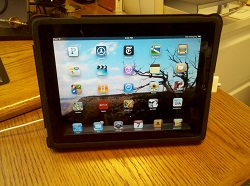
Ann Arbor school officials say more students have iPads or smart phones and were using them to circumvent filters meant to keep them from accessing social media sites like Facebook.
Donna Lasinski, the 2011-12 chair of the district’s PTOC, said it’s hard to know if students are specifically using those sites during school time but she wouldn’t be surprised to find students were using their own devices to access them. However, she said she was concerned that the new restrictions would limit students’ ability to use their devices for educational purposes as well.
“Students themselves are relying more and more on personal devices to do research in schools,” she said. “I’m not sure how that will affect student usage of educational sites.”
Jim Jabero, a manager at the Sprint store at 1336 S. Main St. across the street from Pioneer High School, said he sees a lot more students getting smart phones than even a year ago.
Jabero said most of the students getting the devices are in high school and are being upgraded on their parents' cell phone plans. However, he said he thinks the biggest distraction isn’t accessing the Internet or social networking sites but text messaging.
“Text messaging is much more distracting in class than Internet browsing,” he said. “I guess you can surf the web, but the thing with smart devices is they’re so accessible to Facebook. You can just click a button and you’re on Facebook, so I guess that can be seen as distractive too.”
The district might be able to avoid needing more bandwidth space by limiting the number of users on the network, which could lead to some potential savings.
Lasinski said she thought the decision is a good one because it will allow the district to speed up connections for employees without having to buy more bandwidth. She said she hoped limiting the number of users on the district’s wireless system would increase teachers’ ability to use the web in their lessons.
“Teachers may be using those resources a bit more and it would be a shame to see that progress canceled for teachers trying to use it for instructional purposes,” she said.
The concerns about cyber-bullying are part of the district’s proactive approach to bullying, Margolis said.
She said she didn’t know of any specific instances of cyber-bullying occurring on devices while students were in school, but said it wasn’t worth taking the chance.
“We’re not naive enough to believe it’s not happening,” she said.
Ann Arbor school board Trustee Christine Stead said limiting the wireless access will be a way to keep children safe from the potential harms of cyber-bullying.
She said the changes might inconvenience some people, but eventually it will be appreciated.
“As a parent, I think anything we do to increase the safety of our kids is a good thing,” Stead said. “I do think, with social media and all those things, there are ways we don’t even know that can put them at risk.”
Kyle Feldscher covers K-12 education for AnnArbor.com. He can be reached at kylefeldscher@annarbor.com or you can follow him on Twitter.
Comments
snapshot
Tue, May 24, 2011 : 4:33 a.m.
I agree, restrict use.
Freight Train
Mon, May 23, 2011 : 5:57 p.m.
This just in from the front lines . . . Well, today my students were using laptop carts and I asked them about the speed of the connection. They said it was very fast. Last Thursday, before the crackdown, it was so slow as to be relatively worthless. Many students made cracks like, "We thought free wi-fi was guaranteed in the constitution." They really didn't seem too phased as many had always used their 3G/4G connection or jumped on a hot spot created by a friend's android app. They made sure to include the phrase, "of course we only use our phones between classes.":) Teens are adaptable and they truly seemed to understand the new rules. Thank you AAPS for recognizing that there was a problem and for returning the functionality of computers as research devices.
notnecessary
Mon, May 23, 2011 : 2:25 a.m.
Let the distracted kids play on their phones and not distract the rest of the class. There's no need to save the kids who don't want to be saved if they're distracted by something as simple as a smart phone.
A2parent
Sun, May 22, 2011 : 12:56 p.m.
The teachers are lax in administering existing policies because they don't want to loose their access either! I have students at 2 schools. I have experienced over the years abuse by teachers in the classroom. One teacher has a student teacher every semester to allow personal time to play computer games during class time. Others frequently access the Internet during class time to watch you tube videos, tv shows such as dancing with the stars, american idol and more! Yet we want to blame the students for not being academically focused in class! I hope aaps administrators are watching the staff as closely as they are watching the students! I agree there are issues! Let's be cautious in placing blame. I'm not convinced that the staff is always using district resources for educational purposes either. Not to mention use on their personal devices. Are staff and administrators willing to give up the use of their personal devices during school hours? This is the technology based world we live in. Let's accept the challenges we are faced with, learn and teach our students how to use technology responsibly to be competitive in our global economy rather than denying access. Get creative and challenge students to utilize technology to grow academically! My job requires constant use of technology based resources to be effective.
Bob
Mon, May 23, 2011 : 6:35 p.m.
Sorry, meant to say only if connected to the internet via the school network.
Bob
Mon, May 23, 2011 : 6:32 p.m.
Only if connected via the internet. It would take a search warrant to track a cell phone connecting directly to the net.
ViSHa
Mon, May 23, 2011 : 12:55 p.m.
same thing happens at my kid's school with a couple teachers. internet can be very addicting. @moonmaiden, if teacher is using a personal device, can the use be tracked?
Moonmaiden
Sun, May 22, 2011 : 8:53 p.m.
I hope you reported that teacher to the principal.
Steve Norton, MIPFS
Sun, May 22, 2011 : 4:12 a.m.
Well, as a parent of an AAPS middle-schooler, I can tell you that personal electronics (iPods, phones, etc) are already banned in the middle school, at least in theory. Not all teachers will enforce that strictly, but anyone being obnoxious about using them in class will have them confiscated until the end of the day. And maybe a "VOE" to boot. After some number of violations, a parent has to come in to retrieve the device. Not sure what the high schools do. I, too, will miss the ability to use open wifi in the schools, though I think I can deal with it. If they really want better security, they should enforce access control lists for the MAC's of teacher and staff devices. No password to mess with, though I'm not sure if that causes a performance penalty. But we live close enough to a school that I can pick up the open network from my home office. We lock down our home wireless network; why shouldn't the schools do the same? Finally, I can say from experience that, cell towers or not, 3G reception is not so great inside many of these old and/or cinder block buildings. Of course, I have AT&T.....
Steve Norton, MIPFS
Sun, May 22, 2011 : 4:30 a.m.
OK, I guess MAC filtering is vulnerable to network sniffing attacks, unless combined with a strong encrypted authentication system. But how far do you escalate the networking arms race?
Jack Durham
Sun, May 22, 2011 : 12:38 a.m.
This wont stop cyberbulling. Most "smart" devices are powered by 3g/4g, which isnt dependent on wireless access at all. Secondly, it could still happen in any 17 hours of a day that the kids arent in school. Finally, the internet is just a mean of channeling aggression, you may be able to block connection to the internet, but what will stop a bully from making a face-to-face confrontation? The Ann Arbor School District is a joke. I understand the need for more bandwidth, and I feel it is totally acceptable to block students' personal devices, as they only interfere with education. Kids can still play games and text message without internet access though, so they arent really even making progress until the ban these "smart devices" from the classroom. They are just a distraction. They could have made a perfect argument to do it without bringing cyberbullying into it... The stupidity of some some of the people in charge of children's education is really astounding.
AMOC
Sun, May 22, 2011 : 12:19 a.m.
AAPS is cutting off their nose to spite their students Facebook access. And it will do very little good for anything they claim to want to accomplish. Cyber-bullying will not be prevented or significantly slowed. Most of the slowing of response when working with laptops will continue; the districts' servers are too slow for the increasing demand placed on them as teachers revise their classes to use on-line materials. I am a frequent volunteer and visitor to schools, and have noticed that some high schools have had WiFi passwords in place for most of this school year. Spreading this "ban" on public access WiFi to the middle schools and elementary schools is merely going to encourage the high schoolers, who have already circumvented this security or discovered the passwords, to share information with younger siblings and neighbors. It would be ever so much more effective to prevent cheating by vigorously enforcing a ban on personal electronics during tests, and minimize distraction by banning personal electronics during lectures and class discussions. However, I think the personal electronics should be allowed as research aides when students are working individually. There are only one or two computers in each classroom and the teachers often do not reserve laptop carts for use when only a portion of the class will involve independent working. And even if teachers did reserve laptops more often, three or four classes using the laptops simultaneously will slow the network to a crawl all by themselves.
loves_fall
Sun, May 22, 2011 : 12:14 a.m.
Sounds like a good decision to me. Saves the cost of expanding the capabilities of the network, and I'm sure kids will find a way to live without their personal laptops. If they can't handle it in high school, how are they going to handle it in the real world?
notnecessary
Mon, May 23, 2011 : 2:28 a.m.
in the "real world," the kids that bring their laptops to school will likely have their personal laptops or access to a computer that can go online there, too. They're living reality.
Soothslayer
Sat, May 21, 2011 : 11:29 p.m.
Hey HS Students here's how to turn your Google phone into a wifi hotspot. Be sure to share with everyone! <a href="http://techcrunch.com/2010/05/13/exclusive-google-to-add-tethering-wifi-hotspot-to-android-2-2-froyo/" rel='nofollow'>http://techcrunch.com/2010/05/13/exclusive-google-to-add-tethering-wifi-hotspot-to-android-2-2-froyo/</a>
Moonmaiden
Sun, May 22, 2011 : 8:50 p.m.
it's not free . . .
Yuxuibbs DiNozzo
Sat, May 21, 2011 : 8:54 p.m.
uh... people text with their phones which don't need wifi from the school.... i use my ipod to do homework and research because i don't like using a touch screen for games and unproductive stuff.... people will just find the password. phones don't even use the school wifi so nothing is blocked
Momma G
Sat, May 21, 2011 : 8:52 p.m.
About time! Where are school districts minds when they allowed this to begin with?
proudtobeme
Sat, May 21, 2011 : 8:16 p.m.
Why does AAPS have to justify this decision? Why can't they just say no more wifi period. ? Why do they even have to have a reason? Why is this even news?
alarictoo
Mon, May 23, 2011 : 1:13 p.m.
Preach it, brother/sister!
Moonmaiden
Sat, May 21, 2011 : 5:48 p.m.
About this stopping cyber-bullying: If AAPS has any basic security, the cyber-bullying should not be happening on their network, plugged in or wireless. It is happening on the network, why are they not using available tools to block the sites being used?
A2James
Sat, May 21, 2011 : 5:42 p.m.
This solves absolutely nothing, because the vast majority of smartphone internet access is on 3G networks, not Wi-Fi. All this does is take away legit wireless services for students, faculty, and staff that could use it for educational purposes. The only real way to eliminate this "problem" would be to install a cellphone jammer inside the school, which I'm sure would be protested as well (rightfully so). My solution: hold kids accountable for getting on their phones, and hold parents accountable when their kids keep breaking the rules.
alarictoo
Mon, May 23, 2011 : 1:12 p.m.
Actually, this does not "take away legit wireless services for students, staff and faculty." All AAPS is saying they are doing is turning off the open "public" wireless network. They will still be maintaining their secure wireless network which is the one that provides "legit wireless services for students, staff and faculty." All of their district machines that use wireless access are configured to access that network. Hence, no removal of "legit" services. What it does remove is an open wireless network that is, from their own statement, a drain on network bandwidth (and, thus, on the "legit" wireless network), and on instructional resources. However, will this stop students from getting on-line with their 3G/4G smartphones? No. That is where the parents need to be involved. (And, a lot of parents are not even aware that the nifty new smartphone they have given to their child can act as a wireless access point for up to five computers.) Perhaps when they start to see overages on their cellphone plans from all the texts, internet access, etc. (that is no longer able to flow through an open WiFi network) they will be motivated to take an interest.
Soothslayer
Sat, May 21, 2011 : 11:36 p.m.
That sounds like a well thought out & logical solution but, OH NO, it would involve some effort AND the engage the parents which is a no no. The firemen are more inclined to re-enact a modern day version of Fahrenheit 451.
CLX
Sat, May 21, 2011 : 5:23 p.m.
I find it amazing that parental control is never mentioned. Don't give your kids these devices until they are old enough to handle them (middle school is not old enough in my humble opinion). Make sure the devices don't go to school once they have them. Somehow we all survived without having cell phones. I'm sure there will be many parents who comment that their kids can't live without the phones, and that the phones are safety devices, but I think the phone is a poor crutch for teaching your kid how to manage his responsibilities.
say it plain
Sat, May 21, 2011 : 4:24 p.m.
This is great news! No need to have students distracted by their devices any more than they already are... school is *not* the place for that, and lord knows they spend enough time on facebook elsewise... When I told my student about this change, he initially misunderstood and thought it meant that the laptops-on-carts that the kids use for school-led work would be cut off from the internet. This concerned him of course, but when I made clear it was about only *personal* devices, he seemed totally fine about that. Kids should *not* have to use their own devices on the wireless, so whatever the motivation of AAPS (be it bandwidth savings or prevention of distraction and cyber-bull from the students), it sounds like a great idea!
Moonmaiden
Sat, May 21, 2011 : 4:24 p.m.
It's already been stated, but this will do little to stop internet access as so many students have access through their smart phones. AA could still have an open network, but require a password. This way, staff could have access and visitors who need to have access (how many are we really talking about?) could be given temporary passwords that would expire at the end of the day. Ypsi and Chelsea do this very effectively with very few issues. With all the money being earmarked for technology, when is AA going to figure out how to use it?
alarictoo
Mon, May 23, 2011 : 12:45 p.m.
@Moonmaiden - Requiring a password means it is no longer an "open" network. Figure out the technology. ;^)
Blerg
Sat, May 21, 2011 : 4:20 p.m.
I'm surprised the article didn't mention any of the problems I've heard about giving away free Internet access. I heard the systems were overloaded during March Madness by kids watching basketball games from their phones/iTouches. In addition, people have been pulling up to schools, and blocking bus lanes, trying to check their email. One car even refused to leave, when a principal told them to do so, because they wanted to finish sending an email first.
ArgoC
Sat, May 21, 2011 : 4:16 p.m.
Where I work, we no longer allow use of computers or cellphones during meetings unless it's clearly meeting related, because it was being abused - too much facebook and unrelated email, too many people making expensive project mistakes because they hadn't been paying attention. So, unfortunately, some adults need to be regulated on this too.
northside
Sat, May 21, 2011 : 3:55 p.m.
Imagine having your salary depend on the test score of a 14-year-old who is fixated on Facebook during your class.
A2parent
Sun, May 22, 2011 : 12:35 p.m.
Imagine your child's education dependent upon a teacher watching you tube videos in class or playing computer games while your child is independently learning!
Soothslayer
Sat, May 21, 2011 : 11:37 p.m.
Like this is going to change anything, except make kids wait for facebook updates and info on a slower 3G network than the schools one. So, in effect, MORE time and attention will be wasted. OOPS
Alan Benard
Sat, May 21, 2011 : 3:29 p.m.
An open WiFi network is poor security in any event. One available to children is irresponsible. Hire more network technicians and give those who need to access the network with appropriate rights. At Ann Arbor Open, in response to a cyber bullying event, ALL personal electronics were banned during the school day. I believe that this policy should be in effect district-wide through eighth grade.
Sallyxyz
Sat, May 21, 2011 : 3:09 p.m.
Too many students are allowed to use their personal electronic devices in classrooms when policies at the high schools specifically do not allow their use during class time. Far too many teachers are lax in enforcing this policy and many just ignore it. Students simply ignore many of the teachers when they tell them to put away all electronic devices at the start of class and teachers simply don't address it. Many kids become belligerent when asked to put away personal electronics, as if it's their right to use these devices at all times during the day. Unless the policy of no electronics in classes is applied across the schools in a uniform way, kids will use their phones and ipods, etc, during classes for whatever purposes, and not pay attention to the teacher and class. It's a HUGE issue. Let me add that these kids are not using their devices for educational research during classes, they are being used for private purposes and to evade doing the class work. There are ample laptops available in classes when the internet is part of the assignment. The use of personal electronic devices in schools is an escalating situation which is getting out of control, and I applaud the district's stand on stopping wireless access for personal purposes.
A2parent
Sun, May 22, 2011 : 12:32 p.m.
The teachers are lax in administering the policy because they don't want to loose their access either! I have students at 2 schools. I have experienced over the years abuse by teachers in the classroom. One teacher has a student teacher every semester to allow personal time to play computer games during class time. Others frequently access the Internet during class time to watch you tube videos, tv shows such as dancing with the stars, American idol and more! Yet we want to blame the students for not being academically focused in class! I hope asps administrators are watching the staff as closely as thy are watching the students! I agree there are issues! Let's be cautious in placing blame. I'm not convinced that the staff is always using district resources for educational purposes either. Not to mention the use on their personal devices.
Moonmaiden
Sat, May 21, 2011 : 6:12 p.m.
Is "loosing" the opposite of "tightening"? Maybe the fear of "losing" their devices will present a stronger deterrent.
Blerg
Sat, May 21, 2011 : 4:24 p.m.
Those same belligerent students have belligerent parents that instruct their children to ignore what the teachers say about cell phones and call them whenever anything happens. Parents also call kids constantly during school hours. What ever happened to calling the school office for an emergency and sending a message to students that way?
Soothslayer
Sat, May 21, 2011 : 3:25 p.m.
It's a simple policy: DISALLOW personal electronic devices during classtime. Anyone caught doing so, at an unauthorized time, LOOSES the device for the rest of the day and their parents have to come pick it up after school (added embarrasing torture). Loosing a distracting item worked as an effective punishment when I was a kid.
CPS
Sat, May 21, 2011 : 2:42 p.m.
I see nothing wrong with this move by AAPS, especially if they have a capacity issue. @basic bob: yes, the problem *is* capacity so by making the personal devices utilize their own methods to access the internet then they resolve their capacity issue. The cyber-bullying comment that AAPS tacked onto their distribution email may indeed be a red-herring, but at least the district can now say that they did not provide the vehicle (public access to wifi) to aid in any cyber-bullying. If cyber-bullying happens and someone is using the school's internet, it will have to done on one of the school computers (which should make tracing the bullying behavior easier). @tom swift jr.: true, the personal devices that students are using do not *depend* on the district's wifi, but many devices nowdays default to any open wifi network if it is available (thereby decreasing the traffic on the wireless provider's own bandwidth). @andy jacobs: information is still accessible on the school computers--which have filters to restrict access to sites like Facebook and Twitter--so really the only flow of information that is being stopped is the *free ride* on the district's wifi to *circumvent* the filters.
kathryn
Sun, May 22, 2011 : 2:38 a.m.
Thanks you, CPS. I think yours is the only comment to get it right. Closing the Public WiFi will not eliminate access by smart phones, but it will clear a lot of non-educational traffic off the AAPS network.
Dana Laidlaw
Sat, May 21, 2011 : 2:56 p.m.
I agree with most of this, but I would say that the Cyber Bulling is not a "Red Herring" but a factor that help them make their decision.
Alexander Mills
Sat, May 21, 2011 : 2:33 p.m.
I am a student at Pioneer High School (until yesterday, at least, when I graduated). It took me a total of 4 minutes to identify a workaround for this change. If I had chosen to use the workaround (which I did not), it would have taken only 10 seconds to implement. I'm not posting the workaround here, for obvious reasons. However, it does exist, and it's not that difficult. AAPS may or may not be moving in the right direction (I decline to comment), but either way if they want to make an effort in this push, they need to improve their security. Seriously. Disclaimer: In posting this comment I would like to make note that I have NOT actually used this workaround. Accessing such a means and then admitting to it here would, simply put, be stupid on my part. I've only identified the workaround and how to implement it. On that note, I am 100% confidant of its potential success.
Boo Radley
Sat, May 21, 2011 : 9:57 p.m.
The school system shouldn't have to spend money on better internet security systems. It seems much better to just ban these devices from the school and prohibit their use completely. They are a distraction and a nuisance (see above post from a teacher). I don't buy the arguments about "Students need them to do research". Right ....
JS
Sat, May 21, 2011 : 5:20 p.m.
Congrats on the graduation, and the smarts.
Soothslayer
Sat, May 21, 2011 : 1:36 p.m.
Since when was restricting flow of information a GOOD thing? This will do little or nothing to stop the abuse. For this to happen in a PROGRESSIVE city (actions speak louder than words) like Ann Arbor is really a shame. Way to set the community back & regress Liz & AAPS. Everyone welcome to China!
DonBee
Sun, May 22, 2011 : 2:21 a.m.
Scarcasm on// But....but...but we can NOT have students getting Glen Beck tweets during the school day. That is just wrong. //sarcasm off
northside
Sat, May 21, 2011 : 4:49 p.m.
Andy did you just compare schools trying to get students to focus on their studies, not Facebook, to political repression in China? LOL.
Soothslayer
Sat, May 21, 2011 : 3:22 p.m.
Please define "personal..non-school use" in an acedemic setting? Learning? Is there a set parameter somewhere that dictates what types of learning or life lessons a school may not provide? Believe it or not learning can happen anywhere and this "crackdown" is innapropriate. Want to create a policy of no mobile device use during classtime? That sounds reasonable and acceptable. Any other time? Not so much. I didn't say Soviet Russia, I said China, which restricts and filters its citizens use of information services. Much like AAPS is now doing.
Rob Pollard
Sat, May 21, 2011 : 2:13 p.m.
What are you talking about? The main reason they said they are doing this is to manage the network capacity, which was being "overloaded." Bullying was just listed as a possible additional benefit. Kids in school are not free to do whatever they want - they need to show up for class at certain times and follow the instructions of the teacher. Having free wi-fi for your own personal, non-school use is not remotely a requirement or expectation of going to high school. This isn't Soviet Russia. You can keep your tin foil hat in your drawer.
catcal
Sat, May 21, 2011 : 1:23 p.m.
I doubt if student use of public WiFi is a very big problem for bandwidth. The district's arguments don't hold water: 1. social networking sites are already blocked by the WiFi network. Any student with a smartphone and a data plan can get into Facebook or Twitter whenever they want, and this won't change. 2. Cyberbullying is not dependent on access to WiFi. It will continue with text messaging, and when students get onto other computers, such as at home. 3. The district can try to save money by not purchasing more bandwidth; hopefully they're looking at how staff is using WiFi. I will miss the open network when volunteering at the school and during after school events, but with that I'll say that all of the schools I visit for sporting events don't offer open WiFi access. My student occasionally uses internet access at school for academic needs. (She is not using AAPS WiFi to listen to Pandora all day, which would be a large use of bandwidth.) She uses WiFi on her iPod Touch to look up vocab words in English class when all the actual dictionaries are already in use, or to do research on the Web at lunch instead of going to the library and checking out a laptop.
Soothslayer
Sat, May 21, 2011 : 1:49 p.m.
Many users watching youtube or hulu or listening to rhapsody or any other streaming media service can cripple a network in a hurry. Where's the Google fiber network initiative at? Those who have access to the most information the fastest win.
Dr. I. Emsayin
Sat, May 21, 2011 : 1:21 p.m.
More regular than cyber-bullying at school is cheating using cell phones or itouches. Students text questions and answers, take photos of tests, alert friends via text between classes and in the bathrooms, etc. Keeping students off the wifi network will not achieve a decrease in cheating, nor in whatever cyber things kids do via smartphones or any cell phones. The network is useful for many folks who are not using it for negative purposes. The only students who are hampered are those using the itouch.
Wolf's Bane
Sun, May 22, 2011 : 11:45 a.m.
There you go...
Soothslayer
Sat, May 21, 2011 : 11:28 p.m.
Simple answer: NO personal electronic devices durring class time. Where's the problem with that? We weren't allowed certain programmable calculators and this is the same thing. Enforce a simple policy that's fair and everyone can understand.
sh1
Sat, May 21, 2011 : 1:20 p.m.
I can think of no legitimate reason a student would need a phone during class. Every classroom is equipped with one. Why not just ban student phones?
A2parent
Sun, May 22, 2011 : 12:21 p.m.
Are the administrators and teachers willing to give up their devices during school hours as well? Why are we only concerned with student abuse?
Moonmaiden
Sat, May 21, 2011 : 5:41 p.m.
Well, then, someone would have to enforce it . . .
Tyler
Sat, May 21, 2011 : 1:08 p.m.
This being done doesn't hurt anyone that has smart phones. The only people that would be affected by this would be people who have Ipod Touch's and/or can't get internet on their own. One thing I'm wondering is the students now currently use computers daily in class. Will there be an internet username/password sign in so the students can use the classroom computers? If so, couldn't someone just use the username and password to logon to the school's internet from their device?
Tyler
Sun, May 22, 2011 : 9:57 p.m.
@Freight Train - Trust me the password will get around eventually. They can keep changing it but someone will always have it and pass it on.
Freight Train
Sun, May 22, 2011 : 12:11 p.m.
I am assuming the class computers will be initialized by a tech to directly access the web (this is how teacher laptops access the web). The hand held devices simply won't be recognized by the web w/out a password. I wonder how long it will take for the password to leak?
Moscow On The Huron
Sat, May 21, 2011 : 3:06 p.m.
This doesn't affect classroom or library (excuse me, "Media Center") computers.
dexterreader
Sat, May 21, 2011 : 12:58 p.m.
They are teenagers. Where there's a will, there's a way. As someone who spent 15 years as a tech in a public school district, it will be interesting to see how long it takes for them to circumvent the system. As for cyber-bullying, smartphones do that job very well. Is it possible to divide the bandwidth and allocate a set amount for staff/student work, and then a much smaller amount for "guest" users?
Moonmaiden
Sat, May 21, 2011 : 5:42 p.m.
I'm sure it is already done!
DDOT1962
Sat, May 21, 2011 : 12:53 p.m.
I have an idea. How about if your son or daughter, (or my daughter, for that matter, who attends Skyline), is caught using a personal electronic device for non-educational purposes at inappropriate times during school hours has said device chucked out the nearest window by their teacher? They can be allowed to retrieve it at the end of school, and if it's broke, oh well. Teachers are already dealing with attention-challenged kids. They don't need more competition for the focus of their students that little electronic toys bring. Parents, it's your job to reign that impulse in.
A2parent
Sun, May 22, 2011 : 12:19 p.m.
Doe my child have the same rights if their teacher is inappropriately using personal devices during class time?
JS
Sun, May 22, 2011 : 12:29 a.m.
As a former "kid", I think that a teacher chucking a couple ipads out the window of third floor C hall would be a much cooler (and effective) way to get the point across.
Soothslayer
Sat, May 21, 2011 : 11:24 p.m.
Why would the device be thrown out the window? If it's used when it's not supposed to be (during class) then its taken and the parent has to come pick it up. Simple & I bet kids won't use them during class. RE Attention challenged kids: perhaps they shouldn't be in a special needs class. These kids are a completely different generation that you can understand. They don't talk on the phone, they text. They've never seen an encyclopedia, they use Google & Wikipedia. Get a grip on reality, these rants won't change anything except cause more rebellion. Kids, its' your job to stand up to this nonsense.
Moonmaiden
Sat, May 21, 2011 : 5:43 p.m.
Right. That won't result in any problems . . .
JS
Sat, May 21, 2011 : 5:19 p.m.
Dude, well said.
DDOT1962
Sat, May 21, 2011 : 12:56 p.m.
*rein*
Moscow On The Huron
Sat, May 21, 2011 : 12:50 p.m.
I'm going to miss having the WiFi access when I am there during the doing support work and during evening activities. I don't expect them to provide it for me, but it was nice when it was there.
timjbd
Sat, May 21, 2011 : 12:50 p.m.
Cellphones nor wireless base stations should not be allowed around kids with still developing brains: <a href="http://www.gq.com/cars-gear/gear-and-gadgets/201002/warning-cell-phone-radiation" rel='nofollow'>http://www.gq.com/cars-gear/gear-and-gadgets/201002/warning-cell-phone-radiation</a> "It's hard to talk about the dangers of cell-phone radiation without sounding like a conspiracy theorist. This is especially true in the United States, where non-industry-funded studies are rare, where legislation protecting the wireless industry from legal challenges has long been in place, and where our lives have been so thoroughly integrated with wireless technology that to suggest it might be a problem—maybe, eventually, a very big public-health problem—is like saying our shoes might be killing us. Except our shoes don't send microwaves directly into our brains. And cell phones do—a fact that has increasingly alarmed the rest of the world." (...) " In a study published in 1975 in the Annals of the New York Academy of Sciences, Frey reported that microwaves pulsed at certain modulations could induce "leakage" in the barrier between the circulatory system and the brain. Breaching the blood-brain barrier is a serious matter: It means the brain's environment, which needs to be extremely stable for nerve cells to function properly, can be perturbed in all kinds of dangerous ways." and: "Here, in the U.S., there's been very little resistance to the march of the cell towers. In fact, in Congress there's been almost nothing but support. The Telecommunications Act of 1996—a watershed for the cell-phone industry—was the result, in part, of nearly $50 million in political contributions and lobbying largesse from the telecom industry. The prize in the TCA for telecom companies branching into wireless was a rider known as Section 704, which specifically prohibits citizens and local governments from stopping placement of a cell tower due to health concerns. Section 704 was clear: There could be no litigation to oppose cell towers because the signals make you sick.&quo
timjbd
Sat, May 21, 2011 : 11:25 p.m.
Bob, Maybe you work for a tobacco company. They told everyone cigarettes were safe. They funded all sorts of studies PROVING they were safe. He!!, they MUST have been safe because everyone smoked, right?
Basic Bob
Sat, May 21, 2011 : 5 p.m.
It's time to invest in tinfoil hats.
Yasha Chernyak
Sat, May 21, 2011 : 12:47 p.m.
I always love seeing AAPS try to decrease "distractions" from studies. Like Swift said they aren't using Wifi so unless AAPS wants to knock down some towers none of you are solving anything. And lets say you hypothetically get rid of cell phone service using some other method, students will always find some way to distract themselves because school is boring. Unless you are somewhat distracted throughout school we would all be insane.
DonBee
Sun, May 22, 2011 : 2:17 a.m.
Yasha Chernyak - The towers are there because the bring in revenue to the schools. The discussion about putting them there was undertaken more than a decade ago. Though I will say this, find the revenue in the school budget. I bet you can't.
InterestedReader
Sat, May 21, 2011 : 2:04 p.m.
The number one reason was not distractions. Get over being concerned about this. The number one reason is bandwidth; too much traffic on taxpayer money. Let everyone party on G3 and teachers and students won't get bogged down while trying to use the wonderful resources of the Internet.
48104
Sat, May 21, 2011 : 12:46 p.m.
There was definitely a cyberbullying incident at my kid's middle school in the past month, during school hours, involving Facebook from a handheld device.
alarictoo
Mon, May 23, 2011 : 1:44 p.m.
@bill - It does not cut "all access to all students" (or "throw the baby out with the bathwater"). Student wireless access is still alive and well on the AAPS secured wireless network. They just need to use district-owned computers to access it. Anything else has to be done on their cell phone plans, and should be easier to subpoena when there is a lawsuit. To quote Charlie Sheen (which is probably a bad idea): "Winning!" ;^)
Wolf's Bane
Sun, May 22, 2011 : 11:44 a.m.
Great, so expel the neophyte and move on, but cutting all access to all students is silly.
Moonmaiden
Sat, May 21, 2011 : 5:45 p.m.
And this change will do NOTHING to address that.
DonBee
Sat, May 21, 2011 : 12:40 p.m.
If this ban is like other bans and fences on the network, it will take a few weeks before every one who wants it has a work around. First the principals for their personal devices, then the office staff, then a few teachers, then all, then a few students, then all. At the same time a few students will find an unofficial way around. Maybe the reason for this is to keep the seniors too busy to plan pranks.
Peregrine
Sat, May 21, 2011 : 9:14 p.m.
Finding an unofficial (i.e., unauthorized) way around it can result is against the law and can be either a misdemeanor or felony depending on other circumstances and either way can result in fine and/or imprisonment. See the following links for more details. <a href="http://legislature.mi.gov/doc.aspx?mcl-752-795" rel='nofollow'>http://legislature.mi.gov/doc.aspx?mcl-752-795</a> <a href="http://legislature.mi.gov/doc.aspx?mcl-752-797" rel='nofollow'>http://legislature.mi.gov/doc.aspx?mcl-752-797</a>
Moonmaiden
Sat, May 21, 2011 : 5:46 p.m.
It is encouraging, however, that we are educating students who can find ways around these obstacles!
A2anon
Sat, May 21, 2011 : 12:39 p.m.
This makes me sooo happy. Great decision, AAPS!!!!
Wolf's Bane
Sun, May 22, 2011 : 11:43 a.m.
I fail to see how curtailing access to the internet at school will stop bullying? Cyber or otherwise. Seems to me that we've become so obsessed with social media sites, that we've forgotten what the web is really about, namely, collaboration and the exploration of resources. Tsk...tsk...
jns131
Sat, May 21, 2011 : 12:35 p.m.
According the email I got Liz Margolis made it sound pretty clear that cyber bullying was one of the main reasons to end the public access system. I am so behind her on this one. Too much bullying going on and by snipping this one in the bud? Also can track the ones doing the deed as well. Time well spent.
tom swift jr.
Sat, May 21, 2011 : 3:46 p.m.
This won't cut down on cyber issues... as noted, the schools wifi is not how kids, for the most part, access sms, twitter, facebook, etc.
Wolf's Bane
Sat, May 21, 2011 : 11:31 a.m.
Hmm, this seems more about control and about Ann Arbor schools throwing the baby out with the bathwater. While I totally agree that class time is for learning and collaboration and not a time to cruise social media sites, I do think that the AAPS has a responsibility to keep the school's curriculum interesting and contemporary enough to integrate the all of the wonderful resources available on the web, instead of turning it off and crawling into a cave to hide? Look at it as a challenge to keep the student's attention.
A2parent
Sun, May 22, 2011 : 12:14 p.m.
Well said!
Wolf's Bane
Sun, May 22, 2011 : 11:38 a.m.
No, I am not kidding, I think it is important that we abandon our anachronistic educational tendencies and start using new technologies to the benefit of our children; technology will never go away, only get more complex. Only then, can they truly compete with the rest of the world. Clearly, my comment has brought out a few dinosaurs who believe the chalkboard to be cutting edge.
alan
Sat, May 21, 2011 : 12:54 p.m.
Joke, right?
A2anon
Sat, May 21, 2011 : 12:40 p.m.
You have got to be kidding.
Basic Bob
Sat, May 21, 2011 : 11:18 a.m.
The "problem" they are solving is network capacity. The cyber-bullying justification is just a red herring. Students will continue to send hundreds of texts every day and access their facebook from their smartphones.
Basic Bob
Sat, May 21, 2011 : 4:52 p.m.
@Rob Pollard, thanks for the explanation of red herring, did you google it? I suspect you and I agree on what the real issue is, which is the cost of network expansion.
Rob Pollard
Sat, May 21, 2011 : 2:09 p.m.
Wow, way to break it down, Bob! Margolis literally said, "public wireless access was eliminated because the drastic increase in personal devices not directly involved in education had overloaded the network, and...she also said the move could help reduce the potential for cyber-bullying." A 'red herring' is a false justification or reason for something. The main reason she cited was the network capacity, and she listed the social media part as a possible side benefit (i.e., notice she said "could"), so there isn't a 'red herring' here. AAPS is not being misleading. It is (to use your over dramatic quotes) a real and not made up "problem" when teachers can't access the network at the necessary speeds b/c too many kids are using it for Facebook or YouTube. Unless you think adding and managing network capacity is something that is free for the district.
CommonThought
Sat, May 21, 2011 : 10:41 a.m.
the nations 2 largest cell phone companies have antennas located right next to Pioneer and Huron. Although I do not know for sure, but I'd say that it's a safe bet that the smart phone get pretty good reception to use the internet without needing the schools public access wireless. So... boloney on the idea that "we did it to stop cyber-bullying."
tom swift jr.
Sat, May 21, 2011 : 10:41 a.m.
The district realizes, of course, that many, if not most, of the personal devices that students are using to access the internet do not depend on utilizing the district's WiFi to access twitter, facebook, etc, don't they? All smart phones have 3g/4g connections, as do many iPads, tablets, and many laptops. They aren't really solving the problem here.
InterestedReader
Sun, May 22, 2011 : 3:48 p.m.
The main problem to solve is too much traffic. Those using 3g/4g/ were not part of that problem. Without the superfluous traffic on the WIFI its intended purpose will not be slowed down. Visitors that need to access the Internet can do so easily with a wired connection.
Freight Train
Sat, May 21, 2011 : 12:34 p.m.
I teach in AAPS high schools and there are dozens of kids in my classes who use the ipod touch to access wireless w/out a paid plan. They specifically bought this device for the abundance of free internet. We were using lap top carts in class (on the public network) and they were working at about 1/4 of the speed as last year. It is a big problem.
Jimmy McNulty
Sat, May 21, 2011 : 11:45 a.m.
True Tom, but the main reason stated for the block was "personal devices not directly involved in education had overloaded the network."
1bit
Sat, May 21, 2011 : 10:56 a.m.
But at least they'll be charged minutes on their data plan...