

Own your own 'trigger words' and they might not wound you
Take a look inside yourself and think for a moment. Are there words that when uttered around you cause an immediate emotional response? Are there names, epithets, descriptions, or generalizations about you that either hurt your feelings or make you want to fight?
After reading this, they will not have the same effect on you again.
What I have been describing are termed “trigger words.” The use of these words can ruin the careers, reputations and irreparably alter the lives of those who utter them.
Similarly some words can shatter the lives and break the hearts or spirits of those on the receiving end them.
George Thompson the English professor turned cop who established the Verbal Judo Institute put it this way: “Sticks and stones can break your bones but words will break our hearts.”
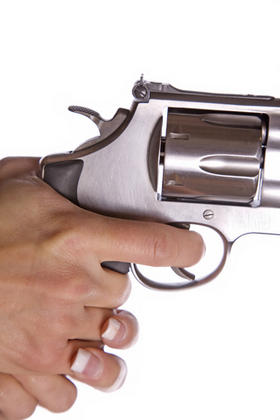
If you can think of your own trigger words you can use them to your advantage. If someone uses those words in your presence understand that you are vulnerable to your emotions. Realize that the person who has just uttered those words, tried to take the most vicious verbal jab at you. Short of actually physically striking you, that person either consciously or unconsciously has tried to hurt you.
Instead of getting emotional or angry, which is the natural response, it is time to get “tactical.” Try to figure out why this person has felt the need to hurt you or knock you off your game. If it is a friend or loved one, who knows what buttons to push to make you angry, this can be especially traumatic, but instead of blowing up you must ask—WHY?
By remaining calm and not reacting to the verbal punch of a trigger word you have now taken the tactical advantage over the person who tried to hurt you. You have effectively disarmed the person.
That person has taken their best verbal shot at you and it had no effect. This is like getting into a physical fight with someone, taking your best shot and finding it has no effect—it is disheartening, scary and means you are in for a really bad time. Not reacting to trigger words is powerful. Sometimes you can actually see a shocked look on the face of the person who has insulted you. Their mind is trying to process why the words had no effect and what to do next.
Meanwhile instead of reacting emotionally to trigger words your mind should be busy trying to figure out what caused this person to try to upset you. Understanding what is actually going on can assist you in solving the real problem you are confronted with. If you are in a professional role such as a police officer and someone tries to verbally abuse you, realize that the verbal assailant is speaking to the uniform and not you personally because they do not know you as a person.
A verbally abusive citizen is trying to get a police officer to do or say something stupid, embarrassing or abusive in hopes that the officer will then not be able to take enforcement action for fear of generating a citizen complaint or getting chewed out by a boss. This tactic rarely works and begs stricter enforcement by the officer.
If it is a co-worker, friend or family member who is slinging the trigger words it is time to figure out what caused this? Was it something you said, did or did not do that is causing the anger? At that point if you can fix it—fix it. Do not scold the person for their inappropriate verbal abuse because that will just cause another argument. Instead explain your actions, apologize or agree to disagree and walk away. It may be hard to do, but sometimes “dynamic inactivity” or walking away gives the time and space necessary to calm all parties and put things in perspective in order to work toward a solution.
The more control you have over your personal trigger words the less power you give someone trying to upset you.
Lock it up, don’t leave it unattended, be aware and watch out for your neighbors.
Rich Kinsey is a retired Ann Arbor police detective sergeant who now blogs about crime and safety for AnnArbor.com.
Comments
Ricebrnr
Thu, Apr 7, 2011 : 8:14 p.m.
hmm weird I've never been affected by what people had thought or had to say about me. And I've most certainly never acted on a verbal altercation. I believe the same of most of my friends as well. Whereas some of the previous commentors are so affected by this article... knowing their stances on certain topics...I guess that's not surprising. Then again I have said before that words can kill and words certainly have been as much if not more of a catalyst to history as any arms. They do say the pen is mightier than the sword after all.
bedrog
Thu, Apr 7, 2011 : 6:18 p.m.
nonetheless some words are "fighting words"... and maybe should be. For many the 'n' word would do it, and i'd admit to getting get pretty testy at "dirty jew".....and forget about insults to one's mother or other near and dear !! There are some words, in short , one should not be reasonably expected to be so desensitized to ,or to repress , so as to cause an ulcer or other stress related ailment..
Pilgrim
Thu, Apr 7, 2011 : 7:48 p.m.
Keep in mind--99% of them don't even have a clue as to who your mother might be!
RJA
Thu, Apr 7, 2011 : 6:15 p.m.
Hello Rich, This is really the best story you have written, since I have been reading. I'm am now going to fix, the trigger words slung at me. I have been slinging back. (hasn't fixed anything). After learning the lesson you are speaking of, I can walk away and fix myself, and let others fix themselves. I know I am responsible for my actions, but some words being called out at me is hard to tolerate. (Out the way, GD you (name) shut the F up, answer my F phone. You just helped me start fixing myself, I just pushed my IGNORE button! Thanks!
Bertha Venation
Fri, Apr 8, 2011 : 1:09 p.m.
Very wll said, RJA. I know I will benefit greatly from Mr. Kinsey's article.
Bertha Venation
Thu, Apr 7, 2011 : 5:11 p.m.
Thanks, Mr. Rich. You really caused me to rethink my strategy.... Guess my frying pan with the trigger will be going back into the closet. Thank you.
Boo Radley
Thu, Apr 7, 2011 : 3:54 p.m.
Someone with some editing power should remove the duplicate paragraph, though.
Boo Radley
Thu, Apr 7, 2011 : 3:52 p.m.
The photo used with the column of someone pulling the trigger on an unloaded revolver is perfect for your message. ... I'll go ahead and give you the benefit of the doubt and say that you did that intentionally ..... Very clever
Pilgrim
Thu, Apr 7, 2011 : 2:55 p.m.
This has got to be one of your best columns ever! I agree that most of the time people lose control and say hurtful words because some other larger issues are plaguing them. However, we can't take responsibility for them, or try to "teach them a lesson". All we can do is decide how we will respond--and that's where we are in control. Thanks for your guidance!
Ignatz
Thu, Apr 7, 2011 : 11:48 a.m.
Mr. Kinsey, Excellent piece! I'm tired of all the excuses for violence and the ruining of lives because someone say something "offensive" The concept has gone too far. I was raised to believe that words are not a reason for harming others. After all, if we repress speech, how are we to know who the idiots are? In a democracy, being offended is not the worst thing that can happen to you.