

Four Democrats seeking 11th District seat on Washtenaw County Board of Commissioners
One of five Ann Arborites will replace Jeff Irwin on the Washtenaw County Board of Commissioners at the end of this year, marking the first time in a decade that the 11th District seat will have seen any turnover.
The four Democrats facing off in the Aug. 3 primary appeared side-by-side Tuesday night in a debate hosted by the League of Women Voters of the Ann Arbor Area.
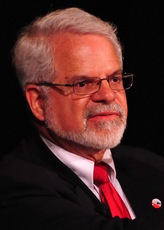
Mike Fried
Mike Fried is the former chief of administration for the Wayne County Prosecutor's Office. Alice Ralph is an architect. Yousef Rabhi is a University of Michigan student and community activist. And LuAnne Bullington is retired from a career in computer information services and education.
The winner of the Democratic primary will advance to the November general election to face Republican Joe Baublis, who was recently in the news after a warrant was issued for his arrest charging him with fleeing the scene of a hit-and-run accident.
Also participating in Tuesday's debate was Commissioner Conan Smith, D-10th District, who is defending his seat against challenger Danielle Mack. Mack did not attend the debate. The winner of the 10th District primary advances unopposed to the general election.
The 10th and 11th districts both cover parts of Ann Arbor. Click here for a map of the districts.
Candidates took turns answering questions Tuesday that touched on expanding the Road Commission, establishing a county land bank authority, police protection, staffing at the county jail, and a host of other issues ranging from transportation to housing to the environment.
Smith, who was first elected in 2004, said he comes from a tradition of public service. He is the executive director of a nonprofit organization called the Michigan Suburbs Alliance.
As chairman of the Ways and Means Committee, Smith oversaw the county's efforts last year to close a $30 million structural deficit. The county expects to trim millions more in the next budget cycle as property values continue to decrease.
Smith laid out priorities for his next term.
"Transportation, as I mentioned, is probably my most frustrating place to work," he said. "I've tried to expand the Road Commission, but we still struggle with that issue. We still need to have a metropolitan police force to address the road patrol issues. And we desperately need a human service millage to address those issues as well."
Rabhi said his goal is to work across levels of government with the city, the townships and the villages to reduce duplication of services.
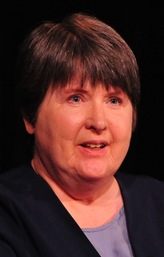
LuAnne Bullington
"I believe in our ability to overcome this tough economic time," he said. "I believe that even with a budget that's declining for the first time in 50 years, we can still maintain an excellent level of human services throughout the county. We can maintain parks, we can maintain health care, our mental health care, and we can do that by reining in our government."
Fried said times are tough and money is tight for most people — and the same goes for Washtenaw County government.
"Even so, we can balance the budget while maintaining essential services," he said. "We can help those in need, we can improve collaboration and we can plan for the future. It's not an easy job, but I have the experience and skills needed to achieve these objectives."
Fried served 26 years as chief of administration for the Wayne County Prosecutor's Office, where he says he maintained quality services while controlling spending. Now retired, he is a trained mediator and facilitator and serves on the board of the Dispute Resolution Center.
"I'm the only candidate for the 11th District who has real world experience working for a county," Fried said. "I managed finance and budgets, personnel, workflow, computer systems and networks. I was liaison to a county board of commissioners, and I have experience serving on a number of state councils and organizations."
Ralph said new territory lies ahead for the county.
"Beyond raw efficiency, we need to focus on the most effective use of funds and other resources," she said. "With resilient policy and attention to core responsibilities, we can work together for local change that is true to shared priorities. As county commissioner, I will confront scarcity and work toward an abundant future."
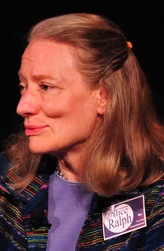
Alice Ralph
Bullington said she already donates a lot of her time to serving a wide variety of organizations that are working on serious problems in the county.
"I believe as a prosperous community we have the strength and the responsibility to show empathy and compassion to at-risk populations and people who are adversely affected by this economic crisis," she said, adding that human services programs are among her top priorities.
All of the candidates said they favored the idea of a county land bank, which the county board approved last year, dissolved, and is now bringing back.
"A land bank can help us in a variety of ways, whether that's keeping people in the homes that they're already on the verge of leaving or taking care of blighted property," Smith said.
"Right now there are over 2,100 properties that are in some state of foreclosure," Fried said. "The land bank is a way of helping to preserve properties, of helping to avoid blight."
Rabhi talked about the potential he sees from other efforts he's been involved with where blighted properties were repurposed.
"I work with the University of Michigan's Matthaei Botanical Gardens and Nichols Arboretum," he said. "We're working on a partnership with the Greening of Detroit to renovate vacant lots to native natural area habitat, water retention — all those issues that are involved. We can bring the community together, we can build partnerships, we can fund this through our partnerships and we can get volunteer efforts to help us raise the communal value, the economic value, of our neighborhoods and stave off more foreclosures from happening."
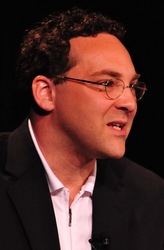
Conan Smith
Plans to expand the Road Commission from three to five members were tabled last week by the county board, but it's an idea that could come back. Bullington and Fried said they didn't think the expansion would make much of a difference. Fried said he hasn't heard a compelling argument.
"Barring new information that comes forward, it's one of those situations that if it ain't broke, don't fix it," he said.
Ralph said she believes the cost of expanding may have prevented a fulsome discussion of the issue, but she thinks it's worth examining ways to improve the county road system. She said the cost of two additional road commissioners would be rather small in the scope of the overall budget.
Rabhi said he supports the idea, but thinks it's wise to hold off for now, given the economic situation in which the county finds itself.
Smith, one of the leading proponents of the idea, said Washtenaw County has always prided itself on the diversity of its transportation network. He said the cost of increasing from three to five members can be little or nothing.
"What's more important to me is that we diversify the representation on that board, that we make sure we have the voices of land use and transit participating in the decision-making about the development of that network," he said.
Candidates shared different opinions on what to do about funding operations at the county jail after the completion of a 112-bed addition.
"I've had concerns with the jail and how we're going to fund it for some time," Bullington said, adding one of her main concerns is who is placed in jail.
"We have a tremendous problem with people who are homeless in this area," she said. "Are we mainly housing people who are homeless? According to Jeff Irwin, he has said publicly that when he toured the jail, he felt 90 percent of the persons in there don't belong there. They belong in other programs."
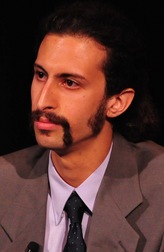
Yousef Rabhi
"Our goal, of course, would be that we don't need so much jail space, but the jail is there, it has been built, and we need to fund it," Fried said. "And we need to fund it adequately, because the worst thing that could happen is not to properly staff it."
Rabhi said the sheriff has been proactive in promoting "alternative programming." He said community service programs can save money to fund the jail.
Smith said the county is looking very keenly at the operations across the entirety of the sheriff's department to find savings.
"We'll find a way to fund the operations, but I think more important than anything else, we need to be really tuned in to how big that jail needs to be in terms of its operation," he said. "We've built the infrastructure. We don't have to staff the full infrastructure necessarily. We need to make sure that we're staffing it not to its most glorious capacity if that's not necessary."
On another topic, Smith said cost-sharing for police services between the sheriff's department and the townships needs discussion.
"Unfortunately, the cost of providing public safety is ever increasing," he said. "And partly that's wages, partly that's the growing population of the townships, partly that's just the fact of inflation around health care costs."
Rabhi said the issue is whether taxpayers in cities such as Ann Arbor and Ypsilanti should be paying for both their own police department and the sheriff's department, and how much of the burden townships should bear.
"I think at the end of the day, Ann Arbor taxpayers should only have to pay for the service that they get," he said, though he sees both sides of it.
"The sheriff has outlined very strongly to me that Ann Arbor taxpayers are getting their money's worth through the jail," he said. "The sheriff's department provides the jail to the Ann Arbor Police Department at no charge. However, if Ann Arbor taxpayers are paying double, we are encouraging suburbanization and we are devaluing the urban core that is Ann Arbor."
Bullington said she'd like to see the sheriff continue to work with municipalities to negotiate contracts that make each jurisdiction pay its fair share.
"I think it's very unfortunate that prior to the time Sheriff Clayton took over, hundreds of thousands of dollars were spent in legal fees to try to argue this issue over what the cost should be," Fried said. "It's unfortunate that something like this could not have been mediated. I think the approach that the sheriff is taking now ... has calmed the situation down and that we can reach a reasonable agreed-upon payment of these services."
Smith said the county is not doing an adequate job of providing human services during the continuing recession because of hindering economic conditions. Alongside that, he said, there exists a structural revenue problem due to the way the state finances local government.
"So we do not have the resources necessary to address these complex problems that are so painful to see on a day-to-day basis," he said. "We need to look very carefully at how we prioritize our funding in this next budget cycle."
Bullington agreed.
"We're seeing a big influx of middle-class people who are now needing our help," she said. "We don't have enough money and we don't have the will right now it seems to look at this issue and decide what we're going to do."
Fried said the county should take the lead in working with the nonprofit community to obtain additional resources to improve efficiency and collaboration among nonprofit organizations. Rabhi said he would engage the citizens in tackling the challenges of the economy.
Smith talked about the need for an east-west rail system connecting Ann Arbor and Detroit, along with a comprehensive mass transportation system.
"If we're going to grow economically as a region, we need to be connecting these excellent jobs that we have here to the excellent workers that they have in Metropolitan Detroit," he said. "If we're going to protect our environment and our water, we've got to get some cars off the road."
On the environment, Ralph said she has been working for several years on efforts to develop a greenway in Ann Arbor, despite little governmental support. She said it makes sense to promote open space and greenways.
Rabhi said it's important to be improving water quality in all of the county's waterways and reducing runoff in urban areas. He said he has four years of experience working in natural areas restoration.
"I know the on-the-ground details of what it takes to get the job done for natural areas management, for water management, and for water retention," he said. "I also have 13 years working with the Buhr Park Wet Meadow Project, which is devoted to making sure that urban runoff is no longer an issue for the Malletts Creek watershed."
Ryan J. Stanton covers government and politics for AnnArbor.com. Reach him at ryanstanton@annarbor.com or 734-623-2529.
Comments
Conan Smith
Wed, Jul 14, 2010 : 9:28 p.m.
Kristin, you should know that the response time allowed for that question was one minute. Nobody had the ability to get into the complexity of the issue. That said, our foremost priority should not be filling the jail to its built capacity but ensuring that we are aggressively finding alternatives to incarceration first. In my own defense, since you called me out specifically, if we can reduce the need for such a large facility and therefore the demand for staffing, it seems intuitive that we would not staff it at its maximum level. The million dollars of additional staff we are being forced by circumstance to put into the jail could have substantive -- even dramatic -- ramifications on the other end of the system. I can't imagine our sheriff encouraging us to unnecessarily staff the jail when we could put those resources in the field preventing crime. Nor should we "go out and fill it." Michigan has made amazing strides in incarceration rates over the past decade, but we still have a system that jails blacks nearly six times more frequently than whites. It is a systemic problem that reaches deep into our community development and support mechanisms, is highly impacted by our educational system, and has serious implications for law enforcement and the judiciary. Given this as our societal norm, the jail is a symbol of our failure to create a just *and equitable* society. It may be an unfortunate necessity right now, but our vision should be laser-focused on reducing the need for it. I think too that throwing out the $50,000 salary figure and declaring that townships pay $150,000 is misleading to the public and highly inflammatory. You know better than most that stacked on top of that salary is a benefits package, which nearly doubles the cost, as well as the funding for essential leadership (commanders, for example), training and equipment that make those deputies effective. The County is constantly engaged in a struggle to articulate these true costs of providing non-mandated road patrol services, and you do us all a disservice to dismiss those economic realities. That said, the Commission has dramatically closed the gap between the arguable true cost and what a contracting community pays for public safety services. I hope that we are nearly to a point of equity in this regard. However, it is patently obvious that the costs of the County's public safety system would overwhelm the revenue stream if the non-contracting communities (Ann Arbor and Pittsfield along with Saline, Chelsea, Ypsilanti and Northfield among others) were exempted from contributing. And yet those communities would still have sufficient police services themselves. This begs the question of how the current service levels are being funded, and the only reasonable answer is that non-contracting communities are subsidizing them. Dismissing the complaints of Ann Arbor's officials as "rhetoric" neither dampens the flame nor solves the problem. I believe the ultimate and most equitable solution is not "to charge townships their fair share" so much as it is to revamp our countywide policing system so there is less geographic segregation among the services. My preferred (albeit politically mind-boggling) solution is a metropolitan police force that we all contribute to and draw services from. That could be the Sheriff's department, to be sure, but governance and control issues among competing independent jurisdictions and agencies would have to go through a transformation to make that day a reality.
Speechless
Wed, Jul 14, 2010 : 6:28 p.m.
What fascinates me about the 11th District Democratic primary is the horse race aspect. Usually I prefer to focus on issues or political principles, but in this case there's an odd chemistry in the competition among the candidates. LuAnne Bullington, Yousef Rabhi, and Alice Ralph all emerge from roughly similar political turf and share an overlapping activist base (notwithstanding Rabhi's student background — and David Cahill predicted early on, incorrectly, that Bullington would drop out once Rabhi successfully filed his petitions.). If they were the only ones running in the primary, then the race would be interesting for that reason alone. Yet these three also face Mike Fried, who seems to be running a strong campaign on the ground. Meanwhile, it doesn't look like he has to risk splitting his base constituencies with any of the other trio of candidates. What if all three campaign hard, and with about equal effectiveness, in this County district? In that case, a roughly three-way split among their shared pool of targeted voters ought to allow the comparatively conservative Fried to easily gain a plurality and win the primary in a cakewalk. However, there's little obvious support, so far, for either Ralph or Bullington. Their district visibility is less than even Pat Lesko. At the same time, Rabhi has a clear presence through much of the area. By chance, if among these three candidates only Yousef Rabhi has put in an energetic, heavy campaign commitment, then it's still possible that Mike Fried could lose next month. Lastly, I appreciate Jeff Irwin's reported comments on the county jail.
a2huron
Wed, Jul 14, 2010 : 2:33 p.m.
@Yousef: Yes, the city residents get their money's worth through the jail. But so do the rest of the county's residents. This is only a distinction if a region such as Ypsilanti Township does not use the jail. Clearly, Ypsilanti Township does utilize the jail, while simultaneously receiving a county subsidy for below-cost police services. That is the issue. Thank you for taking the time to inform yourself on this topic.
Yousef Rabhi
Wed, Jul 14, 2010 : 1:22 p.m.
I wanted clarify my opening statement relayed in this wonderful article: "I believe that even with a budget that's declining for the first time in 50 years, we can still maintain an excellent level of human services throughout the county. We can maintain parks, we can maintain health care, our mental health care, and we can do that by reining in our government." The next sentence in my statement was: "We need to create an efficient government that works for the people and is still able to provide the human services that we need".
a2huron
Wed, Jul 14, 2010 : 1:11 p.m.
@Judge: You have some bad intel since you will find the "typical" salary of a deputy is much higher than the $50,000 reported by you. Closer to $60k or more based on my source, and that was from a year ago. Also, it is misleading to compare $50k to $150k as you have done. As in any cost accounting approach, base salary is only half the equation. Fringe benefit costs, particularly in the govt sector, can be more than 50% of the salary cost, and then you have to add in equipment, vehicles, facilities, OT, training, supervision, etc. Start-up costs are another added issue. Hoping your not suggesting these costs should be the responsibility of the county (the rest of the county taxpayers) and not borne by a contracting township. I had to check because at first read I assumed you represented Ypsilanti Township given your comments. Are your Pittsfield residents in agreement with you that they should pay an added police millage so their public safety program can provide mutual aid support to other units of government? Does your township receive any county funds to supplement its police department? Did Ypsilanti Township see any decrease in service when it cut the fees it was willing to pay the county earlier this year? Can you specifically address this point? If Ypsilanti Township didnt, and I presume your board had to approve this, did you then demand and receive any additional county services for your own Pittsfield police forces? It may be mere rhetoric to you, but to the rest of the county that pays full cost to maintain their own police departments, it is reality. That is why I am glad to hear these candidates address an issue of concern to the rest of us who are struggling to maintain our own valued police forces. It is time the county gets more equitable on this issue.
Yousef Rabhi
Wed, Jul 14, 2010 : 1:06 p.m.
Kristin, I do want to respond by urging you to watch the actual debate (on line at tp://a2cititv.pegcentral.com/player.php?video=5144ddd7996efc408c4940e78dc9224c). I feel that I have been consistent in presenting both sides of the issue. My statement in the article gets at that: "The sheriff has outlined very strongly to me that Ann Arbor taxpayers are getting their money's worth through the jail," he said. "The sheriff's department provides the jail to the Ann Arbor Police Department at no charge. However, if Ann Arbor taxpayers are paying double, we are encouraging suburbanization and we are devaluing the urban core that is Ann Arbor." At the core of it I am firm in my belief that taxpayers who fund their own policing should not pay twice. However, I stated very clearly in the forum that I AM NOT CONVINCED either way. I also speak very highly of the sheriff's alternative programming for the jail. I urge you and other readers to view my statements about the sheriff's dept. 21 and 28 minutes in on the video.
Kristin Judge
Wed, Jul 14, 2010 : 9:21 a.m.
"We've built the infrastructure. We don't have to staff the full infrastructure necessarily. We need to make sure that we're staffing it not to its most glorious capacity if that's not necessary." Commissioner Smith and I disagree on this point. Sheriff Clayton has been very clear that once the jail is open, it is rated by the state at its full capacity. To under staff it would be a safety issue for our staff and the inmates. To suggest that we can underutilize it once it is open is not accurate. Our Sheriff and Judiciary are looking at other means of punishment instead of automatic jail time for non-violent offenders. I am hoping that programs will be before the Board of Commissioners in 2011. If we want a smaller jail population, we will need to fund programs like work-release and tethering. "Rabhi said the issue is whether taxpayers in cities such as Ann Arbor and Ypsilanti should be paying for both their own police department and the sheriff's department, and how much of the burden townships should bear." This is the rhetoric that I hope we can put an end to with the work I am doing with other county and local officials on the Police Services Financial Subcommittee. The Townships are paying very close to the actual cost of a deputy on the street. The typical salary of a deputy is around $50,000. Townships are currently paying around $150,000 per deputy. The state mandates that the Sheriff is responsible to answer a 911 call if there is no other policing entity in an area of the county. The deputies that are paid for by the Townships answer the 911 calls so that the Sheriff does not have to. The county does not reimburse the Townships for that cost. I am more than happy to pay an extra millage for the amazing Pittsfield Township Pubic Safety Officers in my community. But, I like knowing we have a mutual aid agreement with 13 other public safety entities that will come to our aid if needed. It would be helpful to the entire county if we could all stop saying Ann Arbor is paying twice!! They are not. If you would like to discuss this further, feel free to call me anytime at 734-646-2088. Kristin Judge, Washtenaw County Commissioner, District 7
a2huron
Wed, Jul 14, 2010 : 7:30 a.m.
I'm encouraged to read that all of these candidates realize the huge injustice that city residents face in struggling to maintain their own public safety forces while simultaneously subsidizing the public safety for townships. If Ann Arbor can't afford its public safety program, it lays off officers and firefighters and has done so recently. If the townships can't afford it, then they ask the county to pick up more of the cost. Something is seriously wrong with that equation. Everyone benefits from the jail. That is a given and not part of the discussion. What's at issue is the amount of money the county spends beyond jail costs to subsidize discretionary road patrols in areas such as Ypsilanti Township. As large as Ypsilanti is (even larger than the city of Ypsilanti), it refuses to create its own police force because it has such a sweet deal from the county. Why should they spend more money when they can get Ann Arbor, Ypsilanti City, Pittsfield, Northfield and other areas to help cover their costs? Didn't Ypsilanti Township recently cut the annual payments it made to the county but ultimately didn't see much of a reduction in road patrols? That makes the subsidy even greater, particularly since crime rates have gone up. If anyone thinks that the county charges the townships too much for the existing service, then answer this question: why don't the townships all form their own police force or collaborate with areas such as Ypsilanti City? The answer is easy: it is cheaper the way it is. If Ann Arbor, Ypsilanti City, Pittsfield and Northfield all were given a similar subsidy by the county, then they wouldn't have had to make their own public safety cuts. Residents from these areas should be outraged. I commend these candidates and Mr. Smith for realizing the problem and look forward to their solutions.