

Getting healthy food to Ann Arbor residents concerned about eating at all poses challenge
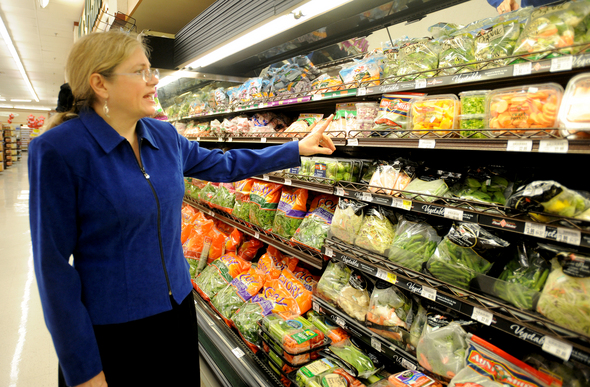
Karen Koeppe, dietician at Packard Health, discusses the importance of fresh vegetables in the produce section at Kroger on South Industrial in Ann Arbor.
Angela Cesere | AnnArbor.com
Ever since Ann Arbor resident Catrina Toure had her daughter Zeinabou two and a half years ago, she's been much more health conscious than she used to be.
But eating healthy is not the easiest thing. Foods like canned or dried pasta are cheaper than milk and fresh produce, and her growing daughter eats a lot of food.

But with the help of the federally funded Women, Infants and Children program and food distributions at the Salvation Army and in the Hikone neighborhood where she lives on the city's south side, she's able to get plenty of good things, like salad, chicken, cereal and milk, for herself and her daughter. Some of her neighbors and she occasionally trade off cooking responsibilities with each other.
She counts herself blessed and says Ann Arbor has provided great resources when she's found herself financially challenged. Many of her neighbors have it tougher, she said. She at least has a car to drive to the grocery store and only has one mouth to feed when she gets back home.
Some residents have three or four children and have trouble getting by with the help of food stamps and other food assistance programs. Many buy salt- and sugar-laden processed food because its often cheaper than fresh produce. "People are really struggling here," Toure said.
Even those who run food distribution programs have concerns about what their clients are getting.
"It's not really healthy," said Yolanda Whiten, the executive director of the Ann Arbor Community Center, which runs an emergency food pantry and a once-a-month food distribution. "Many of the people who need our food have health problems. But when you're hungry, you're not thinking about eating healthy. You're worried about eating."
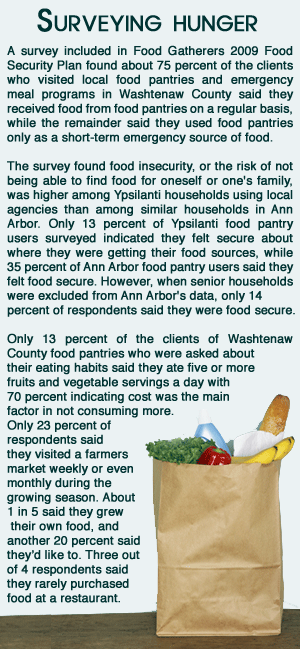
The 2009 Food Security Plan from Food Gatherers included an analysis showing those living in poverty in Washtenaw County were much more likely to suffer from high cholesterol, diabetes and obesity than those with higher incomes.
These chronic conditions are closely linked to a person's diet. With the county having one of the highest costs of living in the state, it's often difficult for low-income residents to eat fresh fruits, vegetables and proteins, the report says.
Barriers to good food
As a dietitian at Packard Health clinic in Ann Arbor, Karen Koeppe often finds herself asking patients some pretty extensive questions about their lives as she tries to figure out how to improve their diets.
What is their income situation? How about transportation? Who does the patient live with and what does that person have to eat?
There's more to diet makeup than personal choice, especially for those on a low income, she's found. For instance, after she advised a client who lives in shared supported housing in Ann Arbor recently to plan and stock up on healthier choices, she realized just how hard it would be for him. Any food he purchased ahead of time would likely get eaten by other residents, he told her. So one way to help him manage his chronic health problem was helping find him his own mini refrigerator.
“For some of my clients, transportation is an issue,” Koeppe said. “They do grocery shopping on the bus, so they get back only what they can fit in a backpack. They go to the local corner store where there is alcohol, cigarettes and highly processed snacks. There’s a challenge for me in trying to help them think of planning.”
At Hikone, the closure of the Georgetown Kroger store earlier this year had a big impact on those who didn't have cars, residents said, because it eliminated the only grocery store within walking distance. The closest retailer, Toure said, is a national chain pharmacy which sells some microwavable meals.
In areas where grocery stores aren’t plentiful, people are less likely to have a car and transportation options are few, said Eileen Spring, executive director of Food Gatherers. The problem, often called the urban food desert, is more common in areas like Detroit, and even some parts of Ypsilanti, but in some parts of Ann Arbor, convenience stores have become residents' main source of food.
“These places might have fresh milk, but it’s going to cost three times more,” said Spring. “They won’t have a real variety of bananas and lettuce or other produce, and it certainly will be more expensive.”
According to the Food Gatherers 2009 Food Security Plan, the rate of vehicle ownership among people who've utilized food pantries is lowest among Ann Arbor residents at 57 percent than any other community in the county. Comparatively, the community with the highest rate of vehicle ownership among those using emergency food services was South Lyon at 78 percent.
“Sometimes we’re distributing 50 pound bags of food,” Spring said. “How do you get that home if you don’t have a car?”
At the Salvation Army, at clothing and gift giveaways, any place where there are free items available, more people have been showing up recently as they run out of benefits, Toure said. "They only get paid at the first of the month. That money runs out and it gets hard by the end of the month."
Healthy eating doesn’t always float to the top of people's priorities when they already have a number of personal crises and are worried about simply getting a meal, any meal, on the table that day. “People don’t think about their health until something hits them,” Koeppe said. Not that she blames them.
“I describe it as chaos in people’s lives, partly if they’re dealing with a chronic condition or mental illness, maybe they have children and they are trying to work,” Koeppe said. “Planning with that can be a Herculean effort.”
And some families just don't have the energy or see the value in pushing their kids to eat fruits and vegetables. "They prefer the junk food … pizza, pizza, pizza," Toure said. It's only on holidays or at neighborhood potlucks when large traditional meals chock full of vegetables are made that some kids get the good stuff, she said.
Organizational challenges
These barriers don’t just affect struggling individuals and families, but also the organizations that help feed them.
“It just costs more to eat healthy foods. That really is the challenge,” Spring said. “Your money goes farther for crappier food. We have the same challenge on a larger scale. We could triple our poundage numbers in terms of food we give out every year if we focus on handing out things like pop.”
And demand is making it harder than ever to balance the desire to give out as much food as possible to an increasing number of people saying ‘I’ll take anything,” with the responsibility to give out foods that don’t contribute to chronic illness, she said.
In recent years, Food Gatherers has begun relying more heavily on planned purchases of fruits and vegetables rather than its less consistent approach of distributing rescued food from local restaurants, grocery stores and farmers.
The organization began focusing more closely on the content of its food “because of overwhelming evidence that people ... have clear health issues related to nutrition. We had to confront that. We don’t want to be part of that,” Spring said. “It’s not that we don’t distribute those comfort foods like ‘mac and cheese,’ creamed corn. But we are trying to find more of a balance.”
And in summer months, Toure said, food distributions are chock full of fresh peppers, cucumbers, tomatoes and other produce. In recent weeks, the healthy choices have been more scarce.
Solutions to unhealthy eating
In Packard Health’s own food pantry, only foods like beans or whole grain pasta, which are high in fiber, and low-sodium soups make the cut. Other groups who hand out food said they try not only to educate the people who get the food from them about eating healthy, but also those who donate food.
"We ask them to look for items with no salt added or other more healthy options," Whiten said.
Part of the challenge of meeting the need for healthier foods is educating the public, Spring said. “When we deal with food insecurity, it’s not a holiday problem. It’s a community problem,” she said. “We need to help year round, but there’s just not the interest to volunteer in February, March or even July.”
And when Koeppe sits down to work with an individual, she better understands the client's food challenges and begins crafting ideas that make sense. “I think a lot of people haven’t had the time or the interest to cook from scratch,” Koeppe said. Maybe they work long hours and have a couple of kids who are hungry and feeling irritable by the time dinner rolls around. “So the quick answer is the drive through.” Koeppe said.
Having ingredients on hand can reduce costs and stress if people can find the time to plan and even cook ahead of time. Koeppe teaches them ways to stock up on healthier and cost-effective items like frozen vegetables.
“I try to teach them to look at the lower shelves for cheaper foods, using bagged lentils or beans as an extender for soups or casseroles,” she said. She steers them away from even going down aisles with junk food or sodas.
Parents who impart healthy eating strategies to their children will be teaching a valuable lesson, Koeppe said.
“All parents want their kids to have a practical and life skills education. Parents are the gatekeepers of health.”
David Jesse covers K-12 education for AnnArbor.com. He can be reached at davidjesse@annarbor.com or at 734-623-2534. Tina Reed covers health and the environment for AnnArbor.com. She can be reached at tinareed@annarbor.com or at 734-623-2535.