

Police join Washtenaw County Public Health to fight K2, other synthetic designer drugs
The heads of local law enforcement agencies have thrown their support behind Washtenaw County Public Health’s plan to confront use of synthetic designer drugs in the area.
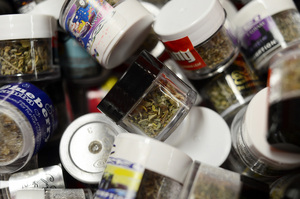
Washtenaw County law enforcement officials have thrown their support behind the health department's directive that asks businesses to immediately stop selling synthetic designer drugs like K2, Spice and bath salts.
Melanie Maxwell I AnnArbor.com
Last week, the department directed businesses in the county to immediately stop selling synthetic cannabinoid products - such as K2 and Spice, and synthetic cathinones - like bath salts.
In a statement issued Monday, leaders of law enforcement departments in Washtenaw County municipalities, as well as University of Michigan and Eastern Michigan University, all showed their support for the health department’s action.
“We think it makes sense that we engage in a public education strategy and put these establishments and the county on notice that they should no longer be selling these products,” said Washtenaw County Sheriff Jerry Clayton.
Should the businesses not stop selling the products - which have been recently linked to several violent crimes in the state - the health department would issue orders that would allow them to prosecute the business.
Police officials also are asking the public to support the effort by not shopping at stores that sell the products.
"The best solutions to community challenges must include community members themselves," according to the release. "Therefore we encourage each of you to support this approach by only frequenting those establishments that have committed to not selling these potentially dangerous products and identifying establishments that choose to ignore the community’s public health concerns and calls for responsible action."
Businesses that don’t sell the products can obtain a decal from the health department to display in a window.
Though the county hasn’t compiled a data set linking K2 usage and crashes or crimes in the county, Clayton said “we don’t want to start waiting for more and more things to happen before we take a strong approach to it.”
Synthetic designer drugs are sold legally in party stores, smoke shops and gas stations. Legislation is currently moving at the state level to make the sale of the products illegal.
Physical side effects from synthetic cannabinoid use include loss of control, seizures, hallucinations, vomiting and elevated heart rate and blood pressure.
Clayton said it is the role of law enforcement to step in when there’s a potential threat to human health.
Diane Brown, public information officer for the University of Michigan Department of Public Safety, said none of the stores on campus sell products like K2, Spice or bath salts.
However, the department does enforce a Michigan law that makes it illegal to consume chemical agents.
The same law that makes it illegal to sniff glue also makes it illegal to smoke synthetic cannabinoid products, Brown said.
The packaging on synthetic cannabinoids reads “not for human consumption.”
“We join with other chiefs in the county to support the efforts to mitigate this public health hazard,” said Joe Piersante, interim executive director of the U-M DPS.
Saline interim police Chief Mike Lindman said he supports the actions of the county and the state in addressing the “dangerous drugs.”
A report came through his department last week involving a 17-year-old suspected of using K2, Lindman said.
“I do believe it’s certainly a problem and as much as it’s coming to light, you can’t afford to wait and let it become a bigger problem,” Lindman said, citing the Tucker Cipriano case.
To report a business that is selling synthetic designer drugs in the county, call the Environmental Health Division at (734) 222-3800.
Amy Biolchini covers Washtenaw County, health and environmental issues for AnnArbor.com. Reach her at (734) 623-2552, amybiolchini@annarbor.com or on Twitter.
Comments
Chris
Sat, Dec 29, 2012 : 6:36 p.m.
I was skeptical that K2 is any good, so I started researching herbal incense on http://smokingblendreviews.com and ended up ordering some stuff that was recommended there. I still prefer the real thing, but the herbal incense stuff isn't bad.
Joe_Citizen
Wed, Jun 13, 2012 : 1:37 p.m.
I saw it in a little incense shop on Washtenaw in Ypsilanti, next to Lucky 7 Chinese food. The proprietor told me he made it himself, and it smelled like bubble gum. I had no use for it, but it did smell inviting though.
Ron Granger
Mon, Jun 11, 2012 : 11:45 p.m.
K2 is so yesterday. K3, with whipped cream, is where it's really at.
Madeleine Borthwick
Wed, Jun 13, 2012 : 12:01 a.m.
ha-ha-ha-, you are sooooooo funny!
Cici
Mon, Jun 11, 2012 : 8:07 p.m.
May one ask which businesses have been selling these items?