

Washtenaw County program offers onetime forgiveness for speeding, other minor infractions
Good drivers who slip up by speeding and get a ticket may be able to keep punitive points off their license through a program run through Washtenaw County district courts.
The Chelsea Police Department is the most recent law enforcement agency to join the collaborative program that began in 2010 and gives a onetime break to drivers with good records who are stopped for a minor traffic violation.
The Ypsilanti City Police Department, the Washtenaw County Sheriff’s Department, the Northfield Police Department and Pittsfield Township Police Department are among the county law enforcement agencies that are working with the district courts in this program.
Neither the Ann Arbor Police Department nor the Saline Police Department is participating, officials said.
The program generally works like this:
Chelsea Police Officer Rick Cornell said that when he stops someone for speeding, or another minor traffic infraction, he asks if the driver has a good record.
If that’s the case, he tells them about a program called a pre-hearing conference through which good drivers can qualify to have the violation reduced to one that doesn't carry points against their driver's license.
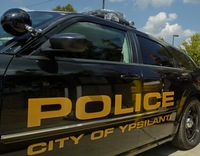
The Ypsilanti Police Department is one of several local agencies that participates in a onetime forgiveness program for drivers with good records who get a speeding ticket.
So, for example, instead of a $130 ticket for 5 miles an hour over the speed limit, a driver would appear at court, discuss the ticket with a police officer, and fill out a form, which is given to Magistrate Thomas Trusdell for review. If approved by the magistrate, the driver must be able to pay the $155 on the spot and walks out without any driver's license points.
Gene DeRossett, court administrator for the 14-A District Court in Chelsea, said the program began in 2010 and there were 618 cases that generated $15,455 across the county's courts.
"It's been very well-received," he said.
The extra fee is sometimes a deterrent, Cornell said, but most people who qualify take advantage of it. The $25 added to a ticket under the program goes to the courts as an administrative fee.
For the driver, it’s a form of one-time speeding forgiveness, and a way to keep car insurance rates down. For the police departments, it’s a way to cut down on overtime costs for officers' court appearances.
“It’s also a way to minimize court time,” said Washtenaw County Sheriff’s Deputy Paul Mobbs, reducing the number of police officers and residents waiting at the court.
Each court has a specific day a month assigned to these hearings and the officer working that day attends court, said Lt. Timothy Greene of the Northfield Police Department.
Northfield has been part of the program for about nine months.
“The policy in Northfield is one break per speeder,” he said. Any more than that and it would defeat the purpose of the program, he said, adding that anyone can make a mistake “or make a bad decision that day.”
Mobbs agreed. He said the sheriff’s department got on board in late summer or early fall, and keeps records of drivers who get a break.
He estimated that about 10 to 20 pre-trial conferences are held in each of the courts per month. Only once has he seen a repeat offender, and that person did not get a break for the second violation. “This is not permission to speed, but we recognize that good people do stupid things sometimes,” said Deputy Doug McMullen of the county’s traffic bureau.
Some drivers don’t want to spend the time to go to court, however, and opt to pay the ticket and be done with it.
“I think it says a lot that someone would take the time and effort to care enough about their driving record to go to court,” McMullen said.
Speeding violations range from 2 points (for 10 miles or less over the legal speed limit) to 4 points (for offenses like drag racing) to 6 points (for reckless driving or fleeing or eluding a police officer.)
However, a pre-hearing conference would primarily apply only to moving violations such as speeding.
“What doesn’t qualify is crashes, careless driving, seat belt violations, passing a school bus, that sort of thing,” Mobbs said.
He said if an agreement can be made, the driver pays fines and court costs but does not get hit with the points on the driving record. It takes 12 points in two years to lose a Michigan driver’s license.
This month, for instance, there were 20 pre-hearing conferences scheduled in 14A District Court in Chelsea.
All traffic tickets include information on a driver's rights and instructions on how to address a ticket, so it's important to read both sides, according to Michigan courts.
Lisa Allmendinger is a reporter for AnnArbor.com. She can be reached at lisaallmendinger@annarbor.com.
Comments
chucklk
Sat, Mar 5, 2011 : 4:03 a.m.
I was driving the notorious Huron parkway speed trap today and was passed by A2 police car w/license 056x135. I tagged him at over 40 in a 35 zone for an extended stretch. Didn't see him pulling himself over to give himself a ticket. Nice! ck
Jim Walker
Fri, Mar 4, 2011 : 4:46 p.m.
This is a very smart thing for the ticket recipient to do. The extra $25 is FAR less than the insurance penalties. However, the need for the program would be far less IF the posted speed limits on main roads and highways were all set for maximum safety at the 85th percentile speed of free flowing traffic under good conditions as described in state laws and correct engineering procedures. Many posted limits in the city of Chelsea ARE set properly and legally according to state laws and proper engineering practices. The same is true for most roads controlled by the County Road Commission. This is NOT true of streets in Ypsilanti or Ann Arbor, most of which are grossly under-posted. On many streets in Ypsilanti and Ann Arbor, it is literally illegal to drive along with the normal flow of traffic in the safest possible manner. Also, the default 55 mph on most rural surface highways is about 10 mph below the 85th percentile speed of free flowing traffic (and 10 mph below their legal speed limit before 1974). The posted 70 mph on rural freeways is about 10 mph below the 85th percentile speed of free flowing traffic. Regards, James C. Walker, Board Member - National Motorists Association Foundation, <a href="http://www.motorists.org," rel='nofollow'>www.motorists.org,</a> Ann Arbor, MI
RJA
Thu, Mar 3, 2011 : 11:33 p.m.
It doesn't matter to me what people choose to do. I haven't had a speeding ticket in over 50 years. (and don't plan on it happening). It is so simple, watch the speed limit signs, drive the limit and no money out of the drivers pocket. I even watch the limit when somebody else is driving my car. (understand I said MY car) They can stop, get out, and I will take over. No filling out a form, or going to court for me!!
EyeHeartA2
Fri, Mar 4, 2011 : 1:05 a.m.
I think I was behind you today. You were the guy with 20 cars lined up behind you and I was the guy telling you that you were "number one in my book". Keep up the good work. You should be proud.
SillyTree
Thu, Mar 3, 2011 : 10:20 p.m.
"But it does move."
Mick52
Thu, Mar 3, 2011 : 8:17 p.m.
I do not understand why anyone would agree to this plan, but since many have hooray. It is only applicable to good drivers, so why pay $25 more if you typically a good driver? Unless 2 pts on your record boosts your insurance, this looks like just a way to generate more $$ by persuading good drivers to cough up more. Also if it applies to drivers with good records that can be deceiving unless they are not putting verbal warnings in the driver's record, which I doubt. A driver might have been stopped several times and gotten a warning for many reasons. Any officer who would give a driver a ticket for only five over is a jerk.
John B.
Thu, Mar 3, 2011 : 11:27 p.m.
A) When was the last time you heard of someone getting 'just a warning?' That generates no revenue! B) That five-over ticket is already discounted from the actual speed. That's SOP these days. There are so many potential 'violators' that it just doesn't make sense to stop someone that is going less than about 12-over. You want the ticket to stick, generate revenue, and you really don't want to annoy citizens that are actually driving five over the posted limit.
Silly Sally
Thu, Mar 3, 2011 : 7:13 p.m.
Oops - Best thing, not this
Silly Sally
Thu, Mar 3, 2011 : 7:12 p.m.
I rather keep the current system, I get warnings, not tickets. Call me Perfect Record Sally! Best this is I no longer even have to cry! California has had a program for over 35 years and it is run by the courts, and if completed, nothing ever shows up on your record. A driver can attend once every 18 months or so, and spends all day Saturday in traffic school.
EyeHeartA2
Thu, Mar 3, 2011 : 4:02 p.m.
@Phil. K. These are metric hours. Get with the program. Jeesh. :-)
klovejoyroe-ytownclerk
Thu, Mar 3, 2011 : 3:29 p.m.
Paying a ticktet without points does not keep an insurance company from raising rates based on the ticket. In fact the insurance companies track the tickets even though no points and do rate you based on tickets even without points.
johnnya2
Fri, Mar 4, 2011 : 1:41 a.m.
Where do you get this information? You are wrong on the facts. Insurance companies use a gender, age,point and credit based system PERIOD. It takes all human prejudices out. The ticket will NOT show up on your insurance rate.
Phil K.
Thu, Mar 3, 2011 : 3:20 p.m.
"10 minutes, $125 = $1250/hour" When did we switch to 100 minute hours?
Jimmy McNulty
Thu, Mar 3, 2011 : 3:09 p.m.
This scheme is nothing new. Scenario: small town police force whose court dates are few and far between for folks pleading not guilty. The ADA cuts a "no points" deal if you plead guilty to a lesser no-points offense whose fine is ALWAYS more than the original ticket.
Mick52
Thu, Mar 3, 2011 : 8:21 p.m.
Jimmy can you give us some examples of traffic violations that are lesser offenses with higher fines than the higher offenses? In all my years in LE I never saw that. The higher offenses always have higher fines.
Greggy_D
Thu, Mar 3, 2011 : 3:44 p.m.
Agreed. The City of Southfield offered me this "deal" back in 1998. The cities just want the extra cash and also to keep the cases out of the courtroom.
Snehal
Thu, Mar 3, 2011 : 3:07 p.m.
Why not $500 penalty? That will deter people to speed. And will generate more money to the budget.
Atticus F.
Thu, Mar 3, 2011 : 3:06 p.m.
Good idea. As long as the break is being given to GOOD drivers. Also, people should remember that no one is being forced to take this option. It's simply being offered as an option. I personally haven't had a ticket in over 7 years, and it's not that hard...Just dont break the law, and you wont have to worry about getting a ticket.
Mick52
Thu, Mar 3, 2011 : 8:23 p.m.
I agree. And if perchance you do go five over and a jerk of an officer writes you a ticket, why would you pay an extra $25 when you likely will never get anywhere near 12 pts on your record? I have a feeling people are being hoodwinked as to the benefits of this law.
jcj
Thu, Mar 3, 2011 : 3:14 p.m.
"Good idea. As long as the break is being given to GOOD drivers." Excellent point ! I have had 3 tickets in 45 years.
a2cents
Thu, Mar 3, 2011 : 3:02 p.m.
I guess I'm old-fashioned. Points, fine and insurance are components of an effort to enforce compliance (and attention) while motoring. If a speeding car rolls through a 2-way stop sign in a child-filled, residential area and is the one caught (out of dozens of offenders), being an example does no harm whatever. It's also quite possible that the police did not record the full gravity of the offense (as in 5-over instead of 10/15 over) to send a message without doing more harm and incurring more wrath.
jcj
Thu, Mar 3, 2011 : 2:48 p.m.
"the program began in 2010 and there were 618 cases that generated $15,455 across the county's courts. " That's pretty simple math 618 x $25 = $15,455. But what is the cost of administering the program? Does anyone believe that $25 per ticket will cover the cost of it? "It's also a way to minimize court time" Of the 618 how many would have just paid the fine with no court time?
jcj
Thu, Mar 3, 2011 : 9:39 p.m.
Mick52 Correct me where I go wrong. I think in most cases but not all I have the option of just paying the ticket. But, "for example, instead of a $130 ticket for 5 miles an hour over the speed limit, a driver would appear at court, discuss the ticket with a police officer, and fill out a form, which is given to Magistrate Thomas Trusdell for review. If approved by the magistrate, the driver must be able to pay the $155 on the spot and walks out without any driver's license points" This looks like time for the PO and the Magistrate is not needed if I just pay the fine.
Mick52
Thu, Mar 3, 2011 : 8:32 p.m.
There would be no further administrative costs. The extra cash is accepted by the same person who takes the lesser money if this plan were not in effect. Why would there be any extra cost? I see no reason to add personnel, or extra paperwork. In re to court time, I agree it may not save anything. But when I was a patrol officer in a western Wayne county PD, they had a very good cost saving program. The first hearing on a ticket was an informal hearing and the cited person had the option of having the officer there or not. Not is a good idea because you do not have an officer opposing you. However, what they did when the driver said "no officer" was send the officer a form to fill out with all the details of the stop. That way the judge had a statement and there was no OT, a cost saver for the agency. If the judge did not make a ruling acceptable to the driver, then the ticket would go to a formal hearing where the officer had to attend. Saved $ and time, worked well.
Heardoc
Thu, Mar 3, 2011 : 2:32 p.m.
This just sounds like revenue generating for the departments involved here. We, as a people, should not allow this to occur. Who do these people think they are? What in the world is going on here.. first to put a police officer in charge of deciding this is ridiculous, Second, the idea that they charge more for a reduced charge but does not go n your record smells bad Third -- one ticket will not raise your insurance rates. If you are over 25, have a clean driving record and get a speed ticket for 5 miles over -- no raise in premium, PERIOD (I know this as I have been in this industry for over 20 years). This is just the police generating revenue from the citizenry by abusing their powers that WE gave them. The magistrate is no different than the cops here -- just thugs using the powers we gave them in order to generate more money for their own purposes -- Has anyone heard of Bell City, California?
John B.
Thu, Mar 3, 2011 : 10:38 p.m.
In my opinion, the greedy Insurance Cos. are the real thugs!
Mick52
Thu, Mar 3, 2011 : 8:34 p.m.
Geez, calm down Doc. It's optional, the PO is not in charge of anything. I do agree its silly to agree to this if you are a good driver as noted in my post here.
EyeHeartA2
Thu, Mar 3, 2011 : 2:21 p.m.
Just do like Taylor does. Set up the speed trap. Swipe your drivers license. Issue you the "impeding traffic" ticket on the spot and note that you were really speeding x mph over, just in case you want to fight it. Then....on to the next sucker. 10 minutes, $125 = $1250/hour ....and here is the best part most the perps are from out of town!! Anyway, I would rather that charade than the "go to court" charade. At least it is as honest as a speed trap gets.
actionjackson
Fri, Mar 4, 2011 : 5:08 a.m.
ten minutes = 1/6hr $125 per ticket = ? 6 tickets per hour @ $125 = ?
EyeHeartA2
Thu, Mar 3, 2011 : 9:13 p.m.
Yep, Mick, people always point out that if you happen to go under the random speed limit, you won't get a ticket. Say on Washtenaw, where the speed limit drops to 30 MPH for about one block? The one I was referring to in Taylor actually had 3 cops working it, all at the same time. Shockingly, it was about a block after the poorly signed drop in speed limit. When I get a ticket for speeding, I am not bitter at all if I had it coming (say on the freeway or whatever). When you are totally dumbfounded at what he cop tells you the speed limit really IS, well, that's a different matter.
EyeHeartA2
Thu, Mar 3, 2011 : 8:38 p.m.
@FattyJ As I mentioned further down, I used metric hours. They are the latest thing. Plus, they get you more money from speeding tickets. ;-)
Mick52
Thu, Mar 3, 2011 : 8:37 p.m.
I feel compelled somehow to add that "speed traps" are often the result of residents complaining to the police of people driving too fast (unsafely) on streets. Then the police monitoring traffic is what they are supposed to do, respond to reports of unlawful behavior.
FattyJ
Thu, Mar 3, 2011 : 6:23 p.m.
re do your math, remember there are 60 minutes in an hour.
johnnya2
Thu, Mar 3, 2011 : 2:07 p.m.
Oh come on, this is not about "forgiving" a mistake. This is plain and simple a way to get more money for the city or town involved. Romulus has done this for many years and basically has officers there to "plea bargain" the ticket to a parking violation. Remember that speeding ticket money is distributed to the state as well. Parking or other tickets go directly to the city. You also need to realize this is supporting perjury. The speeder must ADMIT that they committed an infraction that they really did not. Welcome to third world democracy
johnnya2
Fri, Mar 4, 2011 : 1:36 a.m.
Intent has NOTHING to do with it. If your grandmother was issued the ticket for speeding, why should she pay MORE to have it changed to something she did NOT do. Any cop who issues a ticket for 33 in a 30 MPH is not doing their job and I would bet your grandmother does not have that ticket. I find "speed traps" and other forms of revenue raking to be abhorent. I just think this is a money grab to increase the fine and decrease money to the Sec of State.
John B.
Thu, Mar 3, 2011 : 11:42 p.m.
So if my 94-year-old grandmother's Buick gains 3 mph while rolling down a long hill and hits a velocity of 33 in a 30 zone, resulting in a ticket in a speed trap area, she did it intentionally? Hmmmm.....
SeaEagle
Thu, Mar 3, 2011 : 2:04 p.m.
One could at least argue that there's a benefit of shifting dollars from insurance companies to local government, except this isn't what happens. Insurance companies have to generate a certain amount of income to cover their expenses. If local municipalities game the system, then the insurance company needs to raise premiums in order to meet their budget. So the overall insured community still pays the same, regardless of how local courts manipulate points on licenses, and the net change is that drivers, as a whole, simply pay more for their traffic violations.
John B.
Thu, Mar 3, 2011 : 10:35 p.m.
And how do you figure that? That makes no sense to me. Insurance Companies have almost *no* expenses. They provide no physical product. They have some actuaries that try to predict what they MIGHT have to pay out in the future, jack that up a whole bunch, then relate it back to current premiums. A total racket. Better than printing money! If this little $25 program causes me to have to give less to their racket, so much the better!
Mike
Thu, Mar 3, 2011 : 2 p.m.
No surprise the Ann Arbor police department isn't participating when this would deprive them of ill gotten revenue from running speed traps in illegally falsely depressed speed zones. The best solution is to lay off police officers. The more the better.
John B.
Thu, Mar 3, 2011 : 10:30 p.m.
Um, how do you figure that it would decrease their revenues in any way?
walker101
Thu, Mar 3, 2011 : 1:58 p.m.
Maybe Washtenaw County should implement an online program, pay the fine, go online and complete a brief online training program for an additional fee. Don't subject a police officers time to discuss your speeding ticket, I would think he has more important jobs to perform than listen to someone making excuses about why he was speeding. The officer gives the speeder or any violation a ticket informs him his options along with information regarding the online training with fees. Give me a break, get on board, how much did it cost the county for 20 pre-hearing conferences in one month verses none if you go online? The cost of adding a link on the web site would be minimal.
Ignatz
Thu, Mar 3, 2011 : 1:28 p.m.
Sounds like coersion to me. So now you get to pick between the ridiculous fine of $130 for going 5 MPH over the most likely too low speed limit and points or giving even more money to our so-called justice officials so there are no points. Still I suppose I'd rather give the money to our increasingly robber baronish government than to the ripoff insurance companies.
actionjackson
Fri, Mar 4, 2011 : 5:12 a.m.
No infraction equals no action. I would rather use the money to travel or for a fine meal rather than either "robber baronish governments or ripoff insurance companies.
John B.
Thu, Mar 3, 2011 : 10:28 p.m.
It's a simple financial decision, no need to get your panties in a bunch. Recently, I've discovered that our fine insurance company is charging us a penalty of about $600 per year for one family member's minor moving violation. That can continue for up to five years. That's $3000, vs. $25 paid up front (or $155 if you want to include the initial ticket price). Not a tough call.... ...and $25 bucks for an admin. fee is a pittance, in my opinion. Quite reasonable.
Mike D.
Thu, Mar 3, 2011 : 12:29 p.m.
Speeding ticket revenue contributes a significant portion of Ann Arbor's general operating budget, but our prosecutor Brian Mackie refuses to enter a program like the one above, even though it would generate critical extra income for us. Jack the price of the no-points ticket to $300 and people still would pick it over the points. The money can go to the city, or it can go to the out-of-state insurance companies. Sounds like an obvious choice to me.
Are you serious?
Thu, Mar 3, 2011 : 4:50 p.m.
Brian Mackie is the County Prosecutor and has nothing to do with Ann Arbor tickets. That is the City Attorney's Office.
dsb
Thu, Mar 3, 2011 : 12:59 p.m.
I was stopped by a couple police officers in Peru, and offered the choice of a ticket or just paying him in... um... cash... On the spot. Quietly. And please not to attract too much attention. Please stop waving the cash around, señor... Yeah, I agree. This is exactly what we need in the US. Legal bribes. Cool!
SeaEagle
Thu, Mar 3, 2011 : 12:48 p.m.
Mike, Why not just jack the price to $1000 and really generate money? Who cares about the (supposedly) real reason for law - the safety and well-being of citizens? The traffic enforcement system is horribly antiquated, has moved miles from it's original intent, and badly needs a revamp. The seat belt law, while not bad in itself, is used primarily as a revenue generator, with police forces setting up 'checkpoints' whenever they need to boost to the coffers. Now we have this. It doesn't in any way make the streets safer. In fact, it's just the opposite as it reduces the penalty for driving in an unsafe manner. But, hey, it generates money, so who cares, right?