

Michigan House approves bill cracking down on synthetic drugs, including cannabinoids
The Michigan House of Representatives has passed a version of Senate Bill 1082 that will allow law enforcement to take action to remove synthetic drugs - including cannabinoids like K2 and Spice , as well as "bath salts" - from store shelves.
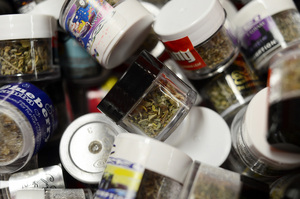
Synthetic marijuana also known as K2, Spice, incense and potpourri is an inexpensive and legal substance used to get high.
Melanie Maxwell I AnnArbor.com
The bill is a part of a broader package that will allow the state to quickly identify and eliminate such “mind-altering products” by temporarily classifying them as a controlled substance, according to a news release from the office of State Rep. Mark Ouimet, R-Scio Township.
If signed into law, measure would take effect July 1, and would allow local law enforcement and public health officials to take action against businesses that sell a broad definition of synthetic cannabinoids -- like K2 and Spice -- and synthetic cathinones, commonly known as "bath salts."
Violating the act would result in a felony charge, punishable by up to four years in prison and/or maximum fine of $20,000.
As several minor changes were made to the Senate bill, it will go back to the Senate for concurrence before being passed to Gov. Rick Snyder for a signature.
Ouimet said the bill -- which is an amendment to the Michigan Public Health code -- was mainly in response to the proactive efforts taken by communities across the state to ban the synthetic designer drugs.
"It's deplorable that young people who can't buy cigarettes can walk into a convenience store or gas station and purchase synthetic drugs," said Ouimet in a news release. “These products are incredibly dangerous, and we must make a concerted effort to get them off the market as quickly as possible."
Synthetic cannabinoids have become the focus of media attention after they were linked to several high-profile crimes in Michigan, which has spurned many communities across the state to take action to ban the substances themselves.
"Washtenaw County business owners, officials and parents must continue to work together to protect our communities, and especially our young people," Ouimet said in the release. "The more we raise public awareness about how unsafe these drugs are, the less likely they will impact our communities."
At a Washtenaw County Board of Commissioners meeting Wednesday night, public health department officials announced the county's plan to address the sale of synthetic cannabinoids through a decal program that would reward businesses that didn't sell the drugs and threaten litigation against those that chose to continue selling.
Details of the county's plan were to be released Thursday afternoon, said Richard Fleece, public health officer for the county.
Synthetic cannabinoids on the market are a blend of leafy herbs and spices sprayed with a synthetic chemical that gives a high.
The drugs are sold over-the-counter in party stores, gas stations and smoke shops and are known by names like incense, herbal and potpourri or by brand, like K2.
Physical side effects from synthetic marijuana use include loss of control, seizures, hallucinations, vomiting and elevated heart rate and blood pressure.
The most dangerous part about synthetic cannabinoids is that their effects are relatively undocumented, said Dr. Kirk Brower, a professor of psychiatry and the director of Addiction Treatment Services at the University of Michigan Health System.
Brower said he’s treated several psychiatric patients who have used synthetic cannabinoids who reported having hallucinations, difficulty talking paranoid delusions and persistent problems.
While there is long-standing research on the effects of drugs like marijuana, cocaine, LSD and methamphetamines, synthetic designer drugs are an uncharted territory.
The vast majority of scientific articles concerning synthetic cannabinoids are about how to test for the substance, not about its long-term effects, Brower said.
“I think the most important message here that people that use these drugs are acting as guinea pigs in a dangerous science experiment,” Brower said. “I would never tell someone to use marijuana, but we have decades of research on its effects.”
Related: Ypsilanti City Council asked to consider banning synthetic marijuana
Amy Biolchini covers Washtenaw County, health and environmental issues for AnnArbor.com. Reach her at (734) 623-2552, amybiolchini@annarbor.com or on Twitter.
Comments
Joe_Citizen
Sat, Jun 9, 2012 : 3:47 p.m.
This law is misleading and way too vague to rely on. It is more of a Tool to use against someone when they decide to use something against you, simply because they don't like you. Oh and this law is against our constitution. I want that stuff off of the streets as bad as most parents, but I am not willing to loose my constitutional rights for it. Besides if kids want to get high they will find something to make it happen. The most dangerous substances are inhalants and alcohol, and these things can be found as usual house hold products. We need to make a bill that prohibits any mind altering substance illegal for 17 and under, with out prescription.
E. Manuel Goldstein
Fri, Jun 8, 2012 : 4:18 p.m.
Yes, what about marinol and sativex? These are synthetic cannabinoid-mimicking drugs. Can't wait to see the cops busting down the pharmacy doors to remove them and charge pharmacists with felonies.
Robert Granville
Fri, Jun 8, 2012 : 3:14 p.m.
Just because law enforcement and government officials refuse to know anything about this issue doesn't mean AnnArbor.com's journalist can't take time to educate themselves. Ask the law enforcement and govt bureaucrats the hard questions: Why do you refer to K2 and Spice as synthetic cannabinoids when their chemical compositions bear no similarities to cannabinoids found in marijuana or cannabinoids found in prescription synthetic thc pills like marinol or sativex? Cannabinoid is a real word with a real meaning. It shouldn't be mentioned in this article at all.
Amy Biolchini
Fri, Jun 8, 2012 : 3:40 p.m.
Per the interview I had with Dr. Kirk Brower, the professor of psychiatry and director of Addiction Treatment Services at the University of Michigan Health System, he advised me to use "synthetic cannabinoid" rather than "synthetic marijuana," as I had been using in previous articles incorrectly. The definition of synthetic cannabinoid Brower advised me to use is of a broader context that means a substance that binds cannabinoid receptors. The synthetic, manufactured chemicals found in products like K2 and Spice are designed to bind cannabinoid receptors together, as THC would, but do so with completely different results. Referring to the drugs as "synthetic marijuana" is inaccurate, Brower said. Referring to the entire class of drugs as K2 is also inaccurate, because K2 and Spice are brands.
Robert Granville
Fri, Jun 8, 2012 : 3:07 p.m.
K2 and spice ARE NOT CANNABINOIDS! This makes me angry.
Amy Biolchini
Fri, Jun 8, 2012 : 3:42 p.m.
True, K2 and Spice are not cannabinoids. They're synthetic cannabinoids, made to mimic the effects of natural cannabinoids. See the reply I posted to your later comment.
clownfish
Fri, Jun 8, 2012 : 12:47 p.m.
Coffee, paint, paint thinners, glue, soda, sweetened tea. I guess this is more regulation by the less government -in-our-lives group? Is this the same group that told us that not wearing a helmet on a motorcycle is good policy? What happened to personal choice etc? These same people decry the limitation of high fructose filled drinks and products, those products lead to more deaths annually than incense. What gives with this disconnect? I can only assume it is one of those "If our side does it it is good, if the other side does it it is bad".
Basic Bob
Fri, Jun 8, 2012 : 2:09 a.m.
What's their position on Irish coffee?
Bear
Thu, Jun 7, 2012 : 9:12 p.m.
>> So, this implies that the state could use this law on just about anything they wish to use it against. Like caffeine pills, coffee, whatever the state deems to be "mind-altering products". That's general and vague.
Dennis
Thu, Jun 7, 2012 : 9:34 p.m.
Exactly what I was thinking. It's a shame people are always so eager to give up their personal liberty in the name of public health and safety.