

6 tough questions that schools in Ann Arbor and Washtenaw County should answer
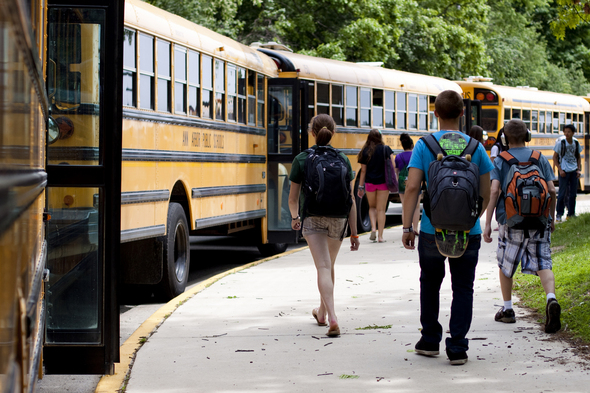
Pioneer and Huron high schools in Ann Arbor were ranked #19 and #20, respectively, among Michigan’s high schools by U.S. News & World Report. But Ann Arbor and other Washtenaw County school districts are falling far short of where they need to be.
AnnArbor.com I Jeffrey Smith
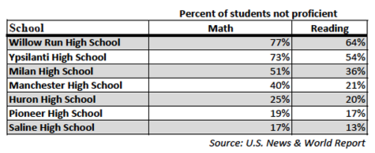
Americans are skeptical of our K-12 schools, and rightly so. A recent poll indicates "that six out of 10 [Americans say] schools need either major changes or a complete overhaul... Only 5 percent of those surveyed thought the school system in the United States was working well… National statistics show that 68 percent of 8th-graders in the United States cannot read at their grade level and American students rank 25th in math and 21st in science compared to 30 other industrialized countries." Large majorities of voters clearly understand that education and job creation are inextricably linked.
Ann Arbor and area Washtenaw County schools, both public and private too, are actually falling far short.
There are many initiatives under way to improve our area public schools, but here are some tough questions about things that are not being addressed effectively, but should be:
1. President Obama's secretary of education says that the traditional long summer break hurts kids and the data is clear that it does hurt low- and moderate-income children. Why can't our local schools adopt a balanced calendar so that we can decrease the "failure to graduate rate" materially? Sure, it's not necessary for upper-income kids who have enrichment going on at home, but it typically isn't upper-income kids who are dropping out of school and ending up as adult functional illiterates. If you haven't already read it, pick up Malcolm Gladwell's recent #1 bestseller "Outliers." Chapter 9 has the most eloquent argument for ending the traditional summer break that I've ever read. Email me at ranzini@university-bank.com and I'll send you this chapter. There are many pearls of wisdom in "Outliers" that should be translated into action items on local school boards' "TO DO" lists.
2. Why don't our children go to school 9 a.m. to 5 p.m., the same hours that parents work? This would decrease many of the problems brought on by unsupervised latchkey kids and better train children for the workforce. Besides, studies show High School students perform better in school if they start later in the day because their biological clocks encourage them to sleep in, so why are they at school trying to learn before 8 a.m. and before even their parents are at work?
3. How much money does each school system spend each year on internal audits to ensure that the formal policies and procedures of the board and senior management are followed and not violated? Several recent scandals that exposed where over a million dollars was being lost each year by actions in violation of established policies indicate that some schools have a culture in place that ignores official policy and an ineffective system of controls and checks and balances.
For example, the AAPS was wasting $766,800 a year paying for employee dependents receiving health care benefits who were in actuality not eligible as legitimate dependents and AAPS was wasting $500,000 a year because the board policy on the distance between bus stops was being ignored by bureaucrats for years.
A strong internal audit would ensure that waste is caught timely, the board's key policies are followed, and that administrators are doing their job properly. Business leaders understand that a strong risk focused internal audit function in a large business is critical to their ability to trust but verify that what is happening throughout the organization is in line with expectations.
4. Consultants and administrative staff don’t teach students, so are the trustees looking carefully at the need for all such expenditures? Many comments have been posted on AnnArbor.com over the years noting examples of waste in this area that have not been addressed. For example, why did the AAPS trustees vote raises to two top administrators despite a $14 million deficit? Good leaders cut their own salary and benefits when they ask for sacrifices from the rank and file (or taxpayers), not raise them. Many of the consultants in AAPS are hired out of a $5 million annual discretionary fund controlled by the superintendent that until recently the school board president wasn't even aware of. Why?
5. Why do school systems use bad instructional programs? For example, in the middle schools, AAPS uses Connected Mathematics, which the U.S. Department of Education rates as not just ineffective but actually harmful to student learning, based on peer reviewed scientific studies. The teachers know it's awful. The parents know it's awful. How come you don't act? How many other awful teaching programs are being used? Shouldn't these all be replaced before we buy technology to teach them? Shouldn't we be spending money on buying better teaching systems that work and then seeing if these need technology or not and specifically what technology to be effectively delivered?
6. What are you doing to explore shared services? For example, Saline Area Schools and the city of Saline have begun to discuss ways to cut costs and share services, including possible collaboration on building and grounds maintenance, sharing IT data centers and IT support services.
It will only be when the local public school districts address these issues raised and prove they are good stewards of the funds entrusted to them that I'll know you are seriously trying to educate ALL our children and not living in the past, replicating existing policy failures.
Addressing these issues is, I believe, actually the biggest social justice issue of our day. Is there one greater?
Stephen Ranzini is a resident of downtown Ann Arbor and president of Ann Arbor-based University Bank. He is a former community member of the AnnArbor.com editorial board. You may contact him at ranzini@university-bank.com.
Comments
Delena M Harrison
Wed, May 23, 2012 : 4:40 p.m.
Is there a discussion on a Washtenaw County School System? Would that address your point on shared resources and administrative costs? Isn't there a group looking into this? While I'm not familiar with the advantages and disadvantages of using Connected Math, we probably keep using it because we haven't collected specific funds to pay for upgrading or replacing it. Both textbooks and computers/electronic devices are resources to be used by teachers and students around content. Students need to learn the content. If an instructional approach doesn't effectively use electronic devices in supporting students' learning the content, either teachers and students won't be using them or they won't be learning the content. Unfortunately, many people believe electronics are the solution to "our" education problems and see them as something different than a resource.. I question the existence of scientific evidence of instructional approaches that incorporate electronic devices and lead to improved student achievement. Note that there are very few scientific studies in education. While there maybe evidence of statistically significant association(s), this is not scientific evidence. Furthermore, under conditions of a scientific study, the significant relationship may become non-significant because of biases in selection of who receives instruction with and without the electronics. We need decision makers in education who can decipher between convincing argument and real evidence.
jns131
Tue, May 22, 2012 : 2:23 p.m.
I am going to settle this once and for all. I am on the MI Gov website and here is the link: http://www.michigan.gov/mde/0,1607,7-140-38924_41644_42668---,00.html Read it and weep. The law needs to be changed. Here is what their little blurb states: In preparation for implementation of the new high school graduation requirements, the Michigan Department of Education, in collaboration with partners across the state, has developed Course/Credit Content Expectations to provide all educators and students with a common understanding of what high school students should know and be able to do at the completion of each credit/course.
jns131
Sun, May 20, 2012 : 2:09 p.m.
Here is my bottom line on education. I hope that everything is cut and the teachers go back to the days of chalk and black board. Why? Because maybe everyone will realize that the only reason colleges are so darn lazy is because they don't want to teach math to those who do not know it. Or what ever subject they need to be what ever they want to do in life. Teach the basics in hi school and if you want to be a carpenter as a profession? Then make the college professors accountable. Not the hi school teachers who are only doing their jobs. This is why public education is failing our children. Colleges do not want to be held accountable.
jns131
Mon, May 21, 2012 : 10:33 p.m.
I could care less. I have a great job with out all that ugly math. I am financially doing well. Thank you very much.
DonBee
Mon, May 21, 2012 : 9:32 p.m.
jns131 - And the good jobs will go where innovation and education is. Poor education = poor financial future.
jns131
Mon, May 21, 2012 : 2:45 p.m.
I remember hi school being easy. 1 year of science, 1 year of math and every thing else you had to take to graduate. Hi school is hard because we are forcing our children to be like the Europeans or the Asians. O shudder, we have to keep up because we are falling behind our counterparts. Who cares. Let them do their thing, this America. China is communism and Europe is old world. This is why we had a revolutionary war. To stop being like everyone else. If you want to be like them? Then move to their country. Stop forcing it down our throats.
DonBee
Mon, May 21, 2012 : 1:26 a.m.
jns131 - More than half the high school students who started college last fall needed one or more remedial classes in order to be ready to take the regular classes (according the US Department of Education). This is not just for 4 year colleges but for community colleges too. My question to you, is why if high school is so hard, and colleges are so lazy, is that students need remedial classes?
J. A. Pieper
Sun, May 20, 2012 : 11:22 p.m.
Colleges want their money and will let just about anyone into their educational programs. Society won't accept the fact that some students would do better with vocational training, and still become a contributing member of the community ( and make good money, I pay the automotive repair people, the electrician, etc.). Everyone does not need a four year degree, they can specialize in other areas!
A2is over
Sun, May 20, 2012 : 12:15 a.m.
All very good points, but maybe we should be asking is "Whats wrong with our American culture? Our parents and grand parents valued education and saw it as a means to a better life. Teachers were held in high regard and respected. Schools had order and a defined set of expected behaviors. Bad grades or bad behavior at school was not tolerated by our parents. Essentially the majority of our parents were the Tiger Moms of today. Now, there's an ever growing majority who send their kids to school and expect them to" get" an education. Unfortunately you cant "get" an education like you can get a bag of chips at the local store. It takes effort and involvement not only by the student but also the parents. So now our schools are slowly being overwhelmed with unengaged and uninvolved students, who just become a layer of overburden that both teachers and students must deal with. So more and more of the day is wasted and less and less is taught. Now our kids spend more hours a day in school, have more homework, and are falling farther and farther behind. Essentially within a generation we have lowered the bar for education instead of raising it
Beth
Sun, May 20, 2012 : 8:52 p.m.
@A2is over, your comments are right on!! This is what I meant in an earlier comment about parental involvement. As a teacher, I have had parents who feel it's my job to teach their child everything, and it's not their job to show up for conferences, check their child's backpack, help with homework, etc. These same parents are then often quick to blame teachers when their kids are struggling in school. We teach character education, anti-bullying, even personal hygeine lessons in school now - because some parents have abdicated any responsibility to teach these things at home. If a parent doesn't make it clear to their child that they value education, the teacher is fighting a losing battle. Some of these parents are some of the parents pushing for a longer school day and school year - because they want to have their children off their hands. Don't believe me? I heard a school board member at a Dec. 2010 meeting say that she'd favor the "balanced calendar" because she couldn't stand spending too much time with her son. There are lots of wonderful parents in Willow Run, and there are lots of non-involved parents in Saline. And yes, there are unfortunately bad teachers that don't do what they should be doing. My point is that there are lots of factors that contribute to a child's success or failure in school. Let's recognize ALL of those factors and not be so quick to blame teachers.
Linda Peck
Sat, May 19, 2012 : 8 p.m.
To risk being boring and blowing hot air, I will say that I think schools are the problem and not the teachers. Schools have been boring since I was in school and that was from the 1940s through 1959 when I graduated from high school. Even college was boring. Graduate school was interesting and I did my best work there. Boring makes for poor grades. I blame curricula, textbooks, structure of classrooms, and long long days among other issues, along with some very poor teachers amongst the mediocre and excellent. The structure of the beast is way old style! Can we not be more creative in our approach? Why are schools like Community High School so popular? Maybe people should ask that question and then find the answer and make some long awaited changes.
DonBee
Sat, May 19, 2012 : 4:32 p.m.
Thank you Mr. Ranzini for raising important discussion topics. We should all be reviewing the links and discussing the topics, not shooting the messenger. Education is critical to the future of our students. These are topics that we should discuss and understand. We need to figure out how to get every child to succeed. The big question in my mind is are we using the right education model, where one size fits all? Does the German system make more sense? Does some other system make more sense? Does social promotion make more sense, than holding people back until they master the work? Should we have grades at all, or should children be grouped by ability by subject and move between rooms even at the 1st grade level? I don't have answers. I have spent a large amount of time volunteering to teach science and engineering topics in grade and high schools. I have learned a lot about what it takes to keep a group of children engaged. I support teachers, I question the education system they have to operate in and the union leadership they are stuck with.
sh1
Sat, May 19, 2012 : 5:58 p.m.
You had me until the end. I don't see where belonging to a union makes a teacher's job worse. Today's unions have been stripped of most of their powers, but they still are better than a right-to-work state.
red9seven
Sat, May 19, 2012 : 3:48 p.m.
Thank you, Stephen, for starting a discussion on critical education issues. After teaching math for over ten years at the secondary level, I agree with many of your points. It appears that many who look at today's education system fail to realize that many of the rules have changed in the last decade. We aren't allocating the resources to this critical sector that we did previously because our present economy will not allow it. And our ability to improve our economy is tied to preparing our children to succeed in a world that is overall better educated. We have to ask the difficult questions. We have to sacrifice, as teachers, as parents and as students. Many of my students get it, and there is a strong correlation with attitude, and, in my experience, a poor correlation with affluence (as evidenced by their clothing). Students who come back for the help sessions, who use the supplemental material I provide, and who are proud of their work, they are the ones who do well. I strongly support Stephan's call for accountability, at all levels!
red9seven
Sat, May 19, 2012 : 6:35 p.m.
sh1, each are accountable for their area of responsibility. I believe most of the issues are with parents/guardians who dismiss their responsibility to guide their children. However, we both know teachers who are not honoring their commitment to the system, and I suspect many parents know who these teachers are, as well. And that is my primary criticism of our MEA: we should be policing our own issues, not protecting them.
sh1
Sat, May 19, 2012 : 4:12 p.m.
I get this, except that teachers are held accountable for parents and students who aren't.
jns131
Sat, May 19, 2012 : 2:28 p.m.
Let me give you folks a heads up on math. Gee, wonder why are children are falling short? Because of the requirements the state of Michigan is requiring our children to do. They need 2 years of English, 4 years of math and I think 4 years of PE and 4 years of Science. If the child fails at any of them they have to re take this in the next grade. They pass. The next year? Fail again? Re take the next year. O wait, this takes us to grade 12. Now they are short on 2 years of math or English or what ever and now they have to drop out to take it as GED. This state fails our children just like the AAPS board fails them as well. Then I read that parents want children to sleep in and go to school around their schedule. Well guess what? The reason most teens are so tired? Is the homework that is dumped on them when it comes to the end of what ever quarter or semester we are in. Mine is lucky to get to bed by midnite. I hate to say it, but hi school is not fun by any means. Only if you are going to college and need all this math is when hi school should require it. Otherwise, give them everyday math. Algebra is only for those who are going on to be doctors.
jns131
Tue, May 22, 2012 : 2:26 p.m.
Look below to see what the state says. Evidently you have not done enough research to validate what you are saying.
DonBee
Mon, May 21, 2012 : 9:35 p.m.
jns131 - That is NOT what state law says, at all. Some school districts have decided to go this route, others have not. If you don't like the math requires in the school district your children are in - move them to a different school, you have options. The state law, which I copied parts of into this discussion, has lots of options in it. Some school districts have chosen to only do one choice for math. I have talked to a range of math teachers, most of them are doing what they are told, few have actually read the law. The ones who have agree there are valid options.
jns131
Mon, May 21, 2012 : 2:49 p.m.
Read my post: Year 1? Algebra Year 2? Geometry Year 3? Algebra II Year 4? Whatever your heart desires. This si what I was told the state requires. Talk to any math teacher. I did.
DonBee
Mon, May 21, 2012 : 1:23 a.m.
jns131 - Please read my post, the requirement is 4 years of math, NOT Algebra, AAPS has decided that Algebra is the requirement, the law does not require it. Business math, welding, etc all can qualify for the math requirements, or so the law says.
J. A. Pieper
Sun, May 20, 2012 : 11:14 p.m.
jns131 I think you have your graduation requirements mixed up. I do agree that in some ways the graduation requirements expected by the state are too demanding, there is no room for the student who wants to work with his/her hands and possibly go into some form of vocational education. Every student in the AAPS is on a four college track, and if one can't keep up with the demands, the school system just doesn't care about you. My son spent many a night up beyond midnight, and often pulled all nighters to achieve the grades he wanted for himself. Through all of this he was very successful in high school, but he hated it none-the-less. Sad reflection on AAPS.
jns131
Sun, May 20, 2012 : 2:02 p.m.
Go ahead and negative me 11. But I still believe that Algebra should be limited to only those who really need it. Otherwise, every day math and 1 year should be required. I could care less if you want to be a carpenter or engineer or nasa something. Don't force this math on my child. I find it offensive to me to force this garbage down my childs throat. The way legislation is? Some child will fail and become your tax payer problem. I hate the way government is involved in our lives. You can take math or leave it. I prefer to leave it. If the Amish don't need it to build their barns we don't need it either. Go figure.
DonBee
Sun, May 20, 2012 : 11:41 a.m.
jns131 - From the state law (the "..." are word removed to make it fit the limits of AA.COM): At least 4 credits in mathematics ... including completion of at least algebra I, geometry, and algebra II, or ... such as trigonometry, statistics, precalculus, calculus, applied math, accounting, business math, a retake of algebra II, a course in financial literacy... formal career and technical education program ... such as a program or curriculum in electronics, machining, construction, welding, engineering, or renewable energy... Each pupil must successfully complete at least 1 mathematics course during his or her final year of high school enrollment. (ii) At least 3 credits in social science ... including completion of at least 1 credit in United States history and geography, 1 credit in world history and geography, 1/2 credit in economics, and the civics course... (iii) At least 1 credit in subject matter that includes both health and physical education ... (iv) At least 1 credit in visual arts, performing arts, or applied arts... (2) ...at least 2 credits, as determined by the department, in a language other than English... (5) ...complete the 4 credits in English language arts required... I NOTE that the math requirements are much more open that AAPS discusses, and that the PE is ONLY 1 YEAR. English can also be fulfilled with speech, debate, business classes, etc. The law is not as rigid as people indicate sometimes. In fact the foreign language can be sign language.
DonBee
Sat, May 19, 2012 : 4:24 p.m.
jns131 - I know carpenters and utility workers who use algebra daily to do their jobs, they may not realize they do, but they do. They use geometry daily too. Again they may not realize it. Math is important to teach structured thinking too. Try sometime to organize a closet with no geometric thinking.
1bit
Sat, May 19, 2012 : 2:49 p.m.
This is a comment only someone young would make. Algebra is necessary for everyone. In fact, it is probably the very least we should expect people to know.
Stephen Lange Ranzini
Sat, May 19, 2012 : 1:56 p.m.
@Beth: I completely agree with your comment above that parents deserve much of the blame for those children being unwilling or unable to learn. In a column that must be limited to about 1,000 words a lot of good ideas must be left out, unfortunately. The question is what works to overcome this basic societal fact and the solutions I advocate in some of my comments above are proven to work.
jns131
Sat, May 19, 2012 : 2:31 p.m.
I disagree with your agreement. We should not be blamed if we are trying everything in our power to keep our children from failing what ever subject they are failing in. You need to watch what you say before laying blame at our feet. We need to put the blame squarely on the shoulders of the Mich Dept of Education. They require this abusive amount of years to do what ever and if the children fall short? They flunk out and get a GED. Sorry, Stephen, but don't blame me if my child fails and I have tried everything. It is not a lot of the parents fault. I blame the MDE.
Beth
Sat, May 19, 2012 : 1:08 p.m.
Instead of continuing to blame only schools and teachers for things like poor literacy rates. can we PLEASE address the area of parent involvement?? There's a big reason why Saline does better than Willow Run, and it has to do with parents who are involved in the schools, involved with getting their children to read and do homework at home, and who see education as important. You can throw lots of money at schools (although I don't know where it will come from) and make the school day and year longer, but unless you're proposing a boarding school you will still see the effects of parental involvement or non-involvement. What about some initiatives that get parents into schools? Speaking as a teacher, I don't think your experience at Yale bears much resemblance to what most area teachers do in a day. I'm sure it has given you knowledge of what it's like to prepare for and teach classes, which is great, but there's no comparison between a class of college-age Yale students (with involved parents!) who want to be in your class and a group of 10-year-olds (with non-involved parents) who'd rather be at recess......
Stephen Lange Ranzini
Mon, May 21, 2012 : 4:31 a.m.
@Beth wrote: "but there's no comparison between a class of college-age Yale students (with involved parents!) who want to be in your class & a group of 10-year-olds (with non-involved parents) who'd rather be at recess......" I agree. Actually, I had some great experience teaching 9 &10 year olds too, earlier in my life. For three years, I was a counselor at the National Music Camp (Interlochen) when their program was an eight week Summer program. I was the only counselor responsible 24/7 for ten boys that age, well I did get one night and one 24 hour day off per week... One year I was given an entire cabin full of challenging non-motivated kids (a lot of them were from rich families). The first few weeks we were clearly the worst cabin in the division, so bad it was a standing joke. But by the end of the Summer, I had instilled in them enthusiasm for many life skills including cleaning, being on time, attention to detail, personal hygiene &etc. One hard case had a 150 IQ & two wealthy professional parents & zero life skills - he couldn't even properly brush his teeth at the start & said with disdain that only his maid cleaned at home. By the end of the Summer he was volunteering with enthusiasm to clean the toilets! This bunch of misfits was consistently the best cabin in everything by the end of the Summer. I must have done something right because the single worst student I ever taught (from that same group) called me up last year out of the blue 30 years later to tell me what a huge impact I had on his life (I caught him stealing and lying about it), but what I did next (he says) turned him around. When the head of the division gave me a critical evaluation I cried for 30 minutes after I was so sad because I knew I had changed 10 lives for the better. So yes, I have insight into the joys and sorrows of your job, why criticism is painful & why it is so hard to do it well, but so rewarding when you do!
Stephen Lange Ranzini
Mon, May 21, 2012 : 4:20 a.m.
@Beth: My column focuses on structural issues that administrators and the trustees need to focus on, but aren't. Please point out to me where I am even the slightest bit critical of teachers? I have nothing but great respect for good teachers! I know from my limited experience as a non-professional how hard it is to do.
J. A. Pieper
Sun, May 20, 2012 : 11:04 p.m.
Beth, keep sharing, it is important to hear your voice. Basic Bob, as educators, we know that there is little we can do about the lack of parental involvement, it is an economic issue, a possible history of negative experiences on part of the parent, all that you mentioned. If the national goal is success for all students, then it must be a issue brought up, and worked on in some way. My students who do best are the ones who are reading with their kids at home, talking about experiences during the school day, helping with homework, helping their child internalize that learning is important to their future. I could not volunteer in my sons' classrooms, but that involvement started the minute they were home from school. We discussed what needed to be done that evening, and what might be coming up for the rest of the week. If a trip to the library was needed, we did it, if we needed information from the news, we searched for it, if I had to listen to the instrument to check that it was sounding okay, well, I did that too. I read the books they were reading in school, so we could have book discussions; I helped create that DNA model for biology, and demonstrated my limited understanding of Algebra, but what I showed them at least gave them ideas of what to try. With cut backs and higher class sizes, parental involvement is going to be more important than it ever has been in the past, without it, the gaps are just going to grow exponentially.
DonBee
Sat, May 19, 2012 : 4:21 p.m.
Beth - I have witnessed the difference in parent involvement, part of that stems from how welcome parents are. In AAPS, some schools welcome them with open arms and some do not. Some principals try to include parents and other work to exclude them. Willow Run has issues, and so does Ypsilanti. No questions there, but the schools offer very few ways in either school to be directly or indirectly involved. I have had multiple discussions with parents who are basically told "go away" by schools. The lower the income, the more important the outreach is to parents. We tend to forget that many low income parents did poorly in school and are not willing to walk thru the door without some work to invite them in and make them feel welcome. The Peace Neighborhood Center does this well. We should all learn from their example. Of the 9 or so teachers my children have in AAPS, two of them are "welcoming", 6 are neutral, and 1 is basically "leave me alone". Not a bad ratio.
jns131
Sat, May 19, 2012 : 2:33 p.m.
Now this I can agree with. There is no parental unit involvement at WR. I have seen it when I have volunteered there. Kind of sad really when a teacher tells you a sib picks up the child from school and puts it in front of television because the sib does not want to be bothered.
Basic Bob
Sat, May 19, 2012 : 2:26 p.m.
Many teachers like to use "parental involvement" as a reason why some schools do better than others. But parental involvement is not an independent variable which can be measured separately. It is strongly linked to the parents' educational background, salary, race, marital status, criminal record, and personality. These all contribute in large degree to the success of students and the freedom of parents to be involved. Feel free to compare Saline and Willow Run in these other areas and you will see how parental involvement is a meaningless statistic. If Willow Run parents were as successful as Saline parents, their children would enjoy equal success.
nattiejames
Sat, May 19, 2012 : 12:58 p.m.
Well said, Northside! A long-serving teacher friend of mine is fond of sarcastically saying, "It's amazing how much you know about teaching the farther you get from a classroom." This certainly applies to Ranzini and many of his sources. I would like to know the logic of continuously charging schools to do more with less. That students of upper income parents, on average, negotiate a summer without losing ground has as much to do with behaviors that are reinforced by those parents than with their greater economic flexibility. So maybe what Ranzini should look into is what attitudes and behaviors are privileged by upper income parents and then determine how best to effect change in the attitudes and behaviors within poorer communities. Even if the difference is entirely economic and not behavioral, why would Ranzini (and other "professional commentators") think extending the school year is the best way to bridge that gap? Newsflash: wealthy parents are not currently using the school system as the means of keeping their children from regressing during the summer. If it is found that non-school summer programs are what keeps wealthy kids from regressing, fund those! Why lay yet another initiatve at the feet of public education? Until we learn, as a society, that public education should be charged with less rather than charged with more, expect the same mixed results from our public school system.
northside
Sat, May 19, 2012 : 12:11 p.m.
Stephen Lange Ranzini knows everything about everything. The sooner we realize that and adopt his sage advice in all areas of life, the better off we'll be.
Stephen Lange Ranzini
Sat, May 19, 2012 : 1:44 p.m.
@Northside: Every good debate coach would inform you that an "ad hominem" attack is evidence that you've lost the debate! http://en.wikipedia.org/wiki/Ad_hominem The role of a regular columnist as outlined to me by the editor at AnnArbor.com is to write and publish a range of interesting, thought and discussion provoking essays on a *variety* of topics. @Brad: Thanks!
Brad
Sat, May 19, 2012 : 1:09 p.m.
Translation: I have nothing
northside
Sat, May 19, 2012 : 1:07 p.m.
Brad if the forecast called for 28 degrees and snow, I'd take the time required to write a thorough response to this op-ed. But it calls for 82 and sun, so after noting the arrogance of this piece I'm moving on to other things.
Brad
Sat, May 19, 2012 : 12:40 p.m.
Feel free to disagree with him using your own facts and citations. Nobody is stopping you.
jayjay
Sat, May 19, 2012 : 11:34 a.m.
You can tell right off the bat that Mr. Ranzini is not and never has been a teacher. When we grow up some day and decide that educating our kids is a noble goal, maybe we will actually make education something for the masses instead of for the few. While I was a straight "A" student in school, it was probably the most boring time of my life. Why -- because teachers were not given the freedom to teach, they were not allowed to make education fun and interesting. They did not have time to do so in great part because class sizes were too big and individualized instruction simply was not possible. What were class sizes at that time -- 20-25 students. And now we are talking about cutting again and increasing class sizes that already are 30-40 students (or more) large. And then you add to it the disparities in preparation and home resources between poor, middle and rich -- when you look at schools as a teaching issue and not a societal issue, you simply will not resolve it. We have a lot of fantastic teachers out there whose hands are tied, and many great administrators who want to do the right thing. We all know what the goal is. But no one knows how to get there, and it certainly is not the direction we are going today. Do I have the answers -- NO. But keeping school as boring and uninteresting as it is and making the boredom a longer day and longer school year with larger classes -- come on people, wake up. Otherwise you'll get what you deserve!
Delena M Harrison
Tue, May 22, 2012 : 3:32 p.m.
While class size might matter, there is no scientific evidence. I believe that the Tennessee class size study has methodological problems. Regardless, what we need to know is the appropriate class size, for the students in the class, and instructional approach that leads to significantly better achievement for all in the class. We don't want the mean achievement is just increase. We want the distribution of achievement scores to get narrower and also increase. If we only focus on class size, this class could receive poor instruction and they might have done better in a larger class who received a different instructional approach that would have lead to higher achievement for them. It is true. There a so many great teachers. They are sent into classrooms with many recommendations for best practices. However, much about how to use these best practices in real classrooms is let for teachers to figure out.
Stephen Lange Ranzini
Mon, May 21, 2012 : 4:55 a.m.
@JayJay wrote: "You can tell right off the bat that Mr. Ranzini is not and never has been a teacher." @Beth wrote: "...you have no teaching experience with children." Actually, I had some great experience teaching 9 &10 year olds too, earlier in my life. For three years, I was a counselor at the National Music Camp (Interlochen) when their program was an eight week Summer program. The first year while the students were in their arts classes during the day, I was in classes being trained by the U-M School of Education (everyone but me got course credit). The second year I had shared responsibility with another counselor for ten 9 & 10 year old boys. My final year, I was the only counselor responsible 24/7 for ten boys that age, well I did get one night and one 24 hour day off per week... For the rest of my comment on this topic see the final reply to @Beth's first comment from 9:08am on 5/19/2012, above.
Beth
Sat, May 19, 2012 : 1:17 p.m.
Mr. Ranzini, I think the point is that you have no teaching experience with children, only with motivated adults. There is a HUGE difference between the two groups. In addition, public school teachers must deal with things like meeting state requirements; teaching for the MEAPS; communicating with parents; trying to maintain control in a classroom of 30 children; working closely with other staff members to best help each child; being constantly criticized, disrespected, and insulted by people like AnnArbor.com commenters and by government officials; trying to teach while your school has run out of things like tissues, bandaids, and paper for the year - the list is endless. The point isn't that only teachers should be making recommendations about what happens in our schools - of course parents and community members should be involved! But teachers have a much better knowledge of what goes on in the classrooms and what may actually be feasible than any non-teacher possibly can. Please don't dismiss what teachers have to say because they don't agree with your own ideas.
Stephen Lange Ranzini
Sat, May 19, 2012 : 1:06 p.m.
@SpamBot1: The experience certainly taught me how incredibly difficult it is to be a good teacher and keep your students engaged and interested for an hour at a time. I have HUGE respect for good teachers as a result! Does my experience as a guest lecturer at he U-M Business School and other schools count? But I get your point, which is that only professional teachers and professional administrators know how to fix and run our schools! We'll just have to agree to disagree...
SpamBot1
Sat, May 19, 2012 : 12:42 p.m.
@StephenLangeRanzini Your teaching a "not for credit" class on investments to students at Yale does count as teaching experience. I hope you will understand that many would not consider it relevant experience. Some would certainly find it laughable that you even consider it germane to this conversation.
Tony Livingston
Sat, May 19, 2012 : 12:37 p.m.
You hit the nail on the head, JayJay. The large class size is a huge problem and getting worse. So is the whole "State Requirements" deal. Most classes are reduced to memorization and spitting out of facts.
Stephen Lange Ranzini
Sat, May 19, 2012 : 11:58 a.m.
@JayJay: While it's true I have never been a *professional* paid teacher I did teach a stock market class at Yale two years in a row (1984-1985) while I was an undergrad there. I put the entire curriculum together myself and the class was extremely popular, with 600 students, the most popular class at Yale those years, despite being a "not for credit" class... Does that count for at least *some* teaching experience?
Lac Court Orilles
Sat, May 19, 2012 : 11:25 a.m.
Given these facts, think about how hard politicians Mark Quimet, Rick Olson, and Randy Richardville have pounded down teachers who are on the front line trying to make a difference in the lives of our students and their academic success. Class size is the number one factor in the equation of any child's learning yet these three legislators cut the amount of money going to our schools which increases class sizes. After cutting the budget they write hostile legislation to disrespect teachers. The future does not look good for those who want to go into teaching with these three guys steering the ship. Why would anyone choose to become a teacher when doing so means giving up any chance of making a decent living and supporting a family. The best and brightest are being discouraged from ever entering the profession. Thanks a lot Quimet, Olson, and Richardville we love you too!
sh1
Sat, May 19, 2012 : 4:10 p.m.
Yes, Basic Bob, please explain.
A2anon
Sat, May 19, 2012 : 3:24 p.m.
Basic Bob... Why?
Basic Bob
Sat, May 19, 2012 : 2:15 p.m.
@Laq Court Qrilles, The best and brightest should be encouraged to be doctors or engineers, not teachers.
Topher
Sat, May 19, 2012 : 11:25 a.m.
Thank you for raising many important questions - it is good to get discussion going. I worry, though, about many people making the unfair leap to teacher hating. A few things I thought about when I read the 6 questions: 1. Would we enforce a balanced calendar for everyone, or only those not succeeding? Don't many school districts already do this with summer school? Or is the idea to provide enrichment during the summer? Could a privileged family opt out of summer because their students don't need the additional instruction? KIPP schools do an extended year within urban populations that they serve, with seeming success. 2. Studies show that for high school students a later start is extremely beneficial. I'm not sure what studies show for elementary level students who tend to go to bed early and wake up early. That would be interesting to explore. A 9-5 change would have families that support sports up in arms. My perception is that school ends so early in order to accommodate sports' schedules. 4. In my opinion there needs to be major administrative reform. While teachers are an easy target because there are so many of them (and some bad ones too), administration is key to a successful school and district. Who is assessing administration? What is the State doing to assess administration? 5. Your fifth comment makes it seem as if there are many programs that are "bad" - program effectiveness has many, many variables including student population, prior knowledge, community values, etc. Schools do evaluate the effectiveness of programs, but a program that worked 5 years ago may not work any more. Student populations, technology, brains, and many other factors are constantly shifting how schools must adapt. I just don't think it's as clear as there being "bad" and "good" programs.
Delena M Harrison
Mon, May 21, 2012 : 3:53 p.m.
I don't know exactly why Ann Arbor schools start high schoolers before elementary schoolers. In some school districts the reverse occurs. Regarding schools ending "early," school's schedules have a long history. Once upon a time children were needed the fields and to help at home. When needs changed, the budget didn't change. There was no funding for extending the day, as is true today. It all needs to be re-looked at as a package. We need thoughtful people making decisions so we stop doing things just because "we've always done it this way."
Topher
Sat, May 19, 2012 : 12:42 p.m.
@ Stephen - Interesting idea! Especially as obesity is on an insane rise, I wonder what the effects of having sports in the middle of the day would be. Many schools have health classes mandated by the state, but I wonder what it would look like if it was focused on actual movement as opposed to health as an academic subject (A public school I used to work at had students do rollerblading, biking to grocery stores (where they then assessed food/marketing), field hockey, ultimate frisbee). The goal was practical sports for fun, not competition. There are several things to think about: 1. School size and logistics. This is much easier to do at a school of 500 as opposed to a school of 2200. Implementation requires some time and thinking. 2. Money. Unless sports that require little money (balls, frisbees, etc.) are the focus, equipment is not cheap and requires constant updating and replacing. 3. School food should make a switch in conjunction with exercise. It's not a necessary step, but a logical one if the goal is for healthy students.
Tony Livingston
Sat, May 19, 2012 : 12:33 p.m.
I love your suggestion about sports Ranzini. Right now, millions is spent on high school sports and it serves certain students very well, other students moderately, and most students not at all. I can think of no other instances in public school where so much money is spent on only those who the coach deems worthy. The vast majority of students that I see in high school sports are the ones who have already had years of participation in private travel teams and private sports clubs. Of course there are exceptions but with the cuts happening left and right this sports money needs to be used to serve a much wider population of students. Can you imagine a teacher giving a lot of playing time to one group, a bit of playing time to another group, and no playing time at all to the rest? Public school money needs to be spent where it serves everyone, not just the ones who can make the team and get the playing time.
Stephen Lange Ranzini
Sat, May 19, 2012 : 11:46 a.m.
@Topher: At the second high school I attended, all students were required to do a sport in the middle of the day after the lunch period as part of a "Healthy Body, Healthy Mind" philosophy. Varsity and JV did two class periods of their sport six days a week (we did a half day of school on Saturday), and club sports did one period three days a week. After sports, you felt great, were alert and energized! Students that didn't do varsity or JV level sports could opt for another class, usually an enrichment class (music, arts, etc.) many of which were scheduled then. School lasted until the dinner hour, 5:30pm.
Topher
Sat, May 19, 2012 : 11:27 a.m.
In addition - if people think that public school administration earns a hefty salary - please check out private school counterparts. Private school administration earn insanely large amounts for serving a small number of students. If we really want to follow the private sector, as many will argue, be ready to pay big for administration.
A2anon
Sat, May 19, 2012 : 11:17 a.m.
Um... How bout we cut more funding, slash resources, and increase class sizes some more! Cuz we certainly don't want to pay *gasp* TAXES to invest in good schools! How about an analysis of school success in thoses states where schools are actually adequately funded, instead of cherry-picking "evidence" fox news style, as sh1 points out?
DonBee
Sat, May 19, 2012 : 4:10 p.m.
A2anon - 1 in 8 dollars in the general fund go to administration in Ann Arbor. Should some of that spending be on the cutting table before teachers are cut?
sh1
Sat, May 19, 2012 : 10:56 a.m.
Things do look bleak if you take your stats at face value. But you seem to have cherry picked the data that suits your opinions rather than being objective. For example, though many people feel public education in general is not working well, how do you explain that "69 percent of Americans would grade teachers in their communities with an A or B – higher than their principals or school boards. This confidence also exists despite the fact that most Americans said that they hear more bad stories than good stories about teachers in the news media"? Also, though you state the Connected Math program was found to be "harmful to student learning by the Department of Education," a Washington Post article stated that "The U.S. Department of Education last week declared Connected Math one of five 'exemplary' math programs. The American Association for the Advancement of Science rated it number one. The president of the National Council of Teachers of Mathematics helped write it, and the National Science Foundation backs it financially." In addition, you state that "the AAPS was wasting $766,800 a year paying for employee dependents receiving health care benefits who were in actuality not eligible as legitimate dependents," when that was never proven. People are not renewed on insurance policies for many reasons. There may have been some fraud involved, I'll admit, but the percentage is unknown and unknowable. While I believe you may succeed in fanning flames with this article, I hope that readers do their own research to read the truth about Ann Arbor's schools. We have so many excellent teachers and families working together to do their best even in the midst of cuts and public attitudes like the one in this article. (http://aacte.org/News-Room/Announcements/2011-pdkgallup-poll-shows-most-americans-are-happy-with-public-school-teachers.html)
J. A. Pieper
Sun, May 20, 2012 : 10:32 p.m.
sh1 I believe there is much work to do to improve education and work towards everyone achieving. But I do appreciate how you focused on the 31 % not achieving, and how some parents aren't involved enough to help make a difference for their child. Parental involvement is more than getting your child to school each day, these days it takes a lot of effort at home after school to make sure your child achieves. I can't make my students learn, students have to have a drive that motivates them, and it has to be internal. The parents have to instill this intrinsic motivation into their child so that the schools can cultivate it and help it grow. It is very difficult to instill this once the child has spent four to five years at home, and has none when he/she arrives at school for kindergarten.
sh1
Sat, May 19, 2012 : 12:38 p.m.
You might have misread it. It wasn't about 69% liking the teachers; it was parents giving teachers grades (soon to become part of all teacher evaluations). And there was no correlation shown between the 31% giving grades C or lower to students doing poorly. In fact, often, the students who are doing poorly don't have parents involved enough to even know how well the teacher is doing, which is the systemic problem I'd like to see our country working on.
Stephen Lange Ranzini
Sat, May 19, 2012 : 12:32 p.m.
@sh1: Perhaps 69% of parents are happy with their teachers because they see them working their hearts to everyday trying to teach their children. It's the 31% of the students who aren't learning whose parents aren't happy with their teachers. Also liking your teachers isn't the same as liking the results being produced overall by the schools themselves or the administration of them, and the poll I cited clearly shows extreme dissatisfaction there because overall, our schools are working well to educate all our children and parents don't like that. As to the U.S. Department of Education saying that Connected Math is both awesome and awful, all I can say is that the peer reviewed scientific literature cited in the link I gave above from U.S. Department of Education indicates that it is awful. Locally, there are many complaints with it. I am not interested in "fanning any flames" (destructive impulse), rather I want to reform what isn't working in our public schools to make them as great as they could be, a positive goal!
Stephen Lange Ranzini
Sat, May 19, 2012 : 10:50 a.m.
The essay as published has one typo in the question six paragraph: "Saline Area Schools and the city of Saline have begin to discuss ways to cut costs and share services", "begin" should have been "begun". Hopefully the staff can fix that. More importantly, it is missing many links to information that supports my arguments: 1) Great explanation of what a "Balanced Calendar" is: http://www.nayre.org/calendar_comparison.htm 2) Research and article on the need for later school start times: www.annarbor.com/news/with-poll-ann-arbor-to-study-possibly-pushing-back-high-school-start-times/ 3) The original story that broke the scandal about the $766,800 per year in in eligible benefits being absorbed by AAPS: www.michigancapitolconfidential.com/15198 The story where the $500,000 a year in waste related to the bussing policy not being followed by administrators was revealed: www.annarbor.com/news/local-school-districts-consider-changes-to-transportation-for-2011-12-budgets/ 4) The article where the school board President first discovered the $5 million discretionary fund: www.annarbor.com/news/the-numbers-behind-ann-arbor-schools-proposals-to-cut-178-million/ 5) A link to the U.S. Department of Education's "Find What Works?" research data: http://ies.ed.gov/ncee/wwc/ 6) A link to the story that discusses what the City of Saline and the Saline Public Schools are investigating to save money by consolidating back office services: www.annarbor.com/news/saline/city-school-leaders-in-saline-to-discuss-sharing-services/ Some of these links may be too long and I'll post "tinyulrs" that do work as a reply to this comment later, so if a link doesn't work please check there. I'll also ask the staff to restore the links in the column itself .
CindyY
Sat, May 19, 2012 : 6:26 p.m.
Thank you for taking the time to write such a thoughtful piece. You have articulated so many of the hard questions that never get pursued, either through inertia or lack of leadership or both.