

Ann Arbor's Community High is a model for education reform
Michigan’s economic and budget woes are forcing all local school districts to make tough choices. As vice president of the Michigan State Board of Education, and an Ann Arbor schools Dad three times over -- I have a strong interest in making sure we use this year to reform our tax and budget policies to raise the money we need to invest in our schools, including Ann Arbor.
In the short-term I do want to make sure that as Ann Arbor schools look to economize, we don’t accidentally kill any educational golden gooses. One such fowl is Community High.
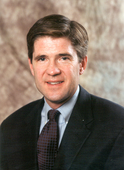
John Austin, vice president of the Michigan State Board of Education
Consider:
• Each year it is over-subscribed. Parents and students enter a 3-to-1-chance-of-winning-the lottery to get in -- this at a time (high school) when many families flee public schools for privates or charters.
• The smaller size, personal attention of faculty, special courses taught by community experts, fantastic college counseling, and proactive encouragement of students to dual-enroll and take courses at the University of Michigan, Eastern Michigan University and Washtenaw Community College -- all make for a dynamic, motivated, and successful student body. Very few kids get “lost,” and no worthwhile learning opportunity is out of reach.
• The ultimate test is in the academic outcomes. No matter what you think of Michigan’s new rigorous high school exit requirements, the bottom line is Community High -- as “alternative” as it may be -- delivers the 2nd highest Michigan Merit Exam test scores in the state. Community’s student body is slightly less diverse racially and socioeconomically; a self-selection bias on the part of applicants Community works to overcome. The answer to Ann Arbor’s stubborn achievement gap, however is to get more students into environments like Community, not fewer.
Pioneer, Huron and (hopefully Skyline as it develops) provide excellences, opportunities, and experiences different than Community. Rich and rigorous math, science, and other advanced courses; state leading arts and music, sports, clubs and extracurriculars galore, along with great traditions, and diverse student body. They work great for a lot of young people.
However, it is still more likely for a student to check-out, to be one of the crowd, to never find their footing, nor be challenged by a caring adult to reach higher, in the larger, more anonymous comprehensive high schools. Counselors are woefully outnumbered. Motivated students backed by organized parents get what they need. Others too often don’t.
This is no one’s fault, it is just a reality of how the high school was organized for industrial-era education -- like our big factories -- when the comprehensive high schools was first conceived 100 years ago. This is why today’s national high school reform movement -- with champions such as Bill Gates and the Gates Foundation and President Obama’s Secretary of Education, Arnie Duncan -- is pushing for restructured high schools that are smaller and more personalized, expect more of every student, and build stronger relationships between and among faculty and students.
Neighbors say “fine: but we can’t afford these smaller schools.” This is a canard. If anything, the cheaper way to organize high school learning would be to have a network of smaller, personal, more-effective, themed schools, (including, like Community High, re-use of existing buildings, not expensive greenfield construction), without all the “bells and whistles,” such as clubs, sports teams, pools and athletic fields, that cost tons of money. This network would be joined to a couple of anchor institutions (like Pioneer and Huron) where all students can go if they want to play football, be part of the Greek or drama club, take AP physics, or sing in the choir. In fact, this is how Ann Arbor schools work now for many kids, to their credit!
If anything Ann Arbor missed a chance, during the “new high school debate” that went on for years, to extend this model further, and take the numbers pressure off Pioneer and Huron by developing more, smaller, better, sought-after schools (like Community has become) but with their own unique “theme” and identity. How about a University of Michigan-linked high school? An arts-media themed school, or a green/sustainability school?
I won’t bemoan the lack of district leadership at the time that led to another expensive comprehensive high school (Skyline) being built instead -- except to note, said leadership rapidly fled the scene. I will however, compliment our current leadership, and encourage our Ann Arbor community to keep advancing new models of powerful and effective learning environments that can also be more cost-effective, versus retreating to the models of the past. And schools like Community High are central to that vision.
John Austin is vice president of the Michigan State Board of Education, a non-resident Senior Fellow with the Brookings Institution, and Visiting Research Scientist at the University of Michigan Institute for Research on Employment, Labor and the Economy. He lives in Ann Arbor.
Comments
PJ
Sun, Mar 21, 2010 : 4:34 a.m.
Half this stuff Im reading is crazy as h_ll and WAY too intellectualized. Bottom line is- you give Michiganders in general and Ann Arborites specifically- something that turns out (remember when Commie High wasn't so popular?) to be so great---that everyone and their mother can't wait to jump on the hater bandwagon. SO ANN ARBOR! SO MICHIGAN! The hatred and spite, the jealousy and anger---seeing the glass as half empty when in fact, it is overflowing! OK Michigan- you've actually got something that is so wildly successful that instead of having to recruit as they once did, they have a lottery- so replicate it! Or don't---and let more and more parents leave the system... By the way- if you want to argue numbers, you really must consider the HUGE resources that go to Special Ed. while other types of students (Commie High kids) are slipping between the cracks as well. I know, I was one. I just completely stopped going to Huron. I was so depressed I didn't go any where for the longest. Only much later in the year when we called from CHS re volleyball (I would like to publicly take credit for being the FIRST to do sports at the traditional HS) did Huron say, "Oh, we wondered what happened to her." As for the stupidly spiteful assumptions that CHS people are racist- it's a LOTTERY people! How much more fair could you make it? As someone previously mentioned-it's cultural more than anything. Commie High is for the freaks basically. If anything, we used to get bullied by various black kids for being freaks. I had to beat one girl in particular- down because our pc faculty was so intent on bending over backward for some loser black bully from a bad home. Guess what--- my home life was not all that lovely itself believe it or not. So please stop the (racist) assumptions so many of you are making. BTW, we were far from wealthy either so bite me! (Just trying to get away from all that high falutin, snoot talk by all y'all!)
Dan Rubenstein
Fri, Feb 26, 2010 : 10:50 p.m.
Regardless of these responses, I will continue to believe reason will prevail, at least for the majority of folks here in A2. BasicBob - You are conflating several issues - pre-selection vs. self-selection, outcomes that correlate with race vs. racism, and whether or not CHS fosters achievement or simply attracts high achievers. I've already addressed all these points (see earlier posts) and agree with you on the latter -- more analysis would be required to know. Regarding costliness, the facts speak for themselves (again, see earlier posts). DagnyJ - Sure, I see the parallel. Again, to solve it, expand programs like CHS, don't attack them. tmo - Misinformation is a factor when you use it to support your arguments. CHS class sizes are not small, as you stated when citing unfairness. We may have philosophical differences, also, but, as has been said in recent politics, you are entitled to your own opinion, you are not entitled to your own facts. Voice of Reason - Yes, that URL is amusing, mostly for its hysteria and one-sidedness, features those who have followed this discussion will immediately recognize for what they are. Bottom line, CHS is not particularly expensive and is not a drain on AAPS finances. (The crack about dining out at boutique shops is also amusing; one would think self-proclaimed cost-cutters would applaud the cost savings associated with foregoing a cafeteria.) I don't mind tough fiscal choices. But, again, arguments should be based on facts and logic, not emotional and divisive red herrings.
A Voice of Reason
Fri, Feb 26, 2010 : 6:10 p.m.
http://aapswastewatcher.blogspot.com/2009/12/golden-ticket-to-country-club-school.html Amusement! It shedds a new light on community high school.
tmo
Fri, Feb 19, 2010 : 12:23 p.m.
@Dan Rubenstein: I do not see the difference in our positions as one that is affected by 'misinformation'. You and I disagree about philosophy. I believe education is as vital a resource for daily living and a productive life as resources such as health care or water. We shouldn't raffle off access to different levels of such things.
DagnyJ
Fri, Feb 19, 2010 : 8:36 a.m.
@Dan, some people are "lucky" to be born rich, born white. I urge our society to make sure that luck isn't the reason that some people succeed and some don't. So, some kids are "lucky" and get drawn into the CHS lottery. See the parallel?
Basic Bob
Fri, Feb 19, 2010 : 6:02 a.m.
@Dan Rubinstein, the contemptible, unfounded accusations of racism are based on observation of real data. The probability that the racial mix at CHS would be different from the district average year after year is zero. As others have said, there is a selection bias BEFORE the lottery is drawn. It is based on non-racial factors, but it still correlates to race and income. The race and income numbers also correlate to standardized test scores and college admissions, weakening the conclusion that CHS provides a better education. The problem that we have now is excess capacity in the schools. Underutilized buildings create inefficiency, and having to shuttle kids between buildings is pure waste.
Dan Rubenstein
Thu, Feb 18, 2010 : 8:58 p.m.
tmo, if I erroneously interpreted your comments to align you with the "racism" crowd, it is because one of your earlier comments made an analogy to separate but equal and justice, you tied this to sapping resources from other students, and because you have been silent in the face of others' contemptible, unfounded accusations of racism. But if that is not your position, I'm glad to hear it. I am not part of a "pro-CHS" crowd; I, like you profess to be, am interested in facts and have only weighed in where I felt facts were being misrepresented or conclusions were being drawn illogically. I am in favor of a diversity of programming to meet different families' wants if it is reasonably affordable. CHS is a good program, so unless there is a compelling reason, jettisoning it would be throwing out the baby with the bathwater. This debate has been about if there is a compelling reason, and I have argued the reasons proffered are absolutely not compelling. Regarding the issue you describe having with CHS, I'm afraid you may not have all the facts and perhaps Mr. Austin's article mislead you. CHS class sizes are not particularly small. If you look at the capacity utilization figures and how they are calculated, it is clear that CHS classes are "full", on average. We shouldn't conflate intimacy and personal-ness, which are school-level characteristics, with class size. So there is no resource allocation issue here. Regarding sports, large performance groups, and AP classes, you are once again ignoring a key point made my Mr. Austin, which is that it's more efficient district-wide to have a few such large-overhead programs and draw kids from other schools to use them. Duplicating them at CHS would be inefficient. Perhaps you reject Mr. Austin's model, but it makes total sense to me. We've already discussed how we lack sufficient data to know who is using more of whose resources and the true per pupil cost at each school. So why do you continue to rail against unproven "unfairness"? I would like to not believe this, but when all logical explanations are exhausted, it is difficult to avoid the conclusion that your opposition is rooted in jealousy and spitefulness. Those CHS kids have it too good. Well, they may have made different choices than you and your kids, and of course they had the luck to win the lottery, but, again, I'd rather expand such programing to meet demand than kill it because it makes some people envious. I just don't see the good sense in that, and it seems rather mean spirited, since, again, it has not at all been shown that CHS consumes a disproportionate share of resources. That said, we know Clemente does, so if fairness in resource allocation is your issue, I don't understand why you continue to attack CHS on minor details that are not likely to alter significantly per pupil cost figures. I wouldn't bother writing anything here if I felt people's minds were already closed. It is not a question of one convincing the other. It is a question of people evaluating facts and arguments and coming to their own conclusions. I would like to hope that reasonable people could eventually agree, that through the debate truth could emerge.
tmo
Thu, Feb 18, 2010 : 7:56 p.m.
@Dan Rubenstein: "It's ironic that some claim CHS is unfair because its families are affluent and then use analogies based on everyone contributing the same amount." I never said anything about being unfair because of the economic class of the students, nor did I mention a single word about racism. In fact I have no information about that and I would go so far as to say that if those were the only problems they would 'fixable' without closing it or changing the model. I wish only to debate CHS's appropriateness based on fairness in terms of resource concentration and allocation. I believe that if it is small classes that CHS students and their parents want to use their allocation for - then yes let them. So I am not even espousing that all schools should look alike. I just don't believe that CHS students are entitled to have it both ways - all the perks of a small private school AND the facilties of a big public school. My family's experience within the large public school allows me to see that those like us don't have access to the former(i.e., private school class size on average) - maybe a class here or there if you work hard enough at figuring out how. Think about it, even if you attend a private high school, you aren't likely to have the opportunity to join a swim team because it probably won't have a pool. CHS is really an end-member on the privilege scale. You have a right to your opinion and I respect that. I don't expect to convince you otherwise. My comments aren't directed to the pro-CHS audience. They are meant to enlighten the rest.
Dan Rubenstein
Thu, Feb 18, 2010 : 7:06 p.m.
Well, tmo, maybe it's just you and me now, so I'll answer you. Conspiracy theories should be a last resort. There's a rather simple explanation, i.e., though the numbers of students going each way may be comparable, it is a higher percentage of the student body at CHS, therefore they've prioritized posting the schedule. If you like, simply mention it to Huron's dean, and I'm guessing they would happily update their website. This is not evidence of the district "promoting" anything. I conclude from your m&m analogy that you oppose any uniqueness in any school unless it is available to everybody. If so, you must be in favor of expanding CHS-type programming threefold, since that's what the lottery indicates is the demand and the cost is negligible. I think that's very progressive of you! It's ironic that some claim CHS is unfair because its families are affluent and then use analogies based on everyone contributing the same amount. I presume they realize that affluent families pay more of the sales and property taxes which make up the school aid fund. If this is where we're going to go with these discussions, we can't avoid the fact that if CHS parents fit the profile attributed to them (which is debatable), they could argue (though I would not) that they are entitled to more if they so choose because they pay more. Surely a kindergardener could see the fairness in that. The mental gymnastics it takes to try to find fault with CHS and "uncover" racism or classism must be exhausting. I know I've had enough.
tmo
Thu, Feb 18, 2010 : 12:43 p.m.
I suggest kindergarteners would be better able to answer the question of fairness in the CHS model. Suppose I were to take equal 25 cent contributions from a kindergarten class of 30 to buy a class snack and came back with 3 big chocolate bars and a bag of pretzels. I then told the class I would put their names in the hat and choose three students who could have the chocolate bars and then distribute the pretzels into 30 handfuls. Yes 30, because the chocolate bar winners would probably still be hungry for something more. I think these kindergarteners could judge the fairness of such a model pretty quickly. A better idea - buy a bag of M&Ms and distribute them equally.
tmo
Thu, Feb 18, 2010 : 6:23 a.m.
Mr Rubenstein, Re: your comment that dual enrollment goes both directions. Have you every looked for instructions on how you would go about taking a class at CHS if you were a student at the Huron or Pioneer? My kids' forms for enrollment mention it not. I looked on the website and find little. It strikes me as illogical that the District would promote this anyway, if the selling point for CHS is that the classes are small. If I go to the CHS website, the home page has links to the shuttle schedule; no such links exist for Pioneer or Huron's homepage. So which direction of shuttle bus use is the District promoting?
Dan Rubenstein
Wed, Feb 17, 2010 : 9:46 p.m.
Rather than insinuate racism, again, the logical conclusion reasonable people would draw is that Clemente is targeted because it is woefully underutilized and double the per pupil cost of the Big 3 and CHS. If seeking to maintain a school of choice dominated by whites even if it is not particularly expensive is racist, by that logic, arguing to maintain Clemente, dominated by minorities, despite its extravagent cost, is more racist. Perhaps we're beginning to get to the real problem some have with CHS. And no one has argued any of the three things DagnyJ asserts. Surprisingly, however, I find myself in agreement with DagnyJ's idea regarding setting aside spots at CHS in proportion to the middle school populations. I think this merits consideration.
DagnyJ
Wed, Feb 17, 2010 : 3:12 p.m.
BTW, there is an fairly easy way to increase the chance to a more diverse student enrollment at CHS. Allocate seats based on the attendance at the middle schools. Clague holds 22% of the district's middle school students. So Clague students should make up 22% of the entering class at CHS. Scarlett has 17% of middle school students, so it should get 17% of CHS seats. Given the segregation by race and social class at the middle schools, this should help diversify CHS. I'd be curious to know what percentage of CHS students come from each middle school.
DagnyJ
Wed, Feb 17, 2010 : 3:05 p.m.
@aataxpayer, I respectfully disagree. I think the 300 kids at CHS would thrive at any HS. A lot of assumptions have been tossed around, mine included, without any real evidence. Let's go through them: Parents would pull their kids of AAPS without Community. There are people who say this is true, but no data. How many parents of freshmen who didn't get into CHS left the public schools? Not just anecdotal evidence from a parents, but data over the last five or ten years. CHS costs less per pupil than HHS, PHS, or Pioneer. There is no way to know this given the way the district allocates costs. Lots of students at PHS, HHS, and Skyline take courses at Community. Again, no data. Here's what we do know: CHS is overwhelmingly white and affluent compared to the other high schools in the district. There is data on this, supplied by AAPS. Ann Arbor needs to cut millions in spending. District officials have suggested closing Clemente, which is mostly minority and disadvantaged. District officials have not suggested closing CHS, which has a different student population. Draw your own conclusions.
Dan Rubenstein
Wed, Feb 17, 2010 : 1:13 p.m.
I regret I am compelled to answer the same few voices again, but A2.com evidently won't, and I would be remiss if readers (if anyone is still reading this) walked away believing them. First, leveling accusations of racism without concrete evidence is irresponsible and condemnable. I challenge anyone on this site to produce direct evidence that parents associated with CHS are racist. The claim that parents want to keep their kids away from minorities is based on what? Those who know CHS know parents and kids desire a smaller, more intimate, personal atmosphere, as well as a more flexible academic program. Moreover, it is weak and unconvincing logic to assert that a cabal of white, affluent parents is influencing the administration and school board (which has long had healthy minority representation) to suppress data about CHS to preserve such separation when the lottery guarantees that no individual can even know if their child will be able to attend. This is an illogical, contrived conspiracy theory, and no basis for serious accusations of racism. It may the case some here weren't around, but bear in mind the current lottery system was implemented precisely to redress real racial and class-based inequalities in the old selection system -- those who could take the most time off work to stand in line, sometimes for days, were admitted. Short of an applications board, a lottery is the fairest way to decide. Finally, to say minorities are underrepresented is not to say there are none. Those who freely choose to attend benefit as much as whites. Second, some people seem to forget that the dual enrollment and shuttle buses run both ways. CHS has programs students at the large schools enjoy, too. I'm sure that in due course more data will come out and truer cost comparisons can be made. Costs should also include foregone revenue when those who don't win the lottery leave the district. For now, evidence suggests CHS is roughly equivalent to the other major schools. And it is not underutilized. That said, we all know Clemente and Stone are significantly more expensive than any of the Big 3 or CHS. There are many ways to "rightsize capacity," as they say, so the question still unanswered is why, for some, it is only CHS that appears to be in their crosshairs? If the answer is that Clemente and Stone serve at risk populations, I agree, and I support preserving them, even if it is redistributive on a much more massive scale than CHS might (might) be. Cost cutting should not be done in a blind or spiteful way, but in a thoughtful manner that preserves what is good about Ann Arbor schools as much as possible. In closing, I hope A2.com will in future censor unsupported accusations of racism, which should trigger its "anti-jerk" policy.
tmo
Wed, Feb 17, 2010 : 6:12 a.m.
DonBee- I'm not holding my breath for a thoughtful full investigation by AnnArbor.com. Their previous articles have been very hurriedly gathered and there seems to be a pro-CHS bent to what is published. BTW, you should add to your list (in the other column) the cost of shuttle bussing students to their classes at Pioneer and Huron. Mr. Jesse did say these were excluded from the per-student allocation.
Basic Bob
Wed, Feb 17, 2010 : 5:57 a.m.
@Dan Rubinstein, "...but it is an option some value and is therefore worth preserving and, given that demand outstrips supply, emulating." Just because people want 6 high schools does not mean that AAPS should provide 6 high schools. We have schools operating below capacity and yet we want to keep additional buildings open for a few hundred privileged white kids. Given the state of the economy and the condition of urban schools statewide, we are not being responsible citizens by continuing to spend money on CHS at the expense of other deserving students. All of the costs are not being properly attributed to CHS because the rich white parents have greater influence over the school board and administration than regular joes. They want to isolate their kids in a special building away from the less motivated (or less affluent, depending on your point of view). If they want to transfer or emulate the educational practices to an existing building, I am in favor of it.
DonBee
Tue, Feb 16, 2010 : 10:30 p.m.
@tmo - Then what do we do about paying for the Virtual High School classes and the proctered exams that Community is responsible for? At roughly $150 a class and roughly 1200 students that are not a Community that are required to take the classes, and 2 proctered exams each semester that tie up 2 staff members at Community most of the time - those are costs that community has in its budget. Again - there is not enough information available to break out the real numbers for any student in any building. The cost per student is the best available number - David Jessie did a Freedom of Information request (or so I have been told) on additional numbers. I have not seen any of those numbers posted.
tmo
Tue, Feb 16, 2010 : 6:56 p.m.
Dan, where is the evidence that it is not more expensive? Are you once again focused (like the others supporters seem to be) only at the per-student allocation? If the CHS supporters want to stick to this argument, then I say give them only what that allocation buys and end the dual enrollment option. Would CHS supporters settle for that?
Dan Rubenstein
Tue, Feb 16, 2010 : 3:13 p.m.
Actually, it doesn't take a survey, however useful it would be, to know something about who applies to CHS. Asians, who perform above average, are also under-represented. Certain attitudes towards structure, discipline, AP classes, and the image an "alternative" school presents on college applications and resumes tend to break down along ethnic lines. Those in the trenches know this. I can support further research and outreach efforts to encourage more minorities, African American and Asian, to apply, but that they don't today does not make the lottery "unfair," a "cover," or "racist." The default racial make-up of CHS might be a distributive issue if CHS were in fact more expensive. It is not, but it is an option some value and is therefore worth preserving and, given that demand outstrips supply, emulating. Certain posters here evidently cannot be convinced by facts or reason or simply distrust AAPS's numbers. It is worth noting that no two schools have identical per pupil costs. The differences we are talking about are minor anyway. The poster who says some just hate CHS seem to have it right. Some just do. The real reason isn't clear as the stated reasons aren't grounded in reality. We can only guess.
Andrew Thomas
Tue, Feb 16, 2010 : 12:46 p.m.
A lot more heat than light in many of these comments... Here's the issue: Nobody REALLY knows why minority students are less likely to complete the application process and enter the lottery (I am making the assumption that, once a student is entered in the lottery, everyone has an equal chance of being accepted, regardless of race or ethnicity). Some people THINK they know the reason, but they are only speculating (and perhaps expressing their own political biases). I would suggest the district conduct a focus group of minority eighth graders (and their parents) to determine the answers to the following questions: 1. Are you aware of Community High and its programs? 2. Would you consider applying to Community High? Why or why not? 3. (For those who would consider applying:) Are you aware of the admissions process? Do you need any assistance in completing the application? 4. (Follow-up question for later:) Did you complete your application? If not, why not? I'm sure someone who is more skilled and experienced with focus group design than I am could refine these questions. Until we get answers, all this hand-wringing about the racial imbalance of Community High is just a waste of time.
DagnyJ
Tue, Feb 16, 2010 : 11:10 a.m.
I hate that CHS caters to affluent white parents who want their children to have a specialized setting regardless of the cost, that lottery is biased against disadvantaged kids, and there is a lack of evidence that kids at CHS really need this setting and would not thrive elsewhere. People hide behind the lottery as "fair" and pretend that the school's piggybacking on programs elsewhere in the district doesn't cost anything. I find the hypocrisy in this to be quite depressing, and also think that the progressive attitude here doesn't hold up when I see the demographic statistics. CHS is a small school full of rich,white kids. That's the deal. The test scores reflect the population, not some fabulous instruction going on at the school.
DagnyJ
Tue, Feb 16, 2010 : 9:23 a.m.
@zulu, parents with resources can be involved. Thus affluent families are motivated to learn about and enter lottery. The lottery discriminates against disadvantaged students, and results in self-selection into CHS. Make CHS a standalone HS and see what happens.
KeepingItReal
Tue, Feb 16, 2010 : 7:56 a.m.
@Rha: The key is not so much that CHS need to amend its lottery process so that students other than white students can be admitted to CHS. I will re-direct you to a comment made by Mr. Austin..."motivated students backed by organized parents get what they need. Others too often don't."
DagnyJ
Tue, Feb 16, 2010 : 7:27 a.m.
@tmo: exactly right. If supporters of CHS want to demonstrate the value of this school, then how about we eliminate the dual enrollment option and see what happens to the oversubscribed problem. Cut the busing between high schools and the accommodation that allows CHS students to play sports at other schools. If a student attends Skyline as a choice, that student does all activities, etc. at Skyline. They don't go back to the other HS for sports. The same should be true for CHS.
tmo
Tue, Feb 16, 2010 : 6:51 a.m.
As a Pioneer parent, I know several CHS students who have participated in its sports teams, its music program, and AP classes alongside my kids,and I know of others in other types of classes. Are these unusual cases and my experience is just warped, Alan? Maybe a good test would be to turn these opportunities off and see how oversubscribed the CHS option becomes.
DonBee
Tue, Feb 16, 2010 : 6:46 a.m.
Alan - If it bothers you, don't read it. If the school district published the level of detail others do, I would not bother to dig, because it would all be in plain view. @tmo - As to extra's nor is the cost of running the Michigan Virtual High School (on-line classes) excluded from Community's budget. There are programs embedded in many of the buildings that are not accounted for separately. AAPS has seen fit to not provide the level of detail needed to have an apples to apples discussion. The tuition for Virtual High School program is somewhere - but where in the numbers i do not know. I do know there are 2 full time staff members at Community that run the program and now that graduation requires an on-line class, all students will have to use the program. It was at Community originally to provide some of the AP and other supplemental classes that were not offered there. The original intent (as explained at a board meeting) was to allow Community students to reduce their need to leave campus to take classes, obviously with the change to state law, the program has changed.
Alan Benard
Mon, Feb 15, 2010 : 11:42 p.m.
@tmo: You wrote: CHS can use its allocation to focus on small academic classes, and meanwhile CHS students can then go take band, art, AP classes at Pioneer or Huron. This is a fine assertion as far as it goes, but again is devoid of evidence. CHS students may take AP classes at Pioneer, but do they displace Pioneer students? Similar amounts of money appear to be spent per pupil in either program, but the money is spent differently. CHS families don't mind the lack of team sports and prefer to put the money toward smaller student-teacher ratios. Is art not taught at CHS? Is band? The latter is in fact a canard -- I have attended instrumental music classes at CHS. Once again, we see the power of annarbor.com to empower a small minority of loud people with sketchy statements to provide paragraph after paragraph of unchecked factoids, uninformed arguments and -- in the case of some of our amateur forensic pathologists -- junk accounting. These comment sections are a waste of your time.
Alan Benard
Mon, Feb 15, 2010 : 11:32 p.m.
tmo opined: Even if CHS works for some small group, it saps resources from the rest and that isn't just. Where is the evidence to support this statement?
Rha
Mon, Feb 15, 2010 : 10:45 p.m.
CHS needs to amend their lottery program to assure that the ethnic mix at CHS at least matches the ethnic mix in the district overall. Otherwise, it simply appears that CHS has become a taxpayer supported private school for white students whose parents are engaged enough in the process to assure them a lottery opportunity. Are we serious about closing the achievement gap? How about providing more CHS spots for students who would really benefit from this excellant school model.
tmo
Mon, Feb 15, 2010 : 10:33 p.m.
@DonBee: The $/student figures do not describe the extra resources allocated to CHS students. The $8800 per-pupil allocation to CHS does not have to be used to support band, athletics, AP classes, etc, while the $8200 per student allocation to Pioneer does. CHS can use its allocation to focus on small academic classes, and meanwhile CHS students can then go take band, art, AP classes at Pioneer or Huron.
DonBee
Mon, Feb 15, 2010 : 9:43 p.m.
I have no way of getting to the real numbers (AAPS does not publish them) so I did a little work to come up with surrogate scores by high school based on Ethnic Percentages. As some have posted, Community has an advantage. Maybe someone has better access to data and can dispute these numbers - or someone has a better method and can create a better set of statistics. What I did was take the ACT scores from the Ann Arbor Website, which listed scores for Caucasians, African American and Other. I applied Other to all ethnic groups listed other than Caucasians and African Americans. I did a student body vs ACT by Ethnic group (e.g. total number of Native American Students at Pioneer times the "Other" score). Then I divided by the total student body. The scores this suggests are as follows: Clemente - 17.3 Community - 23.2 Huron - 21.8 Pioneer - 22.5 Skyline - 22.1 Stone - 19.1 Average for all schools 22.1 WIthout better data I can not come up with better numbers, but purely on Ethnic mix, Community does better than any other school. As to costs ($/student): Community.....8,853 Huron.............9,026 Pioneer...........8,247 Clemente......23,228 Skyline...........8,774 Stone...........16,586 Students per teacher: As to costs ($/student): Community......24.9 Huron..............23.63 Pioneer............24.16 Clemente...........7.34 Skyline.............17.67 Stone...............13.57 Community is neither the most expensive nor does it have the highest student/teacher ratio - even of the big three high schools. Students at Community do have the advantage of an ethnic mix that has a higher achievement than any other high school (again based on the limits of the information posted by AAPS). The more interesting question is what would Community do if its ethnic mix matched the rest of the district. But even that would be supposition since there is nothing available to give a clearer picture of achievement by building. Who knows, Community may not even be the highest achieving school on the ACT or the SAT, nothing is posted that offers a clear picture of which school does the best. Again AAPS does not provide the same level of information to the public that surrounding schools do. I hope this information helps inform the discussion.
tmo
Mon, Feb 15, 2010 : 4:24 p.m.
There is a recurring idea in Mr. Austin's commentary and many of the supportive comments that have since been written, namely 'CHS is a model that works'. Well this is really saying the end justifies the means. The same could be said many years ago in regard to racially segregated education from the white perspective. Injustice should be where we draw the line. Even if CHS works for some small group, it saps resources from the rest and that isn't just. The injustice is going to be magnified when the budget scapel is deployed if CHS is off-limits. Between the lines, I'm sensing that even Mr Austin might recognize this problem. He suggests that rather than disrupt the status quo at CHS, the answer is to find more money to apply this model everywhere. Well we know what the voters said to that. It is time to make the difficult, but just, choices.
limmy
Mon, Feb 15, 2010 : 4 p.m.
My sense of all this is that it is not that CHS is so good, it is that there are so many parents that do not want their kids to go to schools like Pioneer. There is a lot that can be done to address the problems with alienation at Pioneer. It just takes that desire to do it.
DagnyJ
Mon, Feb 15, 2010 : 3:16 p.m.
@Zulu: My question is: why are there few African-American students at CHS? Dan, I apologize for violating your rules about the number of times I can post.
KeepingItReal
Mon, Feb 15, 2010 : 2:42 p.m.
I've read and re-read Mr. Austin's Op post because I wanted to evaluate this article each time I read it to make sure I understood Mr. Austin's argument for Community High. For the most part, I think he makes an excellent argument not only for maintaining Community as a viable option for students, I think he also has made an excellent argument for the need for the State of Michigan Department to raise the cap on the number of Charter Schools in the state. As I read the article several times, this statement made by Mr. Austin consistently caught my attention..."motivated students backed by organized parents get what they need. Others too often don't.", I would love to see a local black leader or educator put forth a similar cogent argument as to why Clemente is needed. Community's student population is overwhemingly white and Clemente's student population is overwhemingly black. Where's the argument and organization from the black community for keeping Clemente open?
tmo
Mon, Feb 15, 2010 : 12:15 p.m.
@rak I agree with your goal, just not the justice of the approach. I say let's maximize our investment in ALL students (create smaller cohorts at the comprehensive high schools, etc.) by taking the $ it costs to run CHS and spreading it around for all. I'm all for compromise and smaller classes. When I sent my kids to a private school, I gladly realized my obligation to support public schools with my taxes. While I send them to public schools, I don't expect to subsidize private school-like education for the lucky lottery winners.
rak
Mon, Feb 15, 2010 : 11:12 a.m.
The point is, we have a model that works. Shouldn't we try to find a way to provide that opportunity to more students? There are even ways to implement some of the smaller learning community aspects in large high schools (see the links provided previously from ed.gov). The research points to improvements for ALL students. Let's figure out a way to implement them in the most cost efficient way. Yes, there are other factors that play a role in student achievement (parental involvement, economic background, etc) but that doesn't mean we shouldn't try to help in ways that we can control (ie smaller learning communities). We can't control everything but we can do something about that.
krc
Mon, Feb 15, 2010 : 11:12 a.m.
My daughter did really poorly at CHS. But then, she was doing poorly at Clague too. Her counselors there recommended CHS in the hope that she'd be able to bring her grades up. Didn't happen. But later she went on to graduate summa cum laude from Arizona State, and has enormous talent as a photographer, one of the classes she took and did do well in at CHS. Just wanted to put her experience out there.
Dan Rubenstein
Mon, Feb 15, 2010 : 11:04 a.m.
DagnyJ - Here's where I stand. CHS is fostering achievement based on the fact its kids achieve. Yes, it would be useful to see how lottery rejects perform in comparison. If minorities choose not to attend, that doesn't make it a school for "privileged white kids" (and we shouldn't assume those kicked out are minorities). And there is not a redistributive or equity issue because in fact CHS is not pricier. Now, if you want to continue our dialogue, which I am happy to do, please post your email address and I will write to you privately. I will not reply again here as I do not feel any one or two voices should try to dominate a public forum like this. You've had you say, as have I.
DagnyJ
Mon, Feb 15, 2010 : 10:56 a.m.
@Dan, it is amazing that so many people are trying not to see that CHS is a school for advantaged, white kids, and the lottery is just a cover for these kids to be self-selected into a school that EVERYONE seems to think is fostering amazing student achievement. But what I see is a school that might benefit struggling students, and these students are NOT the ones in the school. Look at the white kids at CHS compared to the minority kids at other schools. Now tell me again about how "fair" the lottery is.
Dan Rubenstein
Mon, Feb 15, 2010 : 10:47 a.m.
I understand the desire to let ideas flow freely, but how many shots at the apple does DagnyJ get when he/she repeatedly misstates and ignores facts this publication knows. CHS is NOT the most expensive HS in AA, period. Look at the AAPS website and budget. As for concerns about minority enrollment, bear in mind the lottery is open to all. There is a self-selection bias, as AAPS administrators can undoubtedly explain. So the real question is, why attack a program open to all that is cheaper than some other mainstream schools just because supply is limited? And doesn't the fact demand outstrips supply weigh in on the side of replicating the model? For goodness sake.
DagnyJ
Mon, Feb 15, 2010 : 10:27 a.m.
@rak: But, the majority of the studies you cited say that small schools are MORE important for disadvantaged students, right? And there is also research that shows that advantaged kids will achieve in a variety of settings, while disadvantaged students may not. So I ask, why should Mr. Austin's kids get a small school by sheer luck, while needy kids do not? And why should we potentially pay more for Mr. Austin's advantaged children to get such a school setting?
rak
Mon, Feb 15, 2010 : 10:17 a.m.
@DagnyJ: That is simply not true. "Every single study" in those links do not just relate to disadvantaged youths. Here are a couple of the titles: "College readiness for all toolbox" - (note the readiness for ALL) "The power to change: High schools that help all students achieve" So your comment is completely false. Some of the studies, as I mentioned above, are specifically about interventions for students in trouble (failing math or english). But others are more general. Here's another study that tries to factor out the socio-economic variables in looking at school size and graduation rates: http://digitalcommons.wayne.edu/dissertations/AAI3244611/ Not definitive but there are a lot more out there. I think it's safe to say that most educators would agree that smaller learning communitites improve student achievement. That's not exactly a big point of controversy.
Dan Rubenstein
Mon, Feb 15, 2010 : 10:13 a.m.
Grinch - True to your pseudonym, you seem not to be listening. I said research shows smaller schools do a better job of catching at risk youth (with statistics), not that it's been proven CHS in particular does (as my first sentence admitted). Also, it appears you have not followed other recent articles in which it has been established that CHS is not the most expensive school in AAPS. Mr. Austin actually raises a nice and often overlooked ancillary point where he references cost savings associated with avoiding duplicating expensive programs like sports, large musical groups, AP classes, etc.
DagnyJ
Mon, Feb 15, 2010 : 10:02 a.m.
@rak: Every single study in the set you posted indicates that small schools and intensive reading/math interventions are important for disadvantaged, struggling students. These studies also indicate that small schools are not important for affluent, white kids--which characterizes the students who go to CHS. Think about Mr. Austin's kids. Are they disadvantaged? Do they need a small school? Why should they get it through the luck of the lottery, while others who need it more are shut out? Why should I potentially pay more for Mr. Austin's children to go to school?
DagnyJ
Mon, Feb 15, 2010 : 9:53 a.m.
@rak, I would name the kid and the circumstances, but don't think that's really appropriate. David Jesse: How many kids are asked to leave CHS each year?
rak
Mon, Feb 15, 2010 : 9:50 a.m.
Here are a couple of interesting sites with links to studies and articles on smaller learning communities. This first link is primarily on the topic of "intervention" and the other is more general. This is from ed.gov, the US Dept of Education. http://slcp.ed.gov/bib/priority1.html http://slcp.ed.gov/bib/index.html
shortie
Mon, Feb 15, 2010 : 9:42 a.m.
@ Craig Lounsbury: where are you getting this information about the recruitment process? why in the world would Community's administration tell prospective students that they can "come and go as you please"? prospective students are told about the alternative high school experience at Community High, where they will be nurtured as students and develop personal relationships with their teachers - calling them by their first name is only one aspect of that, and not the only thing these students are told. lunch off of campus is only a perk, and not one of the first things students are told about - they are told, however, that they will be trusted, and given the independence to shape their own schedules, and be able to take control of their education, and by the way we have an open campus. I would love to hear where these facts about recruitment are from.
rak
Mon, Feb 15, 2010 : 9:41 a.m.
@DagnyJ: I see if I can dig up some studies. I had a list a few years ago. Also, funny how you complain about people's anecdotal stories and "I heard that.." and then go on to describe a story about a kid getting kicked out of Community. Then, go on to imply that this means Community gets to "pick and choose and dump problem kids". Can't have it both ways.
DagnyJ
Mon, Feb 15, 2010 : 9:36 a.m.
@rak: WHAT studies? I don't believe you. And not news articles, but real studies that say what exactly is a small school, and how is it cost effective to educate about 7,000 HS students in small schools?
rak
Mon, Feb 15, 2010 : 9:33 a.m.
Thank you for your article Mr. Austin. Those of you arguing about the cost per pupil is exactly the "economies of scale" argument that caused the huge impersonal mega high schools that we have now. While Skyline is still too big, at least they are attempting to create smaller cohorts. There are plenty of studies out there that show that smaller learning communities improve scores and reduce drop out rates. How much $$ would we bring in if we cut our drop out rate by 50%? I'm obviously not guarenteeing that big a reduction but my point is that we have a model that works. We should be celebrating it, trying to duplicate it, instead of trying to knock it down. I have one child who lost the lottery and chooses to split enroll between Pioneer and Community and another who won the lottery. The one who lost the lottery will graduate this year and split enrolled every semester because he wanted to be there so bad. The other is doing wonderfully at Community, would probably be doing fine at Pioneer too but CH is a much better "fit" for her. Again, more anecdotal but let's not confuse anecdotal for meaningless. We need to provide more opportunities for students to find their place, instead of the one-size-fits-all solution. We know that doesn't work. It might be cheaper financially now, but costs more in the long run.
DagnyJ
Mon, Feb 15, 2010 : 9:31 a.m.
I would like to see the small school research, and I'd like to see some citations, etc. Also, HS class size research. And not just the "I heard that..." or "My kid loves small schools." I mean real research. Who did it, where was it published. And what exactly is a "small HS." How many kids? otherwise, this is just talk. I agree with MyOpinion. How about the district studies the kids at CHS with kids who didn't get selected? Also, how come CHS routinely kicks out kids who they don't want educate? Like the kid who just got sent to a big HS because someone complained about his behavior? Why does CHS get to pick and choose, and dump the problem students elsewhere?
MyOpinion
Mon, Feb 15, 2010 : 9:05 a.m.
The school district could examine the selectivity of CHS. They have the names of the students who enrolled in the lottery to get into CHS. They can follow the students who were not selected to see how well they do at the comprehensive schools. In other words, are students who apply to CHS going to do well no matter where they matriculate. They could also see if these CHS lottery failures are more likely to dual enroll at CHS than the rest of the student body and whether they are more likely to leave the Ann Arbor schools if not selected. However, I do not think the AA public schools has much in the way of analytic rigor in its administrative staff. Nor, do they avail themselves of the resources at UM. This would be an easy analysis and interesting study for a doctoral student at UM or Eastern.
limmy
Mon, Feb 15, 2010 : 8:48 a.m.
Just because Pioneer was organized in an industrial way many years ago doesn't mean it needs to be organized that way today. Many other districts have divided their large high schools into academies or some other type of smaller groups so kids can have a less factory like experience. Pioneer has ignored the research and trends because this has been the direction of education for quite a while now. The sports, music, and art programs are just a way to pretend that everyone at the school is excelling, which couldn't be further from the truth.
Ruth
Mon, Feb 15, 2010 : 8:40 a.m.
I am not opposed to smaller schools just schools that cost more per pupil and then allow those very students to transfer to the more cost efficient schools for athletics, performance arts, and AP classes. If the costs can come into line by a combination of lower costs andparticipants paying more than the concept could continue
josber
Mon, Feb 15, 2010 : 7:35 a.m.
The point is a smaller school begets more attention and kids thrive. The district needs to take this to heart, because of the problems with elementaries and middleschools in particular is the cattle call atmosphere.
tmo
Mon, Feb 15, 2010 : 6:58 a.m.
@Bridget "CHS kids may get more resources, but so do athletes and AP scholars and band members -- that is not a reason or removing any of those programs." Well now that balancing the budget means cutting some of the very resources you were talking about (e.g., pay-to-play athletics), everything should be on the table, including CHS. Furthermore, CHS students also take advantage of these same resources (band, athletics, AP classes) at the comprehensive high schools and they don't contribute part of their per-pupil allocation to support them. So truly CHS students are at the top of resource food chain.
Bridget Bly
Mon, Feb 15, 2010 : 3:38 a.m.
I think Basic Bob has a great idea: compare the performance (test scores, AP grades, whatever) of the kids who were accepted and went to CHS to the kids who applied but did not go. That takes care of the application self-selection bias (although I suppose not all the kids who were accepted ended up going -- so that is a (smaller) source of bias). That calculation would add something to this discussion in the form of relevant facts. Even if CHS kids did no better at the end of their schooling than their colleagues, however, I don't believe it in any way invalidates the worth of having a school like CHS. CHS kids may get more resources, but so do athletes and AP scholars and band members -- that is not a reason or removing any of those programs. AAPS is a better system for having an alternative like CHS (as it is for having Clemente or Stone). It keeps kids in the system who want a smaller environment and as everyone has an equal shot at getting in, it's a resource available to all -- unlike HS athletics and AP classes, BTW, which are out of reach for many students. Let's not let the angry, strident voices keep us from remembering that all these kids are the kids of our community -- our kids.
treetownie
Sun, Feb 14, 2010 : 9:06 p.m.
Dagny J, I'm not sure why you think that Mr. Austin wouldn't support Clemente; Clemente is, like Community, exactly the kind of more personalized program that he seems to be advocating. To insinuate that he is some kind of racist who's only in education to protect his own is not only without support, it's disingenuous. As a graduate and employee of the Ann Arbor Public Schools I can say that I benefited a great deal from the opportunities at both Huron and Community High Schools. Each offered (and continues to offer) different academic, extra curricular and social experiences, and all are valuable. I was challenged by rigorous classes at both schools, but was nurtured and felt safe and as if I belonged at Community, a feeling that I wish more of my students could have as teenagers now. As a member of the LGBTQ community I was often scared by the rampant homophobia at Huron which, despite the attempts of faculty and committed students, was difficult to address in such a large population. Despite the fact that students of color are underrepresented in CHS' student body, my sentiments have been echoed by classmates and more recent students, saying that it is a place where racism and classism are less prevalent simply because it is small enough for the students and staff to get to know and have to be accountable to one another. It is also worth mentioning that the argument that Community is so much more expensive is misleading because it does not take into account the number of dual-enrolled students who are able to take classes at CHS without being counted in its official student population. Thank you to Mr. Austin for this thoughtful article; yours is a voice of reason in the recent cacophony of arguments for standardized, test-driven education.
braggslaw
Sun, Feb 14, 2010 : 8:44 p.m.
The guy who wins the lottery pontificates about being rich. What a bunch of hooey.
tmo
Sun, Feb 14, 2010 : 7:53 p.m.
Mr Austin's three so-called reasons to keep CHS are circular. 1) Over subscription. If you set up system that bestows more resources per student on a lucky few, then of course it will be be oversubscribed. 2)Smaller classes, yes we would all like them and if the resources spent on CHS were spread equally around the other high schools, the class sizes might be smaller on average for all, 3)higher academic performance, given CHS has smaller classes I would hope this would be the case, but it also comes at a price for the rest of us that is hard to quantify but real. The philosophical question you don't answer Mr. Austin is why is this fair - asking the majority to subsidize the few on the basis of a lottery? We wouldn't put up with this in other areas - health care, water quality, etc. I believe the AA school district uses CHS test scores to prop up its reputation. Now that the bottom is falling out of the coffers, however, it needs to take a serious look at what the policy of keeping CHS running is going to cost the rest of the district.
Basic Bob
Sun, Feb 14, 2010 : 2:43 p.m.
Someone is mixing up their fables. The Golden Goose was a Brothers Grimm tale of greedy people who were tempted to pull feathers off of the goose and became stuck together. Well, maybe this is the right fairy tale after all. CHS supporters are willing to tell any fable, with no evidence or facts to support their claims. Lets see an analysis of CHS lottery losers (since there are so many) vs. winners and compare the results using real facts and figures. I would guess that that horrible big-box multi-ethnic Huron High School outperforms CHS every day of the week.
a2roots
Sun, Feb 14, 2010 : 2:19 p.m.
a2j...come on, you really do not believe that. CH students are no better prepared than those at the other schools and short of any precise data my guess is no smarter. The lack of rules and structure by many is not thought to be helpful in the real world.
a2j
Sun, Feb 14, 2010 : 2:10 p.m.
But it is just those things; a chance to learn how to manage an hour down town by yourself, first name basis with instructors, and an "open" campus that makes CHS unique and prepares the students for College and the real world.
Craig Lounsbury
Sun, Feb 14, 2010 : 2:02 p.m.
To summarize your real agenda, in your own words... "I believe Community High is a thriving example of the future of education for Michigan and the nation....Community High... without all the bells and whistles, such as clubs, sports teams, pools and athletic fields, that cost tons of money."
Craig Lounsbury
Sun, Feb 14, 2010 : 1:50 p.m.
" Each year it is over-subscribed. Parents and students enter a 3-to-1-chance-of-winning-the lottery to get in -- this at a time (high school) when many families flee public schools for privates or charters." stop the annual ritual of recruiting 8th graders with the "promise" of lunch down town, first name relationships with teachers and an "open" come and go as you please campus and the artificial demand will go away.
a2roots
Sun, Feb 14, 2010 : 1:11 p.m.
Community works for some but not all. It bothers me that the cost to run it is much greater than the others. If it is so great then let the parents foot the bill that exceeds the cost of the other schools. Better yet, close it, get over it and move on.
The Grinch
Sun, Feb 14, 2010 : 12:19 p.m.
Dan: Sorry, but it is not "indisputable" lacking a regression analysis that holds constant socio-economic factors at the different Ann Arbor high schools. Anectdotal evidence is not the same as analytical rigor. And, again, my point is not to attack CHS. Far from it. It is to suggest the (expensive) idea that Ann Arbor needs to craft similar programs that meets the needs of all of its students rather than the one-size fits all approach currently at hand.
Dan Rubenstein
Sun, Feb 14, 2010 : 11:59 a.m.
Thank you, Mr. Austin. Excellent article. I agree with every word you wrote. I'm so glad somebody finally weighed in with this sound, informed perspective. As for the Grinch, if his/her point is that CHS's ability to close the achievement gap is unproven, I suppose they're right. But what Mr. Austin argues, and what recent research shows, is that smaller, more intimate schools generally do a better job "catching" at risk students. That's all, and it's fairly indisputable.
DagnyJ
Sun, Feb 14, 2010 : 11:37 a.m.
BTW, Mr. Austin, what's your take on Clemente? Or are you ready to throw the disadvantaged minority students in this district under the bus so you can hang on to Community that serves rich, white kids?
DagnyJ
Sun, Feb 14, 2010 : 11:35 a.m.
Whoops. I meant to say I concur with the first two commenters who were critical of this.
Alan Benard
Sun, Feb 14, 2010 : 11:32 a.m.
Mr. Austin, thank you so much for this excellent argument for maintaining and expanding our educational alternatives. You are correct, the critical thinking skills taught in schools like Community produce the adaptable achievers Michigan needs. Smaller programs -- focused on collaboration and project-based learning -- prepare young people for the world of work which will exist in the future, rather than in 1960.Hearing this support for Community from a member of the state's education establishment gives me hope for our future.
DagnyJ
Sun, Feb 14, 2010 : 11:29 a.m.
I concur. As the parent of two children who were "winners" in the lottery, you are totally biased in your view. It's rather disingenuous of you to be writing a column using your "official" capacity, when in fact you're just fighting to keep your own children's goodies. I also had a child at Community, and I know first hand that the school sucks resources at other schools, while wasting those in house. Mr. Austin, would your children have gone to CHS if they were limited only to the offerings at Community? Or is part of the draw the offerings at the other high schools, like science, sports, higher level languages? Don't you think the true cost of operating CHS should include the prorated expenses of these expenses incurred by CHS students?
belboz
Sun, Feb 14, 2010 : 10:32 a.m.
I have to dissagree with Community being a benchmark... Staffing: Pioneer has a staffing level that is about 35% more efficient than Community - (Pionner: 22.4 Students per Inst, 41.0 Students per Support FTE, Community: 16.9 Students per Inst, 29.8 Students per Support FTE). Do the students at Community score 35% better on college prep tests? Are they 35% more ready for the real world? How would results at Pionner improve with a 35% increase in staffing? Financials: Community is more expensive to run. Staffing levels are excessive. With the excess capacity at Huron, Skyline, and Pionner - is the space at community even needed? What income could it generate as an appartment rental complex - in the hear of Ann Arbor? Real World Preperation: For many kids and adults, discipline has been learned and reinforced through athletics. To casually discount it is very dissapointing from someone who holds a position in Michigan's Board of Education. Athletics help create for many a personally identify with a school. Sure, for many it isn't important - or they are not successful in their attempts to "make" a team. So, they dismiss it. Their parents dismiss it as not important, and a group of them work to create a school where athletics are not important. Community is not a model - it is a result of trying to make everyone feel they fit in. A nice concept, and perhaps one that communities like Ann Arbor can afford. But, it is a luxury. Right now, Michigan cannot afford luxuries when so many basic needs are being unmet. Coddling kids I read from the article that an implication is being made that Skyline is the complete opposite of the model. I'd put more credence to your opinion if it had been shared prior to Skyline being built - an article trying to change the direction of what has turned out to be a very wasteful and unnecessary building.
The Grinch
Sun, Feb 14, 2010 : 9:42 a.m.
Math mistake in my previous: the size of the incoming freshman class at the other AA public high schools is roughly 1200-1300 combined, which means that if 400 apply for Community, 800-900 do not even bother.
The Grinch
Sun, Feb 14, 2010 : 9:33 a.m.
Sorry, but your essay admits to the major flaw in its argument: That is, as with charter schools, there is a self-selection bias in Community's student body. Until someone can present data that shows Community's students do better than a similar population in Ann Arbor's other public high schools when contolling for socio-economic status, the "success" of Community will not be proven despite all of the wonderful anecdotal and testimonial evidence that exists to support such a conclusion. That only 1/3 of applicants get in is too bad, but that means that only 300 to 400 students apply out of an annual freshman class in Ann Arbor's high schools of over 2,000. So what is it that the other 1,600 (+) want and need? Just because they do not apply for Community does mean that they desire to go to PHS or HHS or, more importantly, that the programs at those schools match their needs. This is not to denigrate Community--far from it. It is to say that the author assumes that the 3900 or so students in Ann Arbor's other public high schools who do not get in to Community want to go there or will benefit from its programs. That is a highly doubtful asssertion. In that regard Community is, indeed, a model for the future of education in our state. It is time to ditch our one-size-fits-all approach to education and to realize that different students have different abilities, different agendas, and come from different backgrounds, and they therefore need different programs and different educational approaches. The one-size-fits-all approach has been around for more than a century now. Community's success with its students suggests that it is time to ditch that philosophy.