

End-of-life planning eases difficult transition for patients and families
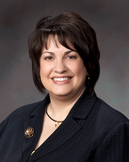
Gloria Danna Brooks
They will be providing information about the most difficult transition a patient and family will ever make: options available at the end-of-life, determining when it is time to stop fighting and live each day to the fullest, no matter how many days are left; deciding how to determine when the treatment is futile. Yes, this means that there may be cost savings; but regardless if there are savings - the patient will receive better care.
Recent studies have shown that when patients forego futile treatments they actually live longer and that these final days in a hospice setting are much more rewarding for the patient and their families than the typical final days spent in an ICU. Patients will live better in those final months because they had this difficult conversation with their physician well in advance of having to make crisis decisions and have had a chance to voice how they would like to live the final months of their lives. Patients and families are waiting for physicians to bring up this topic. When they don’t, families often assume that the patient will recover from their terminal illness. Nothing could be further from the truth. Instead, patients die and their families are shattered, wondering “Why didn’t we know about hospice earlier?” which is the No. 1 comment we receive from families in our surveys following the death of a loved one. The simple fact is that all of us need to discuss our end-of-life options NOW - not when it’s a crisis. Not when a car accident has occurred and family members are left to wonder what their loved one’s final wishes would have been. Not when a spouse has days to live after being diagnosed with cancer months ago and no discussion about how and where they want to die has occurred.
Statistics reveal that most people would like to die at home, pain-free and with loved ones, but nearly 60 percent of us do not have this experience. Wouldn’t it be wonderful, if through these conversations more people were empowered to obtain their wish? The notion of “death panels” is fear evoking, and is incredibly insensitive to anyone who has ever had to experience a loved one’s death. No one is interested in determining who is fit to live and who is not.
The constant questioning of “Did I do everything I could?” rings in the minds of any family member caring for a loved one during this difficult time. However, continuing treatment because no one will acknowledge the facts that the treatment is causing more harm to the patient than good and destroying their quality of life in the process, is not progress.
Having the conversation about the inevitable does not “devalue human life.”
Overtreatment can mean no time for families to say goodbye, no time for grandchildren to learn from the greatest generation, no time for reconciliation of estranged relationships. On the contrary, determining your end-of-life care wishes is the best gift you can give your family and should certainly be discussed with your physician. I hope this issue doesn’t continue to be politicized. All of us - Republicans, Democrats and independents - will find ourselves facing the end-of-life journey someday, and we will need all of the help we can get to make the right decision for ourselves and our loved ones. Now that this regulation has been repealed, we ourselves will need to initiate these conversations with our physicians. There are many tools available to help families have the end-of-life discussion. The one we use at Arbor Hospice is Five Wishes and can be obtained on-line at www.agingwithdignity.org/five-wishes.php.
At end of life, hospice care is the choice of an increasing number of people because of its focus on comfort care and living life to the fullest. In 2009, more than 41 percent of all deaths were served by hospice, and that percentage has increased every year since 2005.
I urge the public to call Arbor Hospice at 800-997-9266 or www.arborhospice.org if you need any assistance in preparing for a loved one’s end of life journey, and if you want to learn how to have the conversation about end of life care options with your family.
Gloria Danna Brooks is president and CEO of Ann Arbor-based Arbor Hospice, which provides hospice care and home care to seriously ill patients and their families in southeastern Michigan.
Comments
CareyJernigan
Mon, Jan 17, 2011 : 1:34 p.m.
Ms. Brooks, thank you for this well written piece. People need to understand their end of life options and make their personal wishes known. Medicare "government" should fund this needed medical expense so that those less fortunate can have the same choices as others with medical coverage. If I need help I will contact Arbor Hospice.
dotdash
Mon, Jan 17, 2011 : 11:14 a.m.
David Briegel: great comment. How can the government, which is beholden to us, be worse than insurance companies, who are beholden to stockholders?
Olan Owen Barnes
Mon, Jan 17, 2011 : 9:47 a.m.
We are the governed by the people and a majority of the people do not want many aspects of this health plan. At least with an insurance company we can change our insurance - it is much harder to change our government but surely the majority of the people will. You can not govern against the will of the people for very long as was seen in 2010 and will see again 2012 - the beauty of a democratic republic.
David Briegel
Mon, Jan 17, 2011 : 9:01 a.m.
Not one of you was willing to discuss the role of an insurance company to profit by denying the "health care" that their customers (premium payers) thought they had purchased. Imagine care being denied to patients for the purpose of making a profit? Now THAT is indeed a "death panel". The fear of govt can border on irrational. WE are the govt. Unless you have experienced first hand and up close the American way of dying, you know not of what you speak! Ignore the wise advise of Ms Brooks at your own peril!
Olan Owen Barnes
Sun, Jan 16, 2011 : 7:13 p.m.
Not sure how an Internist does either. If a caring doctor for an ailing patient wants options he does not need a billing code for it billed out to the collective "us". I must have had close to a million dollars spent on me over the past 5 years and no billing code was needed to set out my options. A research scientist (MD) at the mayo Clinic come to my room and charted out options to me on a legal pad and there was no billing code for his time. When there are doctors paid from the government there are issues. At my former job I had to have doctors review people to see if they were disabled (CEs) and there were always concerns that if the government was paying for the review there was not a completely honest opinion - although I have not seen bias many representatives have tried to show some. BTW a Will and Trust is always a good idea but in my case a second at the Mayo Clinic was better. This will be a pandoras box if it eveer sees the light of day.
dotdash
Sun, Jan 16, 2011 : 4:56 p.m.
I suppose it is true that some doctors are not well suited to end of life discussions, I guess it would be surprising if they were. But maybe we are talking about different discussions here? Your mention that a lawyer is needed makes me think we are talking about different things. I (and I believe the columnist) are talking about ways that patients and doctors and families can find the right solution -- where "right" does not mean cheapest or easiest, but best for the patient. I can't quite figure out how a lawyer figures into that...
Olan Owen Barnes
Sun, Jan 16, 2011 : 4:36 p.m.
A followup to my last post and dotdash (I use my real name BTW): "Paul Krugman on ABCs This Week with Christiane Amanpour: Some years down the pike, were going to get the real solution, which is going to be a combination of death panels and sales taxes. Its going to be that were actually going to take Medicare under control, and were going to have to get some additional revenue, probably from a VAT. But its not going to happen now." http://healthblog.ncpa.org/krugman-solution-to-medicare-spending-is-death-panels-and-a-vat-tax/ I gave my own personal story and have worked with many doctors over the years and they are not all suited to end of life counseling and that should be done with your lawyer, minister and family not a government paid doctor. Also, I have a graduate degree in counseling and a doctor main job is to do no harm - not advise on end of life and how useful a quality of life may be. Again my vote and lobbying will be strongly against government paid end of life counseling by a doctor.
dotdash
Sun, Jan 16, 2011 : 3:43 p.m.
If the government cannot pay doctors to discuss end of life with their patients, there are some patients who will not get the benefit of these discussions. Note that no one is trying to persuade anyone of any given outcome -- they just want patients to have the right information at the right time. Too many people die horribly, hooked up to machines and unable to be with loved ones -- outcomes they would have deplored -- because there was no one to sit down and explain to them what the options were at a time when they could have made a decision that was right for them. It's just information -- no need to be afraid of it.
Olan Owen Barnes
Sun, Jan 16, 2011 : 3:24 p.m.
In 2005 I was told that further treatment was futile at the U of M and all that could be offered for my liver cancer was palliative treatment, I then did not opt for end of life counseling but rather went to the Mayo Clinic. I was put on a new clinic study that lengthen my life and the tumor then was shrunk and I had my transplant in Indiana as the U of M still refused a transplant. What is futile? I am against end of life involvement by the government as this source may be the same unit that pays the bill for the medical treatment - I will vote and lobby that this NEVER occurs due to my own experience.
bedrog
Sun, Jan 16, 2011 : 11:57 a.m.
While of course such matters are, and should remain, primarily between the individual, his/her family and their doctors the larger society ( represented by "the government") DOES have a legitimate role in at least providing information resources, since finite other resources ( including medical care/facilities) are at play in an increasingly overpopulated world. And this is also true at the other end of life...i.e. birth/family planning /abortion. It is hypocritically common for the loudest blatherers about mythical " Obama death panels usurping individual rights " to be the very ones wanting to force their ( usually faith rather than fact-based) standards on everyone else's health issues... from birth to death.
jcj
Sun, Jan 16, 2011 : 11:28 a.m.
@Townie Further proof that we become so schizophrenic that we cannot discus a topic without thinking there is a conspiracy behind every problem in life and death? It is too bad that some are so shallow that they cannot discus an issue if it is not politicized. MY Point was I did not think that Palins position was the point in this article! If it was then my apologies to Ms Brooks.
scole
Sun, Jan 16, 2011 : 11:17 a.m.
And again, we hear "I don't want government involved in these decisions." I agree, government should have no role in making these decisions. Then again, no one is saying that government will have anything to do with making these decisions. They are saying that if you go to your doctor's office for a visit to discuss these things, and you are on Medicare, the doctor can be paid for their time. Like they get paid for yearly physicals, or for a blood pressure treatment plan. How much does the government have to do with those decisions? As it is now, if a doctor spends time talking to you about end-of-life issues, they do it for free. That's it. That's all this provision said. Nothing more. Yet we have to jerk our knees, and land on government interference.
Townie
Sun, Jan 16, 2011 : 11:16 a.m.
'Ms Brooks I wish we could discus some topics without making them political. It is too bad you had to even mention Palin in this otherwise very well thought out article.' Because Ms. Palin decided to create the 'death panels' myth that has taken over the discussion, that's why. Reason and facts are needed, not fear and fiction. Just look at some of the other posts and you'll see where fear and fiction took us. An attempt to pay a physician for this discussion (perhaps you'd like physicians to work for free) was the crux of the legislation that Palin took off the rails with her 'death panels' myth.
Cold
Sun, Jan 16, 2011 : 11 a.m.
who I want helping me make this decision: my family - yes my doctor - yes the government- Hell NO anyone else - no
jcj
Sun, Jan 16, 2011 : 10:24 a.m.
@Ichabod Crane "The author misses the point completely" How presumptuous on your part! Has it gotten to the point on this site that it is not enough to disagree with someone? Now we have to tell everyone that they don't even know what point they were trying to make? I think Ms Brooks knew exactly what point she was trying to make and made it quite well! Have we become so schizophrenic that we cannot discus a topic without thinking there is a conspiracy behind every problem in life and death?
Ichabod Crane
Sun, Jan 16, 2011 : 9:52 a.m.
The author misses the point completely. There is an inherent conflict caused by the government's involvement in end of life decisions--they save money by getting you to end your life quickly and cheaply. That may, or may not, be what's good for you. Companies that have good records in saving Owebamma money will be rewarded; those that don't, won't. This has nothing to do with the warm and fuzzy hospice movement. Its about government controlling you from birth to grave, no more literally true than ever.
jcj
Sun, Jan 16, 2011 : 9:46 a.m.
Ms Brooks I wish we could discus some topics without making them political. It is too bad you had to even mention Palin in this otherwise very well thought out article. I agree that planning for ones death and discussing it openly are very helpful for the family trying to deal with a death. Like many others I have had to deal with death suddenly and also through hospice. I would encourage everyone that can to plan and let your wishes be known. What David said is absolutely true: "Nobody gets out alive. Better plan for it. That is the experience in my family. "
David Briegel
Sun, Jan 16, 2011 : 8:50 a.m.
I agree with Ms Brooks and Bill Sloan. Ms Palin and the like saw death panels where they weren't and totally ignore them where they actually exist and that is the board room of every insurance provider in the nation. These corporations make profits by denying the health care that people believe that they have paid for and are entitled! Nobody gets out alive. Better plan for it. That is the experience in my family.
Bill Sloan
Sun, Jan 16, 2011 : 7:31 a.m.
Well said and explained, and how true. I'm covered by all the appropriate documents, and have made my end-of-life wishes clear to my family. Palin and company's false death panel scare tactics are about as helpful as her gunsight cross hairs. Anyone can raise end-of-life issues with their doctors, and I urge them to do so. Be responsible to your loved ones folks.