

False alarm: Ann Arbor is on the right track with its plan for fire protection
Stephen Ranzini’s opinion article last Sunday (“Fire protection in Ann Arbor hits a new low with ladder trucks in and out of service”) did a good job of scaring unwary citizens but was short on facts. The City Council’s work session Monday night gave Fire Chief Chuck Hubbard the chance to clear up some of the misconceptions but others go deeper than just numbers and charts.

Joan Lowenstein is on the Ann Arbor Downtown Development Authority board and a former City Council member.
The more misleading arguments surround whether Ann Arbor meets standards set by the National Fire Protection Association’s Standard 1710. It doesn’t, but the fire chief said he knows of no communities that do meet the 1710 standard. Not one. We are being held to a standard that no one can meet. To meet this standard, according to the chief, would require 30 new positions at a cost of $3 million. Every community in Michigan has had to reduce the number of firefighters - down 2,000 since 2001 - and the reality is simply that we have to do more with less.
One way to do this, as Chief Hubbard suggests, is to make fire a priority and leave medical emergencies to Huron Valley Ambulance (HVA). Since both a fire truck and an ambulance usually show up to the scene of a medical call, this makes good sense. Let HVA’s EMTs handle heart attacks and car accidents and have the firefighters fight fires.
Mr. Ranzini was unnecessarily alarmist about fatal fires. Chief Hubbard, who should know best, says that reduced staffing over the years was not a factor in the fatal fires in Ann Arbor. No one wants to have any fatalities ever, but a chart showing a giant jump from zero to one, with hash marks for .5 (half a person?), is just silly. What factors do lead to fatal fires?
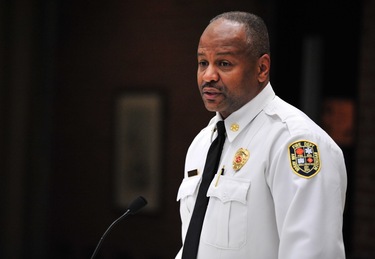
Ann Arbor Fire Chief Chuck Hubbard told the City Council last Monday that ideally he'd like to hire many more firefighters, but he'll take six more if the city is willing.
Ryan Stanton | AnnArbor.com
Foreign cities that have fewer fire-related deaths than we do actually have longer firefighter response times. According to the FEMA report, prevention is more important than suppression in saving lives.
People in other countries have a greater cultural awareness of devastating fires and this institutional memory has led to better fire prevention. In this country, with a much shorter history, most of us have not experienced a big fire so we don’t work on prevention as much. When there is a tragedy, we suddenly wake up. For example, it took a terrible fire fatality in April 2010 to convince the Ann Arbor public that a ban on flammable outdoor furniture was reasonable.
What does real fire prevention mean? In Ann Arbor, we might want a campaign targeted to students living on their own for the first time, reminding them to turn off the burner or blow out all the candles before going to sleep.
Chief Hubbard did say that fire prevention will now be more robust, and he’s assigning more personnel to prevention and education. We should applaud him for that and stop making unwarranted accusations. As Council Member Sabra Briere pointed out Monday, a fire department is like having insurance. I would take the analogy further to say that you want to have just enough insurance but it’s wasteful to have too much.
Raiding infrastructure improvement funds, as Mr. Ranzini wants to do, is not a good plan for paying fire or police salaries, and it would deceive the taxpayers. Mr. Ranzini wants to take out one or two million dollars to fund more firefighters, but what about next year? He would have to raid our sewer, water, and street funds year after year after year. We wouldn’t be able to pay for the capital improvements we need.
Making fun of the Municipal Center, public art, and a much-needed new parking garage is getting old. Mr. Ranzini seems to have forgotten that the police offices were in a moldy basement and the city needed space to house the courts.
Public art money comes from spending on projects. Were it not spent on art, it could still not legally be used for firefighter salaries.
And the new parking structure is bonded - parking revenues will pay off the bond. When Mr. Ranzini wanted to build a huge parking lot in a residential neighborhood, he argued that his bank needed the parking to bring in more jobs, but he seems to object to using parking downtown to stimulate the economy.
All emergency personnel know the concept of triage: Assign priority to the most pressing problems and deploy resources accordingly. I doubt that the citizens of Ann Arbor want to have their money spent figuring out how to rescue Mr. Ranzini from his penthouse. We can continue to spend money the wrong way, by trying to meet impossible standards, or we can use our limited resources in ways that ultimately benefit more people. Chief Hubbard seems headed in the right direction.
Joan Lowenstein is an attorney and former City Council member who served four terms. She works downtown and is on the board of the Downtown Development Authority.
Comments
snapshot
Mon, Mar 19, 2012 : 3:41 a.m.
Bravo Ms. L!!!! A well thought out and educated commentary on the fire situation. Might I suggest that we should allow the recharging of plastic nozzle fire extinguishers. Though no recall has taken place, all recharging businesses in Michigan refuse to recharge these units and force the purchase of metal nozzle units. Other states recharge these plastic nozzle units with complete safety. Why is Michigan different?
citizenx
Mon, Mar 19, 2012 : 12:52 a.m.
AAcity12 I challenge you to go find another department in michigan that meets all the nfpa1710 standards and report back to us, I also challenge you to call westland fire and see how many stations they have and report back. I would be willing to bet we wont hear back from you !!!
jcj
Sun, Mar 18, 2012 : 11:22 p.m.
Ms. Lowenstein can take her opinion and a dime and it won't get her anything UNLESS its from the mayor!
CynicA2
Sun, Mar 18, 2012 : 8:12 p.m.
This arrogant witch should be tarred and feathered, along with the Hieftje and his cronies, and run out of town on a really splintery split rail. Where do they find these creatures? Why are there so many in Ann Arbor?!
retiree80
Sun, Mar 18, 2012 : 5:13 p.m.
Ms. Lowenstein states that Chief Hubbard knows best about the Fire Department's needs... Dominick Lanza did too - but he did not stick around to continue the fight with the Mayor and council. Most department heads have found that the Mayor and council do not listen to reason from the city's department leaders - who DO know best. Dan Oates who served as Police Chief left too after finding that dealing with the City's "leaders" was futile. Barnett Jones has stayed long enough to slash the police department to dangerous staffing levels - and now they want him to cut more. No wonder he is leaving. It is too bad he never took a stand to protect the public and his staff. Ms. Lowenstein should spend two weeks riding along the the AAFD rescue truck and one of the paltry six or seven officers on patrol with AAPD and see if she thinks these articles and/or comments are "scare tactics." The ignorance and arrogance with this City leadership is truly frightening!
Kai Petainen
Sun, Mar 18, 2012 : 2:09 p.m.
"I doubt that the citizens of Ann Arbor want to have their money spent figuring out how to rescue Mr. Ranzini from his penthouse" That's a personal attack and is an unprofessional remark. If you think I'm just taking one side, I did not like the personal attack on the mayor as well at A2Politico in this article. http://www.a2politico.com/2012/03/lanx-satura-sat-ahyuhr-ann-arbors-mayor-hieftje-talks-about-crime-spree/ "Hieftje spoke to A2Politico by phone from his vacation home in Northern Michigan where he lives smugly off the grid." That too was a personal attack and an unprofessional remark.
Stuart Brown
Sun, Mar 18, 2012 : 7:25 a.m.
AnnArbor.com published a table of fire fatalities in Ann Arbor from 1992 to 2011 ( http://www.annarbor.com/FireUM_union_information.pdf ). A regression analysis I did showed that the city can expect 2 more fatalities per year above what one would have expected from the 1992-2001 period. What I find interesting is that in 2001 when the city had about 118 full time fire fighters, the city was collecting less in 2011 dollars from the city's property tax (about $54 million in 2001, or about $69 million 2011 dollars versus about $80 million actual in 2011.) The city says it will cost $3 million per year to bring the city back to the 2001 staffing level--why could the city afford this in 2001 with LESS revenue coming in? That's right, the city had less revenue to work with during what today looks like the good old days than they do now after a severe recession when the city has more revenue to work with despite the recession. Joan is a perfect spokesperson for this mayor, arrogant and out-of-touch; what a sulker! This would all be funny if it were not for the deadly consequences. The fire department spends most of its time responding to accident and medical emergencies; HVA is woefully ill-equipped to handle the toughest of these emergencies. HVA charges money for its services, the city FD does not. We would get much less and more deaths if the HVA replaces the Ann Arbor FD for first responses. Joan is utterly shameless in her shilling for this mayor.
Iamtiredannarbor
Sun, Mar 18, 2012 : 4:45 a.m.
I am a first time poster to Annarbor.com. I am not a fire fighter or have a family member affliated with the Fire Dept. When I read Stephen's (oh I am sorry Mr. Ranzini) opinioin piece I agreed with many points on the fire and public safety issues in the city. After seeing Ms. Lowenstein's response today my first reaction was Mr. Mayor why did you not write the response. If the issues that Mr. Ranzini brought forth in his opinion were incorrect, step up and be a leader and tell why you think he was not correct. I do not need to hear from a "political henceperson" to defend your position on fire safety.
Brad
Sun, Mar 18, 2012 : 3:41 p.m.
Who do YOU think wrote the response? He just didn't have the guts to put his name on it. One of the DDA's main duties - political cover. They even were foolish enough to say so.
Mitch Smith
Sun, Mar 18, 2012 : 1:14 a.m.
I think along the line of Stephen Ranzini. If people of the arena of firefighters can give a solid number. Bean counters like Ms. Lowenstein should say "How can we get the staffing we need?". Yes I understand the need to raid other projects to continue with the fire fighters at 88. The VERY LAST group that should be cut is Police and Fire fighters. Other places to cut would be to convert the pensions to 401K like everyone else.
YpsiVeteran
Sat, Mar 17, 2012 : 9:28 p.m.
"...and the reality is simply that we have to do more with less. " I find the above somewhat difficult to explain, or take seriously, coming from a member of a group that just unilaterally pushed through a huge increase in parking fees. Apparently, the "we" in that statement doesn't apply to the DDA, just to everyone else.
John Q
Sat, Mar 17, 2012 : 7:57 p.m.
While Ms. Lowenstein's attitude could use some adjustment, her basic argument is correct. Ranzini is pushing bodies in the fire house as the solution. It's not. The city doesn't need more people sitting in the fire houses to improve public safety. Most fire calls aren't for fires anyways. As even Mr. Ranzini's numbers show, hiring more firefighters is expensive. Want more fire inspectors? Train the existing fire fighters to do inspections and get rid of union rules that prevent them from doing inspections. Get them out of the firehouses and into the community working on fire prevention. But adding staff is an expensive feel-good approach with no guaranteed pay back.
EyeHeartA2
Sat, Mar 17, 2012 : 7:48 p.m.
"Chief Hubbard, who should know best, says that reduced staffing over the years was not a factor in the fatal fires in Ann Arbor. " Jane; Evidently, Chief Lanza didn't "know best", probably because he disagreed with you. http://www.annarbor.com/news/ann-arbor-fire-chief-heavily-critical-of-city-in-new-letter-to-city-council-decries-looming-cuts/ Hey, I was under the impression you were not allowed to disagree, lest you become tagged as being a member of the "anti-party". When did this change? http://www.annarbor.com/news/former-council-members-critique-of-the-anti-party-in-ann-arbor-gets-local-politicos-fired-up/
Thomas Rollins
Sat, Mar 17, 2012 : 7:46 p.m.
The Chiefs plan and this opinion or article is off the mark. The residents need a fire department that can position its manpower and resources to best serve and protect the citizens of Ann Arbor. Trying to use NFPA recommendations is impossible, especially in this economy. Emphasis needs to be on manpower and response times which effects the safey of the citizens and the firefighters. The next emphasis needs to be put on OSHA and MIOSHA which are standards, by law. NFPA are recommendations and not enforced by law. Lastly the fire department needs to meet the ISO standards which effect property insurance rates, and the tax payers and business owners pocket books. Shifting all medical response to HVA is also a big mistake. Why not ask for a piece of the pie that HVA gets when it bills the customers. Another option is to step down a grade on medical responses, and not go on headaches, nosebleeds, ect. Do what s right by the firefighters and the citizens they protect.
AACity12
Sat, Mar 17, 2012 : 7:41 p.m.
First both ladder trucks were out of service for way to long. It wasnt until Mr. Ranzini's article did one get fixed and put back in service. Second just cause Chief Hubbard doesn't know any departments that meet the standard doesn't mean there aren't any. I am guessing chief Hubbard hasn't asked and doesn't care. How many stations does chief Hubbards community in Westland have?
YpsiVeteran
Sat, Mar 17, 2012 : 5:35 p.m.
"And the new parking structure is bonded - parking revenues will pay off the bond." Replace "new parking structure" with "Water Street Development," and "parking revenues" with "property taxes," and it sort of reminds you of a certain group of seriously deluded Ypsi city councilmembers, doesn't it?
A2James
Sat, Mar 17, 2012 : 3:36 p.m.
To paraphrase the opening sentence: "Joan Lowenstein's opinion article today ("False alarm: Ann Arbor is on the right track with its plan for fire protection) did a good job of being condescending to the citizens she works for, but was short on facts".
Watcher
Sat, Mar 17, 2012 : 3:20 p.m.
My my! Joan sure can get people stirred up. One obvious point is that it makes no sense to send two emergency vehicles to every medical emergency. It most cases it is unnecessary. And it increases the possibility of an accident. It a practice that should be terminated just the way the department stopped sending trucks to get cats out of trees.
YpsiVeteran
Sat, Mar 17, 2012 : 5:40 p.m.
At at casual glance, it may seem to be a duplication to send AAFD to medicals, but in reality, it is not. As been pointed out by another poster, AAFD almost always gets to medicals before HVA. They are often the difference btwn. life and death, literally, at cardiac arrests and other critical medical situations. Also, fire personnel are often called upon to drive the ambulance while HVA works on a patient. It is not a duplication of services. HVA can't possible provide the coverage that AAFD does. That said, smaller vehicles are used successfully in communities across the country to transport FD paramedics to emergencies. However, a planned medical response that includes a big truck is sometimes due to the possibility that a fire call will be received while members are on the medical, and they don't want to have to go back for the truck before they can respond. In short-staffed departments, such as AAFD, this is an increasing likelihood, as there is no duplication of crews to draw upon for multiple responses.
Silly Sally
Sat, Mar 17, 2012 : 3:50 p.m.
meow, get me down
Brad
Sat, Mar 17, 2012 : 2:49 p.m.
For anyone needing a refresher on just how much Ms. Lowenstein detests those with a viewpoint different than that of mayor/council, I invite you to read her opinion piece about the Ann Arbor "anti" crowd. How DARE we want basic services over art, etc. http://www.theannweb.com/letters/2010-2011/december-2011/
bunnyabbot
Sat, Mar 17, 2012 : 2:47 p.m.
To the suggestion the AAFD no longer respond to calls that HVA could "handle". Twice a loved one needed medical assistance and twice the responders from HVA could not lift the individual (they were two very petite women) and they called for back up from the FD to do the heavy lifting. The morning that she was dying the exact same thing happened. Thank God for the FD. The DDA should be disbanded.
Basic Bob
Sat, Mar 17, 2012 : 2:30 p.m.
The author does not make a clear point in how to address the issue of underfunding of fire services. Equipment must be replaced, and fire stations must be staffed. Chief Hubbard must operate under the budget given to him, this does not mean that he is producing an optimal level of service. I don't believe that hiring more fire inspectors is going to make a difference in how often people change the batteries in their smoke detectors in their homes, whether they keep flammable indoor furniture on outdoor porches, burn candles, or smoke in bed. Code enforcement will ultimately improve the level of compliance and safety, but there will always be fires and sometimes death. The answer is to have both adequate prevention and suppression. NFPA codes and standards are often adopted by governments as OSHA regulations (such as NFPA 70E) or local regulations (such as National Electrical Code), and although they do not necessarily have legal standing, they represent best practice and should be considered as a goal or guideline, as the Chief states. This can only be achieved if the city government makes it a priority, something they are unwilling to do.
SonnyDog09
Sat, Mar 17, 2012 : 2:21 p.m.
Regarding the assertion that "nobody meets the standard", please read the following paper that I found on the FEMA site that discusses the common characteristics of a dozen organizations that do meet the standard. http://www.usfa.fema.gov/pdf/efop/efo32798.pdf
Stephen Lange Ranzini
Mon, Mar 19, 2012 : 4:36 a.m.
To clarify, the study concludes that 7.5 square miles per station will result in average response times of 5 minutes (see page 14). The NFPA standard requires four firefighters to respond within 4 minutes to 90% of all fires. See the bottom of page 10 for the research on response times required to meet the average four minutes in the standard, which requires 4.5 square miles per station ("the ideal response area measures 4.5 square miles").
Stephen Lange Ranzini
Mon, Mar 19, 2012 : 4:22 a.m.
@Basic Bob: if you read the document referenced by @SonnyDog09, it is recommended to have one fire station per 4.5 square miles and Ann Arbor has 27.0 square miles of land and so 6 fire stations would be needed in Ann Arbor. It's great that we actually have six then, even if we only use five currently. For the square miles in Ann Arbor, see http://en.wikipedia.org/wiki/Ann_Arbor
Basic Bob
Sat, Mar 17, 2012 : 3:23 p.m.
Well, it seems that the "short answer" is to have at least one fire station per 7.5 square miles in populated areas. For Ann Arbor, that is FOUR fire stations. Looking at Chief Hubbard's presentation, it would seem that the right answer is to operate stations 1, 2, 3, and 5. This improves coverage of the west side, while the south and east sides can be protected by mutual aid agreements with Pittsfield Township, which has two fire stations on Ellsworth Road and just passed a huge public safety millage.
63Townie
Sat, Mar 17, 2012 : 2:03 p.m.
"glad"
63Townie
Sat, Mar 17, 2012 : 2:01 p.m.
B)"Let HVA's EMTs handle heart attacks and car accidents and have the firefighters fight fires" HVA does not carry the equipment and lacks the training to extract a victim from a car accident. AAFD trains tirelessly in extraction. I assume since Mrs. Lowenstein was on city council in the past that she would have seen demonstrations or at least been privy to these facts, but apparently she has conviently forgotten this. Lastly, her personal attack on Mr. Ranzini illustrates much about her character. I'm glas she's not on city council anymore.
63Townie
Sat, Mar 17, 2012 : 1:59 p.m.
5) "Public art money comes from spending on projects. Were it not spent on art, it could still not legally be used for firefighter salaries." City government was responsible for creating this arrangement and not putting it up to a vote. Had a proposal to divert funds to public art funds been put before the people, my guess it would have been soundly defeated. 6) "…it took a terrible fire fatality in April 2010 to convince the Ann Arbor public that a ban on flammable outdoor furniture was reasonable." No Joan, it took city council and the mayor a long time to act, and to imply that somehow we the taxpayers were to blame is misguided, irresponsible, callous and wrong. (I'll leave out other adjectives that I'd like to use but can't) 7) "Raiding infrastructure improvement funds, as Mr. Ranzini wants to do, is not a good plan for paying fire or police salaries, and it would deceive the taxpayers." What city government is doing now with regard to how tax dollars are spent, is deceiving taxpayers. I guess she doesn't read these forums much, let alone cares what the taxpayers want. As long as DDA gets exactly what they want, it's all good. I'll leave the best for last though; "One way to do this, as Chief Hubbard suggests, is to make fire a priority and leave medical emergencies to Huron Valley Ambulance (HVA). Since both a fire truck and an ambulance usually show up to the scene of a medical call, this makes good sense. Let HVA's EMTs handle heart attacks and car accidents and have the firefighters fight fires." There is a shocking amount of ignorance built into this single paragraph. To respond: A)"Since both a fire truck and an ambulance usually show up…" AAFD routinely beats HVA to medical calls, either starts CPR or assists once HVA arrives. AAFD also routinely drives an ambulance if HVA personnel are in the back working on a patient. In this instance, how is HVA supposed to drive to the hospital without having AAFD on the scene?
63Townie
Sat, Mar 17, 2012 : 1:57 p.m.
It is clear from Mrs. Lowenstein's op ed she does not comprehend how AAFD operates and has much disdain for taxpayers or anyone else who doesn't share her opinion. I would expect nothing else from someone so in lock-step with the mayor. I have a multitude of issues with her statements, not just the snarky tone in which they were written. 1) "Mr. Ranzini contends that both a ladder truck and tower rig are out of commission..." Joan, both vehicles have been out of service at the same time. 2) "...would require 30 new positions..." these are not new positions, they were existing positions eliminated by the mayor and city council. Check previous staffing levels. 3) "...but a chart showing a giant jump from zero to one, with hash marks for .5 (half a person?), is just silly." Apparently Mrs. Lowenstein has not created a chart recently. Obviously, there are no "half" people, but if I recall 2011 was one of the deadliest years for fire fatalities. There is no "silliness" involved, as Mrs. Lowenstein so callously states. 4) "Making fun of the Municipal Center, public art, and a much-needed new parking garage is getting old…the police offices were in a moldy basement and the city needed space to house the courts." Yes, the police were working in untenable conditions, but it was from years of neglect by the people who occupy the offices directly above. It's not about "making fun" either, it's about being critical of how our tax dollars are spent on needless capital projects.
B2Pilot
Sat, Mar 17, 2012 : 1:51 p.m.
After reading the article and reading the comments a couple of thoughts: The article is thick with arrogance. Ms. Lowenstein is a spokes person for the Mayor - she is appointed - and as such her comments are an insight to the Mayor's thinking of the people of this city. The comments and response to the article would indicate not many support Ms. Lowenstein or for that matter the Mayor's views.
fireadvocate
Sat, Mar 17, 2012 : 1:43 p.m.
Somebody please call the Insurance Services Office (ISO) and get some technical data and information regarding the grading schedule that affects insurance rates. Right now, the city is hiding behind an outdated rating which will be higher than it should be. If ISO did a review the classification would be different than what it is. The interesting/unfortunate thing is that it takes an "official" request from the city administration to ISO to initiate a new evaluation of the classification schedule. If we are going to put pressure on something, put it on something that really matters. This is where the union and the supporters of the fire department can make a difference and get the level of service back to where it should be. Am I the only one aware of this??
snapshot
Mon, Mar 19, 2012 : 3:45 a.m.
I'll pay higher insurance rates rather than buckle to this kind of union extortion. Fire education is what unions should be advocating not threats and fear mongering. That's not cool.
northside
Sat, Mar 17, 2012 : 1:42 p.m.
What a remarkably cheap shot: "I doubt that the citizens of Ann Arbor want to have their money spent figuring out how to rescue Mr. Ranzini from his penthouse." It would be bad enough if this had been written by one of the peanut gallery on this site, but to come from a former city council member? That's appalling. And highly ironic, given that the city council has so assertively encouraged the development of high-rise condos in downtown. If people who live in those buildings aren't considered worthy of fire protection maybe they should be informed of that before buying? Equally troubling is the dismissive attitude towards questions about money spent on public art, the (eternally in development) parking garage, and new city hall.
Stuart Brown
Sun, Mar 18, 2012 : 7:58 a.m.
This is classic Joan, what a sulker she is! I would also add that the citizens of Ann Arbor do not like the new fee schedules and enforcement times for parking downtown; but Joan is shameless and can shill on demand for this mayor. BTW, replace "citizens" with "mayor" and the quote is probably accurate.
Brad
Sat, Mar 17, 2012 : 2:03 p.m.
Yeah, but I'm sure she is *positive* that we want to spend our money on art. Out of touch much?
Jim Osborn
Sat, Mar 17, 2012 : 1:35 p.m.
Many surrounding communities use volunteer firefighters, Could Ann Arbor use some to augment its existing force? Police forces do this. In the Los Angeles area, a volunteer cop made a very high profile arrest a month or two ago. It can work. What is needed is the 4th person available for when a fireman needs to enter a burning building. Could there be a pool of volunteers available who live and work in Ann Arbor? This might not work here, but it sure does in many, many other cities in America.
Silly Sally
Sat, Mar 17, 2012 : 3:56 p.m.
They especially could be useful and needed during a disaster such as this weeks tornado. Extra manpower to assist the regular fulltime AAFD.
Brad
Sat, Mar 17, 2012 : 1:31 p.m.
Long on wind, short on facts. No independent data, mostly just regurgitation of what the various city parties have already said. Also the whole spinning and dismissal of NFPA 1710 into "a standard that no one can meet" based on one comment by the chief is something that would seem more at home at a Tea Party gathering - "Get your government hands off my fire department!". Ms. Lowenstein - please stick to something you actually know about, whatever that may be. Just parroting the party line isn't that helpful. We've already heard it. And your snide comments about Mr. Ranzini aren't helpful. It's pretty obvious which one of the two of you is working with facts here. Ms. Lowenstein's answer - tell the students to blow the candles out. Why don't I feel safer now? Unbelievable!
Silly Sally
Sat, Mar 17, 2012 : 1:31 p.m.
Why should it cost over $100,000 per year in pay and benefits for one firefighter? This is much more that most in private industry make, including those with more education and experience. More that teachers... Something is wrong with the city's pay structure.This is much more than many who live in the city and pay taxes towards fire protection services.
johnnya2
Sun, Mar 18, 2012 : 6:28 a.m.
Tell us all what is the salary and benefit that is acceptable to you? By the way, why not tell us all what YOU make int he private sector. Be sure to include all payroll taxes, and benefits, not s just your salary. And be sure to factor in how much risk there is involved in your job as well. Of course having to pay OUT OF CONTROL health care costs that should be for EVERYBODY, does change the equation.
YpsiVeteran
Sat, Mar 17, 2012 : 4:13 p.m.
When those in the private sector leave their families and rush to the scene of fires, disasters, medical emergencies, etc., often at great personal risk to themselves, they make quite a bit more than the average firefighter, even with benefits. If you're suggesting that the average firefighter should be compensated at the same level as your average accountant or teacher or grocer or mechanic, I suggest you call your accountant, or your kid's kindergarten teacher, the next time your stove catches fire, or a tornado traps you in what's left of your house, and see what response you get. No knock on accountants/teachers/mechanics, etc., but the risks and sacrifices of the profession, for both the firefighter and his/her family, not to mention the working conditions, are not comparable.
Stephen Lange Ranzini
Sat, Mar 17, 2012 : 1:29 p.m.
@Richard Wickboldt, Jim Osborn, Carole, 1bit, AnnArboral: Amen! Great comments!
j
Sat, Mar 17, 2012 : 1:28 p.m.
As an attorney I would think you would no better then just to quote someones. I would hope you may do more research in your legal work then just use "they said so" as you do here
YpsiVeteran
Sat, Mar 17, 2012 : 4:07 p.m.
Silly Sally, I'm not sure why you feel it necessary to attack j personally with a snarky "special admissions" crack, but you should at least get it right before you jump in. J's post is directed to the writer of the column, who is an attorney. He/she is responding to her, the author, in first-person. J is not claiming to be attorney, and a bit of basic reading comprehension, or perhaps a more charitable attitude, might have revealed this to you. You also missed the fact that the poster corrected his/her typos in the next post, and then poked at bit of fun at him/herself. Did you have something to add to the conversation, or were you just being mean?
j
Sat, Mar 17, 2012 : 1:58 p.m.
mistakes; Know, someone "hope you do more research when doing legal work then just using" I would hope I would use proof reading
Richard Wickboldt
Sat, Mar 17, 2012 : 1:11 p.m.
Fire suppression 101 and commonsense 101. The sooner you get to a fire with adequate equipment and as many responders as possible. The quicker you get the fire under control, The less damage to the structure. Facilitates saving lives. Makes it safer for the responders. Fire spreads fast and the first minutes of a fire and it's response will set the stage of how successful the total response will be in saving lives and property. This is what I was taught when I attended and graduated from the Texas Engineering Extension Service's Brayton Fire Training Field in College Station, Texas. I find it perplexing and worrisome here in Ann Arbor; where we pride ourselves as being progressive, highly intelligent and educated; and have historic districts under slice scrutiny and control. NAP roaming about the city doing burns. That our city government and citizens even argue about level of protection. This is about saving lives and preserving our property (and art), and asking dedicated people to put their lives on the line 24/7. When the discussion comes up it should be simple. What you need? How much? and then sign the check. The city council should be responsible elected officials and if need be tell the citizens we need to change the budget structure. Hey why can't we also take the same percentage of all capital project fund/budget as we do for art also for fire protection? There is cash sitting in accounts for art and green belt. The council should take the leadership and pass any law or supplemental paragraphs to make it happen. Needs to have a citizen vote. Then put it on the ballot. Maybe we need to send the council to fire school in college station and experience fighting their way out of a three story burning structure to understand!
Carole
Sat, Mar 17, 2012 : 1:08 p.m.
There were many good comments that support my feelings about maintaining an adequate, fully staffed fire department. Thank you for those comments -- to Ms. Lowenstein, I ask one question -- "if your house was on fire or a loved one need medical attention would you not wish to have the best available fire department available to take care of the much needed concerns?" I know what I would want, and AAFD are almost always the first to arrive. No offense to Huron Valley because they are so wide spread it is just the way it is.
Craig Lounsbury
Sun, Mar 18, 2012 : 1:51 p.m.
If we want the most for our loved ones we should want an ambulance to be the first one to a medical emergency. That is not an anti fire department comment. A fire truck to medical emergency 4 minutes is the second best option to an ambulance to a medical emergency in 4 minutes.
annarboral
Sat, Mar 17, 2012 : 1:02 p.m.
Has anyone noticed that Joan Lowenstein is a political appointee to the DDA? Another real problem is the DDA which is most easily described as a political slush fund used to reward the mayor's friends with jobs and to approve ecnomically unfeasible projects. Hey, if the projects were such great ideas why would we need to subsidize them? Think about it.
Wolf's Bane
Sat, Mar 17, 2012 : 12:43 p.m.
Ms. Lowenstein is right, we do need additional programs geared towards fire prevention and education. I am reminded of this fact everyday as I cross the intersection at Summit and Main and look towards downtown only to see burnt out and boarded up buildings along Main street. Nothing says, "We're on the ball", like a burnt out ruin for all to see.
Stephen Lange Ranzini
Sat, Mar 17, 2012 : 12:20 p.m.
@So Much Nonsense: I am speaking up on the fire safety issue for three reasons: First, because I live here and want my family, friends, co-workers and neighbors to be safe. I live in Ann Arbor, do you, Mr. or Mrs. Anonymous poster? Second, because I have my life savings invested in University Bank, which has invested immense sums of money in loans in Ann Arbor. A community bank will not thrive if the community it lends in does not thrive. If Ann Arbor has inadequate fire safety, we risk that in the future Ann Arbor will be perceived as being less favorable from a quality of life perspective. That will severely hurt our community bank and its investments. Lastly, I have specifically ruled out running for Mayor in 2012. On the other hand, I am willing to put my name and reputation on the line with my public comments, because firefighters have come to me and expressed their sincere concerns for their own safety and the safety of the citizens of Ann Arbor and our leaders will not listen to them and their concerns when they have brought them to them privately. Like me, are you willing to reveal your identity and then put your opinions on the line to the scrutiny of your neighbors and friends?
so much nonsense
Sat, Mar 17, 2012 : 12:17 p.m.
@Jim Osborn My understanding is that two firefighters cannot enter a burning building without the backup of another two firefighters on site. The chief said it was an OSHA law. That means that it is not a choice. I am not a firefighter so I am not positive on that fact but that is what he said. You just cannot ignore the OSHA rules. So I like the new plan because it accomplishes the goal while cutting costs. On paper it appears to be more logical and more efficient. If we stay with all five stations with only a staff of three, it will only be to appease residents fears that a closer firehouse is better when the data right now shows that it isn't.
Jim Osborn
Sat, Mar 17, 2012 : 12:04 p.m.
Closing stations is just a bad idea. Sure, on the rare times when firemen need to enter a burning building they might need to wait for those from another station to arrive, but most of the time, a smaller group will arrive and get a jump on the fire before it gets bigger. Far too often, Ann Arbor has traffic, so having 5 stations open is preferred. Mocking Mr. Ranzini's residence serves no purpose "...rescue Mr. Ranzini from his penthouse..," and if this is her attitude, and she was a councilwoman and currently is on the board of the Downtown Development Authority, this should worry us all. Does she have this sort of contempt towards the rest of her indirect constituents? (she was appointed) It does appear so. Do we in Ann Arbor need such divisive people governing us and spending OUR money so freely and then mocking those who dare to questin her poor judgement? No - we do not.
Jim Osborn
Sat, Mar 17, 2012 : 11:51 a.m.
Joan Lowenstein is correct when she mentions that Fire Chief Chuck Hubbard is correct in shifting more of the medical response to Huron Valley and not having a big truck respond. (I've often wondered why they don't use a small pickup and if there is another fire call, the truck can respond and those in the pickup can arrive separately). Unfortunately, that is all that she has right. Her opinion is that big spending on things such as City Hall or the BIG DIG is fine since "new parking structure is bonded - parking revenues will pay off the bond" is misguided. This will raise either future taxes to pay off a city hall bond, if financed this way, and parking is steadily going up, with no end in sight, to pay for expenditures such as the BIG DIG. The art fund could easily be ended, if the council and DDA wished it so. This is not some state requirement, it is a self-imposed one. Her solutions remimd me of Jimmy Carter's solution to the energy "crisis" in the last 1970s. He put on that silly sweater instead of working to solve the problem. Likewise, Joan Lowenstein is wearing a sweater. Is it at least fireman's red?
1bit
Sat, Mar 17, 2012 : 11:37 a.m.
"Public art money comes from spending on projects. Were it not spent on art, it could still not legally be used for firefighter salaries." Well, that's the way the system was set up. It can be changed. The "buckets" are convenient excuses to direct money wherever you want it to go without taking responsibility for it. Joan, in the end, I think you are missing the point. At least on this site, there is discontent with spending priorities. There's little money for police and firefighters but more than enough for public art and underground parking structures. We let the Stadium Bridge literally crumble until it was such a disaster that we got federal money when we could have built less gilded alternatives. (Okay, maybe we let it crumble waiting for federal money but is that any better?) We were going to give public land to U of M for a parking structure without a vote. Yes, yes. The Council and DDA know better than the rest of us. We don't understand the big picture of the Grand Ann Arbor. We're "anti" everything. But really, maybe we're not so dumb and just aren't "for" everything you want or think is best.
Stephen Lange Ranzini
Sat, Mar 17, 2012 : 11:08 a.m.
The big picture here for Ann Arbor's fire safety comes down to this with the 2013 fiscal year budget, do you want: A. $1.4 million added to the rainy day fund with 76 firefighters operating from three fire stations who can get to 72 percent of all fires with four firefighters in four minutes, OR B. $200,000 added to the rainy day fund with 88 firefighters operating from five fire stations able to get to 90 percent of all fires with four firefighters in four minutes. The chief says that he really needs B, but the Mayor and Attorney Lowenstein want to give us A. I vote for "Plan B"!! Do you??
Major
Sat, Mar 17, 2012 : 3:55 p.m.
I would say it appears AA can't afford a "rainy day fund", let alone the misguided DDA, this is what we all face today...live within (or below) your means...including municipalities!
Carole
Sat, Mar 17, 2012 : 1:02 p.m.
I say give it to the firefighters to maintain the safety of the town and the citizens of the town -- also for their own safety. And, personally, I believe DDA can be shut down and save the city a great deal of funding that could be used to assist the citizens of the city. Thank you Mr. Ranzini for staying on top of this.
Stephen Lange Ranzini
Sat, Mar 17, 2012 : 11:07 a.m.
I found an interesting quote on the Internet and am curious if any lawyers out there can verify if this is true? "The NFPA is the organization that develops and promotes standards (best practices) for the fire service, many of which get incorporated into OSHA regulations, which are mandatory. Regardless, NFPA standards are designed to make operations on the fireground safer. While considered 'voluntary', in the case where death or injury occurs and litigation follows, the courts have looked at NFPA standards as the "law" and ruled accordingly. In other words, failure to follow the Standards could set up a fire department for (and to lose) a law suit." If true, please note that the city is self-insured for insurance and has a stop loss re-insurance policy that covers only up to $20 million per incident. If a tall building is given the proposed "surround and drown" treatment - this discussion isn't just about possible loss of life but loss of property - the law suit would be devastating for the city's General Fund. Expending the extra $1.2 million a year to staff all five fire stations adequately might be *cheap* compared to the cost of not doing so. In case you missed it, please read this for more background info: http://annarbor.com/news/opinion/ann-arbors-deficient-fire-protection-achieves-new-heights-of-folly/?cmpid=NL_DH_topheadlines The scientific national standard for best practices in fire safety includes the ability to get four firefighters to 90% of all fires within four minutes. The two in two out rule is a national standard that protects the lives of firefighters, as there needs to be two firefighters outside to go rescue firefighters who go into a burning building if those inside run into trouble.
Stephen Lange Ranzini
Sat, Mar 17, 2012 : 11:05 a.m.
Earlier this week I spent two days at the headquarters of NIST (National Institute for Standards & Technology), the group that made the videos Chief Hubbard showed Monday that explain why the number of fire responders and the time elapsed before response is critical to fire suppression. It's not so tough to solve this problem as to how much fire protection is adequate for Ann Arbor. You first determine what your goal is: adequate fire safety for the entire city as defined by *scientific* best practices (NFPA). Then you determine the resources required to meet that best practice. Then you figure out how to find the resources if you don't have them. This is management 101. "Fire Chief Chuck Hubbard wasted no time Monday night when asked by an Ann Arbor City Council member what his "magic number" is in terms of staffing. 'Right now it would be 88,' The fire department is budgeted for 82 full-time positions, and the plan is to reduce that to 77 starting July 1, though city officials say those cuts could be avoided." FYI, the fire department currently has only 76 employees. To have adequate staffing for the existing five fire stations to meet the NFPA national standards, I am told takes 18 firefighters per shift versus the 15 staffed currently. This would require 12 additional firefighters (four extra people for each of three shifts a day) in total to staff all shifts from current staffing, or 88 firefighters in total. The total annual cost of new hires (wages and benefits) would cost roughly $1.2 million a year extra. The fiscal year 2013 city budget presentation states that the City Manager and CFO will propose to City Council a revision to the 2013 budget to put what is now projected to be a $1.4 million surplus into the general fund's rainy day fund, so this plan that I've outlined above would cut the amount going into the rainy day fund in fiscal year 2013 to $200,000. See: http://www.annarbor.com/news/ann-arbor-city-council-fiscal-year-2012-13
Stephen Lange Ranzini
Tue, Mar 20, 2012 : 1:16 a.m.
@gofigure: I didn't say why I was at a conference at NIST's HQ only because of the space limitations on AnnArbor.com's comments. Since you are curious about it, I'll tell you why. I was there in support of an effort to secure a large grant for our regional health information exchange, South East Michigan Health Information Exchange (see www.SEMHIE.org). I mentioned it because I thought it was ironic that I was at NIST's HQ working to further some Internet security standards (they are critical to health information exchange) when people who may not even know what NIST is were attacking research done by NIST into fire safety national best practices. I have been involved in writing industry standards in financial services and health care for many years, and have sat on key U.S. and ISO and United Nations international committees that write these standards.
gofigure
Mon, Mar 19, 2012 : 7:01 p.m.
"Earlier this week I spent two days at the headquarters of NIST (National Institute for Standards & Technology)" You throw that out there with no explanation. Why? You're not a FF. Nor are you in public safety.
Alan Goldsmith
Sat, Mar 17, 2012 : 11:01 a.m.
"Making fun of the Municipal Center, public art, and a much-needed new parking garage is getting old." It's not 'making fun'. It's addressing incompetent political leadership, which, Ms. Lowenstein, you are a part of with your seat on the DDA.
Bcar
Mon, Mar 19, 2012 : 12:10 p.m.
Can I vote your comment up 52 times!!??!
Alan Goldsmith
Sat, Mar 17, 2012 : 11 a.m.
Ms. Lowenstein is a long time supporter of the Mayor, is best know for her vile and insulting opinion piece in The Ann magazine. I would invite anyone who reads this PR piece that is light on the facts check out her previous 'opinions' and her checked career on City Council, where in a rare moment of clarity, she decided not to run for office again.
Stephen Lange Ranzini
Sat, Mar 17, 2012 : 10:52 a.m.
Ms. Lowenstein correctly notes that fire prevention is critical to reducing the severity of fires and preventing death by fire. The fire inspection and prevention department in Ann Arbor was obliterated by the cuts as the fire department staff was cut from 120 to 76, and as recently as last Summer they only had one fire inspector left, and she had only recently been trained. In my opinion, the decrease in prevention efforts as this staff was cut to the bone, is why the deaths have increased so much and the severity of the fires has increased. However, by taking 4 fire safety people off the line, the city can only field 15 fire fighters per day, not the 18 required to meet the current staffing plan that would be required to fully staff all of the existing five fire stations. Once a fire starts however, all the fire prevention in the world won't stop the fire and response times and response in force is critical to suppressing the fire, as noted by the scientists at the National Institute for Standards and Technology.