

Offering medical amnesty for underage drinkers could be a life saver
College students don’t always make the best decisions about alcohol, and their judgment isn’t improved after they’ve had too much of it.
That’s why we find ourselves in support of legislation that would create an amnesty program for any underage person who faces a medical emergency after having too much to drink.
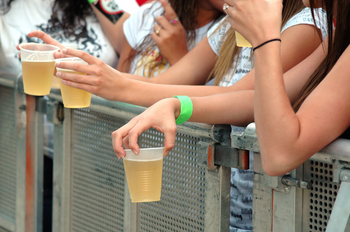
House Bill 4393, which was approved in the state House earlier this month, allows underage students to seek medical help for intoxication without fear of being arrested under the minor in possession law.
Katseyephoto | Dreamstime.com
House Bill 4393, which was approved in the state House earlier this month, allows underage students to seek medical help for intoxication without fear of being arrested under the minor in possession law.
Alcohol poisoning is a serious health issue that can potentially result in brain damage or even death. Young people often underestimate the risks associated with over-consumption of alcohol. Worse yet, a number of studies and survey have shown that college students are reluctant to seek medical help in cases of possible alcohol poisoning because they’re afraid of getting in trouble with the law.
Anybody who doesn’t think alcohol abuse is a serious problem in college towns obviously wasn’t anywhere near Ann Arbor last weekend on St. Patrick’s Day. The combination of beautiful weather and an ocean of green beer led to a display of public drunkenness that could only be rivaled on a football Saturday.
Ann Arbor police said they handled 475 calls last Saturday for everything from disorderly persons to drunken driving and minors in possessions. We certainly don’t see such wretched excess as anything to celebrate, and those who ended up interacting with police will have to accept the consequences.
Where we would draw the line, however, is in situations where a heavily intoxicated young person in serious need of medical attention doesn’t get it because of a fear of being charged as a minor in possession of alcohol. In such cases, medical care has to be the first concern.
A number of other states have approved medical amnesty programs, including New York, New Jersey, Washington and New Mexico. In Michigan, the concept has come to the Legislature before, but died in committee. However, the current version has been improved in ways that make it more likely to become law this time around.
For one thing, it includes a provision that says if a young person under the age of 18 seeks treatment for intoxication, his or her parents would be notified. The current language also makes it a clear that the amnesty applies in the case of someone who presents himself or herself to a health facility or agency for treatment or observation. Past legislation was too vague on the circumstances under which a student could try to claim medical amnesty.
The intent of the law isn’t to encourage or condone underage drinking. In most situations, minors who are drinking illegally would face all of the same potential consequences they do now. But when a young person is in medical crisis, then it is time for enforcement to take a back seat to the health and safety of an incapacitated person. Even police agencies agree in that regard. The legislation is supported by the Michigan State Police and the East Lansing Police Department, among others.
In our view, if there’s one way the legislation could be improved, it would be in the area of alcohol abuse assessment. When a young person receives a minor in possession, one of the consequences is “wellness check’’ meetings that are designed to evaluate that person’s use of alcohol. A student who drinks excessively enough to require emergency treatment is a good candidate for such evaluation, and we’d like to see some way that element could be retained.
On the whole, though, we see House Bill 4393 as a sensible approach to a serious problem on college campuses and elsewhere, and the Senate should pass it. Ultimately, this is a case where the safety of students has to come first.
(This editorial was published in today's newspaper and represents the opinion of the Editorial Board at AnnArbor.com.)
Comments
thinker
Mon, Mar 26, 2012 : 3 a.m.
As a physician and parent, I agree completely. "Wellness check" meetings and/or counselling through AA would probably be a great idea.
Basic Bob
Mon, Mar 26, 2012 : 4:34 a.m.
AA does not provide counseling. As a physician you should educate yourself on treatment and recovery options in the community. It could save lives.
Ann English
Sun, Mar 25, 2012 : 11:36 p.m.
I know that we used to have a law saying that the minimum age to drink is 18. When did it go back to 21? It's been a few years or more since a boy born to Korean immigrants died on his 21st birthday because he tried to down 21 shots of whiskey. He had just graduated from the U of M. I would think that an 18-year-old attempting to down 18 shots of whiskey would also die from alcohol poisoning.
Annie
Sun, Mar 25, 2012 : 11:29 p.m.
I don't believe that the underage drinkers should get off scott free because there should be consequences for breaking the law (even if I disagree with the law). I think if you are found heavily intoxicated or are sent to the hospital because you are heavily intoxicated, you shouldn't be sent to jail or something that's going to permanently scar your record. I think going to AA or some sort of counseling associated with drinking or drug use would be more beneficial. Educating people is what's going to save lives in the end.
Frustrated in A2
Sun, Mar 25, 2012 : 11:15 p.m.
If someone is that drunk I don't see a police officer figuring out who they are and holding up an ambulance from taking them to a hospital just so they can write them an mip ticket. I do think if you do something illegal and get caught then you should pay the consequence. If I were under 21 and caught drinking no matter how I felt I'd say I need medical attention to get out of the ticket. Wouldn't the officer have to let me go to get medical attention? While we're at it we should extend this to drunk drivers who get in crashes, you were so drunk you needed an ambulance so you're free to go. Where is the lesson in that???
Tom Joad
Sun, Mar 25, 2012 : 6:10 p.m.
Absolutely not. The minor, 18-21 year old, knows when they are drinking alcohol they are doing so illegally and should be held accountable for it whether they are driving, in public or ushered into an emergency room after imbibing too much. Anyone who drinks themselves into a stupor requiring medical attention needs the wake-up call that only the courts can mandate with a conviction at sentencing. We are still dealing with a person who doesn't have the legal right to drink alcohol. Too much damage is already caused by alcohol fueled violence, motor vehicle accidents, and sexual assault. If a person is truly in need of medical attention give it to them. Don't worry about the legal consequences when someone's life is on the line.
Mick52
Tue, Mar 27, 2012 : 9:18 p.m.
Good grief Andrew, the fines for MIP are not ridiculous. What they should be more afraid of is the drinking.
Ann English
Mon, Mar 26, 2012 : 12:03 a.m.
With summer coming up, more consequences of drinking are drunk boating, reckless diving into water that's too shallow (so one can fatally break one's neck), and drowning in a lake even if one is a master swimmer. One 23- or 24-year old took such an inebriated dive into Portage Lake, and a very competitive swimmer drowned in Island Lake, near Milford, MI. I don't see this new bill affecting underage drinking in regard to summer activities.
Andrew MacKie-Mason
Sun, Mar 25, 2012 : 6:44 p.m.
Yes, because saying "Don't worry about the legal consequences when someone's life is on the line" in an online forum is definitely going to help. You're talking about people who are probably also intoxicated themselves (and thus not thinking clearly), scared of the ridiculous punishments which are applicable to minors who drink, and unsure of how much trouble their friend is actually in. But by all means, assert a smug moral superiority.
Tony Dearing
Sun, Mar 25, 2012 : 4:06 p.m.
Some commenters have questions about who the legislation would apply to. The bill would offer the medical amnesty to: -- Minors who had consumed alcohol and who voluntarily present themselves to a health facility or agency for treatment or for observation. -- Minors who accompany those individuals who have both consumed alcohol and who have voluntarily presented themselves to a health facility or agency for treatment or observation. -- Minors who initiate contact with a peace officer or emergency medical services personnel for the purpose of obtaining medical assistance for a legitimate health care concern. This language comes from a legislative analysis of the bill.
Mick52
Tue, Mar 27, 2012 : 9:16 p.m.
Ok from your post I would presume that an intoxicated minor could gain immunity if they approach the police for "a legitimate heatlh care concern." I hate to toss in another curve ball here, but what is considered a "legitimate health care concern?" What BAC, condition, etc., or can an intox who sees the police approaching cry out, "I am an alcoholic and I need help!" Or "I want to go to the hospital." Like I posted before, I am not aware of the medical facilities calling the police for alcohol issues if the patient comes into the hospital sans the police. I think it would be a waste of police time if that happens.
Andrew MacKie-Mason
Sun, Mar 25, 2012 : 6:42 p.m.
Does it include amnesty from the drunk driving law for those under 21 who are driving with a BAC above 0 but below .08, who can be charged under current law?
Craig Lounsbury
Sun, Mar 25, 2012 : 4:45 p.m.
I'm going to assume In parts 1 and 2 above amnesty doesn't include driving with a BAC above .08
blahblahblah
Sun, Mar 25, 2012 : 3:34 p.m.
If the law states these young adults are too immature to drink, how else do you expect them to act? Instead of learning how to drink responsibly with their parents like the European's do, they are told it's illegal and TABOO. The level of binge drinking on college campuses has therefore escalated since the drinking age was raised. Unfortunately, the whole legal system will never revisit this FACT.
Mick52
Sun, Mar 25, 2012 : 3:32 p.m.
Nonsense. This is ridiculous. A person who goes into a hospital for medical assistance has his medical records protected by HIPPA. As far as I know, if a drunken person goes to the ER, the ER does not call the police to report it. I would think that would be a HIPPA violation, unless they are required to report it because of the issue of underage drinking being a crime. I do not think that is the case. Now if a police officer comes across a drunk under age person who needs medical attention, that should never allow for immunity. Whoever presented this legislation should not be a legislator. If you don't like it, then change the law back so that drinking age is the age of adulthood, 18. There has been debate that it is unfair to restrict an "adult" of something another older adult can do. That will settle this issue and make 18 year olds true adults.
Andrew MacKie-Mason
Sun, Mar 25, 2012 : 6:41 p.m.
Right. Because the time when an MSU student was left passed out outside by her friends who were too afraid of being arrested for being drunk (she later woke up at the hospital with an MIP ticket next to her bed, I believe) is *exactly* the kind of situation we want to repeat.
JRW
Sun, Mar 25, 2012 : 2:20 p.m.
This "get out of jail free" card does not address the root problem: serious underage drinking on college campuses. After the drunk student receives medical treatment if needed, then they should still be subject to arrest for a minor in possession. Otherwise there are no consequences for their behavior, which is illegal. #1) Young people need to learn there are consequences for their actions, #2) More examination of the reasons for excessive drinking among current college students, which seem to go beyond the usual craziness of college. How does excessive drinking in college in 2012 compare to excessive drinking in college in 1990, 1980 or 1970? What has changed? How can the root causes be addressed rather than a "get out of jail free" card for an escalating problem.
Basic Bob
Sun, Mar 25, 2012 : 3:51 p.m.
There is a real consequence in this case: the ambulance bill and emergency room bill. Overly protective parents can make these go away, they can also hire a lawyer to get the MIP dropped. This is class warfare just as much as the drug laws. Those who can afford doctors and lawyers are not punished, or punished more lightly, simply because they have money and access to professional services. The people who debate these issues in the legislature are clearly out of touch with regular people.
jayjay
Sun, Mar 25, 2012 : 2:32 p.m.
Here we go again! Let's stop all deviant behavior by punishment. Boy, does it work. In the 60's when drug use was so rampant, we stepped up our efforts on drugs. Thank heaven the USA is now a "drug free" society. And why are you even mentioning drinking. We stamped that out with prohibition in the 20th century. The drinkers must all be illegal immigrants because good upstanding 'mericans wouldn't do that. My friend, the root causes can be addressed through education and treatment for those who may dependencies. But punishment, no it will not work, hasn't worked in the past and it doesn't work today. If it did, we wouldn't have the problems we have.
shepard145
Sun, Mar 25, 2012 : 2:17 p.m.
I agree with those who think the legislator has once again layered law after law after law on "under age drinking" until the consequences are way beyond the "crime". Drinking is an easy target - who's not going to support ANOTHER law banning or restricting something else when it comes to kids drinking. Looking back, it's impossible to fathom that not long ago the legal age was 18 and how so many ADULTS actually survived those three years even as they voted, owned property, signed contracts, worked, paid taxes, got married and of course went off to Vietnam! We need more measures that roll back some of the irrational hysteria that has drive this issue for decades.
Ann English
Sun, Mar 25, 2012 : 11:50 p.m.
"Not long ago" means 34 years or more ago. The legal drinking age was still 18 back in 1975.
jayjay
Sun, Mar 25, 2012 : 4:12 p.m.
Amen!
trespass
Sun, Mar 25, 2012 : 2:15 p.m.
The time to enforce the law is not when a young person needs medical attention but where we fail is when the colleges don't enforce underage drinking laws to prevent such situations from happening in the first place. Dan Horning is running for Regent again. He was Regent from 1995-2002. During his tenure a freshman student got so drunk that she fell to her death from the 6th floor of a dormatory. Regent Hornings response was; The majority of students who come to the University have reached the age of 18 and should be mature enough to make their own conscious decisions" Horning said. "In Michigan, you have to be 21 to legally consume alcoholic beverages, and those under 21 are taking a risk" he said. "I'm not condoning police security for crashing parties. Drinking is the responsibility of the students" Horning said. Underage drinking is also a major factor in date rapes.This is not a response that should make parents feel that the UM is going to be a safe place for their children. UM administration needs to enforce drinking laws in fraternities, sororities and dormatories long before students need medical attention.
Mick52
Tue, Mar 27, 2012 : 9:10 p.m.
Trespass. Okay some dude gives name and ID when they buy a keg. The store has no obligation to share that info with the police and even if they did, just because someone buys the keg and underage drinkers consume, under what law could you possibly charge the purchaser with? Also I frat does not have to allow the police entry. "There are many more. All you need is the will to enforce the law." Huh? Like what? I would say they have the will and are doing just about everything possible. It sounds like you are promoting creating a police state, something I never thought would come from you.
Basic Bob
Mon, Mar 26, 2012 : 4:53 a.m.
I don't think a "noise complaint" should lead to campus police detaining and identifying everyone present at a party.
trespass
Sun, Mar 25, 2012 : 9:12 p.m.
@Mick- It is already required that someone who buys a keg has to give their name and ID. If you get a noise complaint at a fraternity, you card each person and bring the person who bought the keg up on charges if any are under age. You then put the fraternity on probation. That is just one tactic. There are many more. All you need is the will to enforce the law.
Andrew MacKie-Mason
Sun, Mar 25, 2012 : 6:40 p.m.
Dan Horning's position is exactly correct.
Mick52
Sun, Mar 25, 2012 : 4 p.m.
Okay, just how do you propose they do that? I highly doubt that you would approve of each dormitory floor Resident Adviser position being filled by a police officer with an exception to the search warrant rule in their pocket in order for them to search rooms for booze. That is just about what it would take to control drinking in dorms. Same for Greeks too. All fraternities and sororities shall be staffed with police officers and a suspension of the Fourth Amendment. And I guess require all students to live in dorms and frats/soros throughout their education. No more apartments for students, because then their Constitutional Rights would protect their right to do whatever they want within their homes. I do not see how you can tie this to Mr. Horning's Regent position. Ms. Cantor's death was attributed more to the position of her loft ladder than intoxication. So if you have some ideas how the U can enforce the law better, let us see what you are thinking.
justcurious
Sun, Mar 25, 2012 : 2:11 p.m.
I think this just may be a law crafted by parents of teenagers who want to make sure their kids don't get an arrest record and embarrass them. Instead of being good parents and spending the time to teach kids right from wrong we seem to want to defer parenting to soften laws and treatment programs. Parents need to quit concentrating on their own career and social achievements and start being parents to their kids again. Maybe they should be suffering the consequences if their kids were never properly taught how to exist in a civil society.
Pappa
Sun, Mar 25, 2012 : 1:59 p.m.
I think this is great article to demonstrate the difference between alcohol use and marijuana use. How many people die, get in fights, get put in jail, get dui's, and totally ruin their lives due to alcohol, compared to people who use marijuana. Read the articles, there's no comparison. http://www.annarbor.com/news/crime/man-knocked-unconscious-during-early-morning-fight-on-east-liberty-street/ http://www.annarbor.com/news/crime/ann-arbor-police-field-475-calls-for-service-on-st-patricks-day/ http://www.annarbor.com/news/crime/ypsilanti-township-man-who-pleaded-no-contest-to-murdering-neighbor-to-serve-up-to-45-years/ http://www.annarbor.com/news/crime/police-say-man-hit-officer-who-was-trying-to-help-him/
jayjay
Sun, Mar 25, 2012 : 4:15 p.m.
Pappa, do you know what your problem is? You are being logical! How dare you? Who ever heard of using logic to win an argument? What a novel approach! It's too bad that so few do so.
Pappa
Sun, Mar 25, 2012 : 2:56 p.m.
Marijuana always gets the bad rap about being the "Gateway" drug, but I don't think that is the case. I know a lot of people that have tried other drugs because they were influenced by alcohol. Certain types of people are going to be attracted to stronger drugs, it's in their genes. Marijuana didn't make them use other drugs. If anything, alcohol should be considered the "Gateway" drug because almost everyone uses alcohol before any other recreational drug.
jayjay
Sun, Mar 25, 2012 : 2:24 p.m.
Pappa, I have to respond to your own response. Marijuana "makes people happy". There's the rub! Some people just cannot appreciate seeing others being happy, for whatever reason. Doing certain things, like driving, under the influence of some substance, indeed should be wrong. But making it a crime if you use it responsibly just because someone else doesn't like it, takes away from our police force doing the job of preventing real crime. Using marijuana may have bad health effects, but then so does supersizing -- should we outlaw McDonald's and Wendy's and Burger King? If I do not like something (and I hate smoking of any kind), I won't do it. But that does not give me the right to go into your home and say you cannot do it. When will get away from trying to impose our morals upon others?
Mike
Sun, Mar 25, 2012 : 2:21 p.m.
You can take statistics and anecdotes and portray them in any way you want. There's an old saying that figures don't lie but liars figure......... I know many young people who lives have been devastated by alcohol and marijuana; they're both bad. Marijuana is a gateway to harder drugs and alcoholism is a horrible disease to deal with.
jayjay
Sun, Mar 25, 2012 : 2:17 p.m.
Wattya mean? Everyone knows that marijuana use is the key to moral decline! That is why only the uneducated use it, right? I know some people will say "two wrongs do not make a right", but your point is right on. But at least we can rest assured, that by punishing all users or marijuana and extending it to those who drink, we can stamp out this moral decline immediately. That is why use has so dramatically declined over the last 10 years -- all the people we have put in jail for their bad behavior has had the intended effect. Right? Right? Right? Right? Why don't you answer?
Pappa
Sun, Mar 25, 2012 : 2:09 p.m.
Have to reply to my own post here... I should have said if marijuana was totally legal like alcohol, or if you have your medical marijuana card. There are a lot of people out there that have been put in jail for using and distributing marijuana. I'm just saying that alcohol makes people insane, marijuana makes people happy. :)
Chase Ingersoll
Sun, Mar 25, 2012 : 1:49 p.m.
Fundamentally, status crimes (it's a crime based upon your status, while it could be legal for others) contravene logic and fundamental fairness and equality of individuals and inevitably fail to solve the problem they are meant to correct, while creating a legal quagmire of unintended consequences that are worse than the original problem. I drank with everyone else when I was under-aged. The law meant nothing, and only served to undermine our respect for the authoritarians who forced or threatened to enforce it. Decades later, I understand that the same way in which some people desire to feel the way ingesting substances makes them feel, other people desire to feel the way they feel when they feel that their environment is better controlled by having laws that limit other people's behaviors that they they don't like or that feel threatening to them. If you don't like the drunken-ness and want to change it, then be sober and share that with people you believe need sobriety, rather than trying to impose laws upon society that you think will push society in the direction of your version of utopia, but are only serving to undermine laws that are universally supported and sap resources from their effective enforcement. Chase Ingersoll
jayjay
Sun, Mar 25, 2012 : 2:05 p.m.
A brilliantly written piece. Hopefully, those who do not wish to see can be enlightend by what you wrote. I doubt it, though, because you admitted that you once were an underage drinker, therefore you lose your credibility. Anyone that could have even considered drinking underage must be daft, right? I mean anyone with an ounce of morals would never even consider drinking let alone admit to it, right? I only wish we could find more people like you who share these kinds of insights.
Brad
Sun, Mar 25, 2012 : 1:44 p.m.
"an ocean of green beer led to a display of public drunkenness that could only be rivaled on a football Saturday" Which last week was reported as "nothing to see here, just a few celebrating students". Do you people even read your own stuff?
nowayjose
Sun, Mar 25, 2012 : 1:40 p.m.
So basically any underage student caught drinking will just tell the cops he/she had too much and wants medical treatment. Clever. Was this bill ghost written by a frat?
Mick52
Sun, Mar 25, 2012 : 3:42 p.m.
I thought of this too, but the article says it pertains to a person who seeks medical aid. Not one who is sent their by the police. That should have been clarified here, does it apply to a case where the police come across a passed out 18 -20? I do not think ERs should be calling police for every drunk brought in unless there is some other criminal activity afoot.
jayjay
Sun, Mar 25, 2012 : 1:59 p.m.
Yeh, let's cut the crap now! Put the bums in prison and throw away the key for such a heinous crime! Who needs young people anyway? And let's go after jaywalkers next!
JRW
Sun, Mar 25, 2012 : 1:36 p.m.
I agree with posters who have said that being soft on underage drinking consequences will only lead to further law breaking, such as drunk driving. Hey, if I'm not going to be arrested for drinking underage, then why not get behind the wheel? Maybe they will look the other way on that one too! No, do not go soft on the very real consequences of underage drinking. Whether it's college kids who risk alcohol poisoning in some fraternity hazing prank, or some underage kids who get drunk and go for a joy ride in a car and injure or kill someone, the consequences for underage drinking need to be tougher, not easier. We have all read articles (some on AA dot com) about intoxicated kids doing stupid things (remember the kid who scaled the outside of the medical center building? by the way was he ever arrested?), and unless there are serious consequences for underage drinking to start with, more of this kind of thing will happen. At present, the drunk driving laws aren't severe enough, thanks to the hospitality industry lobbies, so let's not continue weaken laws associated with underage drinking.
grimmk
Sun, Mar 25, 2012 : 5:31 p.m.
And yet...when people turn 21 they still do stupid and deadly things while drinking. Heck, even 50 + year old people drink and drive. So that really proves age has NOTHING to do with this issue. You are still beating that dead horse trying to get it to stand.
Mike
Sun, Mar 25, 2012 : 2:17 p.m.
The serious consequences you allude to impact these young people for years and for some put them in a spiral of despair and hopelessness. You have no idea what kind of fines and sanctions are thrown at them. Their lives are pretty much destroyed in the name of rehabilitation. Most young men don't even fully develop and mature until they are 23 or so. Did you ever wonder why insurance rates decrease at that age? Just put them in jail, forget the fines and points, that will help wake them up. The monetary punishment never gives them a chance to turn it around. Did you have an extra $5000 or more laying around when you were 18? Get real...............
jayjay
Sun, Mar 25, 2012 : 1:57 p.m.
Glad to see the thought of educating is alive and well. The punishment and beatings will continue until people make the right decisions. And if this doesn't work, let's make the punishments sterner. After all, punishment is the great deterrent, right? That is why all members of all churches never sin. The thought of "burning in hell" keeps them on the straight and narrow. Yeh, and if you believe that, I've got a bridge in Brooklyn...
jayjay
Sun, Mar 25, 2012 : 1:34 p.m.
It is about time we put people's lives in front of our "moral necessity" to punish people for doing wrong! If punishment indeed worked, this law would not be necessary. But as we all can easily see from the facts, punishment is not a deterrent. So let's save our kids when they really need our help. Amen.
SonnyDog09
Sun, Mar 25, 2012 : 12:53 p.m.
This is a "get out of jail, free" card. All an underage drinker has to do is claim that they are having a medical emergency, and POOF, they are beyond the law. Why not be honest and simply drop the drinking age law entirely. That's where this is headed.
Jimmy McNulty
Sun, Mar 25, 2012 : 12:38 p.m.
Or, better yet, just lower the drinking age to 18. I know this statement will draw lots of criticism, but I will boil it down to this: If you are old enough to a) vote and b) join, fight for, and die in the armed services you are old enough to have a beer.
Jake C
Mon, Mar 26, 2012 : 5:28 p.m.
@Mick: Good luck getting the Military to go along with your idea of raising the age of enlistment. Roughly 1/3 of Marines and 1/5 of those in the Army/Navy/AF are 18-21 years old. And unless you propose that we keep kids in High School until they're 21, I don't see how parents are going to be able to keep any more "control" over their children when they're still living in a different city attending college.
trespass
Sun, Mar 25, 2012 : 9:21 p.m.
@Mick52- You are wrong about the HIPPA law. It does not protect your information from the police. Just look at the students at Berkely who were protesting and were identified when they went to the ER for treatment.
Andrew MacKie-Mason
Sun, Mar 25, 2012 : 6:36 p.m.
Just eliminate the drinking age. The problems that occur with alcohol do so because current laws make it near impossible for parents to inculcate a responsible attitude towards alcohol in their children.
1bit
Sun, Mar 25, 2012 : 6:10 p.m.
There are fairly good studies that alcohol can damage developing brains, which is still occurring at the age of 18 (notwithstanding your very valid points).
Mick52
Sun, Mar 25, 2012 : 3:39 p.m.
Mike you are not on base. I do not think MIP tickets are a money maker. It takes a lot of money to issue, record, arrange court time, etc and the costs eat up a lot of the fine $.
Mick52
Sun, Mar 25, 2012 : 3:37 p.m.
I don't like the idea, but it makes more sense than a law like this. See below. It just makes no sense to put a limitation on an adult based on age. So my alternative would be to raise the age of adulthood to 21. That way all this drinking goes to the Juvie court where it disappears upon becoming an adult. Also, parents will gain more control on their children, like the fact they went to the hospital for being in a drunken stupor. The HIPPA law protects medical information and cannot be released to anyone without consent except in emergencies, so as it is now if a drunk 18 year old goes to the ER for also intox, I do not think the hospital can call parents anyway.
Mike
Sun, Mar 25, 2012 : 2:12 p.m.
One problem with lowering the age limit; a lot of revenue would be lost on minor in possesion tickets (MIP's) That's big business on college campuses. Go sit in court and watch some day if you don't believe me. It's a money printing press when it comes to alcohol crimes. BTW I don't drink and have nevr been convicted of any of those crimes but have witnessed many young people getting the hammer dropped on them.
jayjay
Sun, Mar 25, 2012 : 1:53 p.m.
Apparently being able to kill legally (or be killed) doesn't take judgement or common sense. If it did, then it should also be at 21 years of age when people magically acquire the ability to make coherent decisions. That is why underage drinkers automatically cease drinking whne they turn 21, right? Hopefully with our DNA sequencing, we can find the exact genes that turn on when turns 21 and make us all so coherent and responsible.
Twanders
Sun, Mar 25, 2012 : 1:19 p.m.
Not to mention 18 year olds drink anyways. Most of them have 21 year old friends and booze is easily accessible. In countries where the legal drinking age is 18, alcohol is not as much a taboo and thus less sought after by minors. I agree and think we need to make alcohol less of an incentive for kids. Bc honestly that's what they are at that age.
Jon Wax
Sun, Mar 25, 2012 : 12:24 p.m.
No... no... no. This is yet 1 more example of America getting softer and softer as the years progress. These kids don't need LESS consequences. If anything the law for underage drinking needs to be made TOUGHER. If you drink enough that you end up needing medical treatment then you should probably be charged with M.I.P. once you sober up. Mark my words, you let the kids skate out from under the law it will only get worse. Soon to follow: "I want out of my college loan payments!" Why not? You let 'em off the hook for everything else. You guys are setting a VERY poor precedent. Peace
Jon Wax
Sun, Mar 25, 2012 : 8:03 p.m.
"Right, we really just need to toughen up our discipline" all you had to do is stop right there. but then you blathered on. you're all wrong. America needs to toughen up. Oh yeah: these kids aren't supposed to be drinking in the first place!!! but yeah, soft people tend to overlook that fact. "In fact, if kids are found drinking we should just lock them up immediately ..." don't forget the fine. a HUGE fine should be tacked on as well. Peace
amlive
Sun, Mar 25, 2012 : 1:42 p.m.
Right, we really just need to toughen up our discipline. In fact, if kids are found drinking we should just lock them up immediately and refuse them any medical help until they sober up. Sure, there may be the occasional passed out kid who will die in the cell, but we really need to toughen up to get our message across rather than going to soft on them. Hopefully that sounds absolutely absurd to most, but is effectually the same as what you are proposing. When YOUR child, grandchild, nephew or niece makes a dumb choice to over-imbibe (or is pressured to do another few shots or beer bongs), and their friends didn't call for help when they passed out, and YOUR loved one dies of alcohol poisoning, are you still going to say "At least we didn't go soft on them". Or what if your child/grandchild/whoever was the one who didn't call, leaving someone else's loved one to die? Chances are that they've been drinking too, and when faced with knowing they'll be charged with a misdemeanor if they call for help, it's easy for an inebriated kid to reason that everything will probably be fine and it's probably best not to invite the police over. I'm sorry, but this "toughen up and don't go soft on discipline" is just grossly misplaced priorities and so wrong in so many ways.
jayjay
Sun, Mar 25, 2012 : 1:37 p.m.
Yup, just like the states that have death penalties -- murder as a crime no longer exists because punishment is such a great deterrent. Yeh, let's punish everybody for their sins, that way God doesn't have to do so later on. And we can wipe out crime just as we did drinking during prohibition. I feel so enlightened now that I have all the answers.
Ignatz
Sun, Mar 25, 2012 : 1:30 p.m.
Inability or unwillingness to repay college loans doe not result in a medical emergency.
ChelseaBob
Sun, Mar 25, 2012 : 11:51 a.m.
Good intentions once again will result in poor consequences. ER doctors already have far too many laws to follow about what they must report and what they shouldn't report. A few more laws like this and we'll have to have a staff attorney in the ER reviewing current law to let the doctor know what to do.
jayjay
Sun, Mar 25, 2012 : 1:44 p.m.
Yeh, I agree. Let's have our kids die or suffer other consequences so we do not need to have staff ER make decisions. It is not good intentions resulting in poor choises. The choices are there regardless of the law. Whether the law passes or not, drinking underage and making poor choices will continue. Not everyone buys into the fact that "drinking is morally wrong". And as such, we are once again legislating morality by seeking punishment as a deterrent to something. Just as prohibitiondidn't stop people of "age" from drinking, punishment will not stop people underage from drinking. So let's make the best of it, save them as best we can and use it as a moment for educating. Perhaps if we trusted our children a bit and let them make a few of their own decisions, they wouldn't be so gung ho to flaunt their bad decisions. But from early on, we determine how they must behave and we punsih when they do not. And it works, right? Which is why teenage drinking is on such a steep decline!
1bit
Sun, Mar 25, 2012 : 11:37 a.m.
"Where we would draw the line, however, is in situations where a heavily intoxicated young person in serious need of medical attention doesn't get it because of a fear of being charged as a minor in possession of alcohol." How often does this actually happen? Anyone who is "heavily intoxicated" enough to need medical attention probably doesn't have enough wits or rational thought about them to seek medical attention (or worry about being charged with a minor in possession) at that point. These people are brought to the hospital by their friends, not by themselves. If anything, the law should grant amnesty to the friends who bring in the person (to avoid the dump and drive). So, I'm ambivalent about the law as I doubt it will accomplish much of anything.
1bit
Sun, Mar 25, 2012 : 6:06 p.m.
Craig: In these cases, the person bringing the one needing medical attention is often under the influence of alcohol or other drugs as well. They might be afraid of seeking assistance for the person needing it for fear of legal repercussions for themselves. As for the voting, I've seen innocuous comments voted down for no reason and wonder if those using phones or tablets may register an incorrect vote.
Craig Lounsbury
Sun, Mar 25, 2012 : 4:47 p.m.
I find it a bit odd I managed 2 negative votes for asking a couple benign questions.
Craig Lounsbury
Sun, Mar 25, 2012 : 12:48 p.m.
"The legislation does include amnesty for an underage person or person who brings someone else to the hospital for medical care...." what does the amnesty for the third party include? Amnesty from what?
1bit
Sun, Mar 25, 2012 : 12:42 p.m.
Thanks for the follow-up. I think that would be a very helpful provision.
Tony Dearing
Sun, Mar 25, 2012 : 12:25 p.m.
Thanks for raising that issue. The legislation does include amnesty for an underage person or person who brings someone else to the hospital for medical care, or who flags down a police officer to get medical help for a friend who is incapacitated.