

Penn State scandal underlines need to better protect children
The recent child sexual abuse allegations rocking Penn State have brought to the forefront a crime that often goes undetected and is under reported. More people are now talking and asking what they can do to help keep children safe.
Child sexual abuse happens every day; it is a crime that thrives on silence, secrecy, and shame.
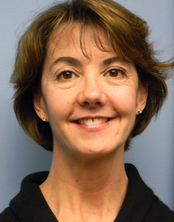
Cathi Kelley
Sex offenders are clever about finding opportunities providing easy access to children. They befriend adults to gain their trust and lower their boundaries, allowing easier access to children while simultaneously grooming children for sexual contact. Parents can help prevent their child from becoming a potential victim by being aware and involved:
- Clear communication between parents and children is essential for effective prevention. All parents should sense a “red flag” if any adult -- friend, coach, minister, teacher, relative -- wants to spend significant time alone with your child.
- Teach your children the correct anatomical names for body parts, and the difference between safe and unsafe touches. Use concrete examples to help children understand inappropriate behavior, such as asking “what if you’re at a neighbor’s house and someone asks you to play a game that makes you feel uncomfortable, such as a game of touching or one that involves taking off your clothes?” Follow up by encouraging your child to tell mom or dad or another trusted adult when someone does something that makes them uncomfortable.
- If you observe sudden changes in your child’s behavior, such as an abrupt decline in school performance, changes in sleeping and eating habits, and/or inappropriate sexual behaviors or self harming behaviors, seek immediate help.
All adults have an ethical obligation to report suspected child abuse, regardless of whether or not they have a legal obligation to do so as a mandated reporter. Also, fulfilling one’s legal obligation is not ever a replacement for exercising your moral responsibility to personally report suspected abuse.
If you suspect, you must report. In Washtenaw County, when a report of child sexual abuse is made to local law enforcement or the Department of Human Services, the child is referred to the Washtenaw Child Advocacy Center (WCAC). The WCAC works closely with local law enforcement and the Washtenaw County Department of Human Services to ensure that the abuse stops, children have a safe place to talk about what happened, and families receive the services they need to start healing.
Cathi Kelley is program director of the Washtenaw Child Advocacy Center (WCAC), a collaboration of Catholic Social Services, law enforcement and prosecutors, health care professionals and the Michigan Department of Human Services. The WCAC was established in 2005 to provide young sexual abuse victims coordinated assistance at one site. Parents seeking counseling or prevention education may call 734.544.2925. For more information, visit the Catholic Social Services website: csswashtenaw.org.
Comments
BhavanaJagat
Mon, Dec 5, 2011 : 5:15 p.m.
Sexual Harassment Policy : I appreciate the author's recommendation to use ethical or moral concerns to report incidents of child sexual abuse. It is important to have legal obligations, well-defined rules and regulations to prevent sexual harassment and child sexual abuse. I would be happy if the author finds time to investigate the existing sexual harassment policies at Ann Arbor Schools, Colleges, and Universities. Children visit all these places and come into contact with adults. These educational institutions must have rules and regualtions that prohibit sexual harassment of children. If sexual harassment is not checked, and if it is not noticed or reported, there are higher chances for the incidence of child sexual abuse. Asking children for sexual favors must be prohibited and must be reported as Harassment.
Mick Talley
Sun, Dec 4, 2011 : 9:59 p.m.
I think that Cathi Kelley had some really important points to make about the dangers to children. When she noted that "90% of the victims" know their offenders, Cathi noted "relatives, neighbors, friends, coaches, ministers and "others". I think in the last 15 years or so, according to stats developed by the Department of Education in Washington, it might have been good to have noted "TEACHERS!!!!" In light of "Penn State", I've noticed an awful lot of females with boys also and it shouldn't be thought that only the men are doing it. The percentage of children abused in the schools is outrageous! Thanks. Mick.
Publius the Younger
Sun, Dec 4, 2011 : 7:45 p.m.
The biggest mistake I ever made was reporting my abuse. It got me a lifetime of bigotry with worse consequences than the actual event. As long as it is socially acceptable to stigmatize survivors, you are creating a serious risk by identifying them. It has taken 40 years of hard work to even begin to address the bigotry faced by gay people, and the bigotry against survivors is just as intense.
OnTheRight
Sun, Dec 4, 2011 : 1:31 p.m.
Cathi, this is a very timely article as the merits of a local case of alleged child abuse by window peeping are being furiously debated in AA.com readers' comments. It has been disheartening to read the overwhelming majority of comments which blame the victim and the victim's family for ruining the personal and professional life of the accused; deny that such an act could be committed by an otherwise well-respected member of our community; and assert that the motive for alerting police to the alleged peeping was financial or part of a personal vendetta against the accused. Probably the worst of the accusations have been those that blame the victim and her family for the alleged attack and slam them for alerting the police about their concerns. As a community, we should demand that our most vulnerable members are protected. We should demand an environment that supports victims, both alleged and confirmed, so that those toe-curlingly horrible instances of abuse can be brought to light and stopped. There may be some false reports along the way, but that may be an acceptable risk in a community environment in which the smallest voice can feel empowered to speak up about abuse....and be taken seriously.
Matt Cooper
Sun, Dec 4, 2011 : 5:36 p.m.
Brad: And are you ready and willing to confirm and support the rights of those accused of a crime but for whom have not yet been proven guilty? Or should we just lock them up until they can prove their innocence? Do you understand that in our society we cannot, nay, we WILL not, expect someone to pay a penalty for a crime they have not been proven guilty of by a jury of their supposed "peers"? Or do we scrap that notion simply because the person is accused of a crime against children? If so, where does it stop? Do we now also throw away the presumption of innocence for accused rapists? What about murderers? Car-jackers? And in answer to your question to johnnya2, you darn betcha I am willing to support the Dr. who is accused of a heinous crime. He, like every other criminal defendant, is entitled to a trial by a fair and impartial jury and a vigorous defense. We have a thing in this country called the 'due process' clause. Read up on it. It is very enlightening.
Brad
Sun, Dec 4, 2011 : 2:17 p.m.
So then are you prepared to support the Dr. who at this point is an "alleged victim" of a false accusation as well? I doubt you are.
johnnya2
Sun, Dec 4, 2011 : 1:49 p.m.
Being falsely accused is an "acceptable risk"? Seriously? The entire basis of the US legal system is that it is better to have a guilty person go free than to imprison one who is innocent. I could end all crime tomorrow. Of course most people prefer we do not live in a police state. Child sexual abuse is abhorrent, but false allegations destroy people <a href="http://en.wikipedia.org/wiki/McMartin_preschool_trial" rel='nofollow'>http://en.wikipedia.org/wiki/McMartin_preschool_trial</a>
trespass
Sun, Dec 4, 2011 : 12:40 p.m.
Although at 18 a child legally becomes an adult but to their parents an 18 year old student at the UM is still their child. Sexual assaults of students at UM should always be reported to police and the victims should be protected. Protection of the victim from intimidation, peer pressure or repeated assault should always be paramount, even when the suspect is a football or basketball player. The University administration must do a better job of reporting all sexual assaults and protecting the victims.