

Outside investigation needed into delay at U-M in reporting child porn on pediatric doctor's computer
Editor's note: The following guest column was originally submitted as an open letter to the University of Michigan Board of Regents. It has been edited for publication.
The University of Michigan failed to report allegations of possession of child pornography on a U-M computer to the Department of Public Safety. The only reason that this came to light was that a hospital security guard bypassed his normal chain of command and reported it to DPS sometime after the Penn State scandal and after receiving the letter to the university community from President Coleman.
The public only became aware of the breach of public trust when an AnnArbor.com reporter, Lee Higgins, was diligent enough to request a copy of the search warrant in the case.
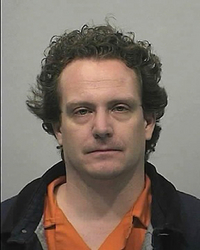
Stephen Jenson is a former pediatrics resident at the University of Michigan Hospitals who is charged with possessing child pornography.
• The security guard had not risked his job to report the incident to DPS?
• The reporter had not been so diligent as to ask for the search warrant?
Would something have happened later to bring this to light? Imagine then the embarrassment to the university when the other resident who found the porn tells the news media “yes, I reported this to the University of Michigan but they did not do anything with my report”. Then U-M would certainly have had a “Penn State moment”.
Now the U-M administration, through its spokesman Rick Fitzgerald, says: “It’s safe to say that there were gaps in procedures” “The procedures are at fault here, not the people”
How do you know that? You don’t even have a report from the internal investigators yet. This brings up the problem with the internal investigation. First the internal auditors do not have the skill set to investigate this type of breach of trust. They are basically accountants and business administrators. They have no expertise to determine whether any laws have been broken. They have never interviewed a witness. They have never investigated a crime. They are not experts in the culture of the College of Medicine or in the care of patients. They know nothing about the hierarchy in the practice of medicine, particularly in a teaching hospital.
This is not the first case of child porn that involves the College of Medicine. The University should also be asking some questions about a previous case of a Cell and Developmental Biology department faculty member, Tzvi Tzfira, who was under investigation for possession and distribution of child pornography by the U.S. Attorney’s Office. A search warrant was executed on July 15, 2010, but he continued to work at U-M in the College of Medicine until December 31, 2010. Did U-M know about the investigation (the husband of the U.S. Attorney and her top deputy are both faculty in the U-M Law School)? After he resigned, he fled to Israel to avoid prosecution.
My impression from the scant facts that are so far public is that the hospital treated the discovery of child porn as a liability issue, using Risk Management to investigate as if this were a report of possible malpractice.
Most of you are lawyers. You all know the questions that need to be answered.
Who knew what and when?
What was it about the culture at the hospital that had them treating this as a liability issue rather than a crime?
Why did the resident who found the porn not report it right away?
Why did those reporting the crime not know that they were talking to security guards not police?
Who directed the investigation of the crime?
What happened in the Medical School chain of command who supervised the Peds/Med residents? Who was informed? What did they decide to do and why?
What have the lawyers in the General Counsel’s office been told with regard to their duties and priorities (protect the hospital or protect the patients first?).
Who made the decision not to report it to DPS?
Why did hospital officials not suspend or restrict Dr. Jensen’s hospital privileges right away to protect the hospital’s patients? Were the appropriate officials informed? If not, why not? (The court not only made him stay away from children but he must where a GPS tracking device, which clearly means that they found him a potential danger).
Was anything done to monitor Dr. Jensen, such as restricting his access to patients when they were alone or monitoring his computer and Internet use while at U-M (no search warrant needed for that because the computers belong to U-M).
Was any evidence lost because of the delay in reporting the crime?
Will any evidence be ruled inadmissible because of the delay?
These are not the kinds of questions that the Office of University Audits is equipped to investigate. The skill sets and resources needed are more similar to those used in the University’s investigation of NCAA violations in the football program. This case should be at least as important as that of the football program.
I call upon the Regents of the University of Michigan to call for an outside investigation of what went wrong in this case and what needs to be done to be sure nothing like this happens again.
Dr. Douglas Smith is a retired professor of pathology at the University Of Michigan College of Medicine. He served as director of the Transplant Immunology Laboratory.
Comments
Ron Granger
Sat, Feb 11, 2012 : 6:04 p.m.
The story here isn't just this one extremely troubling incident. "There is never just one roach." If not for some luck and hard work by outside forces, it seems this could have been kept a secret forever, and the man now charged for the child porn may have gone on to become a pediatrician. So what else might the University be keeping secret? What other incidents have fallen through the cracks of their "flawed process"?
justcurious
Sat, Feb 11, 2012 : 5 p.m.
I agree that this letter was submitted to The Regents before Annarbor.com came out with the latest information from the U of M. That information clarifies some of the timeline and who said what and did what. So, perhaps this letter looks like the author didn't have the facts, because they weren't out there and no one knew when they would be. Timing of the letter being printed here was unfortunate.
getyourfactsright
Sat, Feb 11, 2012 : 3:18 p.m.
give me a break--when did this guy actually write this letter? It is so full of factual errors that I can't believe they actually reprinted it today. "came to light only because a hospital security guard bypassed the normal chain of command"?! WRONG! Apparently Annarbor.com has run out of fuel about this story and is continuing to stir controversy by publishing incorrect information and making the author of the opinion look like he doesn't actually know anything about the truth.
Mick52
Mon, Feb 13, 2012 : 1:18 a.m.
Exactly my opinion on this letter. If the author was any good at his previous job, he should stick with it. Many of his comments indicate his knowledge is not accurate. Not sure what this means: "• The reporter had not been so diligent as to ask for the search warrant?" An investigation on this is not a difficult one. I think the UMPD already knows all the answers to what happened here. The only thing that bothers me is that an investigation on what happened should have been done by now, long ago. I doubt too many people knew about this, and it would not take time to ask why they handled this like they did. That makes the UM look bad, not getting it out quickly. That creates a presumption by people that there is widespread unethical behavior.
getyourfactsright
Sat, Feb 11, 2012 : 6:21 p.m.
@UtrespassM--read the articles from yesterday; they answer most of the questions the opinion writer offered
UtrespassM
Sat, Feb 11, 2012 : 4:36 p.m.
Please put your more accurate information here, we all want to know the truth.
sHa
Sat, Feb 11, 2012 : 3:55 p.m.
So you do agree that an external investigation is warranted?
getyourfactsright
Sat, Feb 11, 2012 : 3:45 p.m.
@sHa-yes, great questions, except they've been answered already, even reprinted on this website. So why print outdated opinion now? I'm not arguing against an outside review, I just think that perpetuating inaccurate information is irresponsible.
sHa
Sat, Feb 11, 2012 : 3:35 p.m.
Grasping at straws, getyourfactsright? Dr. Smith's questions directed to UM's Regents are spot-on.
justcurious
Sat, Feb 11, 2012 : 2:09 p.m.
Who were the "at least eight people" who knew about this and why did they not think it was important enough to report it to the police? Or were some of them threatened into silence and afraid to lose their jobs? Why would doctors not feel it necessary to report this to the police, when their oath is to "do no harm"? Why didn't the University want to illicit a criminal investigation of child abuse?
Arborcomment
Sat, Feb 11, 2012 : 1:27 p.m.
Agree, said so from the git-go. Once outside report is done, THEN determine steps to correct, to include restructure and reporting responsibilities. Which makes the University's effort to date (the Auditors report), a nice exercise in tree killing.
UtrespassM
Sat, Feb 11, 2012 : 1:08 p.m.
Great questions, but they will tell you the truth you want to know. If you keeps seeking, they will make the DPS charge you criminal.
UtrespassM
Sat, Feb 11, 2012 : 1:13 p.m.
they will not tell you the truth