

Q&A with Liz Margolis: Ann Arbor school official talks about funding, consolidations and emergency financial managers
The Ann Arbor Board of Education recently held a session with Michigan lawmakers to discuss the state funding crisis and its impact on the public schools. Prior to that event, Liz Margolis, the communications director for Ann Arbor Public Schools, appeared on The Lucy Ann Lance Business Insider on 1290 WLBY to discuss areas of reform the school district would like to see enacted. Here’s an excerpt of the conversation Dean Erskine and I had, as Margolis outlined what they want lawmakers and the governor to understand.
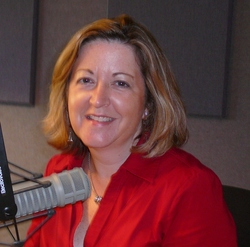
Liz Margolis, director of communications for Ann Arbor Public Schools.
Lucy Ann: As the governor looks to the school districts and municipalities to realize cost efficiencies, much of that can happen up at the state level with our lawmakers, too?
Margolis: Yeah, exactly, and we really think it’s past time to have a serious look at Proposal A. Has it done what it’s supposed to do when Gov. Engler brought it forward? It may have done that for a few years, but since the recession hit, it really has not done what it’s supposed to do as far as equalizing per pupil funding and many communities would like the local control back. We would like to let our community dictate what funding is supported for the public schools. Right now, 70 percent of the tax base that comes in from Ann Arbor dollars, from Ann Arbor district dollars, goes back to the state and that’s another issue that we’d really like the state to take seriously and look at.
Lucy Ann: What’s the idea behind calling it K-20 funding now?
Margolis: That is what the governor’s calling it. He’s caging the education budget as a PreK-20, and that’s one of our issues. He’s taking some of the money that he calls surplus; but I’ll tell you, Lucy Ann, that it’s really not surplus. It’s money that they pro-rated and took from the public school districts from the past two years in the middle of the school year. They’re calling it a surplus but the governor is proposing that that money goes to universities, and that is very troubling to us because universities raise money and, obviously, can raise tuition. Public schools have no way to gain that revenue. So we’re really unhappy about the move to take that money out of the PreK-12 budget and move it to the universities and sort of cage this as a PreK through the end of college, because it’s apples to oranges.
Dean: Liz, Saline Schools Superintendent Scot Graden made a comment on our show recently that surprised us. He said he could envision a situation where there may not be any more public schools. Is the situation really that dire?
Margolis: It’s pretty dire. I would not say that, because frankly this is a democracy, I still hope, and public schools, I think, are some of the basics of that democracy. I think what you will see, though, are fewer school districts, and that’s not necessarily a bad thing at all. I think you’ll see more consolidation, but frankly the erosion to the support of public education in the state of Michigan is really at critical levels. Something has to give and opening up more charters really isn’t the answer.
Lucy Ann: Explain the difference between charter schools and the traditional public school system. They are part of the public schools, so what is the difference then?
Margolis: Well, they are, they receive per pupil funding, so they receive state dollars. They’re not part of the public schools. Here in the Washtenaw County area, the Washtenaw Intermediate School District keeps sort of a loose track of them, but they don’t have to follow the same rules. That’s one of the things that we’re going to be asking, is that charter schools be looked at and assessed the same way public schools are. That is really important because we’re finding that charter schools are not educating our students as well as public schools are, in this area (Washtenaw County) at least.
Lucy Ann: When you say that they don’t have to follow the same rules, can you give us an example of what rules you’re talking about?
Margolis: They don’t have the same kind of funding requirements that we have to follow. They don’t have the same kind of reporting. Their data is not reported out like the data is reported out for our MEAP testing. There are a variety of things that they are not required to do that the regular public school districts are required to do, but they (still) receive the funding. I’ll tell you what we see sometimes in this district, and we see it a lot, is that students are recruited by some of the local charters to enroll and they do that right before Count Day in the Fall. Local charters get to count them and soon after, these students come back to us.
Lucy Ann: Really? And then you don’t get the money?
Margolis: And then we don’t get the money. And that’s a real problem and we have taken that to the state level a number of times to dispute that, but the state has not acted on that.
Dean: Liz, backing up to something you said earlier. You are under state guidelines in regards to pensions to contributions. So, Gov.Snyder, rather than tackling it himself like other states are doing, is kind of laying it back into your lap, the public schools around the state, and you have the specter of emergency financial managers looming over you. Does it feel like you’re between a rock and a hard place?
Margolis: Well, as far as the pensions go, the state dictates what percentage we contribute per employee and that’s where we have no control -- absolutely no control -- and so there needs to be a different pension model at the state level. The emergency manager, you’re right. One of the things we say around here is those emergency managers are only next to God in their control. There are two districts in Washtenaw County that are in deficit spending, Willow Run and Ypsilanti. I’m sure they’re very concerned with the governor’s new plan to bring emergency managers in there. Ann Arbor is not in this position yet. We still do have a small fund balance that covers the two months when the state does not make any payments to us, but that is a huge concern because those emergency managers can come in and basically wipe out everything in that district -- they can wipe out all the contracts, they can wipe out any kind of invoicing that is due to contractors. Districts really have no input on it at all.
Lucy Ann: But if a district is at that point and is failing and is not climbing out of that deficit, why not have someone come in and fix it, no?
Margolis: Well, yes something needs to be done, but we’re not sure the emergency managers are the ones to do this because they don’t have a basis for K-12 education. Let’s say they decide to consolidate some of the districts, how is that decision made? Is it based on boundary lines? Is it made based on the surrounding districts and who can best handle them? Are these districts that are being told they have to consolidate, do they have to fund it at the incoming district’s level or are they going to get some more funding to help to service those school districts that are being consolidated? There are a lot of unanswered questions out there.
Lucy Ann Lance and Dean Erskine own Lance & Erskine Communications, which produces “The Lucy Ann Lance Business Insider” (M-F, 8 a.m.-11 a.m.) and “The Lucy Ann Lance Show” (Saturdays, 9 a.m.-12 p.m.) on 1290 WLBY. The programs are live streamed at www.1290WLBY.com, and podcast on www.lucyannlance.com. The above interview is a condensed version of a longer conversation that is edited for print. The complete audio interview is posted online at www.lucyannlance.com.
Comments
cette
Wed, May 25, 2011 : 1:14 p.m.
@DianeEd, I wish you nothing but the best trying to get those special need services at the charters. If the record were done with fidelity and integrity, all would see the games that are played at these schools and that lip service is given to special ed delivery, not any real degree of service. It's disgraceful what goes on in a charter, and I predict it will be the coming educational scandal of the next few years.
DianeEd
Thu, May 19, 2011 : 8:17 p.m.
Based on publicly released MEAP data for 2010, Central Michigan University has compiled a list of the top 25 school districts. The top school in the state for K-8 schools is Canton Charter Academy with a proficiency score of 94.6%. In 7th place is South Arbor Charter Academy (92.8%), just behind Bloomfield Hills School District (93.3%) and Northville Public Schools (92.8%). AAPS is not included in this list. South Arbor (SA) is located on Carpenter Rd., south of Bemis Rd., in Washtenaw County. SA has 757 students (K-8) and a waiting list of over 500. Its students come from a number of nearby traditional school districts. The educational services provider for SA is National Heritage Academies (NHA). Of the top 25 schools in the aforementioned list, six of these are NHA charter academies. Of the top 25 K-8 charter schools in Michigan, eight are operated by NHA. For more information on South Arbor Charter Academy see: <a href="http://southarbor.heritageacademies.com" rel='nofollow'>http://southarbor.heritageacademies.com</a> All charter schools are required by State law to accept special needs children and provide educational services for them. SA has a program and teachers for its special needs children that meet or exceed all State law requirements in this regard. The use of NWEA's MAP tests is presently under consideration by AAPS. SA and other NHA schools have been using the MAP tests for six years. These tests have proven to be an effective tool for improving student proficiency as well as for judging how well teachers are developing their skills to better educate their students. NHA has been and continues to be a major force in developing and advancing methodologies and processes for educating children
Al Waters
Mon, May 16, 2011 : 12:02 p.m.
Lucy Ann, Would you be willing to follow up with Michigan department of Education to verify the statements Ms. Margolis made regarding charter schools. My reading of public school academy law is very different from hers. I do believe that they play by the same rules, they just receive significantly less funding.
cette
Wed, May 18, 2011 : 7:35 p.m.
What actually happens is perhaps, not so kosher, because after all, the public schools have the real money, and they are just charter schools, on a shoestring budget..shoot, they can't do special ed like AAPS can...
cette
Wed, May 18, 2011 : 7:18 p.m.
They are supposed to play by the same rules....
BhavanaJagat
Sat, May 14, 2011 : 4:12 p.m.
While speaking about the funding problems, we also need to direct our attention to the "SPENDING" issues. How is this School District spending the dollar put into its pocket? If the spending is not wise, why should I put a dollar into that pocket? The pocket has a hole and the dollar just disappears in this bottomless hole. We need to question the spending on consultanats, its hiring policies, its building renovation expenses, its purchases of equipment. The School District buys equipment which gets stolen with much ease as the doors are left open during night time. The District has no proper inventory and does not ask to verify the inventory to prevent loss of costly equipment it buys as if there is a cashcow. There is no cashcow and I would like to place fiscal responsibility and management as the basis for any kind of funding. Public Education is not a Right to misuse and abuse public dollar.
aataxpayer
Sat, May 14, 2011 : 2:56 p.m.
Good article. @Carole - The 70% figure is based on the fact that much more school property tax and sales tax revenue is generated locally than is returned in funding to AAPS. This is the "Robin Hood" part of Proposal A. Some "share the wealth" is okay, but to get back less than 30% of what we give is not acceptable. Note that this does not apply to a local millage - 100% of the money raised with the recently passed WISD special education millage will stay in Washtenaw County. Regarding pensions and the 24% contribution, for many years the MEA and state employee unions insisted on provisions and defined benefit levels that were not sustainable and not consistent with what ordinary taxpayer get in the private sector. Legislators that also got ridiculous pensions and benefits generally agreed to these provisions and nobody looked out for the interests of taxpayers. Some changes are happening now, but essentially these changes hurt the new, younger teachers most and do not address the unaffordable benefits being given to current retirees. This is a huge mess created mainly by the MEA and other public employee unions. They should step up and offer affordable solutions that are fair to taxpayers.
Carole
Sat, May 14, 2011 : 8:59 p.m.
Thank you for replying to my questions. RE: Pensions, I agree with pensions -- surely wished had been on top of % of pension sooner in life -- would have objected highly--have objected continually with legislators voting in high pension rates for themselves -- they actually should be the leaders of the pack and taking reductions effective immediately.
Carole
Sat, May 14, 2011 : 1:10 p.m.
Very good article - thank you. Question: Why is 70% of our tax dollars going to the state? Are these school tax dollars? And, I also agree that funds should not be cut from pre-k - 12 to get to universities. The universities have other avenues to obtain revenue to maintain and improve their financial concerns. RE: Pensions, why is the state dictating the amount school districts pay? Maybe in good times, paying the higher amount of 24% worked, but maybe it should be grandfathered in with new hires that the figure might be lower to help. I know all school employees are paying a small percentage for health benefits -- this was instituted at the beginning of the school year I believe. Interested comment re: pulling students to have the fourth Friday count be high to obtain more funds and then loss students!
gild
Sun, May 15, 2011 : 12:52 a.m.
The pension system actually has changed -- newer employees are on a hybrid plan that's much more self-funded. But the 24% is going to support the current generation of retirees.
Tony Livingston
Sat, May 14, 2011 : 12:51 p.m.
I am glad that Margolis is getting the information about charter schools out to the public. There is a myth circulating that charter schools do a better job with students and test scores. But I compared the data of one of the areas most popular charter schools with our neighborhood elementary and middle school and there was very little difference. Charter schools do not have the population of poor and non english speaking students that AAPS has. Some have the cream of the crop of involved families and they still did no better than AAPS in their scores. Parents need to attend meetings and enter a lottery to get their kids into charter schools. Some have no buses so they have to be able to drive their kids to an from school every day. That eliminates a huge portion of families who merely send their kids off to the neighborhood public school. I would also agree that from my personal experience, no one is watching a lot of what goes on in charter schools.
TryingToBeObjective
Sat, Jun 8, 2013 : 4:51 p.m.
Personally, I feel that one thing that makes a difference in test scores is kids getting excited about learning. And having teachers who are not only skilled at teaching, but also creative and innovative, makes a key difference, when teachers aren't happy where they work, due to a non- effective administration, or a just plain nasty or negative principal, these same teachers reflect that stress in their classrooms. That's why Che Carter is such a fine example of a good administrator- I bet that staff will be happy with him, which will translate to enthusiastic kids in a classroom. If the staff isn't happy with someone like Che, they have a problem. In addition, the parents and the kids also click with Che. This makes a HUGE difference- if you have an issue, you know he will listen, as well as act in the best interest of the student. The AAPS needs more like Che- the trickle down effect will bring in, as well as keep enrollment up.
cette
Sat, May 14, 2011 : 12:41 p.m.
Despite all the budget cuts, it's time for AAPS to join other school districts and hire lobbyists and go to Lansing and play the game up there at Lansing. Don't let Mackinac.org run the show here in our district. They are union busters, pure and simple. Nothing else matters to them. It's time to work on pension reform, and make that palatable for the staff, before EFM's do it for us, and we are like DPS, relying on charters and autocracy to run our school districts.
Rachel
Sun, May 15, 2011 : 11:01 p.m.
Problem is they don't have money to hire lobbyists.
Dr. I. Emsayin
Sat, May 14, 2011 : 11:53 a.m.
If Ypsilanti Public Schools and Ann Arbor Public Schools are forced to consolidate many more people will be reading articles like this and commenting rather than commenting on a 5 day suspension for Pioneer students. Parents of AAPS students want to tell the district how to manage their children but they need to get more involved in working with the district regarding budget issues. When they see their children's principals or favorite teachers being cut they get upset, but they need to also see how money is being spent at their children's schools by becoming active in PTSO and School Improvement Teams. Scrutinize from the inside.