

The main business of government is the people
Editor's note: Robert Faber writes occasional columns for AnnArbor.com about aging, politics and other issues.
It was President Calvin Coolidge in the early 1920s who asserted that “the business of America is business.” If they had television in those days he would have been the target of all the late-night TV comedians, but we now discover that he was not necessarily foolish or glib - just prescient.
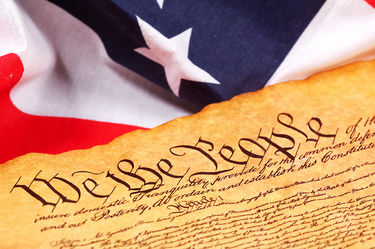
The Founders' pledge to "promote the General welfare" is one of the bedrock principles of our nation -- the essence of who we are.
Dana Rothstein | Dreamstime.com
As a successful business, after all, our country could assure stability and make funds available for the necessities of a good, or at least adequate, life for all its citizens. With such a no-nonsense, conservative approach to our nation’s governance, it could be claimed that the important needs of the People — health care, education, food, housing — will be adequately attended. Successful businesses are built on knowing the needs of their customers and employing the most efficient ways by which to satisfy those needs.
At least that’s the theory. Unfortunately, the problem with the government’s current business model is that a large part of its original customer base — the working middle-class who comprise the vast majority of our population — has been downgraded to the status more of inventory than of client.
It is now the suppliers rather than those most in need who are the primary recipients of our government’s attention.
And now that segment of our population most dangerously impacted by our tottering economy because they have no reserves and no alternatives, are further threatened by fiscal policies focusing on the reduction of aid to the indigent as the best way by which to balance our budget.
The conservative philosophy of keeping larger business firms healthy in order to provide jobs in the future is reasonable and potentially productive — within principled limits. Adjusting those limits to the politics of the moment, however, can be dangerous.
An offensive example of surpassing reasonable limits, for instance, was the legislative favor to the coal mining industry to help them cut their costs by reducing the safety rules then in place. Unfortunately, in 2006, the inaction of the regulators charged with oversight and enforcement of even those new relaxed rules led to the West Virginia Sago coal mine disaster—and its loss of 12 miners’ lives.
Manipulating the system to make friends and win votes often works, but is not the best way to serve the people or the democratic process.
Our Constitution, the founding document setting the tone and defining the goals of our democracy, insists that its primary mission is to “promote the general Welfare” of our citizens, thereby “form[ing] a more perfect Union.” That goal remains unchanged for conservative and liberal leaders alike, but the loss of the higher principles of governance makes it a very costly and dangerous tactic.
The credible conservative philosophy that by making businesses profitable, working people will find the employment they need to provide adequate resources for a better life is reasonable — when approached with integrity. Buying political support by reducing taxes for the affluent, however, or helping industry by not enforcing such environmental safeguards as the clean-air or clean-water regulations, is dangerous and dishonorable — a form of “trickle-down relief.”
An alternative approach would be to start the process by identifying the unmet needs of our people, analyze ways to provide the assistance needed to bring them up to speed and then determine the best and most efficient tactics to meet those ends.
In his second Inaugural Address in 1937, Franklin Roosevelt, noting the shame of “one-third of a nation, ill-housed, ill-clad, ill-nourished” said: “The government is competent when all who compose it work as trustees for the whole people.”
The Founders’ pledge to “promote the General welfare” is one of the bedrock principles of our nation — the essence of who we are. Rather than trying to create an environment conducive to fuller employment so people will eventually find work — also known as “trickle down” — it should be mandatory that everyone have their essential needs fulfilled and then find the best way to manage the process.
In the present scheme of things, we too easily lose our focus, concentrating on the well-being of our suppliers rather than of our people, which puts the citizens several rungs lower than that of business. It is reasonable to support businesses in order to help the poor, but the ground rules must be set by the needs of the people—their customers—rather than by the demands of their stockholders.
To some degree, President Coolidge was right — business does have a major role in the business of our country, but instead of concentrating solely on methods of easing quality controls or bypassing environmental standards to meet that burden, our concern must include addressing the needs of the people to be served. Very simply, in both the planning and the process, the people must be our focus.
Bob Faber has been a resident of Ann Arbor since 1954. He and his wife, Eunice, owned a fabric store and later a travel agency. He served a couple of terms on the Ann Arbor City Council. He may be reached at rgfaber@comcast.net.
Comments
bobslowson
Mon, Jun 25, 2012 : 4:01 p.m.
Bob...you are wise beyond your years.
Cold
Mon, Jun 25, 2012 : 11:22 a.m.
Government needs to adopt the medical professions motto: First, do no harm.
leaguebus
Sun, Jun 24, 2012 : 6:08 p.m.
Good observation, Mr Faber. It's easy for the right to crow about the private companies in this country, but having a good stock values and large profits was not the only reason our country stands where it is now. For instance, if it was not for governmental research dollars, it is highly likely that I would be typing on this IPad on the Internet. It took government money and research to stimulate the individual's that ultimately built companies that provide the hardware for me to do what I am doing. Those short sighted people who do not see that it takes a partnership between government and business to build the greatest country in the world are slowly turning us into a third world country with a huge gap between the rich and poor. Those that cut taxes to starve the government smaller are killing our educational system. Companies can provide money for research but because they have to keep their profits up and stock prices high, can't do the whole job needed. Venture capital will not fund off the wall ideas that could eventually become huge breakthroughs. That's what the government does. In doing this the government can take care of its people by stimulating job creation in the private sector as has happened since the war.
leaguebus
Sun, Jun 24, 2012 : 6:10 p.m.
Sorry for the typo, it's highly unlikely that I would be typing, not likely.
LarryJ
Sun, Jun 24, 2012 : 1:32 p.m.
A thoughtful column, but if his best example is that the governnment could have prevented the death of 12 miners in 2006, he is understating his case. I think an important role of gov't is to steer business toward endeavors that help our overall economy and benefit the people. RIght now, many in our government are in the pocket of businesses that grew big in the 20th century but are not leading us in good directions for the 21st century. Our politiicians are subsidizing these big old companies, who in turn are paying the poltiicians, a situation worsened by CItizens United case. The best example, of course, is climate change. CO2 was historically in the upper 200s but is now at 397 and rising steadily. On our present course, it may reach the 600s or 700s by the end of this century, in which case our grandchildren will be cooked. The solution MUST involve giving businesses the incentive to develop clean energy, but instead, we are subsidizing the big profitable dead-end companies that worsen the problem. In doing so, we are missing the opportunity to develop a future-oriented economy and jobs for the future. How can we get our government and our business to lead us in a better direction?
Unusual Suspect
Fri, Jun 29, 2012 : 3:26 p.m.
"I think an important role of gov't is to steer business toward endeavors that help our overall economy and benefit the people." Absolutely wrong. An important role of government is to stay out of the way, in which case business will steer itself toward profits, for which they will need to hire employees, which will help our overall economy and benefit the people.
leaguebus
Sun, Jun 24, 2012 : 5:34 p.m.
"Clean Coal". LOL
4Bells
Sun, Jun 24, 2012 : 12:04 p.m.
"We the People of the United States, . . ." I take from this opinion piece that quality, well-administered government is for the good & welfare of ALL the People, not just a privileged few. "One-trick-pony" government to benefit a single segment of society, at the cost of everyone else, is ill-advised & built on faulty logic & narrow vision. If nothing else, in Michigan, it is my hope that our present governor & legislature begin to honor their charge to best represent EVERYONE in this state; not just a single, special interest group . . . Thank you Mr. Faber!
Mick52
Sat, Jun 23, 2012 : 10:43 p.m.
Actually I think running the govt like a business would help more than anything. Business is successful by cutting waste and focusing on effective and efficient ways to operate. With govt every year you get a big pot of money with little or no oversight on how you spend it. That causes most fiscal issues. What business survives by spending more than it takes in?
Albert Howard
Sat, Jun 23, 2012 : 4:51 p.m.
The Creator always gets what He wants. The Author, Originator and Designer wants His 'constitution' in Ann Arbor, Michigan to mirror the pattern of His heavenly constitution. Anyone can quote from an earthly constitution. Some Democrats/Republicans use the constitution as a euphemism to filter their embarrassment for the true and living God. Never mentioning His name in public or in print. The God of Ann Arbor, Michigan is Theocratic. He speaks through His Son. His name is Jesus of Nazareth.
Unusual Suspect
Fri, Jun 29, 2012 : 3:24 p.m.
"This is your opinion, only." And that is your opinion, only. Prove to me your opinion has any importance.
leaguebus
Sun, Jun 24, 2012 : 5:31 p.m.
This is your opinion, only. Prove to me your God of Jesus exists and I might listen.
lumberg48108
Sat, Jun 23, 2012 : 4:50 p.m.
Since he quoted the constitution I thought I would lend my two favorite quotes to to gallery ... I predict future happiness for Americans if they can prevent the government from wasting the labors of the people under the pretense of taking care of them. Thomas Jefferson The uncontested absurdities of today are the accepted slogans of tomorrow. They come to be accepted by degrees, by precedent, by implication, by erosion, by default, by dint of constant pressure on one side and constant retreat on the other - until the day when they are suddenly declared to be the country's official ideology. ~ Ayn Rand
Basic Bob
Sat, Jun 23, 2012 : 3:50 p.m.
When Calvin Coolidge was president, the government did not provide either retirement or health care benefits. The country was prosperous and was not involved in any wars, only some small occupations in the Caribbean and Central America. Governor Coolidge's comments on the responsibility of government are irrelevant to the current situation. File this opinion piece under "Who cares".
Dog Guy
Sat, Jun 23, 2012 : 2:38 p.m.
As Faber's beloved central planning creates a collapsing economy and society, he advocates even more central planning as a remedy. Most people I know run their own lives better than anyone else can . . . except when the petty gods of central planning interfere.
EyeHeartA2
Sat, Jun 23, 2012 : 2:35 p.m.
The second paragraph is more or less unreadable. My 6th grade daughter would have received a C for this load of drizzle due to that alone. Once again, Richard Faber proving his point through argumentum verbosium. Do you get paid by the word or something?
Mick52
Sat, Jun 23, 2012 : 10:40 p.m.
My thoughts exactly. When I saw who wrote this before scrolling down I figured we would be confronted by hundreds of words that say nothing. This is just typical liberal idealism. "Buying political support by reducing taxes for the affluent..." Funny, I thought taxes were lowered for everyone. And here is a hoot too: "Manipulating the system to make friends and win votes often works, but is not the best way to serve the people or the democratic process." Isn't that just what the President is doing? Free prescriptions for healthy people (contraceptives, to heck with the sick people on meds) and his recent pandering to illegal immigrants.
Daniel Piedra
Sat, Jun 23, 2012 : 1:01 p.m.
A very well-written article, although I disagree with Mr. Faber's analysis of conservative political philosophy, which I found to be inaccurate. It is difficult to analyze conservatism through the lens of liberalism, because the perceived negative aspects of conservatism -- namely, favoring businesses over social programs -- will be magnified through one's own bias. Nonetheless, I appreciate Mr. Faber's attempt to approach conservatism reasonably, which is indeed a rare accomplishment in today's hyper-partisan politics. For those reasonable readers who style themselves as progressives, one of the best books to read to understand conservatism is Friedrich Hayek's "Road to Serfdom"; but don't worry: it is neither propaganda nor offensive. Once again, kudos, Mr. Faber, for a well-written article.
G. Orwell
Sat, Jun 23, 2012 : 2:56 p.m.
@Daniel "It is difficult to analyze conservatism through the lens of liberalism, because the perceived negative aspects of conservatism -- namely, favoring businesses over social programs -- will be magnified through one's own bias." Real conservatives would not favor businesses over people because real conservatives believe in the free market. It's the fake conservatives (The Republican party) that are corporatists. I also remind you the Obama admin. and many democrats are also Corporatists. Obama also supported the TARP (theft) and his biggest contributors are the big banks. Also, under Clinton, NAFTA was passed and the Glass-Steagall was repealed. I'd say the Democratic leadership, under the guise of helping the middle class, did more to destroy the middle class than the Republicans. Both are working together to destroy the middle class on behalf of their masters.
golfer
Sat, Jun 23, 2012 : 12:34 p.m.
gee wounder if people in Washington knows this?
The Black Stallion3
Sat, Jun 23, 2012 : 12:58 p.m.
I don't think so Mort............The people in Washington only care about the people in Washington and we need to change that.