

Pfizer closing in Ann Arbor feels like a lifetime ago
The calendar doesn’t lie: Five years ago, Ann Arbor learned that its largest private employer was closing.
The news, as I wrote at the time, made “all of Ann Arbor reel from the blow.”
At stake was the looming vacancy of 2 million square feet of offices and labs, the pending loss of 2,100 jobs, the unending questions about what it meant for the future.
Five years later, that January day in 2007 it feels like a lifetime ago instead of 60 months.
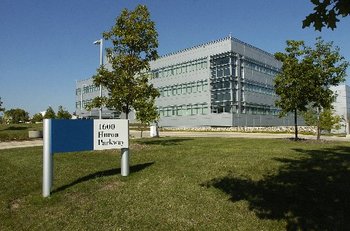
There’s also the short conversation with a trusted source who nervously called that same weekend to tell me that I shouldn’t be surprised when news come from New York that ould be devastating to Ann Arbor.
And I recall the shock of learning on a Monday morning that, indeed, Pfizer was planning to leave Ann Arbor. The impact, at that moment, seemed enormous.
The enormity of the moment grew into a specter that dominated Ann Arbor as it strove to keep its balance while its world was shifting.
We talked about leadership and mobilization and how losing Pfizer was a regional problem and not happening in a northeast Ann Arbor bubble. We fought to keep the employees in Ann Arbor by urging more startups and hiring. We anticipated who could be hurt amid the loss of tax base, payroll, home owners.
Yet somewhere on that road to keep the Pfizer closing from devastating Ann Arbor, the route blurred.
5th anniversary of Pfizer's announcement
And a few months later, the University of Michigan stepped into the void, landing the real estate bargain of a lifetime when it purchased the campus for $108 million. Suddenly, we knew what would happen to the property. Not the details, but the direction: It was coming off the tax rolls as it rolled into U-M’s vision for its research and future.
That move was soothing, in a way. We all had more to worry about at that time.
Today, considering the Pfizer experience, it feels like Ann Arbor experienced a happy ending. The number of U-M employees at the campus has moved from dozens to hundreds to about 1,000 today. Someday, I’ll even stop calling it the “ex-Pfizer property.”
Getting to that place hasn’t been without hurdles. I lost neighbors. My children’s elementary school lost parent leadership and my kids lost friends. Home values fell, businesses lost regular customers, nonprofits lost a benefactor. The city lost tax revenue.
But all of that happened as the world was changing, too: Jobs were lost. Retirement funds eroded. Industries faded. The nation worried about its future, and our state fared poorly.
Looking back, that seemed to make the worry and planning over the Pfizer departure seem like practice for the bigger crisis.
The initial fears about Pfizer’s loss to Ann Arbor simply had to fade. At some point, while the city was rebuilding, we even became that “bright spot” so often mentioned when people talk about Ann Arbor’s role in this state.
I know I’m not alone in thinking that January 2007 seems like a very, very long time ago.
I don’t look backwards. None of us really can: We still have to fight that bigger fight to get Michigan and the nation back on track.
But I can say that the experience did make us stronger. Beyond that, it just feels like distant history.
Paula Gardner is News Director of AnnArbor.com. She can be reached by email or followed on Twitter.
Comments
Rod Johnson
Sun, Jan 22, 2012 : 8:13 p.m.
One thing that happened was that Pfizer told the employees that were moving that if they sold their houses for up to $100K under the asking price, Pfizer would make up the difference. (This is what I remember, anyway--corrections welcome.) The damage that did to home prices around here was enormous. Overnight, the prices buyers were willing to pay dropped, and that was only one of a series of blows that we still haven't recovered from.
Townie
Sun, Jan 22, 2012 : 11:28 p.m.
True from what I heard from friends. Thanks for one more example of why Pfizer leaving was a good thing. Like the local drug kingpin leaving. Finally - before it did worse things than it had already done.
Tru2Blu76
Sun, Jan 22, 2012 : 3:31 p.m.
You can see from the poll that people are of two minds about that event (Pfizer closing). The recovery of "something" from "nothing" is about the commercial land site and about the job situation. And the "not over yet" group sees the stark reality of where cold corporate calculation & political irresponsibility has taken Michigan, the U.S. and the world. We can also see that Ann Arbor owes the University of Michigan a huge thanks. Not long after the Pfizer closing, U of M not only bought that vacant 150 acre site, it embarked on a massive building program which led developers to jump in with huge new student housing buildings. At one point, there were 13 construction cranes visible on Ann Arbor's Easter skyline. During this, the old YMCA building was demolished, a new Y Building erected and the city decided to jump in with parking structure expansion on a large scale. The closing of the Ann Arbor News was another blow. But the U of M Credit Union now occupies that iconic building. Indirectly - U of M came to the rescue there too. U of M also spent $225 million renovating Michigan Stadium, largest in N. America. Key I think is the undaunted spirit of U of M leadership - which spills over into this town. Never has the cry of "Go Blue" meant more or sounded sweeter.
Townie
Sun, Jan 22, 2012 : 3:25 p.m.
Pfizer? This Pfizer?: September 04, 2009 Pharma Crime: Pfizer Fined $2.3 Billion for Drug Fraud (the largest health-care fraud settlement in U.S. history) An ethically challenged corporation that routinely lied, cheated? That one? I didn't see it quite as a much 'loss' as an inevitable consequence to the worst kind of corporate behavior. Parke-Davis - that was a loss; caused by Pfizer....
Tru2Blu76
Mon, Jan 23, 2012 : 4:16 a.m.
One quibble: Warner-Lambert / Parke-Davis was not exactly a paragon of corporate virtue. The extinction of the original Parke-Davis started the chain of outsider ownership which ended with Pfizer's leave-taking. My great grandfather (F. J. Whitney) was friends with Parke and Davis, in fact, he once held controlling interest as a result of his (large) financial support. Corporate culture in both the Warner-Lambert & Pfizer "versions" was atrocious. I worked there for a time under contract: I've never seen so many "made" snobs in my entire life. Good riddance, is all I thought when I heard the news of their leaving.
xmo
Sun, Jan 22, 2012 : 1:50 p.m.
Ann Arbor and many other communities in the Midwest have gone through plant closings. Pfizer just happen to employ higher educated workers. Let's get over it and move on!
squidlover
Sun, Jan 22, 2012 : 1:43 p.m.
Another memory that I have about the announcement was an interesting article being printed in the Observer called "Pfired" from an anonymous writer who worked for Pfizer and described the events leading up to the meeting. The author described how Pfizer informed everybody that there would be a mandatory meeting at 10am on the given date. Although curious, the author described the mood as still being generally relaxed, except for a worried co-worker who was viewed as being a Nervous Nellie. At the time of the announcement, the author described how a man in a golf shirt watched the clock, and when 10am came, approached the microphone and said "The Ann Arbor site will be closing." The author effectively described the sense of shock that swept over the room and personalized how many ways the closing would effect not only himself, but so many others.
Brad
Sun, Jan 22, 2012 : 1:33 p.m.
For what it's worth, our next-door neighbor was displaced from his job at Pfizer and the family transferred to San Diego. They could not be happier and their kids love it there. It isn't all doom-and-gloom.
Tru2Blu76
Mon, Jan 23, 2012 : 4:21 a.m.
Unfortunately, exodus from Michigan is no picnic for the greater number who are left behind. It's nice that a few escaped to places they now enjoy more. But there are a few million Michiganians who won't leave: they'd rather stay and work to make Michigan a destination rather than a place to run from.
squidlover
Sun, Jan 22, 2012 : 1:14 p.m.
Another critical effect was how AAPS lost millions of dollars as it lost its single largest resource of tax revenue. Obviously, that problem has not been resolved yet.
HPD
Sun, Jan 22, 2012 : 1:09 p.m.
"... I shouldn't be surprised when news come from New York that ould be devastating... " When will annarbor.com prioritize editing. I have a problem with articles looking like someone texted them in.
A2comments
Sun, Jan 22, 2012 : 12:03 p.m.
ould? Plymouth Rd stores suffered and have not recovered.