

Prosecutor: Historic medical marijuana rulings not 'tectonic shifts' in Washtenaw County
The Michigan State Supreme Court’s rulings Thursday on two facets of Michigan’s medical marijuana law won’t be changing too much for Washtenaw County, according to one prosecutor.
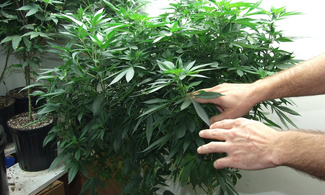
The Michigan State Supreme Court recently clarified some parts of the medical marijuana law.
AnnArbor.com file photo
Washtenaw County Chief Deputy Assistant Prosecutor Steve Hiller said Friday the ruling on when the doctor’s statement, or a medical marijuana card, needs to be issued to the patient helps clear up that aspect of the law. Other than that, much of what Washtenaw County prosecutors deal with won’t be changing, he said.
“I don’t see it as being a tectonic shift in the landscape,” Hiller said. “It clears up a few things.”
“It’s always good for everyone to know what the lay of the land is,” he added.
The rulings by the justices were the first and second decisions on the Michigan Medical Marijuana Act since voters passed it in 2008. It’s the first step in a long process to clear up the broad language in the law that has left many officials confused on exactly how to enforce the statute.
Both sides of the aisle have hailed the decisions as their own victories, with a spokesman for Michigan Attorney General Bill Schuette stating the ruling on when a doctor’s note or medical marijuana card must be obtained supports the Republican’s stance on the law in an MLive report. A lawyer for the American Civil Liberties Union stated the ruling on the number of plants and amount of marijuana was a victory for patients, in the same report.
Hiller said the ruling on how many plants can be grown, and how they can be grown, would apply to some cases prosecutors have seen where defendants claimed marijuana plants were being grown for medicinal purposes but were not meeting the guidelines set by the statute.
However, more interesting decisions on that front will be coming down the pipe, Hiller said.
The state’s Court of Appeals has ruled a caregiver can have up to 12 plants per patient, but each patient’s plants have to be locked and secured in an enclosed area only accessible to the patient and the caregiver, Hiller said. This ruling outlaws large grow operations that medical marijuana dispensaries would prefer, Hiller said.
The Supreme Court might not have taken up that particular case yet, but it’s going to be a major one for the future of medical marijuana in the state, he said.
“We’re going to have to see how things progress from this point,” Hiller said. “There’s certainly more to come.”
Kyle Feldscher covers cops and courts for AnnArbor.com. He can be reached at kylefeldscher@annarbor.com or you can follow him on Twitter.
Comments
lefty48197
Sun, Jun 3, 2012 : 10:08 p.m.
Oh no. This won't cause problems for prosecutors. At least not until a huge majority of the people they drag into court on marijuana posession charges start showing that they're under a doctor's care and are eligible to use marijuana for their medical condition. At that point, police arresting people for posession marijuana will cease forever.
Madeleine Borthwick
Sun, Jun 3, 2012 : 9:07 p.m.
Prohibition doesn't work. It never did, and I firmly believe it never will. people will do what works for them, regardless of what I or anyone else thinks. I no longer smoke marijuana, but I can make that determination ONLY FOR MYSELF and I will go to my grave supporting its legalization and the right of people to use it medicinally, OR to get high at the end of the day. To those who oppose legalization, I can only say that I hope you never have the back pain that one of my daughters(she's had 4 surgeries at this point)has to live with on a daily basis. On the other hand, pain can be quite a persuader and maybe this would change your mind. My daughter has taken every narcotic substance that Big Pharma can come up with. Ultimately, they all lose their power to help her because she builds up a tolerance. in addition, these substances can also wreak havoc with her kidneys and her liver. to date, the only thing that affords her some relief is a hot shower and a(gasp!)joint. Bill Schuette, Shame On You. sign me, a mother who doesn't like to see her children in pain
MARK
Sat, Jun 2, 2012 : 9:02 p.m.
How about a public/private option. Just like one of the Affordable Health Care suggestions. Buy from private sources but have a government source ,subsidized if needed, also available to keep the price within reach of the poor.
mixmaster
Sun, Jun 3, 2012 : 7:15 p.m.
Maybe U812 would prefer to live elsewhere?
u812
Sun, Jun 3, 2012 : 12:02 a.m.
Only in America is there such Political Bull.
toothless wonder
Sat, Jun 2, 2012 : 5:08 p.m.
Big Pharma is extremely threatened by marijuana becoming a viable option for Americans! This is virtually the only reason its such a big deal!! Bear this in mind upon further discussion. Your anti-psychotic/antidepressant/anti-anxiety pills that make one limp in the nether region/ gain 45 lbs/ can't go out in the sun or overexert for fear of death from overheating... Don't compare to the sense of community from burning one with your friends, which is at least a sense of community of a sort- how therapeutic! And the anti nausea and pain relief from MJ and many other symptom-reliever anecdotes are real.
Madeleine Borthwick
Sun, Jun 3, 2012 : 9:10 p.m.
Amen, toothless!! Big Pharma wants to keep pushing its pills which, in the long run, trash your liver/kidney function, don't work too well, all in the name of Big Money.
Major
Sat, Jun 2, 2012 : 4:21 p.m.
The vast majority of people voted for this, and most likely feels the same about full re-legalization, yet a microcosm of elected officials..countable on one hand, are so hell bent on their own personal views they forget who elected them in the first place...and who they work for. Self serving narcissists that must go!!! We all need to remember that come the next vote!! The needs of the many, outweigh the needs of the (very) few!
David Cahill
Sat, Jun 2, 2012 : 3:51 p.m.
I was pleased by the Supreme Court's decision because it was unanimous - which is a rarity nowadays on landmark cases. The all too typical partisan split did not happen. The Court took our medical marijuana law seriously, and did a workmanlike analysis of what were small, technical issues. The Court's approach bodes well for patients as other cases move its way.
mixmaster
Sat, Jun 2, 2012 : 1:16 p.m.
It's a plant that literally will grow pretty much anywhere. It's relatively easy and far safer to grow out of doors in your home garden than it is indoors. 2-3 mature plants will easily provide for one persons needs. For most people growing their own or with a friend, outdoors will be sufficient. Like most everything else, it's too bad that there are a few greedy people who will make it hard for everyone else. Lastly, the US imports all the help it uses for industrial purposes. If our legislature would get their act together, industrial hemp could be a cash crop for Michigan farmers.
David Briegel
Sat, Jun 2, 2012 : 1:05 p.m.
Won't we all sleep better knowing that our noble criminal justice industrial complex is wasting our precious tax dollars by protecting us from those fiendish hordes of marijuana junkies! There is a sane alternative of veteran law enforcement professionals called L.E.A.P. (Law Enforcement Against Prohibition) that rational folks can support.
jamie
Sat, Jun 2, 2012 : 1:04 p.m.
Mr.Hiller appears to lack knowledge on this issue. Washtenaw Co. may not be as immediately affected by this ruling, but several people in surrounding counties have been denied their rights, and have had their lives and their family's lives turned upside down, in many cases, while trying to cope with a debilitating medical condition. This ruling will help to restore the original intent of the drafters and voters, and protect people the injustice that has been so rampant in Oakland, Livingston and other counties around the state. Also, most dispensaries do not want large commercial grows. Most responsible operators of safe access sites and Provisioning centers do not want the law changed, and want to continue working with and relying on the existing caregiver system to help get medicine and education to patients in need, and keep the activity out of the range of concern for most Federal investigations and action. Most dubious is this statement by Mr. Hiller- "The state's Court of Appeals has ruled a caregiver can have up to 12 plants per patient, but each patient's plants have to be locked and secured in an enclosed area only accessible to the patient and the caregiver, Hiller said. This ruling outlaws large grow operations that medical marijuana dispensaries would prefer, Hiller said." I do not believe that any such ruling took place in the COA. What is described is what I know as one of the many senseless and unnecessarily restrictive and prohibitive opinions about the MMMA, by the Attorney General in his consistent attempts to thwart the will of the people.
clownfish
Sat, Jun 2, 2012 : 12:45 p.m.
end the madness, legalize it.
clownfish
Sat, Jun 2, 2012 : 4:10 p.m.
The madness of spending billions of dollars in a futile attempt to rid the country of a plant. The madness of jailing thousands of people that do no harm to society. It need not be as complex as you make out. All that needs to be done is to remove MJ from Schedule I drug laws and state that possession and growing of MJ is no longer a crime. The end.
Justavoice
Sat, Jun 2, 2012 : 1:11 p.m.
What madness? Your getting what you ask for. Legalization will take huge steps to regulate the industry. Legalization will do nothing to make it simplier. A good example is the liquor industry. They have huge regulatory systems to go through, including standardization and set limits in the amount of alcohol. To legalize marijuana your looking at a need to control and set standards on the amount of the feel good substances. I'm waiting for the first law suit claiming that the industry conspired to keep users hooked by inceasing thc in the product much like what happened to the tobacco industry with nicotine. Be careful what you wish for, you may just get it but it won't be in the form you see today. This in turn will continue to spark a black market for "better" weed and will do nothing to cure the importation or jail sentences since certain regulated pot will not be the same as what you will get on the black market. Regulation will make it easier to get, but it definitely will be a standardized watered down version that makes it difficult on growers, sellers, etc if the federal government decides to turn another leaf (there is even the threat of synthetic pot without the feel good chemicals that still treat pain but do nothing for the fun aspects of the drug).
G. Orwell
Sat, Jun 2, 2012 : 12:30 p.m.
It is obvious the prosecutors and politicians work for the system. If they worked for the people, they would be very supportive of medical marijuana or legalizing marijuana since that is what the people overwhelmingly want. What is the difference between a glass of wine and marijuana. Other than you go to jail for life if you are caught with marijuana ("three strikes and your out" to benefit private prisons). Marijuana probably has many more health benefits than wine. Which Big Pharma does not like.
jjc155
Sat, Jun 2, 2012 : 10:45 a.m.
you can legalize it (which I am 110% for) but if you tax it too much (and you know .gov will lol) there will still be a black market for it, ie: if it costs say 20 bucks for a gram at Walgreens (with all taxes and fees added in) but only costs 15 from the guy on the corner (because there are no taxes/fees) where do you think most people are gonna go? Not to mention that .gov and the IRS can hardly handle "regular" taxes now they are gonna be the "dealers" and taxman. Taxing MJ if legal will not be savior that most think it will be.
Duncan
Sun, Jun 3, 2012 : 12:05 a.m.
People act as if every black market is created the same. It's absurd to argue that we should continue to assign this very lucrative market to organized criminal syndicates which view a satchel of disarticulated human heads as a valid messaging system unless we can completely wipe out every vestige of the black market. In Georgia USA, there are still a few vestigial bootleggers of drinking alcohol. In that State modern day bootlegging leads to the scourge of stripper poles and the tragedy of illegal buffets: http://www.gainesvilletimes.com/archives/43767/ quoted from article linked above: Though the squads focus on drugs and gangs, they address a few bootlegging cases each year. "They pop up every now and then. People want to make a little extra money," Ware said. "They'll buy beers and then sell it for two or three times more." In early November, three people were arrested and accused of selling alcohol illegally out of a home on Brown Street. The suspects allegedly were selling beer, wine, mixed drinks and shots of moonshine. There was also a buffet and a stripper pole set up at the house, Ware said.
jjc155
Sat, Jun 2, 2012 : 11:20 p.m.
@jimmy, alcohol has always been highly taxed though. Its not like a pint went from 10bucks to 15 bucks. its always been 15 buck (figuratively speaking). The black market that will arise from taxing weed will come from the overnight increase in price due to a tax that was never there. Plus if you think that there is not a black market out there in alcohol, cigarettes etc (not talking about moonshiners etc, talking about for the purposes of tax evation) you are living under a rock, but thats fine with me.
jjc155
Sat, Jun 2, 2012 : 4:57 p.m.
for the 80mg'ers
jjc155
Sat, Jun 2, 2012 : 4:53 p.m.
actually oxy goes for north of $50 a pill on the street.
tdw
Sat, Jun 2, 2012 : 12:46 p.m.
I'm not so sure you are correct.I don't know the pharm price of Oxycontin but it goes for about $10 a pop on the street ( don't ask me how I know and I've never used it ) .But then again you can't grow it in your basement.
Jimmy McNulty
Sat, Jun 2, 2012 : 12:07 p.m.
jjc155, by the same token alcohol is highly taxed as well yet I do not see many folks buying beer or vodka on the black market from the "guy on the corner."
Steve Hendel
Sat, Jun 2, 2012 : 10:31 a.m.
What a sham! Why don't we just legalize and regulate (and tax) marijuana, instead of pretending that many (most?) of the 'patients' who have 'consulted' doctors over the Internet or in perfunctory office visits to get their prescription/card just want to get high?
Joey Ismail
Sat, Jun 2, 2012 : 3:48 p.m.
I'm not going to "pretend" to know who's using what for what. I don't ask myself if the guy in front of me at the convenience store is "faking" a headache so he can have an excuse to buy Advil. Frankly its none of my business, and we are talking about a deadly drug in that instance, advil kills almost a 1000 people each and every year. If I'm not worried about hat, why would I worry about someone choosing a non toxic plant instead of a deadly pill. Its their body, their life, their medical decision, their problem, their business.
G. Orwell
Sat, Jun 2, 2012 : 12:24 p.m.
The reasons why our overlords (on the left and right) won't legalize marijuana is because some people within the system make too much money by keeping it illegal (this is a form of monopoly). Exactly the same as when alcohol was illegal. If it is legalized, anyone can grow it. Marijuana is a weed and it will grow just about anywhere.